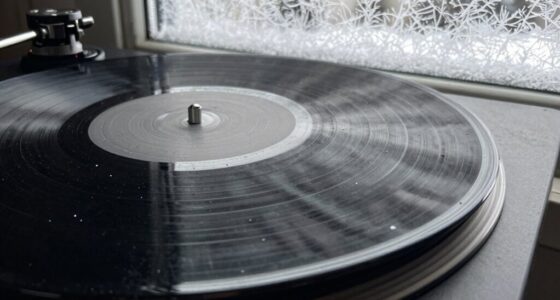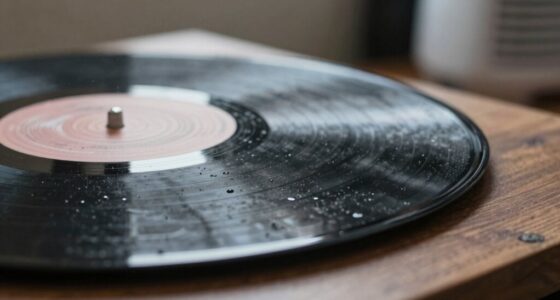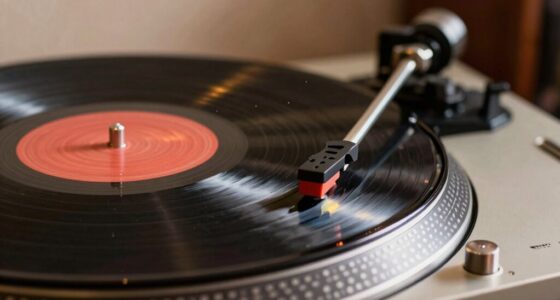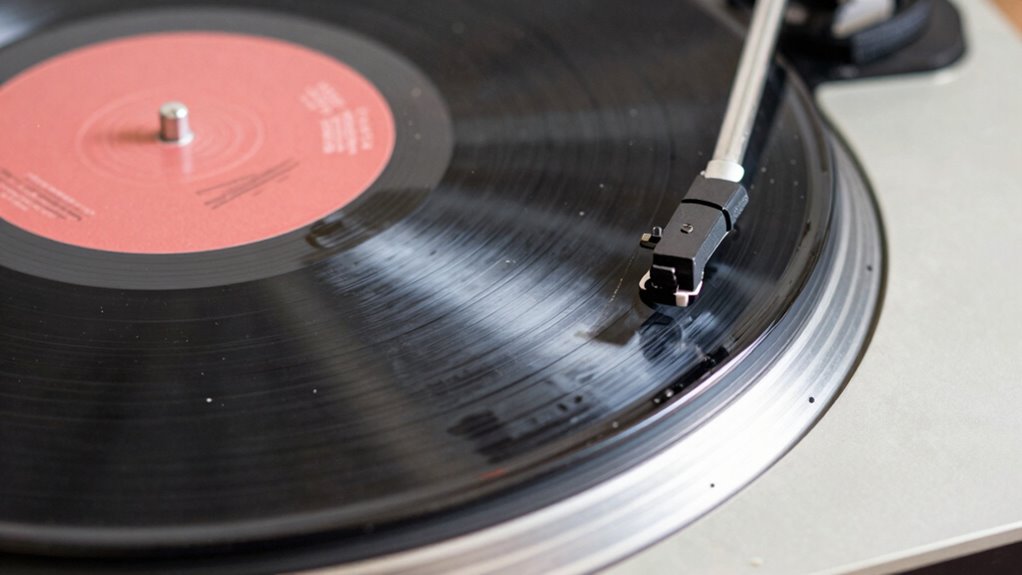

To determine if your vinyl problem is due to storage, setup, or dirt, start by listening for consistent crackles or pops, which often point to dirt or surface contamination. Check the record’s physical condition for warping or scratches—signs of storage issues. Also, review your turntable setup; uneven sound or tracking problems may indicate improper calibration. Paying attention to these details helps identify the root cause, and if you keep exploring, you’ll find tips to fix each issue effectively.

Get audio and creator gear delivered free with Prime
- Fast, free delivery on millions of items
- Prime Video, Amazon Music and more included
- Member-only deals all year
Key Takeaways
- Inspect for visible scratches or warping to identify storage-related damage.
- Check if the record plays with crackles or pops despite cleaning, indicating dirt or surface contamination.
- Ensure the turntable setup is properly calibrated; misalignment often causes tracking issues unrelated to storage or dirt.
- Examine the surface closely for dust, fingerprints, or debris to determine if dirt is the cause.
- Consider storage conditions—warped records suggest improper storage, while clean, properly stored records with setup issues point to calibration problems.
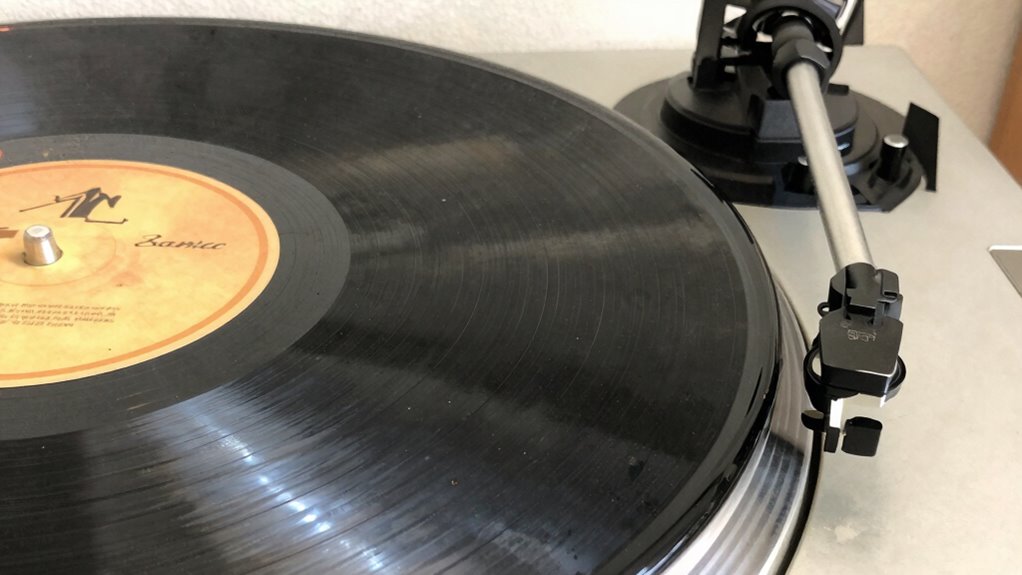
Vinyl records can develop issues that affect sound quality, but figuring out whether the problem stems from storage, setup, or dirt isn’t always straightforward. When your records sound off—skipping, crackling, or muffling—your first step is to identify the root cause. Often, it’s a matter of inspecting the record itself, your turntable’s calibration, or how you’ve stored your collection.
Start with record cleaning. Dirt, dust, or fingerprints on the vinyl surface are common culprits. You might notice crackles or pops that weren’t there before, which often signal surface contamination. Regular record cleaning can resolve this, but if cleaning doesn’t improve the sound, then the issue might be deeper. It’s worth checking whether your cleaning method is effective; sometimes, a thorough, gentle clean with a dedicated record cleaning solution or a record cleaning machine makes a noticeable difference. Residual dirt can cause tracking issues, leading to distorted sound. Additionally, using proper record cleaning techniques helps ensure that surface contaminants are thoroughly removed. Proper storage conditions, such as temperature and humidity, also play a crucial role in maintaining surface quality over time. Maintaining a controlled environment can prevent the buildup of dirt and reduce the likelihood of surface issues.
Regular cleaning with proper solutions or machines can significantly improve sound quality by removing surface dirt.
Next, consider your turntable setup. Proper calibration is key to good sound quality. If your tonearm isn’t balanced correctly, or if the tracking force is off, you’ll hear uneven playback or excessive wear on your records. To troubleshoot, adjust your turntable’s calibration—check the tracking weight, anti-skate, and tonearm height. If these aren’t set correctly, even a perfectly clean record won’t sound right. Sometimes, the issue isn’t with the record but with how your turntable interacts with it. Ensuring your turntable setup is accurate can prevent many sound issues.
Storage is another critical factor. Records stored improperly—stacked horizontally or in excessive heat or humidity—can warp or develop surface damage over time. Warped records cause tracking problems and audio distortions. If you notice warped edges or uneven surfaces, then the storage environment is to blame. Proper storage involves keeping records upright, in a cool, dry place, away from direct sunlight. Using inner sleeves and keeping records away from sharp objects also prevents scratches or warping. Regularly inspecting your collection for signs of damage can help catch storage-related problems early. Maintaining an environment with stable temperature and humidity is essential to prevent warping and deterioration. Proper storage conditions are vital for preserving the longevity and sound quality of your records.
record cleaning solution for vinyl
As an affiliate, we earn on qualifying purchases.
As an affiliate, we earn on qualifying purchases.
Frequently Asked Questions
Can Temperature Changes Cause Vinyl Issues?
Yes, temperature fluctuations can cause vinyl issues. When temperatures change rapidly, they can lead to vinyl warping or buckling, especially if stored or installed in environments with inconsistent heat. You might notice your vinyl records or flooring becoming distorted or developing gaps. To prevent this, keep vinyl in a stable, moderate temperature environment, avoiding extreme heat or cold, which helps maintain its shape and longevity.
How Often Should I Clean My Vinyl Records?
You should clean your vinyl records regularly, ideally after every few listens or at least once a month, to maintain sound quality. Use proper record cleaning techniques like a microfiber cloth or a dedicated record cleaner. Handle your vinyl with clean hands, and always hold the edges to avoid dirt transfer. These vinyl handling tips help prevent dirt buildup and reduce the need for frequent deep cleanings, ensuring your records stay in top shape.
What Tools Are Best for Vinyl Maintenance?
Think of your vinyl as a delicate garden needing the right tools. For record cleaning, use an anti-static brush and a microfiber cloth to gently remove dust and dirt. For storage solutions, keep records upright in archival-quality sleeves and store them in a cool, dry place. These tools and strategies protect your collection, ensuring each spin sounds just as good as the first, like a well-tended bloom.
Does Vinyl Storage Humidity Affect Quality?
Yes, vinyl storage humidity markedly affects quality. When you store records on a record shelf, high humidity can cause warping, mold, or warping, damaging your collection. To protect your vinyl, use humidity control methods like dehumidifiers or silica gel packs. Keep the environment dry and cool, ensuring your records stay in ideal condition and preserve their sound quality over time. Proper storage is key to lasting enjoyment.
How Can I Prevent Dirt Buildup on Vinyl?
Dirt buildup on vinyl is common, with dust and oils causing surface damage over time. To prevent this, you should regularly perform record cleaning with a soft brush or cloth. Using proper storage solutions, like anti-static sleeves and keeping records upright in a cool, dry place, can also minimize dirt accumulation. Did you know that keeping records clean extends their lifespan by up to 50%? Regular maintenance keeps your vinyl sounding great.
As an affiliate, we earn on qualifying purchases.
Conclusion
By paying close attention to the clues—whether it’s storage, setup, or dirt—you’re almost there. But some issues can be tricky, hiding behind subtle signs. The real challenge lies in knowing what to do next, once you’ve identified the culprit. Will a simple cleaning fix it, or is a deeper adjustment needed? The answer might surprise you, and uncovering it could be the key to releasing perfect sound again. Are you ready to find out?
anti-skate adjustment for turntable
As an affiliate, we earn on qualifying purchases.
As an affiliate, we earn on qualifying purchases.
As an affiliate, we earn on qualifying purchases.
Halloween Picks
halloween
As an affiliate, we earn on qualifying purchases.