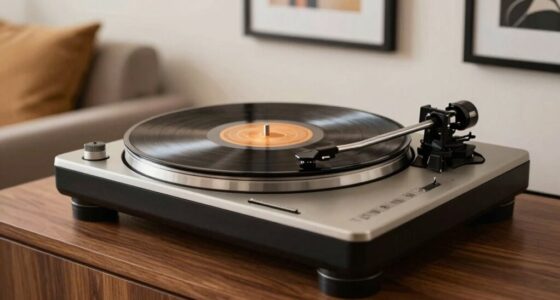
To understand cartridge alignment, you need to know about overhang, offset, and null points. Overhang is how far your cartridge extends beyond the headshell’s pivot point, affecting tracking accuracy. Offset adjusts the angle of your cartridge to better match the record’s geometry. Null points are specific spots on the record where the stylus tracks perfectly with minimal distortion. Mastering these terms helps you optimize sound quality—keep exploring to learn how each adjustment works together.

Get audio and creator gear delivered free with Prime
- Fast, free delivery on millions of items
- Prime Video, Amazon Music and more included
- Member-only deals all year
Key Takeaways
- Overhang is the distance the cartridge extends beyond the headshell’s alignment point, affecting tracking accuracy.
- Offset angle is the cartridge’s mounting tilt relative to the tonearm, influencing how well it follows record grooves.
- Null points are specific record locations optimized to minimize tracking error and distortion during playback.
- Proper overhang ensures consistent stylus contact across the record surface.
- Correct null point placement maintains accurate groove tracking and improves sound quality.
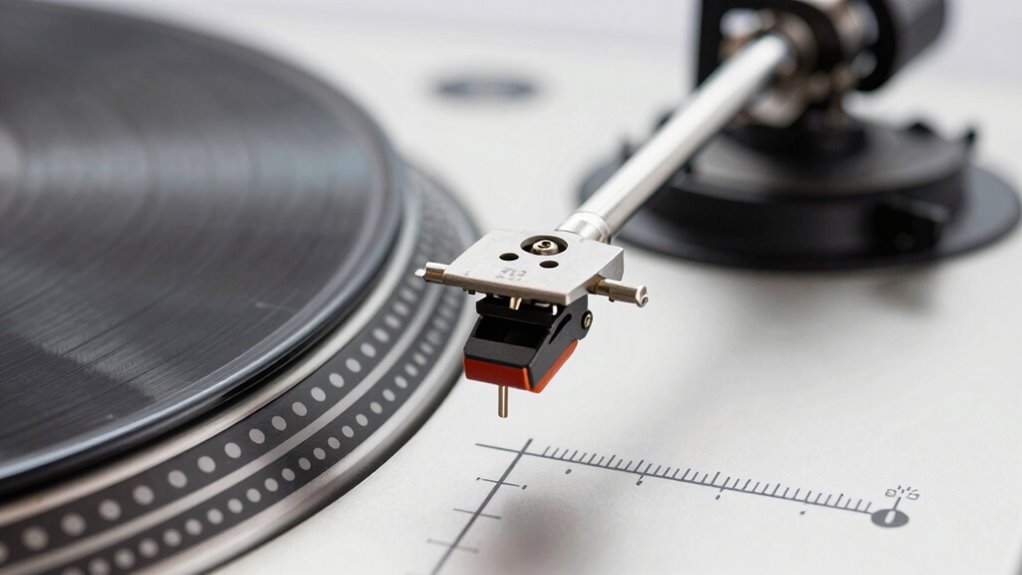
Have you ever wondered what cartridge alignment terms mean and why they matter? When setting up your turntable, understanding concepts like overhang, offset, and null points can seem confusing at first, but they’re essential for maximum sound quality. Proper alignment ensures that your stylus tracking is accurate, reducing wear on your records and cartridge while delivering the best possible audio. One key factor in this process is tonearm height, which affects how your stylus tracks the record groove. If your tonearm isn’t correctly adjusted, it can cause uneven stylus tracking and improper contact with the record surface, leading to distortion and increased record wear.
Proper cartridge alignment and tonearm height are essential for optimal sound quality and record preservation.
Overhang refers to the distance the cartridge extends beyond the alignment point on the headshell when the tonearm is properly positioned. It’s a critical measurement because it determines how accurately the stylus follows the record groove. Too much overhang can cause the stylus to drift outward, while too little can push it inward, both negatively impacting tracking ability. When you adjust overhang, you’re essentially aligning the cartridge so that the stylus remains in proper contact with the record groove across the entire play area. Correct overhang helps maintain consistent stylus tracking, which is essential for clear sound and record preservation.
Offset angle, on the other hand, involves the angle at which the cartridge is mounted relative to the tonearm. This angle influences how well the stylus tracks the record’s curved grooves. If the offset is off, the stylus may not sit perfectly in the groove, resulting in distortion or uneven wear. Adjusting the offset angle ensures that the cartridge’s alignment complements the record’s geometry, maximizing stylus tracking. When these parameters are set correctly, the stylus stays aligned with the groove’s tangent, reducing tracking errors and improving sound fidelity.
Null points are specific locations along the record where the alignment is optimized to minimize tracking error. These points are calculated based on the record’s radius and the cartridge’s geometry. By aligning your cartridge so that these null points are directly over the record, you ensure that the stylus maintains proper contact with the groove throughout the entire playback. This precision reduces distortion and enhances audio clarity. Achieving the right null points often involves meticulous adjustments of overhang and offset angle, reinforcing the importance of understanding these terms. Additionally, ensuring your turntable’s tracking force is correctly set is vital for optimal performance and cartridge longevity.
Lastly, tonearm height plays a subtle but significant role in cartridge alignment. If the tonearm isn’t set to the correct height, the stylus may not sit perpendicular to the record surface, which can compromise stylus tracking. Proper tonearm height ensures that the cartridge is aligned at the correct angle, allowing the stylus to follow the groove smoothly and accurately. When you get tonearm height right, you’re helping your stylus track the record more precisely, resulting in better sound quality and less record wear. In summary, paying attention to these alignment terms and adjusting tonearm height accordingly can make a noticeable difference in your listening experience.
turntable cartridge alignment tool
As an affiliate, we earn on qualifying purchases.
As an affiliate, we earn on qualifying purchases.
Frequently Asked Questions
How Does Cartridge Alignment Impact Overall Sound Quality?
Cartridge alignment directly impacts your sound quality by ensuring ideal vibration transfer and tonearm stability. When aligned properly, your cartridge tracks the record accurately, reducing distortion and skipping. This improves clarity, bass response, and overall listening experience. Poor alignment causes uneven wear and mistracking, which can damage your records and degrade sound. So, taking the time to align your cartridge correctly enhances sound fidelity and prolongs your equipment’s lifespan.
Can Improper Alignment Damage My Vinyl Records?
Did you know that improper cartridge alignment can cause up to 50% more stylus wear? Yes, if you don’t align your cartridge correctly, it can damage your vinyl records by creating unnecessary record groove damage. This misalignment forces the stylus to press unevenly against the groove, accelerating wear and risking permanent damage. Always guarantee proper alignment to protect both your records and stylus, prolonging their lifespan and sound quality.
What Tools Are Best for Precise Cartridge Alignment?
You should use digital protractors or alignment gauges for precise cartridge alignment. Digital protractors offer accurate angle measurements, making it easier to set overhang and null points correctly. Alignment gauges help you position your cartridge precisely on the tonearm, ensuring proper offset and overhang. Both tools are essential for ideal sound quality and record preservation, giving you confidence that your cartridge is aligned accurately for the best listening experience.
How Often Should I Check My Cartridge Alignment?
You should check your cartridge alignment every 20 to 30 hours of playtime or when you notice sound distortion or uneven stylus wear. Regular checks help guarantee ideal tracking force and prevent unnecessary stylus wear. If you change records frequently or notice skipping, perform a quick alignment to maintain sound quality. Consistent alignment keeps your stylus tracking properly, protecting your records and prolonging your cartridge’s lifespan.
Does Cartridge Type Influence Alignment Procedures?
Think of your turntable as a symphony, where each instrument, or cartridge type, needs perfect harmony. Your cartridge compatibility and stylus types influence the alignment process greatly. Different cartridges have unique shapes and mounting requirements, so you’ll need to adapt accordingly. Using the correct alignment procedure guarantees your stylus traces the grooves accurately, preserving sound quality and protecting your records. Always check your cartridge’s specifications before fine-tuning.
record player null point alignment
As an affiliate, we earn on qualifying purchases.
As an affiliate, we earn on qualifying purchases.
Conclusion
Mastering cartridge alignment is like tuning a finely crafted instrument; each term—overhang, offset, null points—is a note that guarantees perfect harmony. When you understand these concepts, your turntable becomes an extension of your artistry, revealing rich, nuanced soundscapes. Think of it as guiding your vinyl’s melody with a steady hand, transforming every record into a symphony. With precision and patience, you’ll open the full potential of your setup, turning listening into a truly immersive experience.
As an affiliate, we earn on qualifying purchases.
As an affiliate, we earn on qualifying purchases.
Halloween Picks
halloween
As an affiliate, we earn on qualifying purchases.