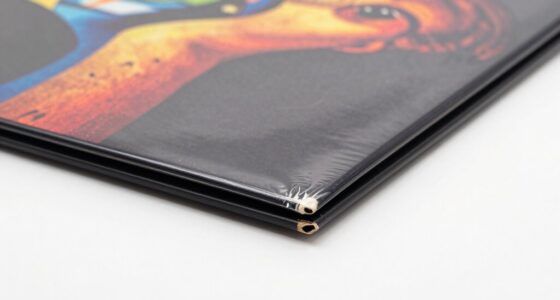

To keep your growing vinyl collection under control, store records vertically on sturdy, upright shelves like books and avoid stacking them flat. Protect each record with quality anti-static sleeves and handle them carefully by the edges to prevent damage. Organize your collection by genre, artist, or year, and regularly clean and inspect for dust or warp signs. Creating a tidy system now prevents chaos later—stick with these tips to preserve your records and learn more ways to maintain order.

Get audio and creator gear delivered free with Prime
- Fast, free delivery on millions of items
- Prime Video, Amazon Music and more included
- Member-only deals all year
Key Takeaways
- Organize records by genre, artist, or year and label shelves clearly for easy access.
- Store vinyl vertically in sturdy, dedicated shelving units to prevent warping.
- Regularly clean and inspect records, using protective anti-static sleeves for added protection.
- Keep collection in a cool, dry environment away from sunlight and humidity.
- Use storage boxes or upright shelving solutions to manage expansion and maintain order.

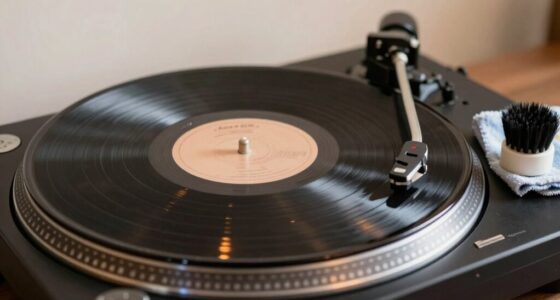
As your vinyl collection begins to grow, finding effective storage solutions becomes essential to protect your records and keep your space organized. The first step is to make sure your records stay in top condition, which means incorporating regular record cleaning into your routine. Dust, dirt, and fingerprints can damage the vinyl over time, causing scratches or affecting sound quality. By gently cleaning your records with a suitable record cleaning kit, you prevent buildup and preserve their longevity. Once your records are clean, you’ll want to safeguard them further, and protective sleeves are key. These sleeves shield your vinyl from dust, static, and minor handling damage, extending their lifespan. Always opt for high-quality, anti-static sleeves, and slide each record into a new sleeve before storing it. This simple step can make a big difference in maintaining sound quality and preventing warping or scratches. Proper storage also involves understanding the best practices for vinyl, which can help prevent damage and ensure your collection remains in excellent condition as it grows. Additionally, familiarizing yourself with record handling techniques can further reduce the risk of accidental damage during use.
When it comes to storing your records, vertical storage is generally the best approach. Stacking records flat can cause warping over time, especially if they’re stored for long periods or in areas with fluctuating temperatures. Invest in sturdy, well-designed shelving units that allow your records to stand upright, similar to books on a shelf. This not only keeps them accessible but also reduces pressure on individual records, helping them stay in good shape. As your collection grows, consider alphabetizing or categorizing your records by genre, artist, or year. Clear labels on shelves make it easier to find what you want quickly, saving you from unnecessary handling or shifting of your collection. Additionally, understanding how to properly handle records can further maintain their condition during browsing or retrieval. To enhance protection, consider using climate-controlled storage, which helps maintain stable temperature and humidity levels for your collection.
Another important consideration is controlling the environment where you store your records. Keep your collection in a cool, dry place, away from direct sunlight or humidity, which can warp or degrade the vinyl. Avoid storing records in basements or attics, where temperature and humidity levels fluctuate. Regularly check your collection for dust or signs of damage, and clean your shelves periodically to prevent dirt buildup. If you’re tight on space, consider using storage boxes designed specifically for records, but still prioritize upright storage to prevent warping. Ultimately, handle your records by the edges and label — never touch the grooves — to keep them pristine and ready for ideal playback. Proper storage, combined with record cleaning and protective sleeves, ensures your vinyl collection remains in great shape as it continues to grow.
anti-static vinyl record sleeves
As an affiliate, we earn on qualifying purchases.
As an affiliate, we earn on qualifying purchases.
Frequently Asked Questions
What Is the Best Way to Organize Vinyl Records?
To organize your vinyl records effectively, sort them by genre, artist, or alphabetically for easy access. Keep albums upright to protect the artwork and prevent warping. Use sturdy shelving or storage units designed for records, and label sections for quick identification. Incorporate collector tips by handling albums carefully and storing them away from sunlight. This method preserves your collection’s album artwork and keeps everything neat and accessible.
How Do I Prevent Warping or Damage Over Time?
Did you know vinyl records can warp with temperature fluctuations? To prevent warping or damage, always store your records upright in sturdy record sleeves, not stacked flat. Maintain a consistent room temperature—around 65-70°F—and avoid direct sunlight or damp areas. Proper temperature control and protective sleeves keep your vinyls safe, preserving sound quality and extending their lifespan over time.
Should I Store Vinyl Vertically or Horizontally?
You should store vinyl vertically to better preserve album cover integrity and optimize storage space. Vertical storage prevents warping and minimizes pressure on album covers, keeping them in top condition. Make sure each record stands upright with even spacing, avoiding leaning or crowding. This method makes it easier to access your collection and helps maintain the quality of both the vinyl and its cover over time.
What Materials Are Safest for Record Storage?
Did you know that improper storage causes up to 80% of vinyl damage? When storing your records, use acid-free record sleeves and sturdy storage containers made from materials like polypropylene or polyethylene. These materials are safe, non-reactive, and help prevent warping and scratches. Avoid cardboard boxes, which can deteriorate over time and damage your collection. Proper materials keep your vinyl sound quality intact and your collection organized for years to come.
How Often Should I Clean My Vinyl Collection?
You should clean your vinyl collection regularly, ideally every 3 to 6 months, depending on usage and dust levels. Use proper record cleaning techniques, like a carbon fiber brush or a record cleaning solution, to remove dust and dirt without damage. Maintain a clean storage environment by avoiding direct sunlight, humidity, and temperature fluctuations, which help preserve sound quality and prevent mold or warping.
As an affiliate, we earn on qualifying purchases.
Conclusion
As your vinyl collection continues to grow, the real challenge begins—keeping everything organized and accessible. Will your current storage methods hold up, or will chaos take over? With the right strategies in place, you can stay ahead of the clutter and enjoy your music without stress. But beware—if you ignore these tips, your collection could soon spiral out of control. Stay vigilant, stay organized, and keep those records spinning smoothly. The future of your collection is in your hands.
As an affiliate, we earn on qualifying purchases.
upright vinyl record storage cabinet
As an affiliate, we earn on qualifying purchases.
As an affiliate, we earn on qualifying purchases.
Halloween Picks
halloween
As an affiliate, we earn on qualifying purchases.