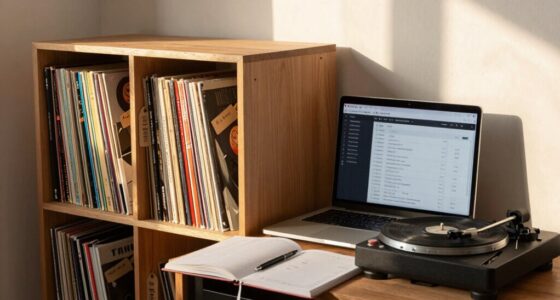
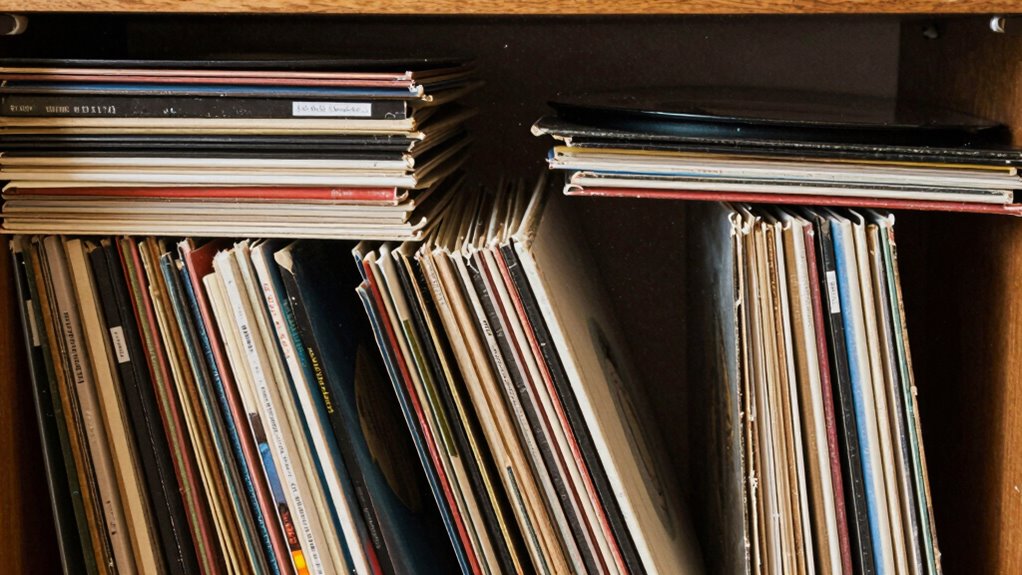

As you grow your vinyl collection, the record shelf problem can sneak up on you faster than expected. Limited space on shelves quickly becomes a challenge, leading to clutter and disorganized stacks. Vintage storage options might look great but can get out of hand without proper planning. Balancing aesthetics with functionality is key. If you keep expanding your collection without a clear system in place, chaos will follow. Keep going to find out how to stay ahead of these storage pitfalls.

Get audio and creator gear delivered free with Prime
- Fast, free delivery on millions of items
- Prime Video, Amazon Music and more included
- Member-only deals all year
Key Takeaways
- Collection growth often exceeds initial storage capacity, leading to clutter and disorganization over time.
- Vintage storage solutions may become inefficient without proper planning and regular reorganization.
- Lack of a clear labeling system makes finding specific records difficult as the collection expands.
- New collectors may underestimate space needs, resulting in cramped, chaotic shelves.
- Balancing aesthetics with functionality is crucial to prevent clutter from sneaking up unnoticed.
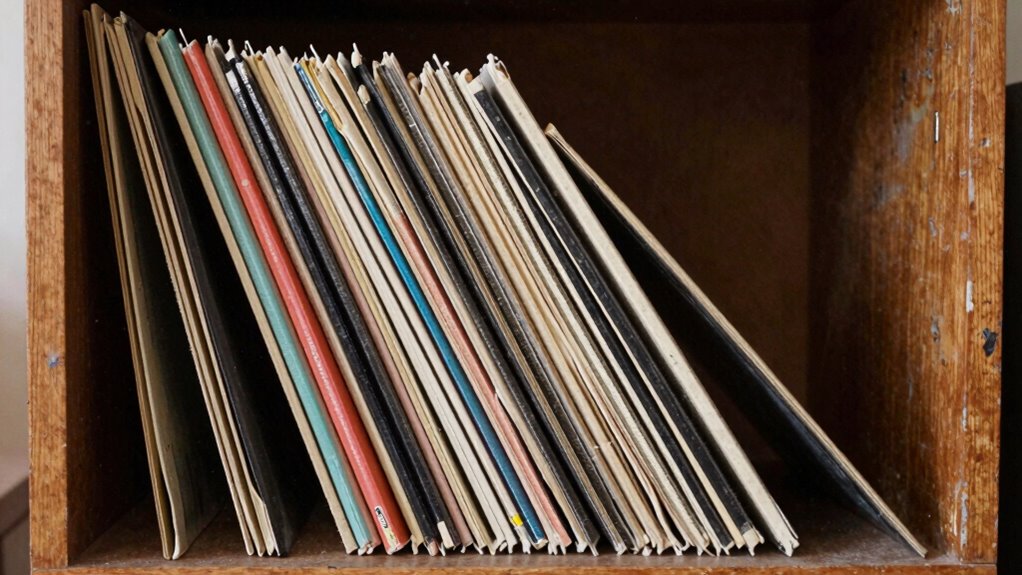
Starting a new vinyl collection can be exciting, but it often comes with the challenge of managing limited space on your record shelves. As your collection grows, you might find yourself juggling more records than you initially expected. Vintage storage options can help, but they also come with their own set of considerations. Many collectors lean on classic wooden crates, metal bins, or repurposed furniture to hold their records, aiming for a nostalgic look that fits the vibe of vinyl collecting. However, these vintage storage solutions can quickly become cluttered if you’re not careful. You need to think about accessibility, durability, and how well they fit into your space. The key is finding a system that keeps your records safe while allowing you to see and access your collection easily.
Label organization becomes essential as your collection expands. Without a clear method for organizing by artist, genre, or release date, browsing your records can turn into a frustrating game of guesswork. You might start stacking records randomly or alphabetically, but over time, this approach can become chaotic. When you don’t have a well-thought-out labeling system, it’s easy to lose track of what you own, and searching for that one specific album can take longer than it should. To avoid this, you should consider labeling your storage containers or adding custom dividers within your shelves. It’s a simple step that saves a lot of time in the long run and makes your collection feel more curated and manageable. Additionally, organization techniques tailored to vinyl collections can help you optimize your space and keep everything orderly. Regular maintenance and reevaluation of your storage strategy are also important as your collection continues to grow. Recognizing the importance of space management can help you prevent clutter before it becomes unmanageable. Proper vintage storage options can also protect your records from damage and ensure they stay in good condition over time. Planning your storage ahead of time allows you to create a long-term system that adapts as your collection expands.
The record shelf problem often sneaks up on new collectors because they underestimate how quickly their collection will grow. What begins as a manageable number of records can easily become overwhelming if you don’t plan ahead. Proper vintage storage solutions combined with a solid label organization system help prevent clutter from taking over your space. It’s about creating a balance between aesthetics and functionality. Think about how you want to browse your collection—whether by artist, genre, or mood—and plan your storage accordingly. Regularly maintaining your labels and reorganizing as you add new records will keep your collection feeling fresh and accessible. With a little foresight, you can avoid the common pitfalls and enjoy your vinyl hobby without the stress of chaotic shelves. Embracing storage solutions designed specifically for vinyl records can make a significant difference in maintaining an organized and enjoyable collection.
As an affiliate, we earn on qualifying purchases.
Frequently Asked Questions
How Can I Prevent My Records From Warping Over Time?
To prevent your records from warping over time, store them upright in a cool, dry place. Keep them in their record sleeves to protect from dust and scratches, and avoid exposing them to direct sunlight. Maintain a desirable temperature around 65-70°F, as heat can cause warping. Regularly check your storage conditions to guarantee your records stay flat and sound great for years.
What Are the Best Storage Conditions for Vinyl Records?
To keep your vinyl records in top shape, store them upright in a cool, dry environment with stable temperatures, ideally between 65-70°F. Use high-quality record sleeves, like polyethylene or polyethylene-lined sleeves, to protect against dust and scratches, and guarantee album cover preservation by keeping covers away from sunlight and humidity. Avoid stacking records horizontally, which can cause warping and damage over time.
How Do I Identify Genuine Vintage Records From Reproductions?
To spot genuine vintage records, think of authenticity markers as your treasure map. You look for signs like label wear, thin vinyl, and label font changes. Reproduction techniques often leave clues, like modern glossy finishes or digital-printed labels. Feel the weight—vintage records tend to be heavier. Comparing your find to verified originals online helps too. Trust your instincts; these subtle details reveal if your record is truly vintage or just a clever reproduction.
What Are Common Signs of a Scratched or Damaged Record?
You’ll notice a scratched or damaged record by inspecting the record surface for visible marks, scuffs, or gouges, which can cause skipping or distortion. Listen for pops, crackles, or irregular sounds during playback, indicating surface damage. Also, check for needle damage signs, like excessive skipping or distortion, which can result from playing a damaged record. Regularly examining your records helps prevent further damage and preserves sound quality.
How Often Should I Clean and Maintain My Record Collection?
Cleaning your records is like giving your favorite song a fresh breath of life. You should clean and maintain your collection regularly, ideally after every few listens or weekly if you’re a serious collector. Use gentle cleaning techniques like a microfiber cloth or a record brush, and incorporate maintenance routines such as proper storage and handling. This keeps your records sounding great and prevents damage from dust and dirt buildup.
vintage record storage solutions
As an affiliate, we earn on qualifying purchases.
As an affiliate, we earn on qualifying purchases.
Conclusion
As you fill your shelves, remember they’re more than just a home for your records – they’re a garden waiting to blossom. Don’t let the record shelf problem grow like weeds, choking out your passion. Stay mindful and organized, or your collection could become a tangled jungle. With care, your shelves will flourish, showcasing your love for music like a vibrant, thriving landscape — a proof to your journey as a collector.
record label organization system
As an affiliate, we earn on qualifying purchases.
As an affiliate, we earn on qualifying purchases.
As an affiliate, we earn on qualifying purchases.
Fall Picks
fall essentials
As an affiliate, we earn on qualifying purchases.