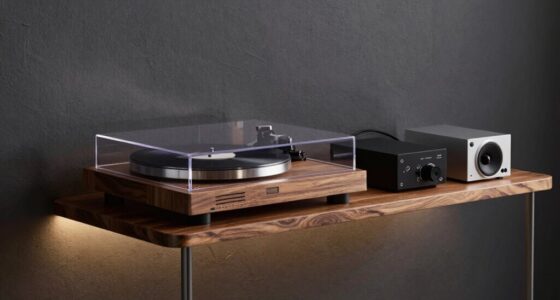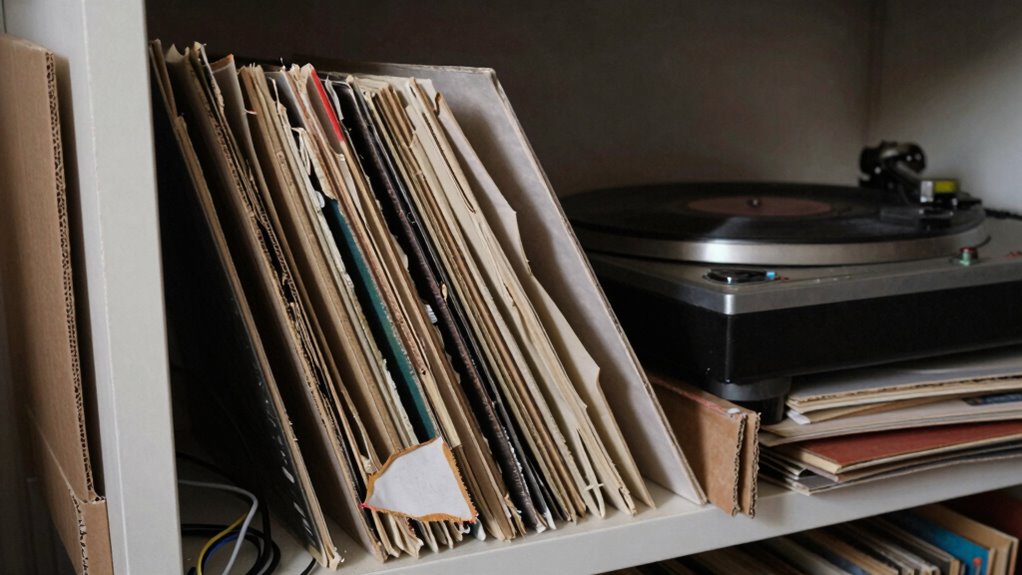
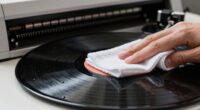
The biggest mistake you make when storing records is neglecting a stable environment and improper handling. Avoid stacking or leaning records, and don’t expose them to direct sunlight, heat, or humidity, which can cause warping and deterioration. Use quality sleeves and upright shelving to protect your collection. Proper storage boosts sound quality and extends your records’ lifespan. Want to make certain your collection stays pristine? Keep going to discover essential tips for safe, long-term storage.

Get audio and creator gear delivered free — and shop member deals
- Fast, free delivery on millions of items
- Access to Prime Big Deal Days deals on October 6–7
- Prime Video, Amazon Music and more included
Key Takeaways
- Avoid storing records flat or stacked to prevent warping and scratches.
- Use high-quality, anti-static sleeves instead of flimsy or worn covers.
- Maintain a stable environment with consistent temperature and humidity levels.
- Handle records by edges and labels to prevent dirt and oils from damaging grooves.
- Keep records away from direct sunlight, heat sources, and areas with poor airflow.
anti-static vinyl record sleeves
As an affiliate, we earn on qualifying purchases.
As an affiliate, we earn on qualifying purchases.
Why Proper Vinyl Record Storage Matters for Sound Quality and Longevity
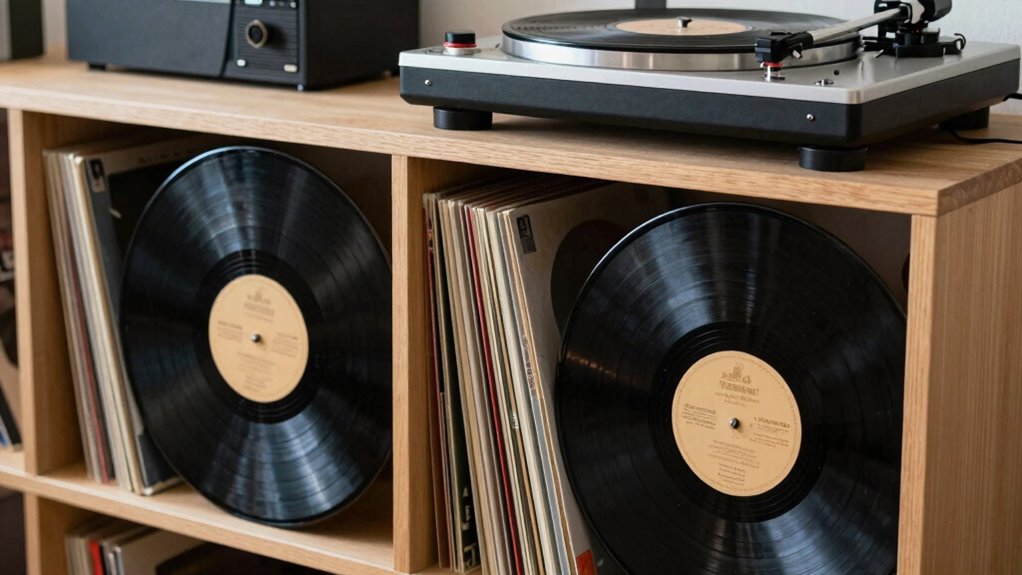
Proper storage of vinyl records is essential because it directly impacts both their sound quality and lifespan. When you store records improperly, dust and dirt can settle, making record cleaning more difficult and reducing sound clarity. Using protective sleeves is a simple but effective way to shield your records from scratches, dust, and static. Clean records regularly before storing them to prevent dirt buildup that can damage grooves over time. Well-maintained protective sleeves not only prevent physical wear but also help preserve the record’s condition. Proper storage keeps your vinyl safe from warping, warping caused by heat or humidity, and accidental damage. Additionally, storage conditions such as temperature and humidity levels play a crucial role in maintaining your records’ integrity. By focusing on these basics, you ensure your records stay in excellent condition, delivering ideal sound quality for years to come.
As an affiliate, we earn on qualifying purchases.
What Is the Biggest Record Storage Mistake?
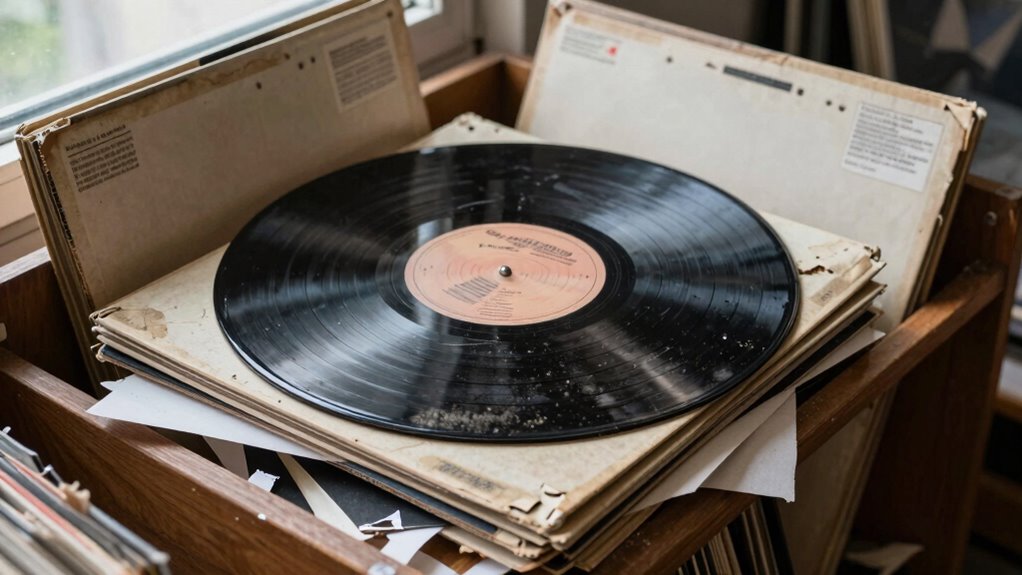
The biggest mistake in record storage is neglecting to keep your vinyls in a stable environment, which can cause warping from heat, humidity, or temperature fluctuations. When your records aren’t stored properly, they can warp or become damaged over time. Using flimsy or improper album sleeves exposes your vinyls to dust, scratches, and environmental changes, accelerating deterioration. Additionally, placing records directly on shelves or in areas with poor airflow can lead to uneven temperature shifts. Record labels can also suffer if your records aren’t stored correctly, affecting their longevity and readability. Always keep your records upright in sturdy, acid-free sleeves, and avoid exposing them to direct sunlight or extreme temperatures. Proper storage protects your investment and preserves sound quality for years to come. Implementing climate-controlled storage can further ensure your records remain in optimal condition over the long term.
climate-controlled record storage
As an affiliate, we earn on qualifying purchases.
As an affiliate, we earn on qualifying purchases.
How to Choose the Best Environment and Materials for Your Vinyl Collection
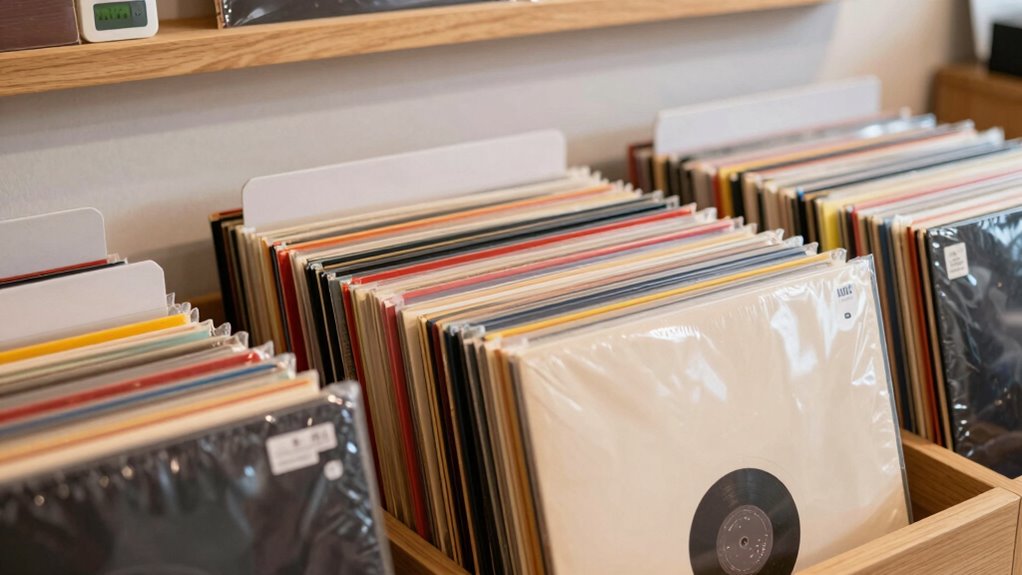
Choosing the right environment and materials for your vinyl collection is essential to keep your records in top condition. Proper conditions prevent warping, warping, and damage to album covers. Consider these four key points:
- Maintain a consistent temperature around 65-70°F to prevent warping and mold.
- Keep humidity levels between 40-50% to avoid warping and mold growth.
- Use acid-free, anti-static inner sleeves and sturdy outer jackets to protect the vinyl and album covers.
- Display your records using methods that avoid direct sunlight and excessive dust, such as open shelving or wall-mounted racks, ensuring your collection stays pristine and visually appealing.
- Regularly monitor environmental conditions to ensure optimal preservation and prevent deterioration over time.
Choosing quality materials and the right display methods helps preserve your collection’s longevity and aesthetic appeal.
As an affiliate, we earn on qualifying purchases.
Safe Stacking, Shelving, and Handling Tips to Protect Your Records
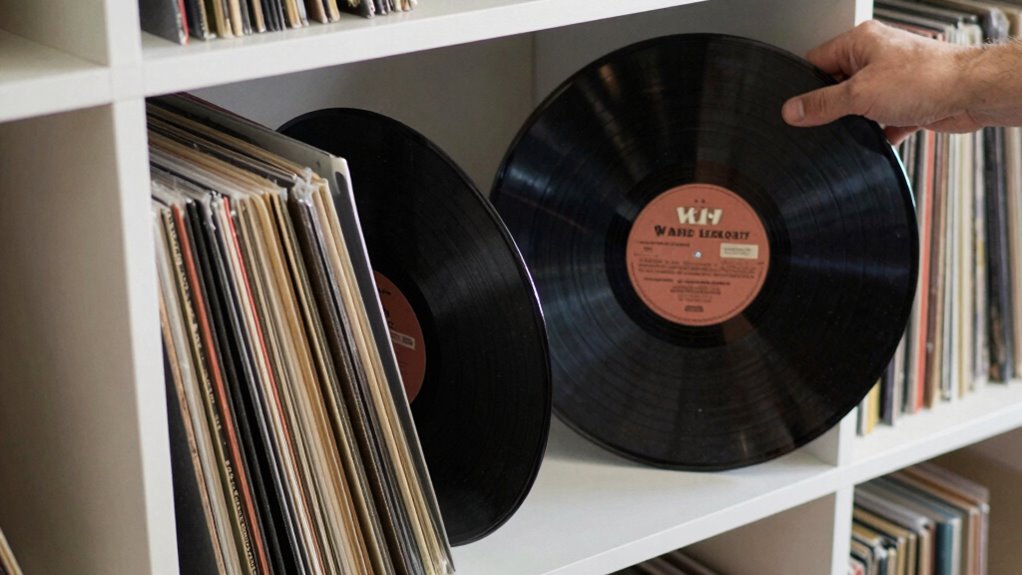
To keep your vinyl records safe from damage, it’s essential to practice proper stacking, shelving, and handling techniques. Always handle records with clean hands to maintain handling hygiene and prevent dirt or oils from transferring to the vinyl and record sleeve preservation. When stacking, avoid leaning records against each other or stacking too high, which increases the risk of warping or scratches. Use sturdy, perpendicular shelving designed for records to prevent slippage and bending. Always hold records by the edges or label, avoiding touching the grooves. When removing or replacing a record, do so gently to prevent warping or scratches. Proper handling and stable storage ensure your collection stays pristine, preserving both the vinyl and the integrity of the record sleeves. Incorporating energy-efficient storage solutions can also contribute to sustainable record preservation.
Long-Term Storage Tips to Keep Your Vinyls in Mint Condition
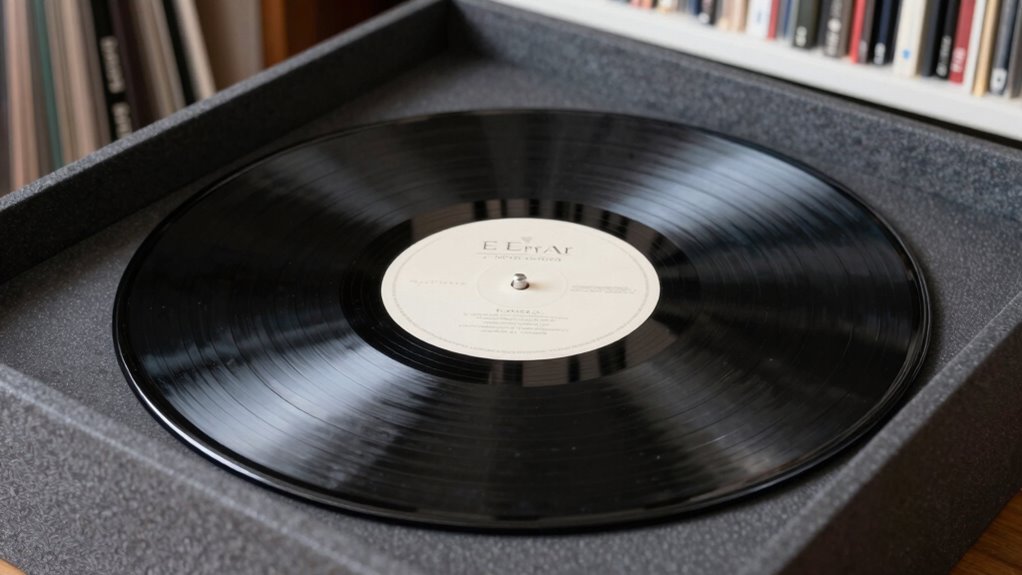
Proper long-term storage is essential to keep your vinyl records in mint condition over the years. To achieve this, focus on maintaining their quality through careful practices. Regularly perform record cleaning to remove dust and dirt that can cause scratches or warping. Use a gentle, record-specific cleaning solution. Preserve your sleeves by replacing worn or damaged ones with high-quality, anti-static sleeves to prevent static buildup and physical damage. Store records vertically in a cool, dark environment with stable temperature and humidity to avoid warping or mold growth. Keep records away from direct sunlight and heat sources, which can degrade both the vinyl and the sleeve, ensuring your collection stays pristine for years to come. Additionally, understanding essential oils for record preservation can help you maintain the condition of your collection.
Frequently Asked Questions
How Often Should I Clean My Vinyl Records During Storage?
You should clean your vinyl records regularly, ideally every few months, depending on your storage environment. If you keep them in a dust-free, cool, and stable environment, less frequent cleaning is needed. However, if dust or fingerprints accumulate, clean more often. Proper cleaning frequency helps prevent dirt from scratching the grooves and preserves sound quality, ensuring your records stay in top condition for years.
Can Temperature Fluctuations Damage My Vinyl Collection?
Ever wonder if temperature fluctuations can damage your vinyl collection? They definitely can. Sudden changes in temperature cause expansion and contraction, which can warp or crack your records. To protect your collection, maintain consistent temperature control and keep humidity levels stable. Avoid storing records near windows or heat sources, and use a climate-controlled environment. Proper storage ensures your vinyl sounds perfect for years to come.
Are There Specific Brands of Storage Materials Recommended?
Yes, certain brands of storage materials are highly recommended. Look for archival sleeves like MoFi or Mobile Fidelity, which are made from acid-free, high-quality materials to protect your records. Use sturdy storage containers, such as those from Whynter or IRIS, designed for long-term preservation. These brands help prevent warping, chemical damage, and deterioration, ensuring your vinyl collection stays in excellent condition for years to come.
How Do I Identify if My Records Have Been Damaged?
Don’t wait for a storm to find out your records are damaged. You can spot issues early by checking for record surface contamination, like fingerprints or dirt, and warping detection—look for bows or curves in the record. If it doesn’t sit flat or shows irregularities, it’s a sign of harm. Regularly inspecting your records helps guarantee they stay in mint condition, avoiding a costly surprise later on.
What Are the Signs of Improper Handling Affecting Sound Quality?
If improper handling affects sound quality, you’ll notice skipping, muffled audio, or distortion during playback. To prevent this, practice proper cleaning and handling techniques, like holding records by the edges and avoiding touching the surface. Damage from improper handling can cause scratches or dirt buildup, leading to poor sound. Regularly inspecting your records and maintaining a gentle touch guarantees you preserve sound quality and extend your records’ lifespan.
Conclusion
Think of your vinyl collection as a delicate garden—it needs careful tending to thrive. By avoiding common storage mistakes and giving your records the right environment, you’re nurturing their sonic beauty and lifespan. With proper handling, shelving, and long-term care, your records will stay pristine, ready to fill your space with rich sound for years to come. Protect your collection like a treasured masterpiece, and it’ll reward you with timeless music and memories.
Fall Picks
fall essentials
As an affiliate, we earn on qualifying purchases.