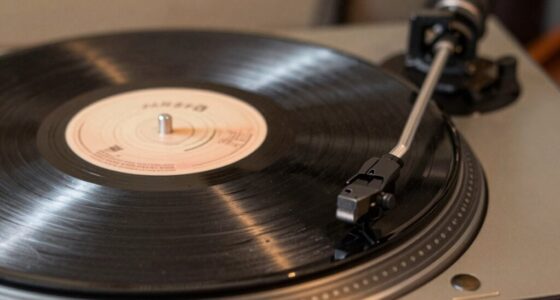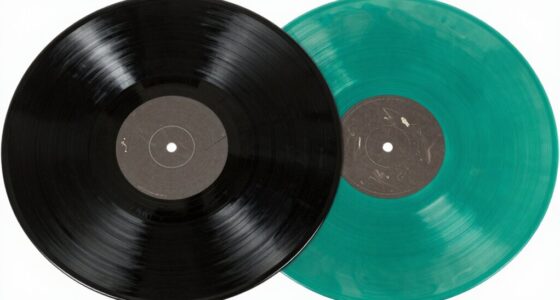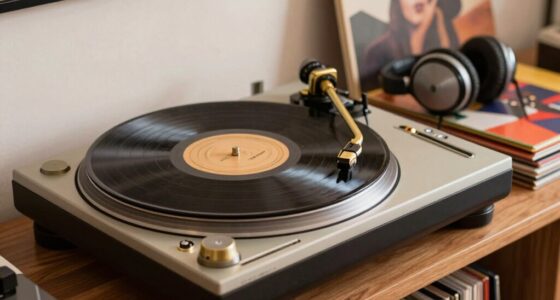
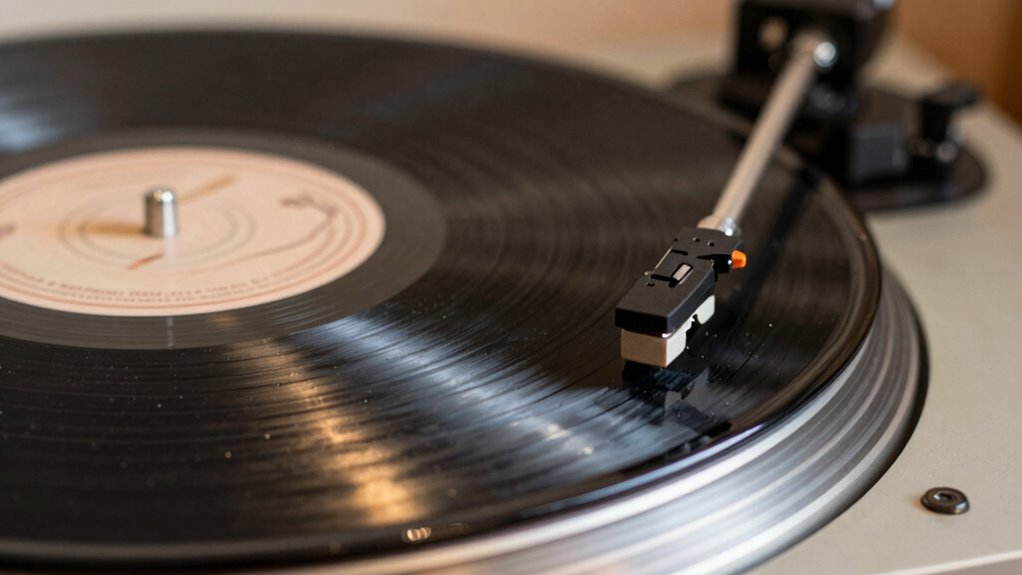

Cleaning your records removes dust, dirt, and oils that cause pops, crackles, and dull sound. These contaminants settle into the grooves over time and disrupt how the stylus tracks the record surface, leading to poor sound quality. By cleaning, you restore groove clarity, reduce static, and prevent physical wear. This results in a crisper, more detailed sound that’s true to the original recording. Stick around if you want to uncover the science behind this process.

Get audio and creator gear delivered free with Prime
- Fast, free delivery on millions of items
- Prime Video, Amazon Music and more included
- Member-only deals all year
Key Takeaways
- Cleaning removes dust, dirt, and oils that cause pops, crackles, and dull sound, restoring clarity.
- It reduces static buildup, preventing dust attraction and minimizing noise during playback.
- Proper cleaning prevents physical groove damage and wear, maintaining accurate stylus tracking.
- Removing contaminants enhances tonal quality by allowing the stylus to interact smoothly with the groove.
- Regular cleaning preserves record longevity and ensures consistent, high-quality sound over time.
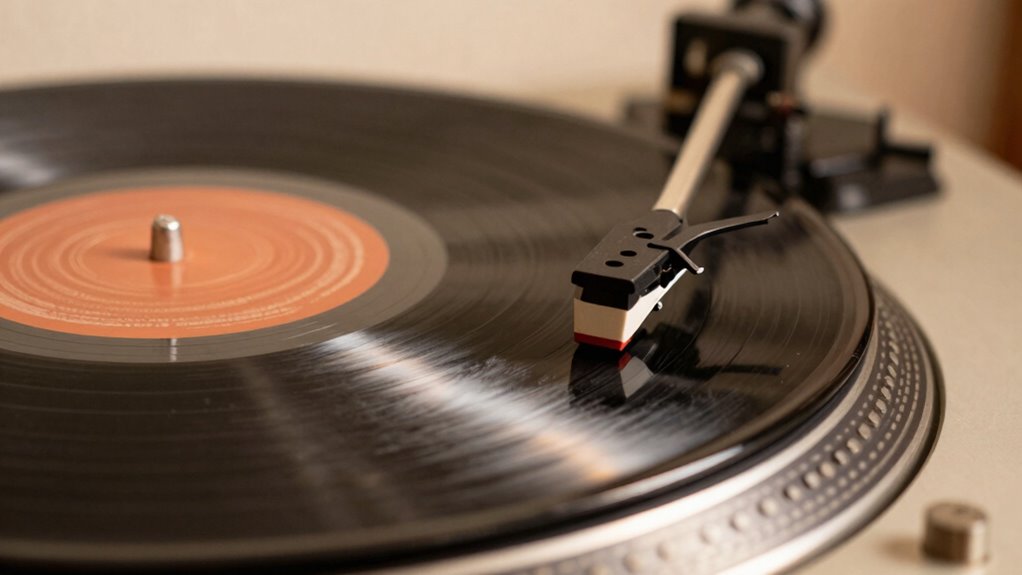
If your records haven’t been cleaned in a while, you might notice that the sound quality is suffering—cracks, pops, and a dull tone can all detract from your listening experience. Over time, dust, dirt, and oils from your fingers settle into the grooves, disrupting how your stylus interacts with the record. When this buildup accumulates, it hampers groove preservation, making it harder for the stylus to track the original waveform accurately. Cleaning your records removes these contaminants, allowing the stylus to glide smoothly through the grooves and maintain better contact with the record’s surface. This process not only restores clarity but also helps preserve the integrity of the grooves themselves, preventing unnecessary wear and tear that can degrade sound quality over time. Proper cleaning techniques can also help elevate your brand by demonstrating your commitment to quality and attention to detail. A key benefit of cleaning is static reduction. Records tend to develop static electricity, especially in dry environments, which attracts dust and causes pops and crackles during playback. When you clean your records thoroughly, you often reduce static buildup considerably. Many cleaning methods, like using anti-static brushes or solutions, neutralize static charges, so dust particles are less likely to cling to the surface. With less static, your stylus encounters fewer airborne particles that cause noise, resulting in a cleaner, clearer sound. Static reduction is essential because it directly influences how noise-free your playback is, especially during quiet passages or between tracks. Beyond just removing dirt and static, cleaning your records also enhances groove preservation. Dirt and debris embedded in the grooves can cause physical damage when played repeatedly, gradually wearing down the vinyl. Regular cleaning prevents this deterioration, helping your records stay in better condition longer. When the grooves are free of abrasive particles, the stylus can track the record more precisely, which not only improves sound fidelity but also extends the lifespan of both your records and stylus. It’s a simple step that pays off by maintaining the record’s original sound quality for many plays to come.
As an affiliate, we earn on qualifying purchases.
Frequently Asked Questions
Can Cleaning Damage Delicate Vinyl Records?
Cleaning delicate vinyl records can damage their surface integrity if you’re too aggressive or use harsh chemicals. You might cause scratches or remove essential lubricants, leading to more wear over time. Be gentle, use proper cleaning techniques, and don’t clean too often, as excessive cleaning can affect the record’s surface integrity and the sound quality. With careful cleaning, you preserve your records’ longevity and sound performance.
How Often Should I Clean My Records?
You should clean your records regularly, ideally after every few plays, to maintain sound quality and extend their vinyl lifespan. Frequent cleaning removes dust and debris that can cause wear. However, avoid over-cleaning, which might damage delicate surfaces. Aim for a cleaning frequency that keeps your records sounding their best without risking harm, usually every 10-15 plays or once a month, depending on storage conditions and usage.
Does Cleaning Improve Sound Quality on All Record Types?
Like a vintage jukebox, cleaning can enhance sound quality on most record types. You’ll notice clearer audio, especially if your records have accumulated dust or static from vinyl manufacturing or poor record storage. While some older or delicate records might need gentle handling, regular cleaning generally improves playback. Keep your collection in good shape, and you’ll enjoy richer sound with every spin, no matter the record’s age or style.
Are There Specific Cleaning Products Best for Sound Preservation?
You should choose cleaning products specifically designed for record preservation, as they effectively remove dirt without damaging the vinyl. Avoid cleaning myths that suggest harsh chemicals or excessive scrubbing; these can harm your records. Look for gentle, pH-neutral solutions or dedicated record cleaning fluids. Using the right products guarantees your records stay in top condition, preserving sound quality and longevity, while avoiding unnecessary wear or damage.
Can Cleaning Fix Scratches or Only Dirt and Grime?
Think of scratches as scars on a record’s soul—they can’t be erased through cleaning alone. Cleaning primarily removes dirt, grime, dust, and reduces static, helping your record sound clearer. While a thorough clean can improve playback by minimizing surface noise, it doesn’t fix scratches or gouges. For scratches, consider specialized repair methods or replacement. Cleaning keeps your record healthy, but it can’t heal all imperfections.
As an affiliate, we earn on qualifying purchases.
Conclusion
So, next time your record sounds a bit off, remember that a simple clean can breathe new life into it—like hitting refresh on a favorite song. Think of it as giving your vinyl a spa day, removing dirt and grime that block its true tone. With just a little effort, you’ll notice your records sing clearer and richer, turning each listen into a mini concert. Clean your records, and let the music flow like a river freed from debris.
As an affiliate, we earn on qualifying purchases.
As an affiliate, we earn on qualifying purchases.
Fall Picks
fall essentials
As an affiliate, we earn on qualifying purchases.