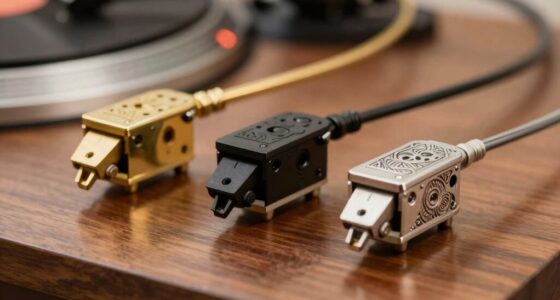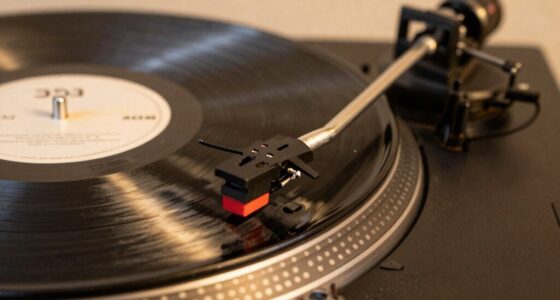
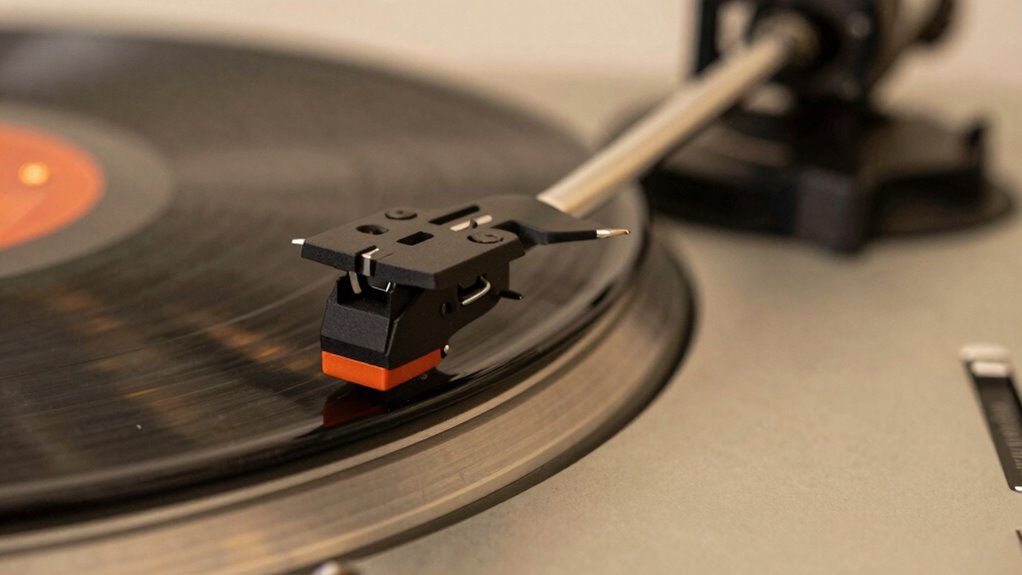

To understand cartridge and stylus talk, start by learning their basic roles: the cartridge holds the stylus, which traces record grooves and converts vibrations into sound. Focus on how stylus shape and cartridge quality affect sound clarity, tracking, and vibration accuracy. Get familiar with terms like tracking force, alignment, and wear, as proper setup keeps your records in great shape. If you keep exploring, you’ll discover how all these parts work together to deliver better sound.

Get audio and creator gear delivered free with Prime
- Fast, free delivery on millions of items
- Prime Video, Amazon Music and more included
- Member-only deals all year
Key Takeaways
- Learn basic terminology: cartridge, stylus, tracking force, and groove shape.
- Understand how stylus shape affects sound quality and record tracking.
- Recognize the importance of proper setup and alignment for optimal performance.
- Know compatibility factors: mounting style, weight, and electrical specifications.
- Focus on sound quality improvements to connect parts’ functions with listening experience.
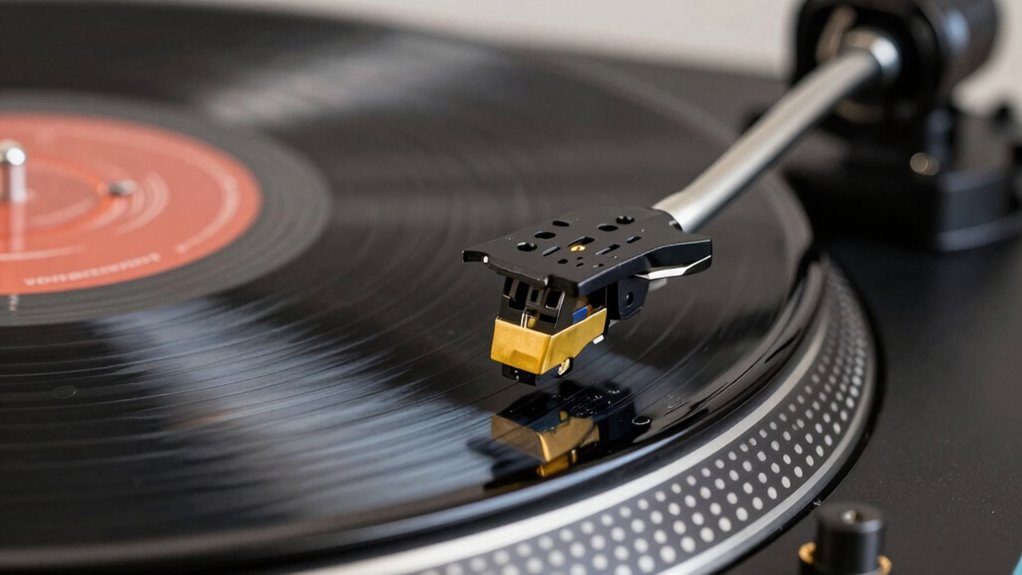
When it comes to turntables and vinyl records, understanding the roles of the cartridge and stylus is vital for best sound quality. These components directly impact your listening experience, affecting everything from audio fidelity to how well your equipment works together. The cartridge is the part that holds the stylus, which is the tiny needle that traces the grooves of your records. Together, they convert the physical vibrations from the record into electrical signals, which are then amplified into sound. Knowing how these parts work helps you select the right combination for your setup, guaranteeing that your music sounds clear, detailed, and true to the original recording.
Understanding cartridges and styluses is essential for optimal vinyl sound quality and equipment compatibility.
One of the key aspects to grasp is how the cartridge and stylus influence audio fidelity. A high-quality stylus and compatible cartridge allow for more accurate tracking of the record grooves, which means less distortion and a more faithful reproduction of the music. Cheaper or worn-out styluses can cause skipping, distortion, or muffled sound, robbing your listening experience of richness and detail. When choosing a stylus, consider its shape—elliptical or microline styluses typically provide better sound accuracy by tracking the grooves more precisely. The cartridge’s design also plays a role; a well-matched cartridge will produce a fuller, more balanced sound with accurate bass, mids, and highs. Additionally, understanding the record groove helps you appreciate how stylus shape impacts tracking and sound quality. Recognizing the importance of proper alignment can significantly improve your listening experience and extend the lifespan of your records. Being aware of tracking force ensures your stylus maintains optimal contact with the record surface, which further enhances sound quality and preserves your records over time. Moreover, paying attention to tracking error can help you fine-tune your setup for the best possible sound. It’s also beneficial to understand how stylus wear affects playback and when it’s time to replace your stylus to maintain optimal sound quality.
Another essential factor is equipment compatibility. Not all cartridges and styluses fit every turntable, so you need to verify your choice aligns with your specific model. Some turntables have fixed cartridges, meaning you can’t swap them out easily, while others are designed for upgrades. When considering a new cartridge or stylus, check the specifications for mounting style, weight, and electrical compatibility. Fitting an incompatible cartridge can lead to poor sound quality or even damage your records or turntable. Proper matching guarantees that the components work seamlessly together, maximizing both durability and performance.
Understanding the talk around cartridges and styluses isn’t about memorizing technical jargon; it’s about recognizing how these parts influence your overall listening experience. When you carefully select components that match your equipment and prioritize audio fidelity, you guarantee that every record you play sounds as good as possible. By paying attention to compatibility and quality, you can avoid common pitfalls like distortion and skipping, making your vinyl listening sessions more enjoyable and immersive. Ultimately, a well-chosen cartridge and stylus elevate your entire setup, helping you get the most out of your records with clarity and precision.
high quality turntable cartridge
As an affiliate, we earn on qualifying purchases.
As an affiliate, we earn on qualifying purchases.
Frequently Asked Questions
How Often Should I Replace My Stylus?
You should replace your stylus every 500 to 1,000 hours of playtime, depending on its stylus lifespan. Typically, replacement frequency varies based on usage, cartridge type, and record condition. Keep an eye out for signs like distortion or skipping, which indicate it’s time for a new stylus. Regularly inspecting your stylus guarantees peak sound quality and prevents record damage, maintaining your listening experience.
What’s the Difference Between Moving Magnet and Moving Coil Cartridges?
Moving magnet (MM) cartridges are like trusty workhorses, offering great compatibility with various turntables and stylus materials. Moving coil (MC) cartridges are precision instruments, providing more detailed sound but often requiring specialized cartridge compatibility. MM cartridges generate more output and are easier to replace, while MC cartridges tend to be more delicate and expensive. Your choice depends on your sound preference and equipment, but both use different internal mechanisms to produce music.
Can I Upgrade My Cartridge Without Replacing My Turntable?
Yes, you can upgrade your cartridge without replacing your turntable, but you need to check cartridge compatibility first. Make sure your new cartridge fits your tonearm and has compatible connections. Once installed, regularly use stylus cleaning tips to maintain sound quality. Upgrading can substantially enhance your listening experience, and with proper care, your new cartridge will deliver better audio performance without needing a new turntable.
How Do I Identify a Damaged Stylus?
Think of your stylus as a delicate brush—if it’s damaged, it won’t paint sound accurately. You can spot a damaged stylus by inspecting it closely for bent or broken tips, uneven wear, or accumulated dirt. Perform regular stylus inspection and cartridge calibration to keep your sound pristine. If you notice distortion, skipping, or excessive noise, it’s time to replace the stylus to protect your records and enjoy clear audio.
What Is Tracking Force and Why Does It Matter?
Tracking force is the pressure you apply to your stylus on the record, ensuring proper cartridge alignment and stylus compatibility. It matters because too much force can damage your records and stylus, while too little can cause skipping or poor sound quality. Adjusting tracking force correctly helps maintain ideal contact between the stylus and record groove, prolonging your equipment’s lifespan and ensuring the best listening experience.
As an affiliate, we earn on qualifying purchases.
Conclusion
Now, as you confidently navigate the world of cartridges and styluses, you realize that understanding these tiny parts isn’t as overwhelming as it seemed. It’s funny how a chance encounter with a vintage record player at a friend’s house sparked your curiosity, leading you down this rabbit hole. Just like discovering a hidden gem in a thrift shop, grasping these details makes your vinyl experience richer and more personal—turning a simple spin into a journey of sound and discovery.
As an affiliate, we earn on qualifying purchases.
record player cartridge and stylus
As an affiliate, we earn on qualifying purchases.
As an affiliate, we earn on qualifying purchases.
Fall Picks
fall essentials
As an affiliate, we earn on qualifying purchases.