


In winter, static feels worse on records because dry indoor air makes it easier for static charges to build up. Without enough moisture, dust and debris stick to your records, causing crackling and potential damage. To prevent this, you should maintain indoor humidity between 40-50% and use anti-static brushes or sprays. Keeping your environment stable and properly caring for your records helps reduce static issues, so you can enjoy better sound quality all season long.

Get audio and creator gear delivered free with Prime
- Fast, free delivery on millions of items
- Prime Video, Amazon Music and more included
- Member-only deals all year
Key Takeaways
- Cold, dry indoor air in winter increases static buildup on vinyl records.
- Low humidity reduces moisture, making static charges more likely to accumulate.
- Static causes crackling sounds and dust attraction, degrading sound quality and damaging records.
- Maintaining humidity between 40-50% helps control static and preserves record condition.
- Using humidifiers and anti-static products minimizes static-related issues during winter.
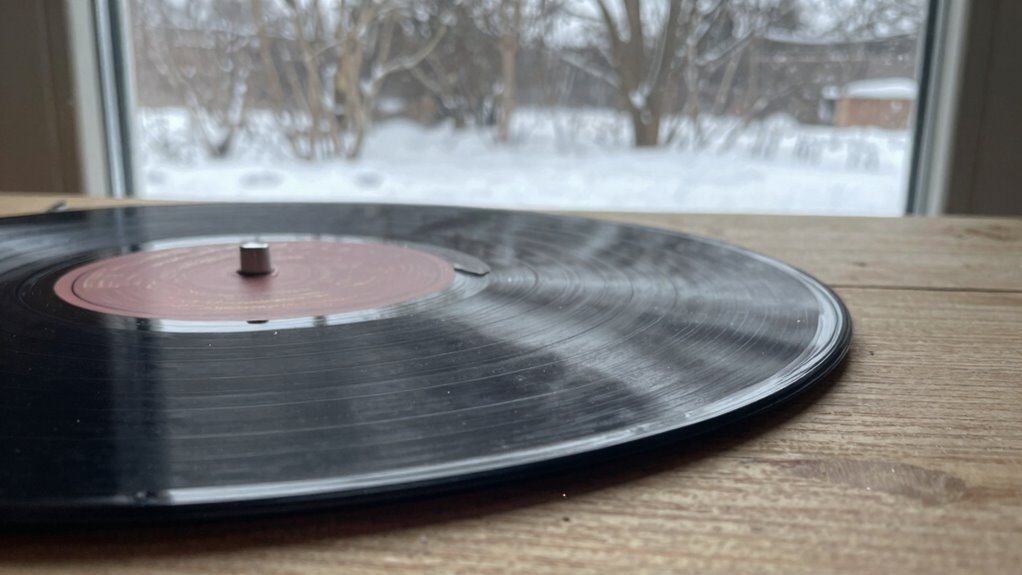
Winter’s dry air often causes static to build up on your records, making them prone to crackling and skipping during playback. When the air lacks moisture, static charges accumulate more easily on the surface of your vinyl. This static attracts dust and debris, which then creates unwanted noise and can damage your records over time. To keep your vinyl collection sounding its best, understanding how humidity levels influence static buildup is essential. During winter, indoor heating reduces moisture in the air, drastically lowering humidity levels. This dry environment is a major contributor to increased static, so maintaining proper humidity is a key part of vinyl maintenance.
Dry winter air increases static on records, causing crackles and damage; maintaining proper humidity is essential for optimal sound.
The key to reducing static during winter is to manage humidity levels in your listening space. Ideally, indoor humidity should stay between 40% and 50%. If you notice your records crackling more than usual, it’s likely because the air is too dry. Using a humidifier can help restore moisture to the air, reducing static buildup on your records and making playback smoother. Conversely, if the air becomes too humid, it can lead to other problems like mold growth or warping of your vinyl. Consequently, maintaining a balanced humidity level is essential for proper vinyl maintenance and ensuring your records stay in excellent condition. Additionally, understanding how static buildup occurs can help you better prevent it. Proper humidity control plays a vital role in this process.
In addition to controlling humidity, you should adopt specific vinyl maintenance practices during winter. Regularly wiping down your records with an anti-static brush or cloth helps remove dust and static charges before playing. It’s best to do this in a gentle, circular motion, always moving from the center outward. This not only improves sound quality but also minimizes static buildup over time. When storing records, keep them upright in a cool, dry place, and consider using anti-static sleeves to further reduce static charges. These simple steps can make a noticeable difference in overall record care, especially during the dry winter months. Maintaining a clean and static-free surface is crucial for preserving sound quality and preventing damage.
You might also consider using anti-static record cleaning solutions or sprays designed to dissipate static charges. These products can be applied before playing or stored on your records regularly, providing ongoing static control. Remember, the goal is to keep your vinyl in a stable environment with consistent humidity levels and clean, static-free surfaces. By doing so, you’ll preserve the sound quality, prevent damage, and prolong the life of your collection. Winter’s dry air presents unique challenges, but with proper vinyl maintenance and humidity control, you can enjoy warm, crackle-free sound all season long.
As an affiliate, we earn on qualifying purchases.
Frequently Asked Questions
Can Static Damage My Vinyl Records?
Static can damage your vinyl records if you’re not careful. When static builds up, it can cause tiny sparks that might transfer dirt or dust, potentially scratching the surface. To prevent this, you should store your records properly, use anti-static sleeves, and keep them in a cool, humid environment. Proper record storage and anti-static sleeves help reduce static buildup, protecting your records from damage over time.
How Can I Prevent Static Buildup on Records?
Think of static buildup like a thunderstorm ready to strike—prevent it with anti-static sprays and proper record storage techniques. You can lightly spray your records with a quality anti-static solution before playing, and store them upright in anti-static sleeves. Keep humidity levels balanced to reduce static. Regularly cleaning your records with a microfiber cloth also helps prevent static, ensuring your music stays clear and your records stay safe.
Does Humidity Affect Static in Winter?
Yes, humidity levels directly affect static in winter. During winter dryness, low humidity causes your records to build up static more easily. As humidity drops, static charges increase, making records cling or spark. To reduce static, you can raise indoor humidity with a humidifier or anti-static sprays. Maintaining balanced humidity levels helps protect your records and reduces static buildup, making playback smoother and less prone to static shocks.
Are Certain Record Materials More Prone to Static?
Certain record materials are more prone to static, especially those made from PVC or polycarbonate, which tend to build up static charges more easily. Don’t worry—using static prevention techniques like anti-static sleeves or mats can help. Understanding record material differences helps you choose the right storage and handling methods, reducing static buildup. This way, you protect your records and enjoy high-quality sound without static interruptions.
What’s the Best Way to Remove Static From Records?
To remove static from records, start with gentle record cleaning to eliminate dust and debris. Then, apply anti-static solutions specifically designed for records, which help neutralize static buildup. You can also use an anti-static brush or cloth before playing. By combining proper cleaning and anti-static treatments, you reduce static cling, improve sound quality, and protect your records from damage caused by static electricity.
humidifier for record collection
As an affiliate, we earn on qualifying purchases.
As an affiliate, we earn on qualifying purchases.
Conclusion
As winter’s gentle grip whispers through your home, it’s easy to see how static might dance more freely, whispering secrets on your records. But think of it as a delicate reminder to nurture your collection with tender care, like tending a cherished garden in the cold. Embrace these quiet moments, knowing that with a little extra attention, your records will continue to sing their timeless lullabies, warmed by your thoughtful touch amid the winter’s hush.
anti-static record cleaning spray
As an affiliate, we earn on qualifying purchases.
As an affiliate, we earn on qualifying purchases.
record storage anti-static sleeves
As an affiliate, we earn on qualifying purchases.
As an affiliate, we earn on qualifying purchases.
Halloween Picks
halloween
As an affiliate, we earn on qualifying purchases.