
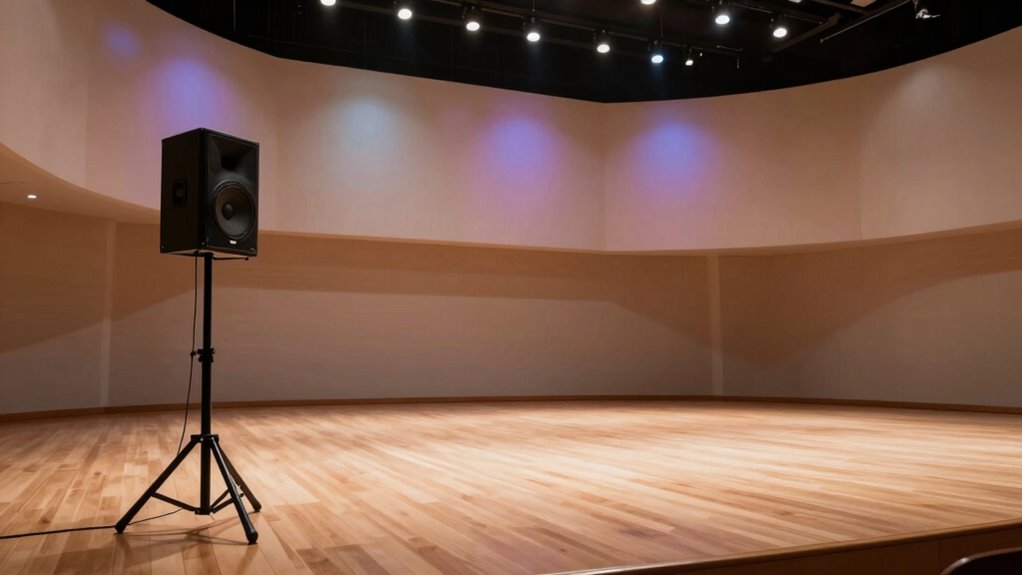

Your position in a room greatly impacts how bass sounds because of room modes and standing wave patterns. When you’re at a resonance node, bass feels deep and powerful, while stepping away can cause it to thin out or even cancel due to destructive interference. Small movements shift your relationship with these patterns, changing bass quality noticeably. To understand how to optimize your listening spot and improve your sound experience, keep exploring these resonance effects deeper.
Open a free Amazon Business account
Business pricing, bulk buying and tax-exempt orders.
As an affiliate, we earn on qualifying purchases.
Key Takeaways
- Standing in a room’s resonant nodes amplifies bass due to constructive interference from standing waves.
- Moving away from these nodes causes destructive interference, weakening or canceling bass sounds.
- Small positional changes can significantly alter perceived bass quality by shifting interference patterns.
- The room’s dimensions determine where resonance peaks and nulls occur, affecting bass distribution.
- Optimizing listener placement within the room can improve bass clarity by aligning with favorable resonance zones.
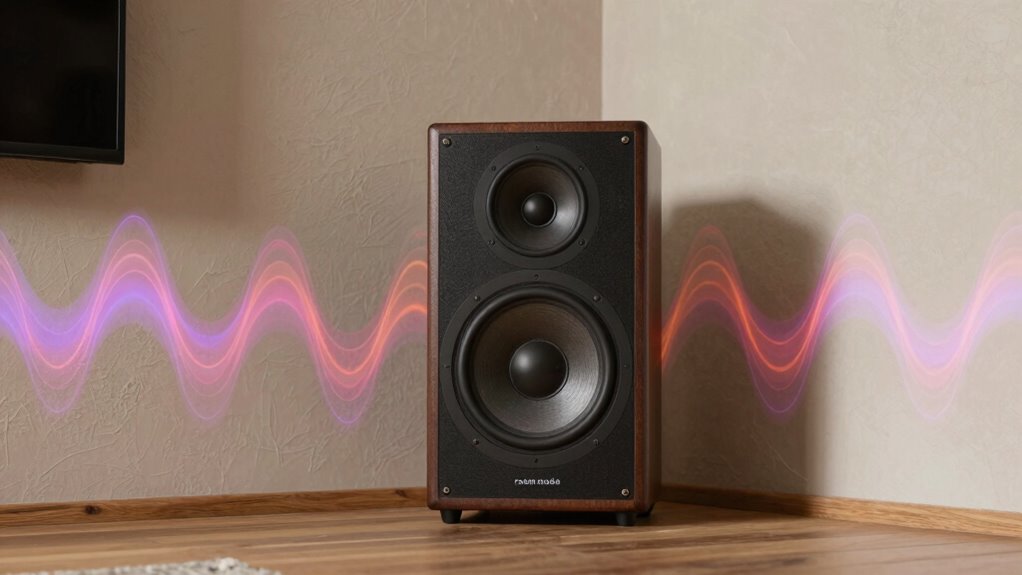
Have you ever noticed how bass sounds can suddenly become boomy or thin depending on where you’re sitting in a room? This phenomenon isn’t random; it’s rooted in what’s called room modes, which are specific resonance patterns that develop based on your listener positioning. When sound waves bounce between walls, they create standing waves at certain frequencies, amplifying or canceling bass sounds depending on where you are. These standing waves can make bass feel overwhelming in one spot and almost nonexistent just a few feet away. You might be in a spot where the bass is booming, with low frequencies reinforced by resonances, or in a spot where those same frequencies cancel out, leaving your bass sound dull and weak. The key to understanding this is recognizing how resonance patterns form within your space and how your position relative to these patterns affects what you hear.
Your positioning in the room influences how you experience these resonance patterns. When you stand in a location where the standing waves reinforce bass frequencies, you’ll notice a deep, powerful sound. Move just a few feet away, and you may find the bass suddenly thins out or becomes less impactful. It’s because your ears are located at different points relative to the room’s resonant nodes. At some points, the waves add together constructively, boosting bass, while at others, destructive interference occurs, reducing the bass response. This is why even small movements can drastically change your perception of bass quality. Understanding your listener positioning is essential if you want a balanced sound experience. It’s not just about the equipment or room size but also about where you stand or sit during playback. Recognizing how room modes influence sound can help you optimize your space for better audio performance.
To optimize your listening experience, try experimenting with your position in the room. Notice where the bass sounds most full and where it feels weak. Keep in mind that resonance patterns are influenced by room dimensions, so moving slightly can help you find spots where the standing waves produce more desirable bass. If you’re setting up a home theater or a stereo system, consider placing your seating where the resonance patterns create a balanced, rich bass response. By being aware of how your positioning interacts with the room’s resonance patterns, you can reduce the impact of dead spots and boom zones. This simple awareness can make a significant difference in how you experience bass, transforming your listening space into a more accurate and enjoyable environment.
As an affiliate, we earn on qualifying purchases.
Frequently Asked Questions
How Do Room Dimensions Influence Bass Standing Waves?
Your room dimensions directly influence bass standing waves by affecting room resonance and bass frequency alignment. Narrower or uneven spaces can amplify certain frequencies, creating boomy or dull spots. Larger, well-proportioned rooms help distribute bass evenly, reducing problematic resonances. By understanding how your room’s size impacts these factors, you can position your speakers and add acoustic treatments to minimize bass issues and achieve a balanced sound.
Can Furniture Placement Reduce Problematic Room Modes?
Think of furniture placement as the sculptor shaping sound. You can reduce problematic room modes by strategically positioning furniture, especially in relation to the room shape. Bass trapping works like a sponge, soaking up excess low frequencies. By combining thoughtful furniture placement with effective bass trapping, you’ll smooth out bass issues and create a more balanced, resonant listening environment. It’s all about working with your space, not against it.
What Tools Help Identify Bass Nulls and Peaks?
You can use tools like room EQ measurements, spectrum analyzers, and room acoustic treatment apps to identify bass nulls and peaks. These tools help you visualize room modes and guide your speaker placement strategies to minimize issues. By analyzing the frequency response, you can adjust furniture, add bass traps, or reposition your speakers, ultimately creating a balanced sound environment and improving your overall listening experience.
How Does Ceiling Height Affect Bass Distribution?
Ever wonder why bass sounds uneven in your room? Ceiling height dramatically influences bass distribution, creating unexpected peaks and nulls. Higher ceilings tend to disperse bass more evenly, while lower ones can cause standing waves that amplify or cancel certain frequencies. By understanding this, you can strategically position speakers and furnishings to optimize bass response, transforming your space into a balanced, immersive listening environment.
Are There Specific Standing Locations for Different Music Genres?
You should experiment with speaker placement and standing locations tailored to each music genre. For bass-heavy genres, position your speakers near bass traps to minimize room mode effects and enhance clarity. For genres needing more detail, avoid corners and focus on symmetrical placement. Adjusting your standing location helps optimize bass response, ensuring you get the best sound experience regardless of the music style.
acoustic treatment bass resonator
As an affiliate, we earn on qualifying purchases.
As an affiliate, we earn on qualifying purchases.
Conclusion
By simply adjusting your standing position, you can subtly influence how bass resonates in your space. While it might seem like a small detail, this gentle shift can enhance your listening experience without needing complex tweaks. Think of it as finding the cozy corner where your sound feels just right. So, Experiment with your spot, and enjoy discovering the sweet spot where your bass feels naturally richer and more inviting.
speaker placement for optimal bass
As an affiliate, we earn on qualifying purchases.
As an affiliate, we earn on qualifying purchases.
home theater soundproofing bass control
As an affiliate, we earn on qualifying purchases.
As an affiliate, we earn on qualifying purchases.
Flea & tick season Picks
flea and tick prevention
As an affiliate, we earn on qualifying purchases.