

To create a festival camping setup that saves you in bad weather, start by choosing a well-drained, elevated site with natural windbreaks. Reinforce your tent with sturdy stakes and guy lines, and set up additional shelters or windbreaks to protect your gear. Position everything to maximize airflow and drainage, keeping valuables dry in waterproof containers. Planning your layout carefully and being prepared with an emergency plan guarantees a safer, more comfortable experience—more tips on perfecting your setup await.
Key Takeaways
- Choose high ground with natural windbreaks and good drainage to prevent flooding and water accumulation.
- Set up weather-resistant tents securely on elevated ground, anchored with sturdy stakes and reinforced guylines.
- Incorporate outdoor shelters and windbreaks to protect gear and create safe, sheltered zones.
- Monitor weather forecasts regularly and prepare emergency plans with communication and safety supplies.
- Design the campsite layout to maximize airflow, minimize water pooling, and utilize natural features for weather protection.

CAMPROS CP 8 Person Camping Tent, Room Divider, Rainfly, Weather Resistant
- Spacious Interior: 72-inch center height for standing room
- Weather Resistant: Waterproof coating and sealed seams
- Easy Setup: Quick assembly with color-coded poles
As an affiliate, we earn on qualifying purchases.
As an affiliate, we earn on qualifying purchases.
Choose a Campsite That Stands Up to Bad Weather
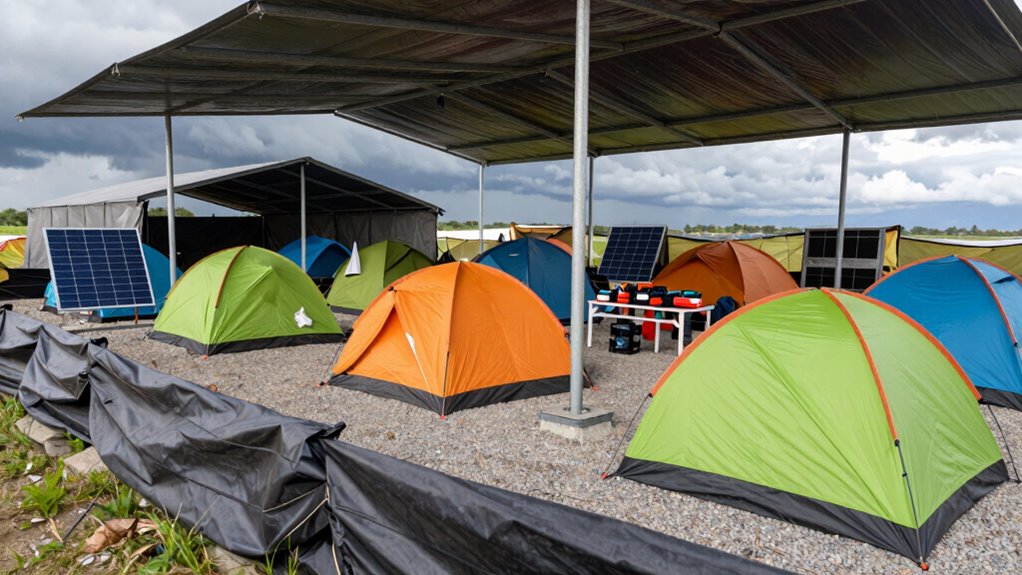
When selecting a campsite, it’s essential to take into account how well it can handle bad weather. Look for sites with reliable campground amenities that can provide shelter and safety during storms or heavy rain. Research the local weather patterns to understand the typical conditions you might face, such as frequent rain or strong winds. Choosing a site on higher ground can prevent flooding, while avoiding low-lying areas minimizes water runoff risks. Check if the campsite has sturdy trees or natural windbreaks that can offer extra protection. Well-maintained amenities like covered picnic areas, accessible emergency stations, and good drainage systems are also key. Additionally, understanding essential oils for weather-related relief can be beneficial for personal comfort during outdoor adventures. By considering these factors, you ensure your camping experience remains safe and comfortable, no matter what the weather throws your way.

NACETURE Heavy Duty Tent Stakes, 12 Inch with Guy Lines, 4 Pack
- All-Purpose Ground Stakes: Includes four 12-inch stakes and ropes
- Reinforced Nail Head Design: 6mm thick head for durability
- Versatile Tent Anchors: Secure tents, tarps, and canopies
As an affiliate, we earn on qualifying purchases.
As an affiliate, we earn on qualifying purchases.
Assess Storm and Rain Risks at Your Campsite
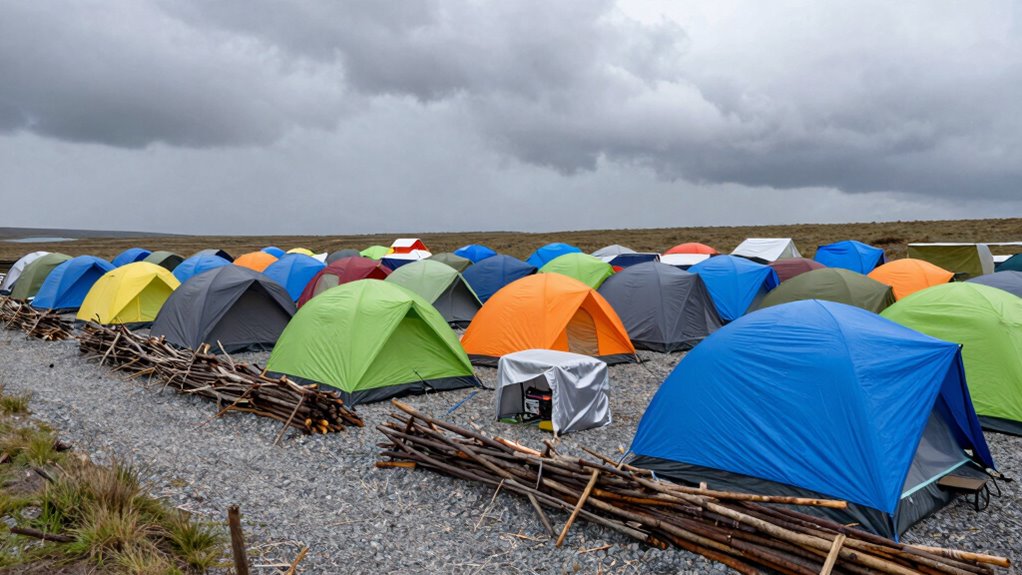
To effectively assess storm and rain risks at your campsite, start by examining recent weather data for the area and consulting local forecasts. Pay close attention to storm warnings, which signal immediate dangers, and track updates on weather forecasts to anticipate rain patterns. Check for any alerts issued by weather services and monitor their updates regularly, especially as the festival approaches. Consider the timing and severity of potential storms, and identify if heavy rain or strong winds are expected. This information helps you decide whether to change your campsite location or prepare extra protection. Additionally, understanding the accuracy and reliability of weather forecasting models can help you make more informed decisions. By staying informed, you can take proactive steps to minimize weather impacts, ensuring your festival experience remains safe and enjoyable despite upcoming storm or rain risks.

Oneofics 10x10FT Slant Leg Pop Up Canopy Tent, Portable Outdoor Shelter
- Sturdy Steel Frame: Rust-resistant, durable steel construction
- UV Protective Top Cover: Waterproof Oxford fabric with silver lining
- Easy Setup and Portable: Pop-up design with carrying bag for convenience
As an affiliate, we earn on qualifying purchases.
As an affiliate, we earn on qualifying purchases.
Set Up a Weather-Resistant Tent for Festival Camping
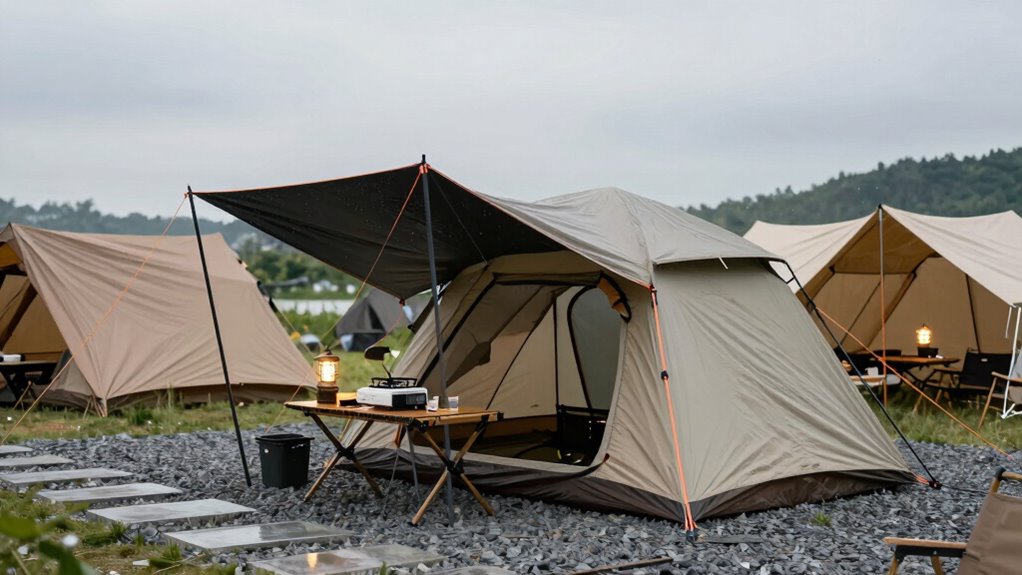
To keep dry and comfortable, you need to choose a tent that’s designed to withstand weather conditions. Make sure it’s sturdy enough to handle strong winds and heavy rain. Securing your tent properly will prevent it from collapsing or blowing away during a storm. Incorporating energy-efficient materials into your tent can also enhance its durability and sustainability in adverse weather.
Choosing the Right Tent
Choosing the right tent is essential for a successful festival camping experience, especially when weather conditions can be unpredictable. Look for tents with good tent ventilation to prevent condensation and ensure airflow during warm nights. Opt for lightweight materials that are easy to carry but durable enough to withstand rain and wind. Consider the tent’s shape and design for better weather resistance. Proper color accuracy and material quality can also influence how well your tent handles weather exposure, ensuring a longer lifespan and better protection.
Securing for Storms
When storms threaten your festival camping trip, securing your tent properly becomes essential to prevent damage and keep you dry. Use a tent made from storm resistant fabrics that can withstand high winds and heavy rain. Ensure all anchor points are firmly staked into the ground, preferably with heavy-duty stakes or anchors designed for tough weather. Tighten guylines securely, attaching them to the anchor points to add stability. Avoid loose or sagging fabric that can catch the wind. If possible, set up your tent on higher ground to reduce flood risks. Regularly check all securing points before a storm hits. Properly anchoring your tent with durable materials and solid anchor points keeps it stable, protecting you from unexpected weather and ensuring a safe, dry camping experience. Additionally, verify that your setup complies with regulatory safety guidelines to enhance overall safety during severe weather conditions.

Plano Storage Trunks
- Product Type: Sportsman's Storage Trunk
- Material: High-impact plastic construction
- Design Features: Molded grooves for stacking
As an affiliate, we earn on qualifying purchases.
As an affiliate, we earn on qualifying purchases.
Add Rain Shelters and Windbreaks for Extra Protection
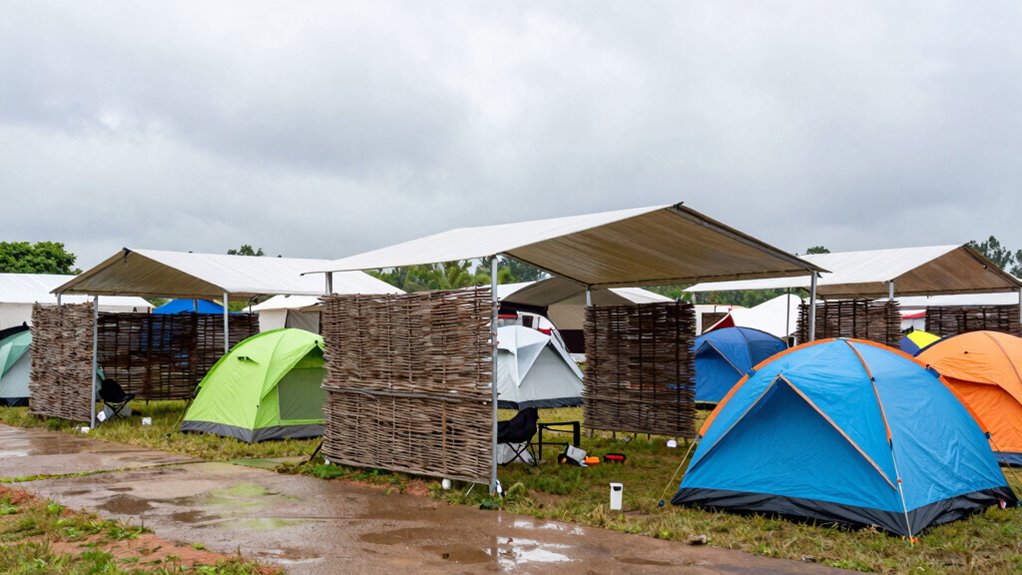
To stay dry and comfortable, choose rain shelters and windbreaks made from durable materials that can withstand the elements. Place them strategically around your campsite to protect your gear and create a safe space. Make sure to secure them well against strong winds to prevent any accidents or damage. Incorporating smart weather monitoring devices can help you anticipate changing conditions and adjust your setup accordingly.
Selecting Durable Materials
Since weather conditions can change unexpectedly during a festival, adding rain shelters and windbreaks made from durable materials is essential for a comfortable and safe setup. Focus on selecting materials with high material durability and weather resistant fabrics to withstand the elements. Look for fabrics that resist tearing, UV damage, and moisture, ensuring your shelter remains reliable throughout the event. Durability in construction also matters—choose sturdy frames and reinforced seams to prevent failure during strong gusts or heavy rain. Investing in high-quality, weather resistant fabrics means you won’t need to replace shelters frequently, saving you time and money. Properly chosen materials keep you protected from unpredictable weather, allowing you to enjoy the festival comfortably regardless of what Mother Nature throws your way. Additionally, considering trusted brands known for their high-quality weather-resistant products can improve your overall setup’s reliability and longevity.
Strategic Shelter Placement
Strategic placement of rain shelters and windbreaks can substantially enhance your festival camping experience by providing essential protection from unpredictable weather. Start by analyzing your campsite layout to identify natural wind corridors or open areas prone to gusts. Use shelter materials like tarps, portable canopies, or lightweight tents to create effective rain shelters in key spots. Position windbreaks, such as portable screens or natural barriers like trees and shrubs, downwind of your tent and communal areas to block gusts. Place rain shelters near main gathering points, cooking stations, and sleeping zones to ensure quick access during sudden downpours. Properly planned shelter placement minimizes exposure, keeps you dry, and creates a safer, more comfortable campsite even when weather turns nasty. Additionally, understanding the importance of weather-resistant setups can help you prepare more effectively for changing conditions.
Securing Against Wind
Wind can quickly turn a festival camping experience uncomfortable or even hazardous, but adding rain shelters and windbreaks considerably enhances your protection. To secure against gusts, focus on effective wind anchoring and tent tie downs. Here are four key tips:
- Use heavy-duty stakes to firmly anchor your rain shelters and windbreaks into the ground.
- Tie down your tents with extra tent tie downs, ensuring all guy lines are taut.
- Position windbreaks strategically around your campsite to block prevailing winds.
- Reinforce tent stakes periodically, especially in loose or sandy soil, to prevent shifting and improve stability.
Arrange Your Campsite for Good Drainage and Wind Safety
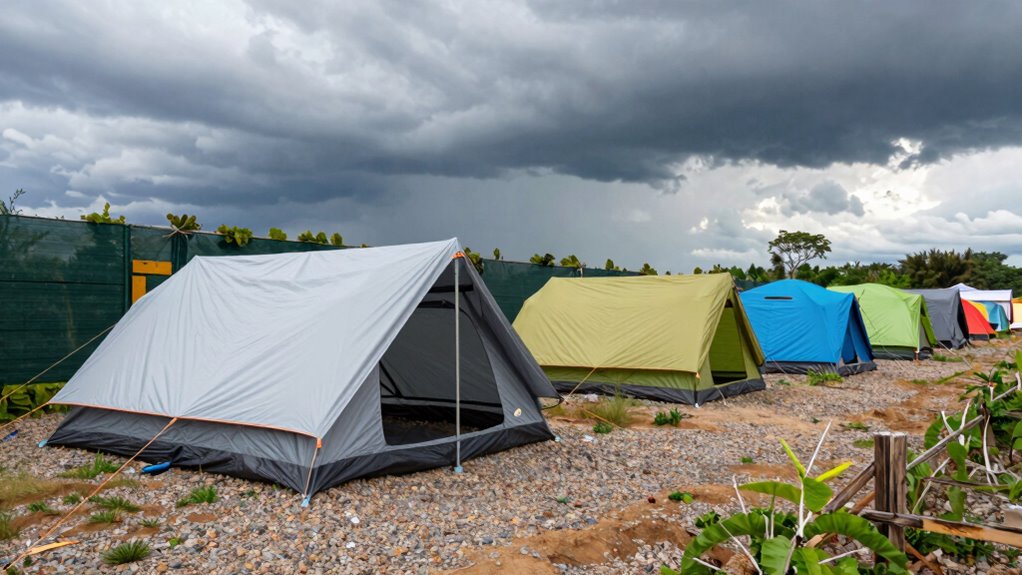
To guarantee a safe and comfortable camping experience, it’s essential to choose a site with proper drainage and good wind protection. Look for a ground slope that directs water away from your tent, ensuring natural drainage keeps your area dry. Avoid low-lying spots prone to accumulating water or areas where water might pool after rain. Position your tent on slightly elevated ground to prevent flooding and promote airflow. Consider the prevailing wind direction; set up your tent with the narrow end facing into the wind to reduce wind pressure. Clear the area of loose debris or branches that could be blown around. Additionally, selecting unique and wicked planters designed for outdoor use can inspire creative terrace gardening, enhancing your outdoor space and providing natural windbreaks. By selecting a site with good drainage and wind safety in mind, you’ll minimize weather-related issues and enjoy a more comfortable camping experience.
Secure Gear to Keep It Dry and Safe
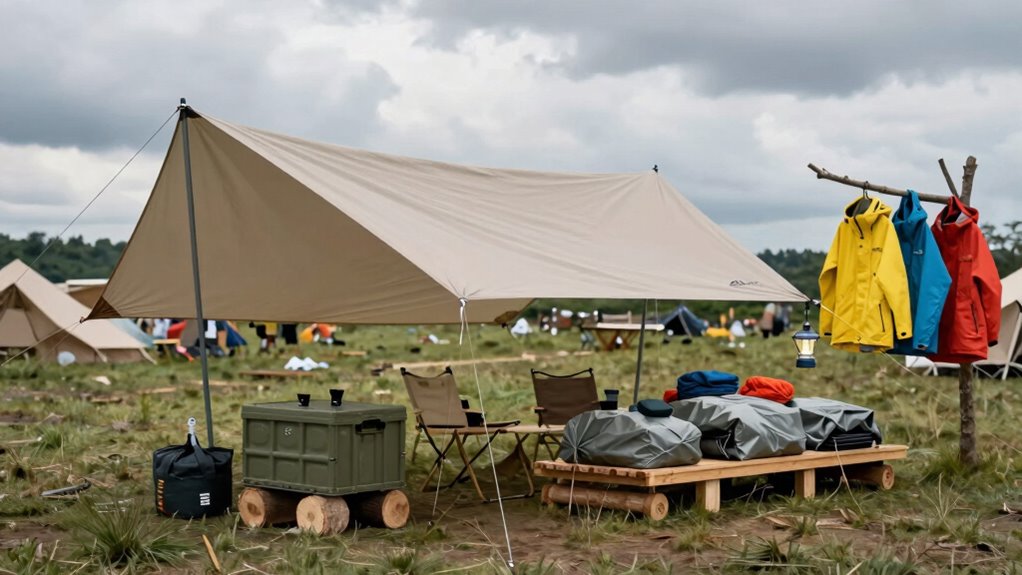
Ensuring your gear stays dry and secure is essential for a trouble-free camping experience. To protect your belongings from rain and moisture, consider these tips:
Keep your camping gear dry and secure for a hassle-free outdoor adventure.
- Use weatherproof gear whenever possible, especially for electronics and clothing.
- Store valuables in waterproof storage containers or dry bags to prevent water damage.
- Elevate your gear off the ground with pallets or hooks to avoid puddles and mud.
- Secure all outdoor equipment with straps or cords to prevent movement in strong winds.
Prepare an Emergency Plan for Bad Weather
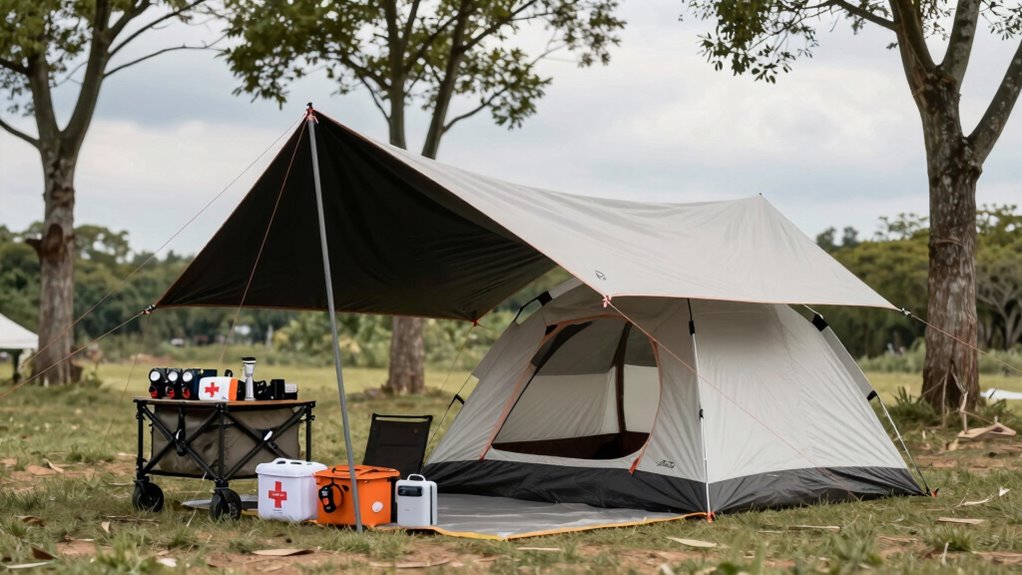
While securing your gear keeps it safe from the elements, it’s equally important to prepare for unexpected bad weather. You should create an emergency plan that includes emergency communication methods like radios or cell phones, ensuring you can stay connected. Also, prioritize first aid preparedness by keeping a well-stocked kit nearby. Consider the following:
| Emergency Communication | First Aid Preparedness |
|---|---|
| Share your location with someone | Know basic first aid skills |
| Have backup power sources | Store supplies in an accessible spot |
| Establish a safety check-in system | Regularly check and replenish supplies |
Having a clear plan helps you respond quickly, reducing panic and injury. Being ready for bad weather keeps everyone safe, giving you peace of mind during your festival adventure.
Frequently Asked Questions
How Can I Tell if a Campsite Is Prone to Flooding?
You can tell if a campsite is prone to flooding by checking its elevation and conducting a drainage assessment. Look for low-lying areas or spots near water sources, as they’re more vulnerable. Use topographical maps or ask locals about flood history. During your visit, observe how water flows after rain—if it pools or runs off quickly, drainage might be poor, increasing flood risk.
What Materials Are Best for Waterproofing Festival Gear?
You should choose gear made from waterproof fabrics like nylon or polyester with a durable waterproof coating. For extra protection, apply sealant options such as silicone spray or seam sealer to your tent, rain gear, and backpacks. These sealants help prevent leaks at seams and fabric fibers. Regularly reapply them to maintain waterproofing, especially after exposure to rain. This way, your gear stays dry and reliable during bad weather at festivals.
How Do I Identify Sudden Weather Changes During a Festival?
You can spot sudden weather changes by paying close attention to the sky and wind patterns. Keep an eye on rain-resistant fabrics that may darken suddenly or become heavier. Use weather alert apps on your phone to receive real-time updates, and listen for distant thunder or changing wind sounds. Staying alert helps you prepare quickly, protecting yourself and your gear from unexpected storms during the festival.
What Are Quick Fixes for Storm-Damaged Tents?
Like a skilled surgeon, you can patch up your storm-damaged tent quickly. Start with tent repair by sealing small tears with waterproof tape or patches. For larger holes or leaks, use tarp solutions—draping a tarp over your tent and securing it with stakes or cords provides instant protection. These quick fixes keep you dry and comfortable, helping you weather the storm until proper repairs are possible.
How Can I Communicate Effectively During Severe Weather Emergencies?
During severe weather emergencies, you should use clear communication strategies like loud calls or whistles to alert others. Keep emergency signaling devices, such as flares or reflective mirrors, handy for visibility. Stay calm and listen for updates, and establish a designated area or signal to gather everyone. By staying proactive and using simple, effective signals, you guarantee everyone’s safety and quick response during stormy conditions.
Conclusion
By choosing your campsite wisely and preparing for bad weather, you create a safe haven amid chaos. Sometimes, a simple rain shelter or well-secured gear can make all the difference when storms roll in unexpectedly. Remember, the best festival memories often come from those moments when you adapt and stay safe. In the end, a little foresight turns unpredictable weather into just another part of your adventure, reminding you that preparedness is your greatest comfort.