
To avoid common mistakes when setting up a portable handwashing station, guarantee it’s placed in visible, high-traffic areas near key spots like restrooms and food vendors. Use water-saving fixtures and regularly monitor water levels to prevent shortages. Keep soap dispensers filled and the station clean, with trash bins nearby for waste. Train staff to handle maintenance issues promptly and ensure supplies are replenished. Following these tips helps maintain hygiene standards—continue to explore more for an effective setup.
Key Takeaways
- Choose visible, accessible locations near high-traffic areas to enhance visibility and promote frequent handwashing.
- Monitor water levels regularly and use water-saving fixtures to prevent shortages and conserve resources.
- Keep soap dispensers filled, stations clean, and conduct routine inspections to maintain hygiene and functionality.
- Provide nearby trash receptacles, empty them frequently, and ensure waste is properly disposed of to support sanitation.
- Train staff or volunteers on operation, troubleshooting, and supply refilling to ensure consistent, safe station performance.
Setting up a portable handwashing station for a festival requires careful planning to guarantee hygiene and compliance with safety standards. You need to ensure that attendees have access to clean water and proper sanitation, all while practicing water conservation. Neglecting these aspects can lead to health risks, violations of regulations, and an overall diminished festival experience. To avoid common mistakes, focus on properly positioning your station, maintaining hygiene, and managing resources efficiently.
First, selecting the right location is crucial. Place the handwashing station in an accessible, high-traffic area near restrooms, food vendors, and gathering points. If it’s inconvenient to find, attendees might skip using it, risking poor hygiene. Also, make sure the station is visible and clearly marked, so people know where to go. Proper placement helps promote frequent use and supports sanitation standards, reducing the spread of germs.
Choose a visible, high-traffic spot near restrooms and food vendors for your handwashing station.
When it comes to water supply, water conservation should be a top priority. Use low-flow faucets or foot pedals to minimize water waste. Regularly monitor water levels and refill tanks as needed to prevent running dry, especially during busy times. Employing water-saving features not only conserves resources but also aligns with environmental responsibilities and safety standards. Remember, overusing water can lead to shortages, making it impossible to maintain hand hygiene throughout the event.
Hygiene maintenance is another critical factor. Keep soap dispensers filled and accessible at all times, and ensure handwashing stations are kept clean and free of debris. Schedule regular inspections to check for leaks, clogs, or malfunctions that could compromise sanitation standards. If the station uses hand sanitizer as an alternative, choose alcohol-based options and replenish them often. Proper sanitation keeps the station effective and prevents the spread of illnesses. Additionally, selecting a high-quality handwashing station can significantly improve hygiene and user experience.
Another common mistake is neglecting waste management. Always set up a nearby trash receptacle for used paper towels, soap wrappers, and other waste. Empty trash cans regularly to prevent overflow, which can quickly become a sanitation hazard. Proper waste disposal complements the handwashing process and maintains a clean environment, reinforcing good hygiene practices.
Finally, train staff or volunteers on how to operate and maintain the station properly. They should know how to troubleshoot issues quickly, refill supplies, and ensure the station stays compliant with safety standards. Educating your team helps prevent accidental oversights that could jeopardize hygiene or safety.
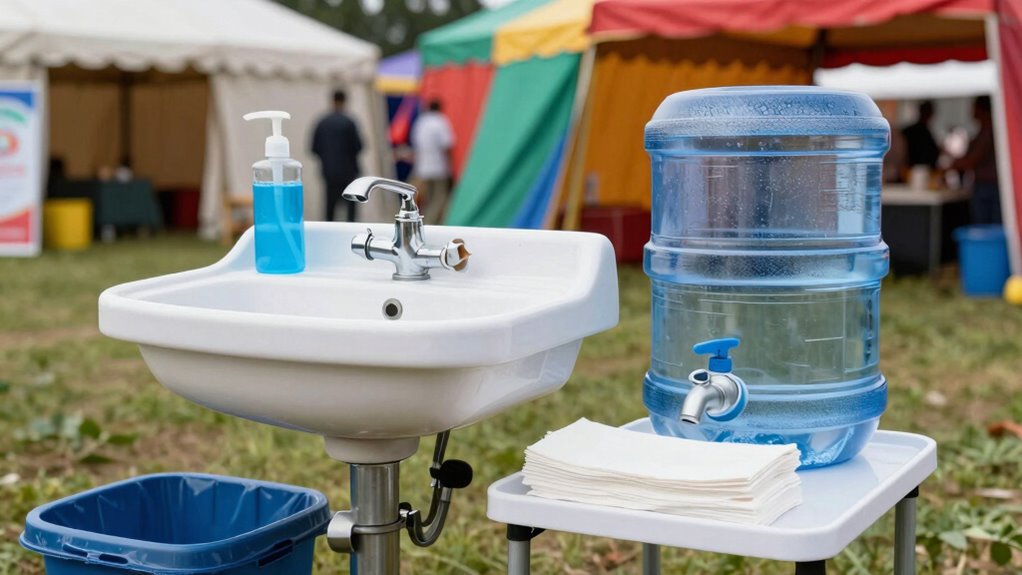
portable handwashing station with water-saving fixtures
As an affiliate, we earn on qualifying purchases.
As an affiliate, we earn on qualifying purchases.
Frequently Asked Questions
How Do I Ensure the Water Supply Stays Clean?
To keep the water supply clean, you should regularly check and replace water filters to prevent contamination. Use high-quality water filtration systems designed for portable stations, and always store water in sanitized, sealed containers. Avoid touching the spout or water reservoir with dirty hands, and keep the station covered when not in use. These steps help prevent contamination and guarantee safe, hygienic handwashing during your festival.
What Are the Best Locations for Setup?
Choose spots that are accessible, visible, and convenient for everyone. Designate accessible spots near restrooms, camping areas, and main pathways to encourage use. Avoid high traffic areas like entrances or crowded zones, which can cause congestion and reduce efficiency. Position your handwashing stations where people naturally pass by, ensuring ease of access and compliance. Proper placement enhances hygiene habits, prevents crowding, and keeps your festival safe and sanitary for all attendees.
How Often Should I Refill the Hand Sanitizer?
You should refill the hand sanitizer regularly, ideally every few hours or when the level drops below half. Keep a close eye on the refill schedule to make certain there’s always enough sanitizer for everyone. Frequent refills prevent the spread of germs and promote hygiene. Make it a habit to check and refill the hand sanitizer often, especially during busy times or after heavy usage, to maintain a clean and safe environment.
Are There Specific Regulations for Portable Stations?
Yes, there are specific regulations for portable stations that you need to follow. You should check local health department requirements and adhere to sanitation standards, which often include proper waste disposal, regular cleaning, and maintenance. Portable regulations may also specify handwashing station placement, water supply, and soap availability. Ensuring compliance helps keep everyone safe and prevents legal issues, so always review the relevant guidelines before setting up your station.
How Do I Prevent the Station From Tipping Over?
Keeping your portable handwashing station stable is like balancing a seesaw—you need proper weight distribution. To prevent tipping, make certain the station has a wide base and evenly distribute weight, especially when filling the water tank. Use stability tips like securing the station to a solid surface or adding sandbags around the base. Regularly check for uneven weight and adjust as needed, so your station stays upright and safe.
festival handwashing station with soap dispenser
As an affiliate, we earn on qualifying purchases.
As an affiliate, we earn on qualifying purchases.
Conclusion
By following this checklist, you guarantee your festival camp has a reliable handwashing station that keeps everyone safe and comfortable. Don’t overlook even small details—think ahead and double-check everything. After all, isn’t your festival experience better when you’re confident in your setup? Avoid common mistakes, stay prepared, and enjoy your time without unnecessary worries. Proper planning makes all the difference—so why risk it? Make cleanliness a priority and camp with peace of mind.
high-traffic outdoor handwashing station
As an affiliate, we earn on qualifying purchases.
As an affiliate, we earn on qualifying purchases.
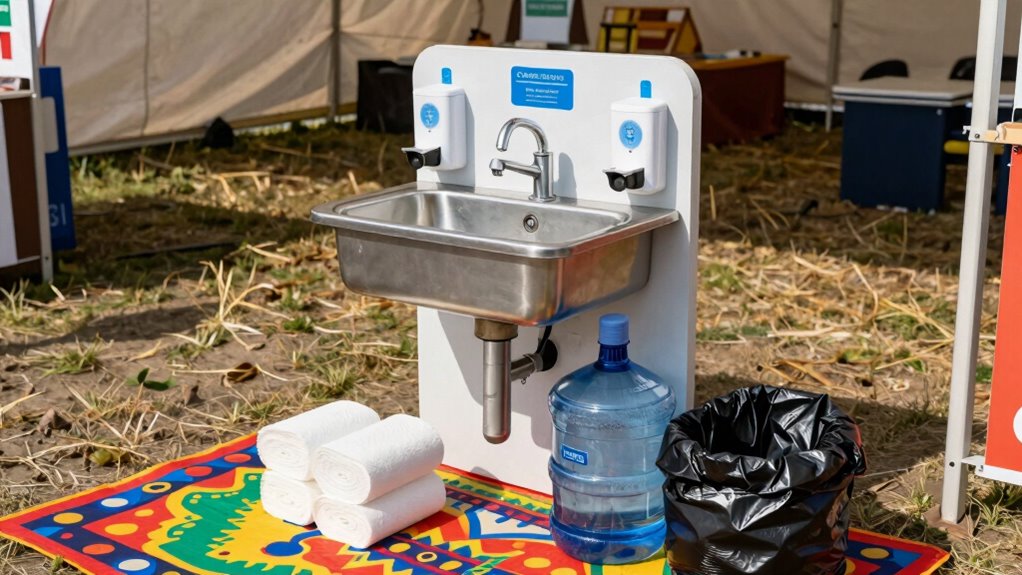
portable handwashing station with trash bin
As an affiliate, we earn on qualifying purchases.
As an affiliate, we earn on qualifying purchases.