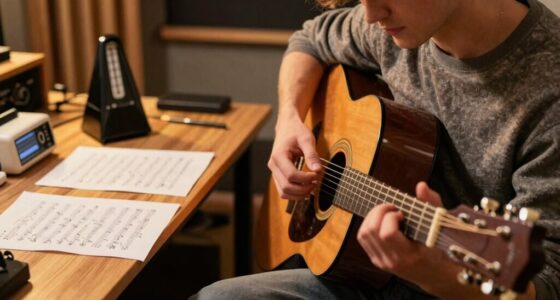
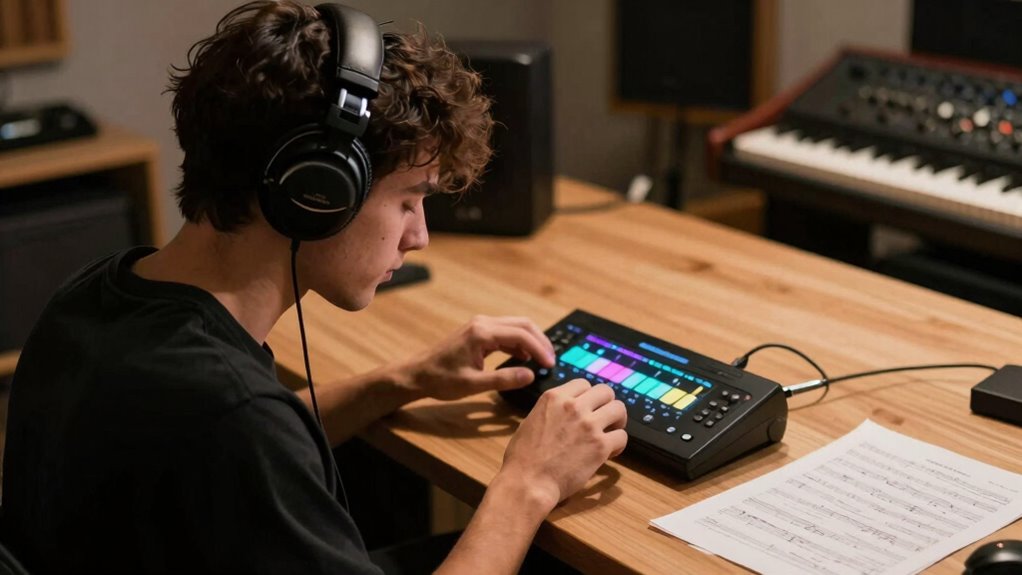

To train your ear faster, develop a consistent daily practice routine that combines focused listening with music theory knowledge. Short, regular sessions help reinforce neural pathways, making it easier to recognize pitches, intervals, and chords. Setting clear goals and tracking your progress keeps you motivated. By integrating theory and practice, you’ll deepen your musical intuition. Keep at it, and you’ll discover even more techniques that can boost your skills as you continue exploring.

Get audio and creator gear delivered free with Prime
- Fast, free delivery on millions of items
- Prime Video, Amazon Music and more included
- Member-only deals all year
Key Takeaways
- Practice daily in short, focused sessions to reinforce neural pathways for pitch and interval recognition.
- Incorporate music theory knowledge to guide targeted listening and improve sound-to-structure understanding.
- Set specific goals and track progress to maintain motivation and measure improvement over time.
- Use singing exercises and active listening to internalize musical elements more efficiently.
- Develop a consistent routine that combines theory and practical ear training for faster, more confident recognition.
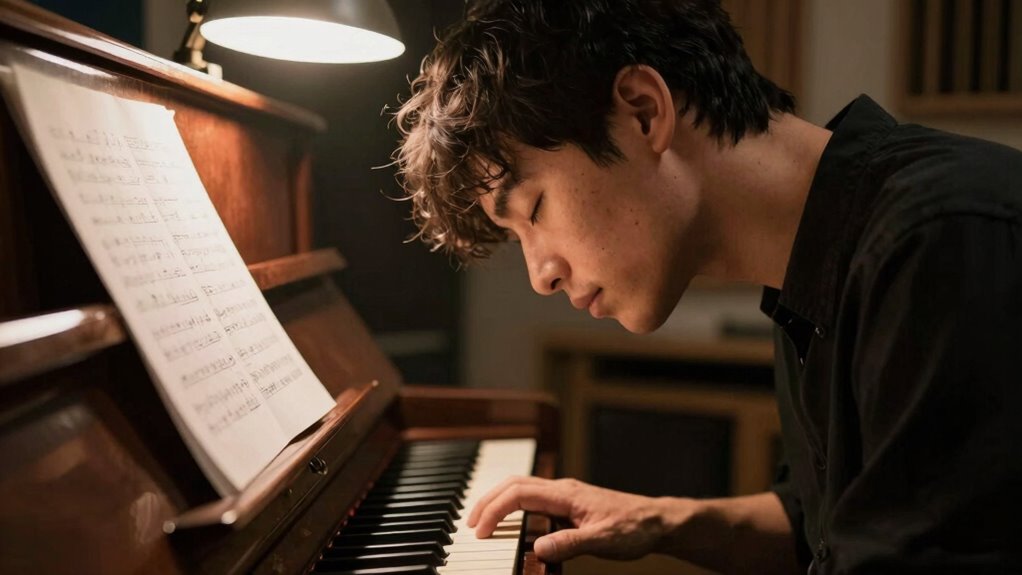
Developing a consistent ear-training habit is vital for musicians aiming to improve their pitch recognition and musical intuition. When you prioritize regular practice, you create a foundation that makes understanding music theory and applying it to real-world playing much easier. Consistency is essential; by dedicating even just a few minutes daily, you reinforce neural pathways that help you identify intervals, chords, and melodies more instinctively. This steady approach accelerates your progress far more than sporadic, lengthy sessions.
You might think about ear training as a skill that improves naturally with time, but without deliberate effort, progress can stall. To truly benefit, you need to embed ear training into your daily routine, making it as natural as tuning your instrument. When you practice consistently, your brain becomes better at recognizing subtle pitch differences and harmonic structures—both vital for mastering music theory. You start to see connections between what you hear and the written notation, which improves your sight-reading and improvisation skills. It’s like building a mental map of sound that helps you navigate complex musical ideas effortlessly.
Moreover, integrating music theory into your ear training amplifies your growth. Understanding scales, chord progressions, and intervals gives your training a purpose. When you know what to listen for, you can focus your practice on specific elements, making it more efficient. For example, if you’re working on recognizing minor chords, your knowledge of music theory guides your listening exercises, sharpening your ear faster. This synergy between theory and practice ensures that your training isn’t just about rote memorization but about truly internalizing musical structures. Recognizing fundamental concepts of sound and music theory can also deepen your appreciation for musical diversity and complexity. Additionally, incorporating music literacy into your routine enhances your overall ability to understand and interpret musical elements more holistically.
Practice consistency also means setting realistic goals and sticking to them. Whether you aim to identify intervals by ear, recognize chord qualities, or transpose melodies, regular effort keeps you engaged and prevents regression. Use of apps, singing exercises, or playing along with recordings can be part of your daily routine. Tracking your progress helps you see how far you’ve come, motivating you to sustain the habit. Over time, your ability to recognize musical elements becomes more automatic, and you start to trust your ear in both practice sessions and live situations. Developing musical literacy as part of your training can further enhance your overall understanding and skills.
Engaging with biodiversity and sustainable practices can also inspire a more mindful and disciplined approach to your musical training, fostering patience and perseverance. Recognizing the fundamental concepts of sound and music theory not only enhances your understanding but also deepens your appreciation for musical diversity and complexity. In the end, the key to faster, more effective ear training is making it a daily habit rooted in a clear understanding of music theory and committed practice consistency. This approach not only hones your pitch recognition but also deepens your overall musical intuition, paving the way for more expressive and confident playing.
As an affiliate, we earn on qualifying purchases.
Frequently Asked Questions
How Long Should Daily Ear-Training Sessions Last?
You should aim for 10 to 15 minutes of daily ear-training to build your musical memory and improve rhythm recognition. Consistency matters more than length, so shorter, focused sessions are more effective. During this time, challenge yourself with different intervals, melodies, and rhythms. Over time, you’ll notice faster recognition, better pitch accuracy, and a stronger overall sense of musical understanding, helping you progress as a musician.
Can Ear Training Improve Pitch Accuracy for Beginners?
Yes, ear training can dramatically improve your pitch accuracy, especially when you focus on developing your musical intuition and tonal recognition. By consistently practicing, you’ll start to hear subtle differences in pitches, making your sense of pitch almost superhuman. This intense focus helps you internalize notes faster, transforming your ability to stay in tune during performances. Over time, your ear will become a finely tuned instrument, vastly enhancing your overall musicianship.
What Tools or Apps Are Best for Ear Training?
You should try apps like Tenuto, Perfect Ear, or Tenor for ear training, especially for musical dictation and interval recognition. These tools offer exercises to improve your pitch accuracy and help you identify intervals quickly. By practicing regularly with these apps, you’ll develop a keener ear, making it easier to recognize musical patterns and improve overall musicianship. Consistent use accelerates your progress in ear training.
How Quickly Can I Expect to See Progress?
You’ll notice progress in just weeks if you practice daily, sharpening your musical intuition and auditory memory. Don’t expect miracles overnight—unless you’re a musical prodigy with a time machine. Consistent ear training hones your skills, making you recognize intervals and chords faster. Before long, you’ll trust your ears more than sheet music, transforming into a musician whose musical intuition guides every note, effortlessly.
Is Ear Training Necessary for All Musical Genres?
Ear training is essential across all musical genres because it enhances your ability to recognize pitch, harmony, and rhythm, regardless of style. It boosts genre versatility by helping you adapt to different musical contexts. Cultural influences shape your ear, making training even more valuable as it deepens your understanding of diverse musical traditions. So, whether you’re into jazz, pop, or classical, ear training accelerates your growth and broadens your musical horizons.
musical interval recognition training tool
As an affiliate, we earn on qualifying purchases.
As an affiliate, we earn on qualifying purchases.
Conclusion
By making ear training a daily habit, you’ll notice your musical skills sharpening faster than you imagined. It’s not just about recognizing notes or chords—it’s about trusting your ear to guide your playing and songwriting. Imagine how confident you’ll feel in every jam session or composition. So, why not start today? Will you let your ears become the secret weapon that propels your musical journey forward? The choice is yours—embrace the habit and see your skills soar.
music theory practice book for musicians
As an affiliate, we earn on qualifying purchases.
As an affiliate, we earn on qualifying purchases.
singing exercises for ear training
As an affiliate, we earn on qualifying purchases.
As an affiliate, we earn on qualifying purchases.
Halloween Picks
halloween
As an affiliate, we earn on qualifying purchases.