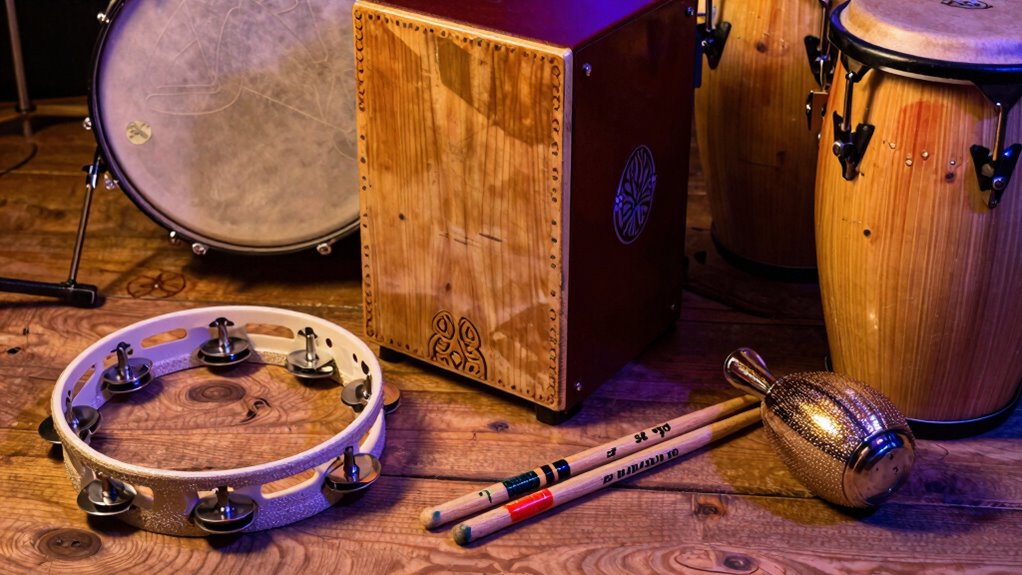

To master the jam band rhythm toolkit, you should be comfortable with five key feels: straight quarter notes, swung grooves, funk-inspired syncopation, shuffle or groove-based patterns, and Latin or Latin-fusion rhythms. These feels help you lock into the band’s groove, respond interactively, and keep the music lively. Developing these feels boosts your improvisational flexibility and overall groove command. Keep exploring, and you’ll discover how these patterns can truly energize your performances.

Get audio and creator gear delivered free — and shop member deals
- Fast, free delivery on millions of items
- Access to Prime Big Deal Days deals on October 6–7
- Prime Video, Amazon Music and more included
Key Takeaways
- Master common groove patterns like funk, blues, shuffle, reggae, and swing to diversify your rhythmic palette.
- Develop a strong sense of pulse and internalize syncopation to lock into the jam’s feel.
- Practice switching seamlessly between feels to adapt dynamically during performances.
- Use subtle accents and ghost notes to add rhythmic interest within each feel.
- Focus on tight coordination with the rhythm section to ensure cohesive and compelling grooves.
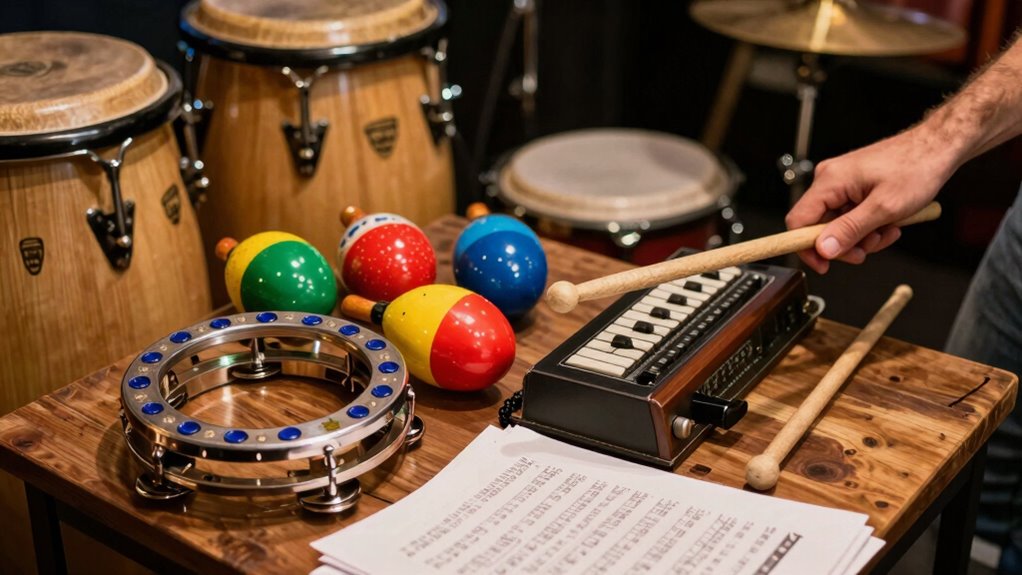
Have you ever wondered how jam bands seamlessly blend improvisation with tight rhythm sections? It’s a skill that requires more than just knowing your scales or chords; it’s about mastering improvisation techniques and understanding groove development. When you’re on stage or jamming with others, you want to feel confident in your ability to adapt and flow naturally. That’s where these core elements come into play, shaping the foundation of a compelling performance.
Improvisation techniques are essential for creating spontaneous, engaging solos that complement the band’s groove. One effective approach is learning how to listen deeply to the rhythm section, allowing your improvisations to groove tightly with the bass and drums. This means developing a sense of space—knowing when to play and when to hold back—and using techniques like motif development, where you take a small idea and explore it through variations. This keeps your improvisation focused and musical, rather than random noodling. Additionally, incorporating call-and-response patterns within your solos can add a conversational feel, making your improvisation more interactive and dynamic. The key is to stay flexible, making decisions on the fly based on what you hear around you, and trusting your ears to guide your phrasing. Developing high-quality sound and tone is also crucial for expressing your ideas clearly and fitting within the band’s sonic landscape.
Groove development is equally essential because it anchors your improvisation within a solid rhythmic framework. To do this, you need to internalize common groove patterns used in jam band music. Practice locking into a steady pulse, feeling the quarter notes and syncopated accents that make the groove compelling. This involves not just playing the right notes but also emphasizing the right beats, adding subtle dynamics and accents that give the groove a sense of movement and life. Incorporate rhythmic variations like ghost notes, slides, or muted strums to add texture and keep the groove interesting. As you develop your groove, experiment with different rhythmic feels—funky, bluesy, or groove-heavy—and learn how to switch seamlessly between them during a jam. This versatility allows you to adapt quickly, maintaining tightness while still leaving space for improvisation.
As an affiliate, we earn on qualifying purchases.
Frequently Asked Questions
How Can I Improvise Using the Jam Band Rhythm Toolkit?
To improvise using the jam band rhythm toolkit, focus on applying syncopation exercises to add unexpected accents and complexity. Feel free to experiment with groove development by varying your rhythm patterns and dynamics, creating a compelling flow. Trust your ear, stay loose, and listen to the band. This approach helps you stay in the pocket while improvising, making your solos more engaging and rhythmically interesting.
What Are Common Mistakes Beginners Make With Jam Band Rhythms?
You often struggle with timing issues and syncopation errors when playing jam band rhythms. To improve, stay locked into the groove by listening carefully and counting beats consistently. Avoid rushing or dragging, and practice with a metronome. Focus on internalizing the rhythm, so you can naturally feel the syncopation without overthinking. Consistent practice helps you develop better timing and reduces common mistakes, making your playing more tight and groove-oriented.
Which Songs Best Showcase the Toolkit’s Techniques?
You should try songs like “Shakedown Street” by the Grateful Dead and “Cissy Strut” by The Meters. These tracks showcase funk grooves and shuffle patterns that highlight the toolkit’s techniques. Playing along with these songs helps you develop groove, timing, and feel. Focus on locking into the rhythm and experimenting with different feels to truly master the toolkit’s concepts.
How Do I Develop My Own Unique Jam Band Rhythm Style?
To develop your own jam band rhythm style, focus on experimenting with rhythm variation and groove development. Play around with different timing, accents, and syncopation to find what feels natural and expressive for you. Listen to diverse artists, then incorporate those influences into your playing. Practice improvising within grooves, and don’t be afraid to take risks—your unique rhythm style will emerge through consistent exploration and personal expression.
What Equipment Helps Improve Rhythm Practice for Jam Band Playing?
Back in the day, you’d use a metronome app or a drum machine to sharpen your timing. These tools help you stay locked in with the groove, essential for jam band rhythm. Use a metronome app for subtle tempo adjustments, and a drum machine to experiment with different beats and fills. Together, they boost your ability to maintain consistent rhythm and develop your unique style.
As an affiliate, we earn on qualifying purchases.
Conclusion
Mastering these five feels transforms your jam sessions into a vibrant tapestry of sound. Think of it like adding colors to a canvas—you bring your own unique brushstrokes, shaping every moment into something alive and unforgettable. I remember jamming with a friend, switching feels mid-song; the energy soared, and suddenly, we were part of a musical story that only those feels could tell. Embrace these rhythms, and let your music truly come alive.
As an affiliate, we earn on qualifying purchases.
As an affiliate, we earn on qualifying purchases.
Fall Picks
fall essentials
As an affiliate, we earn on qualifying purchases.