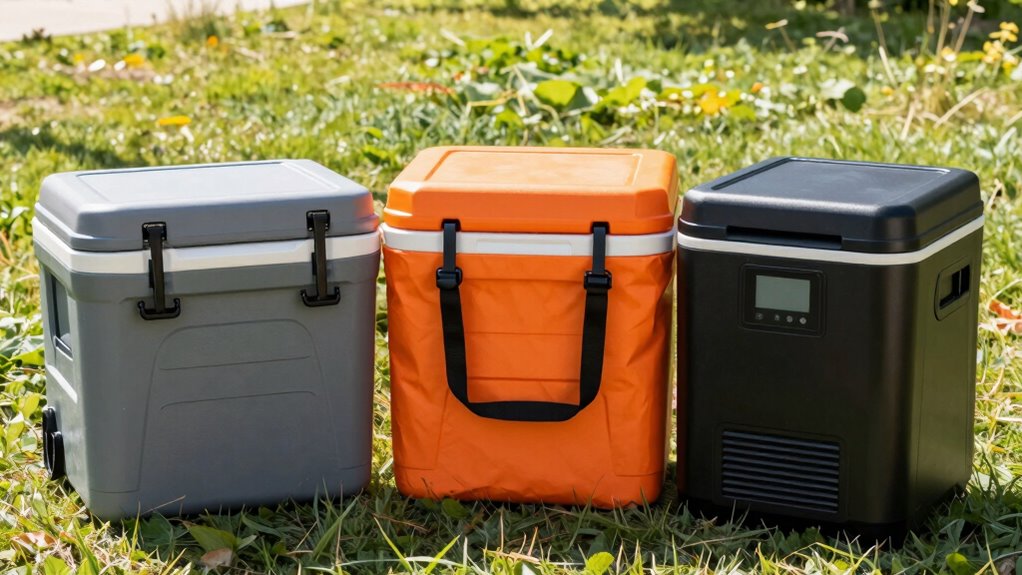

When choosing between hard, soft, and powered coolers, consider how long you’ll need to keep items cold and how portable you want the cooler to be. Hard coolers are best for multi-day trips with heavy insulation, while soft coolers are lightweight and great for short outings. Powered coolers offer precise temperature control for frequent use or perishable items. Keep your activity level, duration, and transport needs in mind to find the perfect fit for your adventures.

Get audio and creator gear delivered free with Prime
- Fast, free delivery on millions of items
- Prime Video, Amazon Music and more included
- Member-only deals all year
Key Takeaways
- Consider trip duration: long trips favor hard coolers, short outings suit soft coolers, and frequent needs benefit from powered coolers.
- Assess portability: lightweight soft coolers are ideal for easy carrying, while hard and powered coolers offer durability and features for transport.
- Match insulation needs: long-lasting ice retention requires hard or powered coolers, whereas soft coolers are suitable for shorter periods.
- Evaluate power requirements: powered coolers need electricity, making them ideal for frequent, controlled cooling; others are manual.
- Determine activity type: outdoor adventures, daily errands, or medical needs influence the best cooler type based on durability, portability, and features.
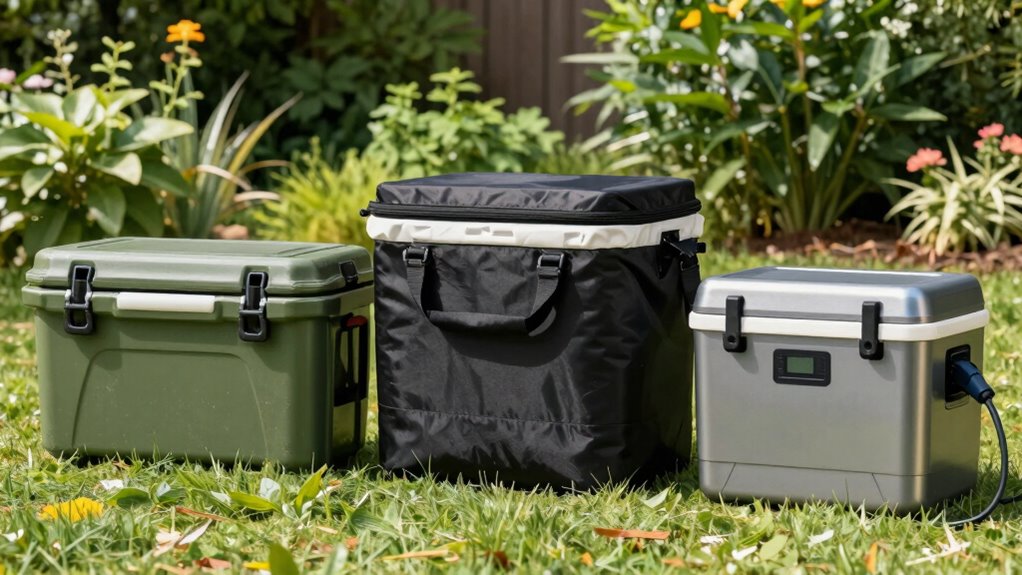
Are you struggling to choose the right cooler for your needs? Picking the perfect cooler depends on understanding how different options suit your activities and priorities. First, consider the insulation types. Hard coolers often feature thick foam insulation, making them excellent for long-lasting cold retention. They’re designed to keep ice frozen for days, which is perfect if you’re planning a multi-day camping trip or a weekend festival. Soft coolers usually have less insulation, often made with lightweight materials and fewer layers, so they’re better for short outings where you don’t need to keep items cold for extended periods. Powered coolers, on the other hand, utilize advanced refrigeration technology, but their insulation types vary. They typically have high-quality insulation combined with their cooling system to maintain consistent temperatures and are ideal when you need reliable cooling over a long period. Additionally, understanding the insulation types can help you determine how well the cooler will perform based on your specific needs. The materials used in different coolers also influence their durability and performance, making this an important aspect to consider. Moreover, considering the cooler design can impact how well it maintains temperature and how easy it is to use in various environments.
Portability considerations play a huge role in your decision. Hard coolers tend to be bulkier and heavier, especially when filled with ice and supplies, which can make them less convenient to carry around. However, many models include sturdy handles and wheels, helping to reduce the strain. Soft coolers are lightweight and easy to carry, making them a great choice for day trips, picnics, or activities where quick setup and transport matter. Their flexible design allows them to fit into tight spaces or be packed into larger bags easily. Powered coolers are generally heavier because of their electrical components and power sources, like batteries or adapters. While they might require more effort to move initially, their convenience in maintaining a consistent temperature often outweighs the extra weight, especially if you’re traveling via vehicle or have access to power outlets. In addition, the transportation process can be simplified with models that include features like telescoping handles or wheels. When choosing a cooler, also consider how frequently you plan to move it and whether portability features are a priority for your activities.
Think about how long you’ll need to keep your items cold. If your trip lasts several days, a hard cooler with superior insulation might be your best choice. For shorter excursions or casual outings, soft coolers offer sufficient insulation for a few hours to a day, and their portability makes packing and carrying effortless. If you’re frequently on the go and want precise temperature control, powered coolers could be worth the investment, especially if you’re transporting perishable items or medications. The key is matching your cooling needs with your activity level, how much weight you’re willing to carry, and how long you need the cold to last. By evaluating insulation types and portability considerations carefully, you can select a cooler that perfectly complements your plans without unnecessary hassle.
hard cooler with wheels for camping
As an affiliate, we earn on qualifying purchases.
As an affiliate, we earn on qualifying purchases.
Frequently Asked Questions
What Is the Typical Lifespan of Each Cooler Type?
The typical lifespan varies by cooler type, primarily influenced by cooler material and insulation quality. Hard coolers usually last 5-10 years, thanks to durable materials like rotomolded plastic and thick insulation. Soft coolers may last 3-5 years, as their fabric and zippers wear out faster. Powered coolers can last 3-7 years, depending on battery life and maintenance. Proper care and high-quality insulation extend each cooler’s longevity.
How Do Maintenance Requirements Differ Among Cooler Types?
You’ll find that maintenance requirements vary by cooler type. Hard coolers need periodic cleaning and seal checks for best temperature regulation, while soft coolers demand less upkeep but may need fabric cleaning. Powered coolers require regular battery checks and filter replacements, ensuring smooth operation for consistent temperature regulation. Overall, soft coolers offer greater user convenience with minimal maintenance, whereas powered coolers need more frequent attention to maintain their performance and temperature control.
Are Certain Coolers More Eco-Friendly Than Others?
Some coolers are more eco-friendly than others, especially if they use eco-friendly materials like recycled plastics or biodegradable insulation. Hard coolers often last longer, reducing waste and making recycling easier at the end of their lifespan. Soft coolers may be made with sustainable fabrics, but their shorter lifespan can impact eco-friendliness. Powered coolers consume electricity, so choosing energy-efficient models and exploring recycling options for batteries can help lessen environmental impact.
Which Cooler Types Are Best for Long-Term Storage?
Think of your cooler as a fortress guarding your perishables. For long-term storage, hard coolers excel because their superior insulation quality and thicker walls keep ice retention at its peak longer. Soft coolers, while portable, lose ice faster, making them less ideal for extended periods. Powered coolers can be effective, but depend heavily on power sources and may not match the insulation strength of high-quality hard coolers.
How Do Weight and Portability Vary Across Cooler Options?
You’ll find that soft coolers are the lightest and most portable, making them perfect for quick trips or light loads. Hard coolers tend to be heavier but offer better insulation, which can influence weight over time, especially when fully packed. Powered coolers vary widely in weight depending on size and features. When comparing, consider insulation effectiveness and price, as higher insulation often adds weight, and portability may be impacted by cost and design features.
As an affiliate, we earn on qualifying purchases.
Conclusion
Choosing the right cooler is like picking the perfect boat for a trip—each has its strengths for different journeys. I once brought a soft cooler on a day hike, and it packed easily but struggled to keep ice overnight. Now, I opt for a powered cooler for longer trips, ensuring my drinks stay icy and fresh. Think about your adventure’s length and needs; the right cooler will keep your cool, no matter the ride.
powered portable cooler for vehicles
As an affiliate, we earn on qualifying purchases.
As an affiliate, we earn on qualifying purchases.
insulated cooler for multi-day trips
As an affiliate, we earn on qualifying purchases.
As an affiliate, we earn on qualifying purchases.
Halloween Picks
halloween
As an affiliate, we earn on qualifying purchases.