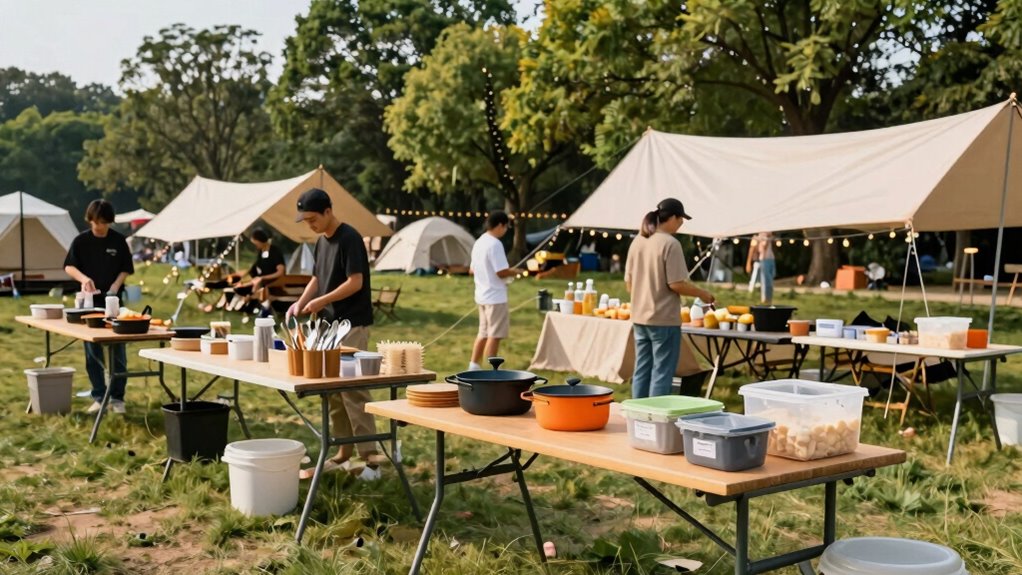

To prevent chaos in your festival camp kitchen, create designated zones for prep, cooking, and cleaning, and use clear containers with labels for ingredients and utensils. Choose durable, stackable gear to save space and plan meals that share ingredients to streamline cooking. Keep trash bins nearby and clean surfaces immediately after use. Maintaining organization and cleanliness makes your cooking smoother and more enjoyable. Stay with us to discover simple tips that can transform your camp kitchen into a well-oiled system.
Key Takeaways
- Organize your camp kitchen into zones: prep, cooking, and cleaning for efficiency.
- Use labeled, stackable containers to store ingredients, spices, and utensils clearly.
- Plan simple recipes with shared ingredients to streamline meal prep and reduce clutter.
- Keep cleaning supplies and trash bins close to work areas for quick disposal and hygiene.
- Maintain a clutter-free space by cleaning surfaces immediately and regularly organizing supplies.

Yorkenbe Camp Kitchen Organizer, High Capacity Camping Cooking Utensils Bag, with Hanging Hooks and Paper Towel Holder, Multi-pocket Waterproof Portable Storage for BBQ Outdoor Cooking Essentials
【High Capacity & Multifuctional Storage】4x sleeve pockets for organizing cooking utensils ,2x sleeve pockets to store plates or…
As an affiliate, we earn on qualifying purchases.
As an affiliate, we earn on qualifying purchases.
Why a Clutter-Free Camp Kitchen Makes Festival Cooking Easier
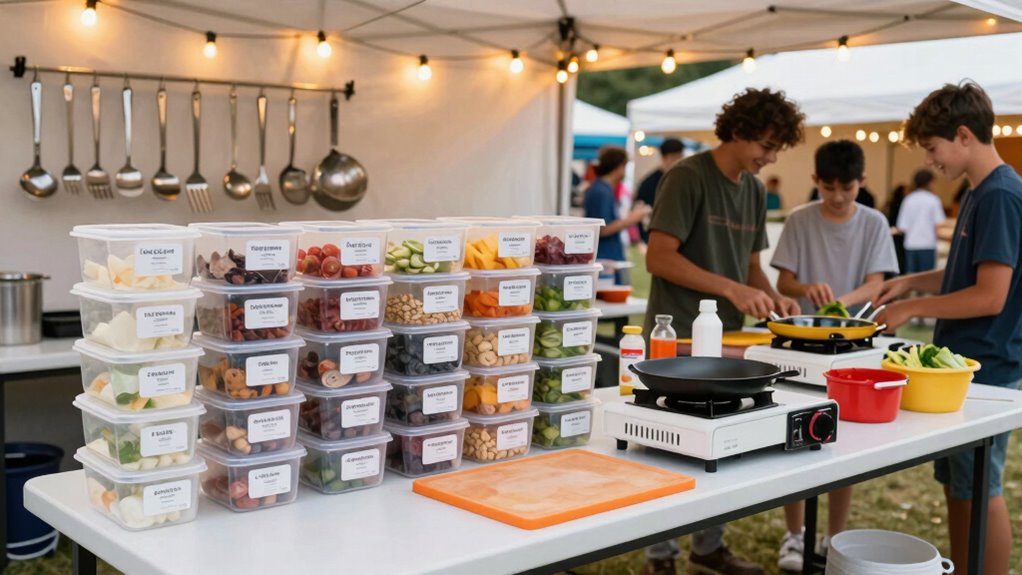
A clutter-free camp kitchen streamlines your festival cooking experience by making everything easier to find and access. When your space is organized, meal planning becomes simpler because you can see all your ingredients at a glance. Proper ingredient storage prevents spills and spoilage, saving time and reducing waste. With everything in its designated spot, you won’t waste precious festival time searching for utensils or spices. This setup also helps you stay efficient during busy cooking moments, ensuring you can prepare meals quickly and safely. A tidy kitchen boosts your confidence, letting you focus on enjoying the festival instead of worrying about chaos. Overall, maintaining a clutter-free space makes your entire cooking process smoother, more enjoyable, and less stressful, especially when you use easy document management techniques to keep your supplies organized.

K HOME VT Collapsible Silicone Food Storage Container Set (INDIGO)
K-HOME VT COLLAPSIBLE SILICONE FOOD STORAGE CONTAINER SET OF 8.
As an affiliate, we earn on qualifying purchases.
As an affiliate, we earn on qualifying purchases.
Designing Zones and Storage Solutions for Your Camp Kitchen
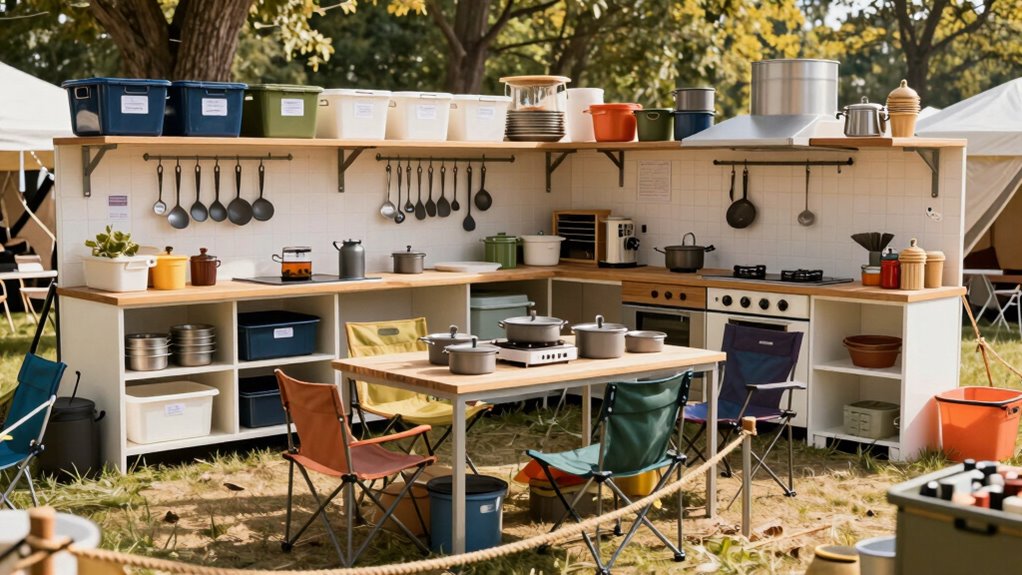
Organizing your camp kitchen into specific zones and selecting the right storage solutions keeps everything within reach and simplifies your cooking process. Proper zone design helps you work efficiently, reducing chaos. Focus on areas like prep, cooking, and cleaning, and assign each a dedicated space. Use container labeling so you know exactly where utensils, spices, and ingredients go. For example:
Organize your camp kitchen into zones with labeled containers for easy, efficient cooking.
- Allocate a utensil zone with designated holders for spatulas, tongs, and spoons, ensuring easy utensil placement.
- Use clear containers with labels for dry goods, spices, and snacks to keep everything visible and accessible.
- Designate a cleaning zone with trash bags and dishwashing supplies close by to streamline cleanup.
- Incorporate efficient organization techniques to maximize space and minimize clutter in your camp kitchen.
These strategies keep your camp kitchen organized, saving time and reducing frustration.

Sea to Summit Camp Kitchen 6-Piece Clean-Up Kit, Yellow
6-piece clean up kit includes a kitchen sink, pot scrubber, soap, cleaning towel, and drying towel, that all…
As an affiliate, we earn on qualifying purchases.
As an affiliate, we earn on qualifying purchases.
Selecting Gear and Containers to Keep Your Camp Kitchen Organized
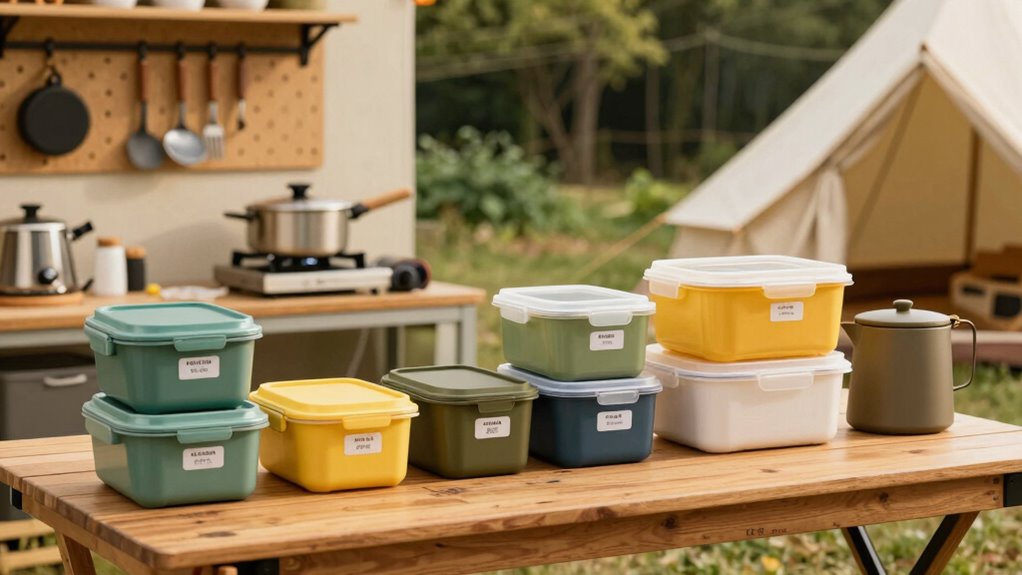
Choosing the right gear and containers is essential for keeping your camp kitchen tidy and efficient. Focus on camping utensil organization by selecting stackable, durable containers that fit your needs. Use clear containers with secure lids to prevent spills and make it easy to find ingredients quickly. Incorporate container labeling techniques—applying labels or color-coding to identify contents at a glance helps prevent mix-ups. Consider small bins for spices, utensils, and cleaning supplies, keeping everything accessible yet contained. Invest in versatile gear like collapsible bowls and multi-purpose utensils to save space. Well-chosen containers and thoughtful organization make meal prep smoother and cleanup faster, so you can focus on enjoying the festival instead of hunting for supplies. Additionally, understanding the science behind storage solutions can help you select the most effective options for your needs.
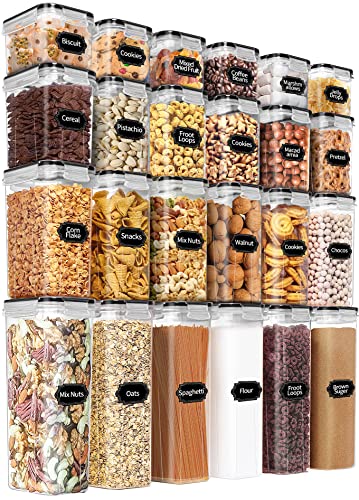
PRAKI Airtight Food Storage Containers Set with Lids – 24 PCS, BPA Free Kitchen and Pantry Organization, Plastic Leak-proof Canisters for Cereal Flour & Sugar – Labels & Marker
Bundle Set: This kitchen & pantry organizers and storage set comes with 24 containers, they are inlaid together,…
As an affiliate, we earn on qualifying purchases.
As an affiliate, we earn on qualifying purchases.
Creating an Easy Workflow for Cooking and Cleanup
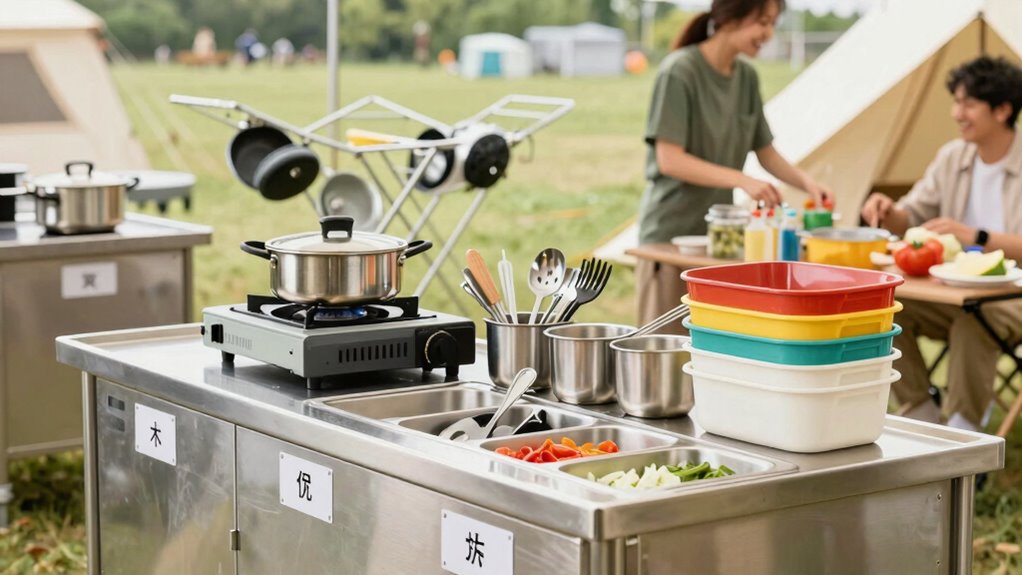
Creating an efficient workflow makes cooking and cleanup at your camp easier and less stressful. By planning your meal prep and organizing your supplies, you save time and energy. Using smart cleanup strategies guarantees you’re ready for the next meal without hassle. Incorporating modern life principles can help streamline your camping routines and improve overall convenience.
Streamlined Meal Prep
To make meal prep at your festival camp more efficient, establishing a clear workflow is essential. Good menu planning and streamlined food prep help save time and reduce stress. Start by choosing simple recipes that share ingredients to minimize prep work. Next, organize your ingredients and tools in advance, so everything is ready to go. Finally, prepare ingredients in stages—chop, marinate, or pre-cook as needed—so cooking flows smoothly. Incorporating eco-friendly handmade tools can also enhance your experience and reduce waste during your festival stay.
Efficient Cleanup Strategies
Streamlining cleanup at your festival camp starts with establishing an efficient workflow that minimizes mess and saves time. Begin with clear dishwashing techniques: rinse dishes immediately after use, then wash in hot, soapy water, and dry or air-dry promptly. Keep soiled dishes separate from clean ones to avoid cross-contamination. Implement a designated trash area close to your cooking station, and use multiple bins or bags for recyclables, compost, and waste. Regularly empty trash to prevent overflow and odors. Set a routine for quick cleanup after each meal—clear plates, wipe surfaces, and sort trash—so messes don’t pile up. This organized approach keeps your camp tidy, reduces stress, and makes your overall festival experience more enjoyable. Utilizing performance-focused gear and tools can also help make cleanup faster and more efficient, allowing you to spend more time enjoying the event.
Tips to Keep Your Camp Kitchen Clean During the Festival

Keeping your camp kitchen clean during the festival is essential for safety and convenience. Staying organized prevents pests and keeps your cooking area safe. Here are three tips:
- Clean as you go—wipe surfaces after preparing campfire snacks to prevent crumbs and spills from attracting critters.
- Keep beverage organization simple by using labeled containers or coolers to avoid spills and clutter.
- Dispose of trash frequently, especially food wrappers and leftover scraps, to maintain hygiene and avoid odors.
- Incorporate free floating storage solutions to maximize space and reduce clutter in your camp kitchen.
Fixing Common Clutter Problems in Your Camp Kitchen
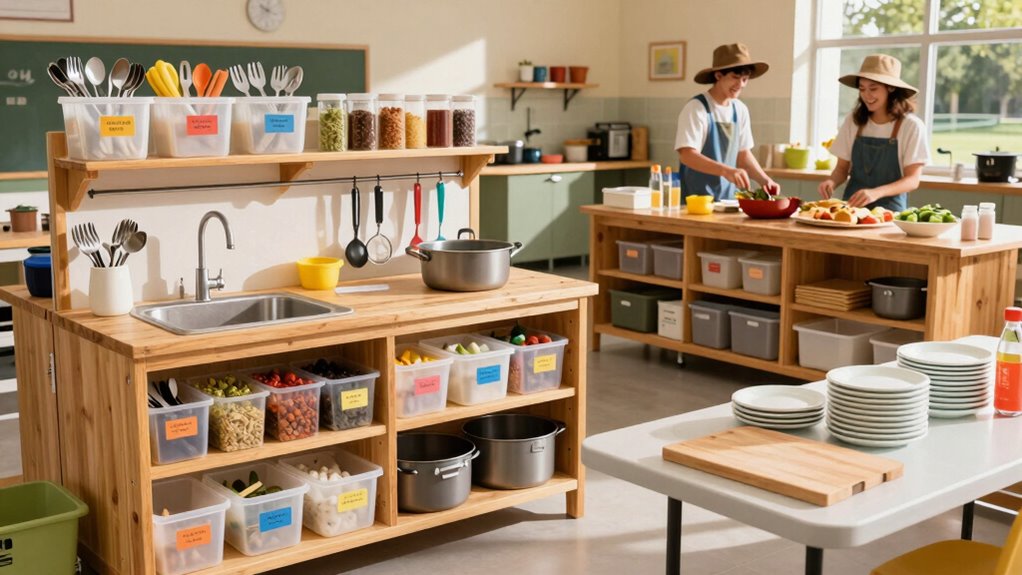
Even with good habits, clutter can quickly take over your camp kitchen, making it harder to cook and increasing the risk of pests. Countertop clutter often occurs when utensils, spices, or food items pile up without a designated spot. To fix this, designate specific containers or zones for frequently used items, and put everything back immediately after use. Misplaced utensils are another common problem; keep a utensil holder nearby and develop a habit of returning tools to their place. Regularly clearing your counters and organizing your supplies prevents chaos and saves time. Using stackable containers and labeled bins can also help keep everything neat and accessible. Staying consistent with these habits ensures your camp kitchen remains functional and clutter-free throughout the festival. Incorporating effective organization techniques can further streamline your setup and maintain order.
Frequently Asked Questions
How Far in Advance Should I Plan My Camp Kitchen Setup?
You should plan your camp kitchen setup at least a week in advance. This gives you enough time for meal prep, guaranteeing ingredients are fresh and organized. Focus on utensil organization by grouping tools together and packing them systematically. Planning early helps you avoid last-minute stress, ensures everything is ready, and keeps your cooking smooth and enjoyable during the festival. Proper preparation makes your camp kitchen efficient and chaos-free.
What Are the Best Materials for Durable Camp Storage Containers?
For durable camp storage, opt for high-quality plastic containers like polyethylene or polypropylene, which offer excellent container durability and resist impact. Look for airtight, stackable designs to maximize camp storage space and keep your gear organized. Rubber seals and sturdy lids ensure your supplies stay secure and dry, even in rough conditions. Avoid flimsy materials, and prioritize containers made specifically for outdoor use to maintain longevity and prevent leaks or damage.
How Do I Prevent Pests From Accessing My Camp Kitchen?
To prevent pests from accessing your camp kitchen, use pest-proof storage containers made from wildlife deterrents materials. Store all food in airtight, durable containers and keep them sealed tightly. Clean up crumbs and spills promptly, and dispose of trash away from your campsite. Elevate storage off the ground if possible. These steps create a barrier that deters pests and keeps your food safe, ensuring a chaos-free camping experience.
What Safety Precautions Should I Consider When Organizing Cooking Gear?
When organizing your camp cooking gear, you should prioritize safety by keeping a fire extinguisher nearby and ensuring all equipment is in good condition. Store food securely to prevent contamination and avoid cross-contact. Clear your workspace of clutter to prevent accidents, and always follow proper handling procedures for hot items. By doing so, you minimize risks of fire, food contamination, and injuries, making your camping experience safer and more enjoyable.
How Can I Adapt the System for Larger Festival Groups?
To adapt your system for larger festival groups, focus on group coordination by assigning specific roles and responsibilities. Use resource allocation wisely by designating designated cooking stations and shared supplies to prevent confusion. Encourage clear communication and regular check-ins to make certain everyone knows their tasks. This organized approach minimizes chaos, keeps everyone safe, and ensures smooth meal preparation, even with a bigger crowd.
Conclusion
With a simple system in place, chaos becomes a thing of the past. But the real test begins once the festival starts—will your organization hold up under the pressure? Keep your zone clear, stay on top of cleanup, and watch as your camp kitchen transforms into a smooth-running hub. The secret to stress-free festival cooking isn’t just in the design—it’s in your ability to stick with it. Ready to see how far this system can take you?