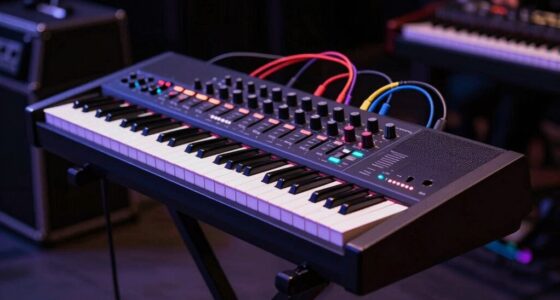
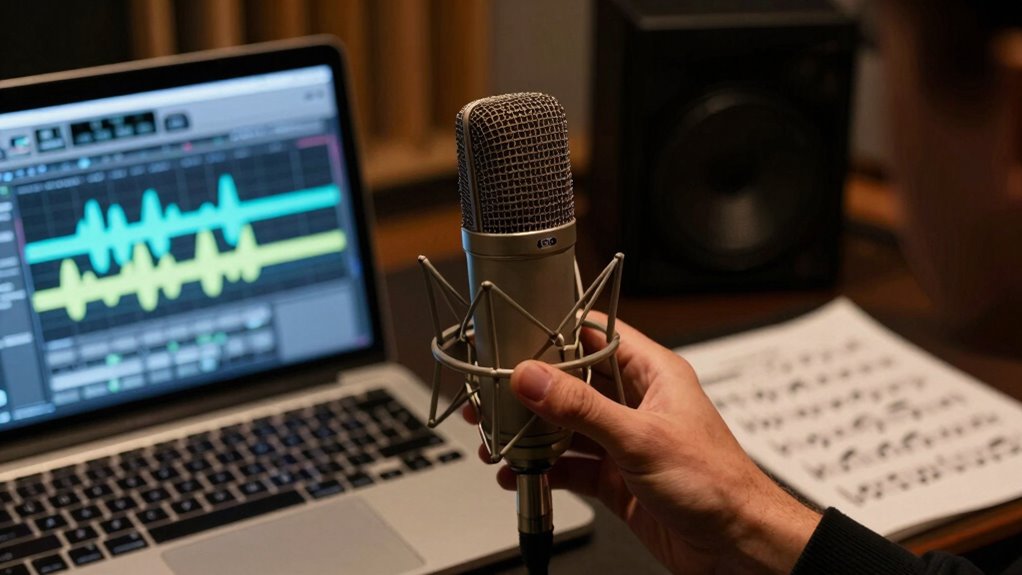
To transcribe live solos step-by-step, start by listening at a slower speed using audio tools that preserve pitch, focusing on small sections like phrases or measures. Pause frequently, hum or sing along, and identify key melodic ideas, rhythms, and accents. Break difficult passages into manageable parts and verify your work by cross-referencing with sheet music or other recordings. By practicing this way, you’ll sharpen your ear and deepen your musical understanding—keep going to discover more effective techniques.

Get audio and creator gear delivered free — and shop member deals
- Fast, free delivery on millions of items
- Access to Prime Big Deal Days deals on October 6–7
- Prime Video, Amazon Music and more included
Key Takeaways
- Use audio software to slow down recordings without altering pitch for clearer listening.
- Break the solo into small sections, focusing on one phrase at a time for accuracy.
- Hum or sing along to internalize phrasing and melodic ideas before writing them down.
- Analyze rhythmic details and note accents to capture the groove and feel accurately.
- Verify transcriptions by cross-referencing with sheet music or other recordings for precision.
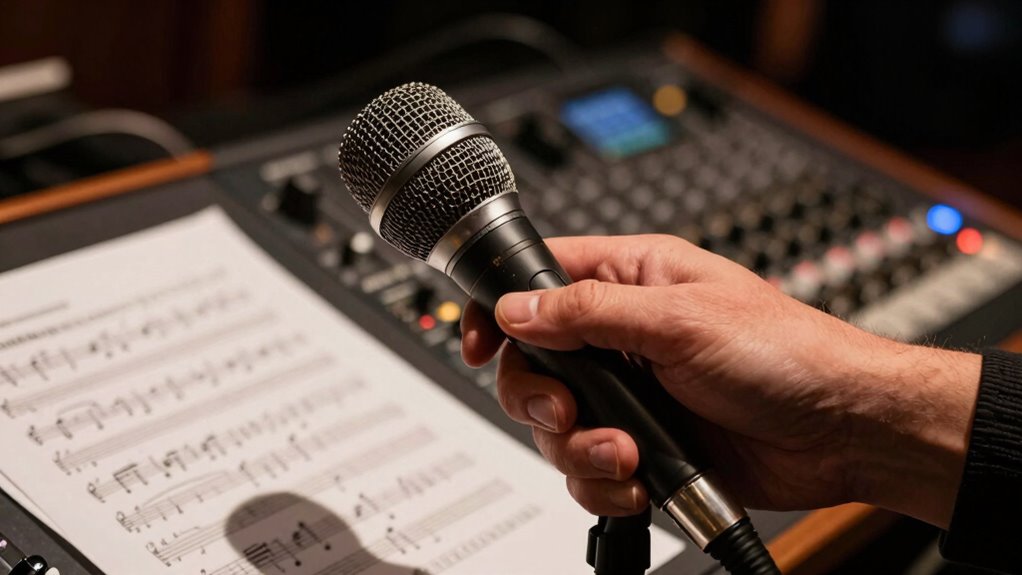
Transcribing solos from live recordings is a powerful way to improve your improvisation skills and deepen your understanding of musical phrasing. It’s more than just figuring out notes; it’s about immersing yourself in the language and feel of the music. To get the most out of this process, you need effective practice techniques and reliable listening tools. These tools help you slow down recordings without losing clarity, allowing you to catch every nuance. Using audio software or apps that support variable speed playback makes it easier to dissect complex passages. As you listen, focus on isolating small sections, such as a few measures or a single phrase, rather than trying to transcribe entire solos at once. This approach keeps your mind focused and reduces frustration.
Start by playing the recording at a slower tempo. Many digital tools allow you to decrease speed while maintaining pitch, which is essential for catching fast runs or subtle articulations. As you listen repeatedly, try to identify the key melodic ideas or motifs. Don’t just passively listen; actively engage with the music by humming or singing the lines. This vocalization helps internalize the phrasing and makes it easier to replicate on your instrument later. Use your practice techniques to break down difficult sections into smaller chunks, repeating them until you can sing or play them confidently. Consistent repetition is key to internalizing the language of the solo.
Pay close attention to the rhythmic feel and phrasing. It’s tempting to focus solely on pitch, but the groove and timing are equally important. Use your listening tools to slow down the recording and analyze how the musician accents notes or sustains certain phrases. Write down the transcribed notes and rhythms as you go, but don’t be afraid to make educated guesses if something isn’t clear. Cross-reference your work with sheet music or other recordings to verify accuracy, but trust your ear first. Developing your ear training skills is essential for more accurate transcription and musical growth. Over time, you’ll develop a sharper ear for subtle differences and a more intuitive sense of musical vocabulary.
Incorporating these techniques into your practice routine helps you become more efficient at transcribing solos. With patience and persistence, you’ll notice your improvisation improve, your phrasing become more expressive, and your overall musical understanding deepen. Remember, transcribing from live recordings isn’t just about copying notes; it’s about immersing yourself in the language of jazz or any improvisational style, enriching your playing with every phrase you decode.
audio slow down software for musicians
As an affiliate, we earn on qualifying purchases.
As an affiliate, we earn on qualifying purchases.
Frequently Asked Questions
What Equipment Is Best for High-Quality Transcription?
For high-quality transcription, you need good equipment like a quality audio interface or digital recorder to capture clear sound. Use headphones with noise cancellation to focus on the music. A computer with audio editing software helps isolate and slow down recordings for easier transcribing. With precise audio, you can accurately convert solos into music notation, making the process smoother and more accurate.
How Do I Handle Difficult or Fast Passages?
When you encounter difficult or fast passages, slow down the recording and use techniques for slow passages to break it into manageable sections. Focus on strategies for complex melodies by isolating small phrases and repeating them. Practice these sections repeatedly, gradually increasing speed. Don’t hesitate to pause and rewind often, and use a metronome to build precision and confidence in capturing even the most challenging parts accurately.
Can Transcription Improve My Improvisation Skills?
Yes, transcription can markedly improve your improvisation skills. By actively listening and transcribing solos, you deepen your understanding of music theory and develop your ear training. This process helps you recognize scales, chord progressions, and phrasing patterns, making it easier to improvise creatively. Regularly analyzing transcribed solos allows you to internalize musical ideas, boosting your confidence and spontaneity during performances.
How Do I Transcribe Solos With Multiple Instruments?
Transcribing solos with multiple instruments can seem complex, but it’s doable. Start by carefully listening to the recording, focusing on instrument identification to distinguish each part. Use rhythm analysis to break down timing and phrasing. Pause frequently, and isolate each instrument’s line. Repeating this process helps you accurately transcribe each solo, improving your overall understanding of multi-instrument arrangements and enhancing your improvisation skills.
What Software Tools Assist Transcription Accuracy?
You can improve transcription accuracy with software like Transcribe!, which offers music notation features and precise tempo adjustment, making it easier to follow complex solos. Programs like Ableton Live and Logic Pro X also let you slow down recordings without affecting pitch, helping you catch every note. Using these tools, you can focus on accuracy, refine your transcriptions, and better understand the nuances of live recordings.
As an affiliate, we earn on qualifying purchases.
Conclusion
By practicing these steps, you’ll gently unseal the hidden melodies woven into live recordings, like revealing a secret garden’s pathways. With patience and keen ears, you’ll start to see the subtle brushstrokes behind each solo, gradually painting a clearer picture of the artist’s voice. Remember, every note you transcribe is a small step toward mastering the art of musical storytelling. Keep exploring, and soon you’ll find yourself weaving your own stories through the language of music.
transcribing music practice tools
As an affiliate, we earn on qualifying purchases.
As an affiliate, we earn on qualifying purchases.
pitch-preserving audio playback software
As an affiliate, we earn on qualifying purchases.
As an affiliate, we earn on qualifying purchases.
Fall Picks
fall essentials
As an affiliate, we earn on qualifying purchases.