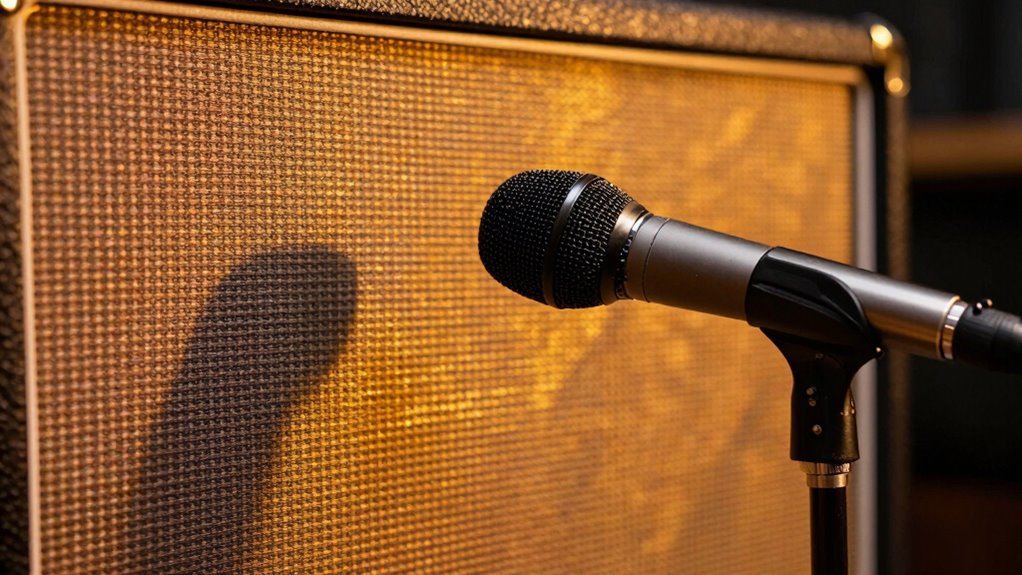
To record a loud amp without making it sound fizzy, start with mic placement about 1-3 inches from the speaker grille, slightly off-center to balance tone. Use room treatment like foam panels or blankets to absorb reflections, which can cause harshness. Manage your signal levels with a load box or DI to prevent clipping. Experiment with mic angles and distances to find the sweet spot that captures your amp’s natural sound. Continue exploring these techniques to achieve a full, clear tone.
Prime for Young Adults — start your free trial
Fast free delivery, streaming and member deals for eligible 18–24 year olds.
As an affiliate, we earn on qualifying purchases.
Key Takeaways
- Position the microphone 1-3 inches from the speaker grille and slightly off-center to capture a balanced tone.
- Use acoustic treatment like foam panels or blankets to reduce room reflections and prevent comb filtering.
- Manage input levels with a DI or load box to avoid clipping and maintain clarity at high volumes.
- Experiment with mic angles and distances to find the sweet spot that minimizes harshness and fizz.
- Incorporate proper room setup and patience, adjusting microphone placement and acoustics until the natural tone is captured without fizz.
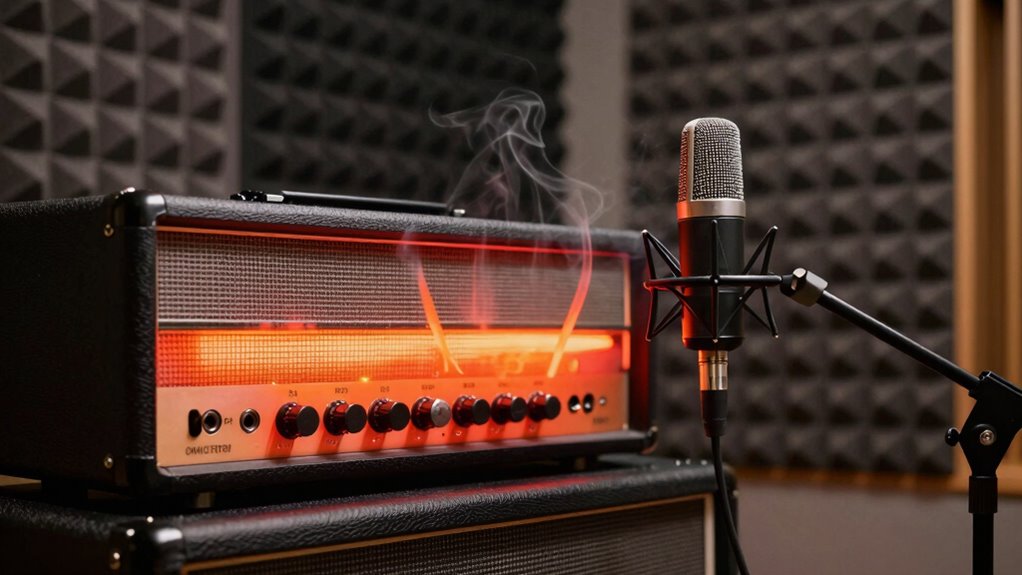
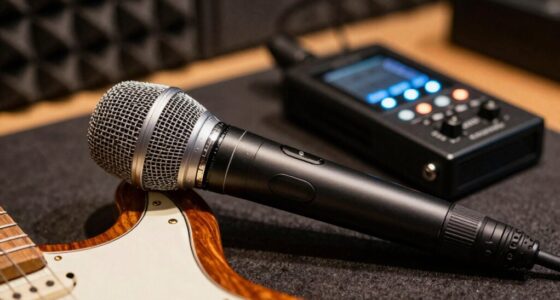
Recording a loud amplifier can be challenging, but with the right techniques, you can capture its power without distortion or clipping. One of the most critical aspects is microphone placement. The position of your mic relative to the amp drastically influences the sound you record. Placing the microphone too close can overload the input, causing unwanted distortion, while placing it too far may result in a thin, distant sound. To avoid this, start by positioning the mic about 1 to 3 inches from the speaker grille, aiming slightly off-center to pick up a balanced tone. Experiment with angles—pointing directly at the cone or slightly off to the side—to find the sweet spot that captures the amp’s tone without clipping. Moving the mic further back can also soften the attack and reduce the risk of overload, especially with high-gain settings.
Room acoustics play a crucial role in recording loud amps. The space you’re in can add unwanted reflections or absorb sound, influencing how the amp’s tone is captured. A room with too many reflective surfaces, like bare walls or windows, can cause comb filtering and make your recordings sound fizzy or harsh. To mitigate this, consider using acoustic treatment—adding foam panels, rugs, or blankets to absorb excess reflections. Alternatively, choose a room with balanced acoustics or set up in a space with soft furnishings that help dampen echo. Positioning the amp in a corner or against a wall can also enhance low-end response, giving your recordings more body. However, be mindful that too much reflection can cause muddiness, so find a balance that highlights clarity without sacrificing the amp’s natural character. Additionally, understanding room acoustics and how they affect sound can help you make better choices in your recording environment.
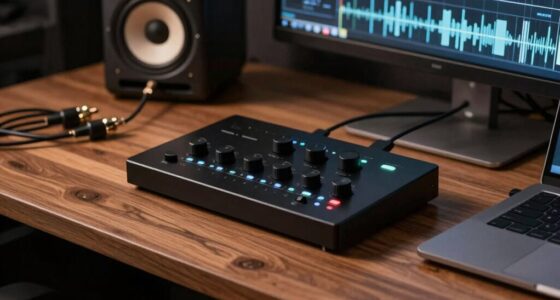
Additionally, consider the use of a DI box or a load box to manage signal levels before they reach your recording interface. This prevents clipping and allows you to record at higher volumes without distortion. Combining this with proper microphone placement and room treatment ensures you capture the amp’s authentic tone without fizz or harshness. Remember, the key is to experiment—try different mic positions and room setups until you find a configuration that faithfully reproduces your amp’s sound without sacrificing clarity or introducing unwanted noise. With patience and a keen ear, you’ll be able to record loud amps that sound powerful, clear, and professional, all without the fizz.
microphone for guitar amp recording
As an affiliate, we earn on qualifying purchases.
As an affiliate, we earn on qualifying purchases.
Frequently Asked Questions
Can I Record a Loud Amp With a Smartphone?
Yes, you can record a loud amp with a smartphone. To get the best sound, position your phone’s microphone close to the amp, experimenting with different microphone placement angles. Keep the amp gain settings moderate to avoid distortion and fizziness. Use a quiet room to minimize background noise, and consider using an external microphone attachment if possible for clearer, higher-quality recordings.
What Are the Best Microphone Types for Loud Amps?
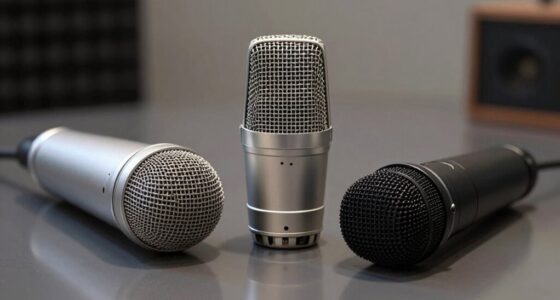
You should choose dynamic microphones for loud amps because they handle high sound pressure levels well and minimize distortion. Condenser mics can capture more detail but may overload easily, so use them carefully. Proper microphone placement is key—position it close to the speaker cone, aiming for the sweet spot. This setup guarantees clear, powerful recordings without fizz, regardless of whether you opt for dynamic or condenser microphones.
How Does Room Acoustics Affect Loud Amp Recordings?
Your room acoustics can dramatically shape your amp recordings, as room reflection influences sound clarity and tone. When you understand the coincidence of proper placement and acoustic treatment, you facilitate richer, more balanced recordings. By minimizing unwanted room reflection with bass traps and diffusers, you create a controlled environment. This guarantees your loud amp’s power is captured accurately, avoiding fizziness and preserving the true character of your sound.
Is It Better to Record a Loud Amp Live or DI?
You should record your loud amp using a combination of live and DI methods, depending on your desired sound. Focus on microphone placement to capture the amp’s true tone, and choose a recording environment that minimizes unwanted noise and reflections. Using a close mic can give you punch, while DI provides clarity and control. Mixing both allows you to craft a powerful, clear guitar tone without fizz.
How Do I Prevent Clipping When Recording Loud Amps?
To prevent clipping when recording loud amps, you should focus on impedance matching and maintaining a good dynamic range. Use a high-quality DI box or load box to match impedance, ensuring your input isn’t overloaded. Keep your input levels below clipping thresholds, and consider lowering your amp’s volume or using a pad to protect your gear. Proper gain staging helps preserve your dynamic range and avoids distortion.
As an affiliate, we earn on qualifying purchases.
Conclusion
Remember, capturing a loud amp without fizz means controlling your environment and equipment. Using dampening techniques, proper mic placement, and quality gear can make all the difference. Did you know that over 60% of professional recordings use room treatment to reduce unwanted noise? By applying these tips, you’ll get a clear, powerful sound that truly represents your amp’s tone—without the fizz. Keep experimenting, and you’ll find the perfect balance for studio-quality recordings.
As an affiliate, we earn on qualifying purchases.
As an affiliate, we earn on qualifying purchases.
Fall Picks
fall essentials
As an affiliate, we earn on qualifying purchases.