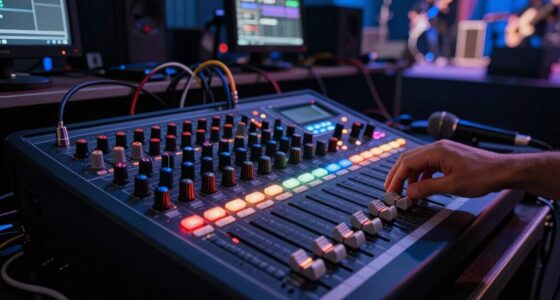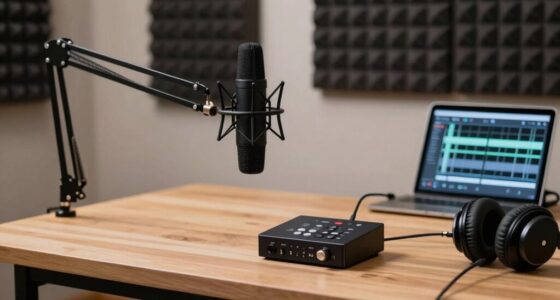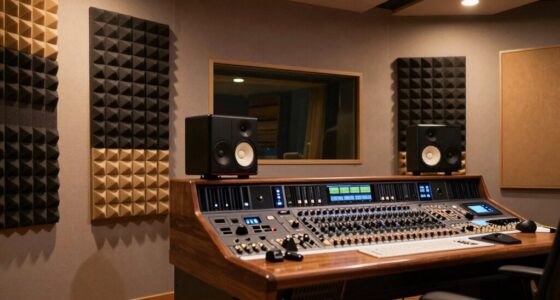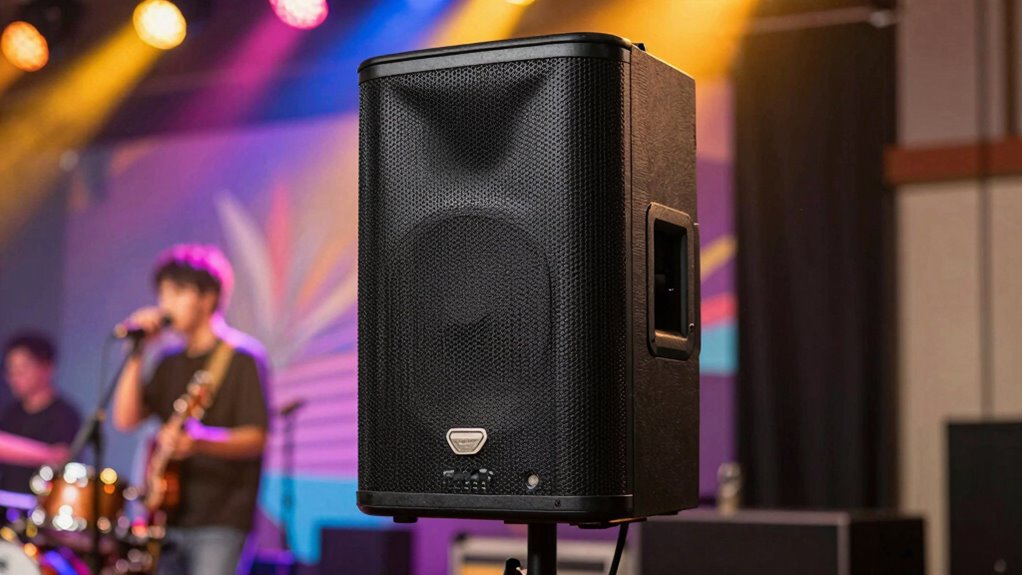

To choose the right PA speaker size for bands, events, and small venues, consider your space’s size, layout, and acoustic needs. Use smaller speakers for intimate settings, but go for larger, more powerful ones for bigger venues to guarantee even sound coverage. Avoid undersized speakers that struggle with volume or oversized ones that cause muddiness. Getting the right balance between size and coverage keeps sound clear and balanced. Keep exploring to find out how to fine-tune your setup for perfect audio.

Get audio and creator gear delivered free with Prime
- Fast, free delivery on millions of items
- Prime Video, Amazon Music and more included
- Member-only deals all year
Key Takeaways
- Select speakers with appropriate power and size to ensure even coverage without distortion in small venues.
- Match speaker dispersion patterns to venue layout to prevent dead zones and ensure clear sound reach.
- Use smaller, focused speakers for bands and events requiring targeted sound for optimal clarity.
- Consider venue shape and size to balance sound dispersion and avoid muddiness or muffled audio.
- Properly sizing speakers prevents volume overload, feedback, and maintains balanced sound throughout the space.
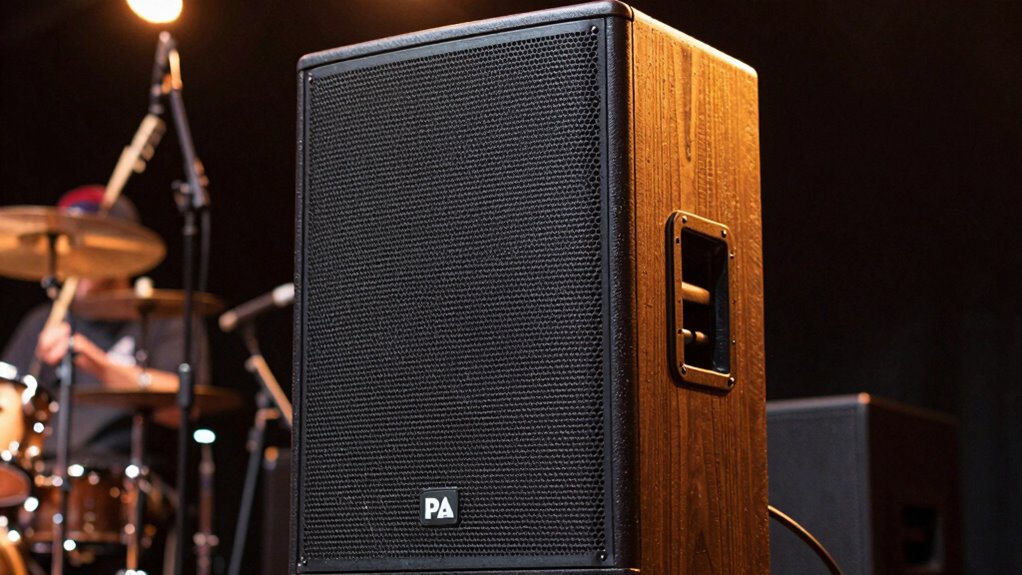
Choosing the right PA speaker size is essential for guaranteeing your sound system can adequately cover your venue without sacrificing clarity or volume. When selecting speakers, you need to contemplate the acoustic coverage they provide. Acoustic coverage refers to how well the sound reaches every corner of your space, ensuring that every audience member hears clearly regardless of their position. If your speakers are too small, they won’t project enough sound to fill the venue, leaving some areas echoing with silence or muffled audio. Conversely, oversized speakers can produce excessive volume, creating muddiness and distortion that hampers clarity. Striking the right balance guarantees even sound dispersion, which is critical for small venues, bands, or events where clarity is paramount.
Sound dispersion is another key factor in choosing the appropriate PA speakers. It describes how sound waves spread out from the speaker, affecting how evenly sound reaches your audience. Wide dispersion speakers are ideal for covering broad areas, especially in small venues where you want to avoid dead zones or areas with overly loud sound. Narrow dispersion speakers focus sound in a specific direction, which is useful if you only need to target a particular section of the audience or stage. Understanding your venue’s layout helps determine the ideal sound dispersion pattern. For example, a rectangular room with a high ceiling might need speakers with a broader dispersion to reach all corners evenly, while a narrow hall may benefit from more focused sound projection. Additionally, considering the acoustic environment of your venue can help you select speakers that minimize unwanted echoes or reverberation, enhancing overall sound clarity. Properly assessing the venue’s acoustic characteristics can help prevent issues like feedback or muddiness, ensuring a clean and balanced sound output. Being mindful of the venue’s size and shape can also help you choose the most effective speaker setup for optimal coverage.
As an affiliate, we earn on qualifying purchases.
Frequently Asked Questions
How Do I Account for Outdoor vs. Indoor Venue Acoustics?
You should adjust your PA speaker setup based on indoor and outdoor acoustics. Indoor spaces with reflective surfaces require more powerful or strategically placed speakers to combat echoes and sound absorption. Outdoors, sound disperses more quickly, so you need larger or more speakers to guarantee coverage, considering the lack of reflective surfaces. Always test your system in the venue beforehand, tweaking for ideal sound clarity whether indoors or outdoors.
What Are the Best PA Speaker Brands for Small Venues?
When choosing the best PA speaker brands for small venues, don’t overlook reliability and features. Brands like QSC, Yamaha, and Electro-Voice stand out for their wireless compatibility and robust power handling, making setup a breeze and ensuring clear sound. These brands are worth their salt, giving you the quality needed without breaking the bank. Remember, sometimes the proof of the pudding is in the eating, so try before you buy.
How Does Speaker Placement Affect Sound Quality?
Speaker placement greatly impacts sound quality by influencing sound dispersion and how evenly sound fills the space. When you position speakers correctly, you guarantee that sound waves project throughout the venue without dead spots or excessive reflections. Proper placement minimizes echo and feedback, creating a clearer, more balanced sound. Experiment with height, angle, and distance to optimize sound dispersion, giving your audience a better listening experience.
Can I Mix Different Speaker Brands in One Setup?
They say, “Don’t put all your eggs in one basket,” and that applies here. Mixing different speaker brands in one setup is possible but can cause issues with speaker compatibility and brand consistency. Different brands may have varying sound signatures, impedance levels, and power handling. To guarantee seamless sound quality and avoid phase problems, it’s best to use matching speakers or carefully test compatibility before mixing brands.
How Often Should I Upgrade My PA System?
You should upgrade your PA system when its speaker durability starts to decline or it no longer meets the power requirements of your performances. If you notice distortion, reduced clarity, or difficulty handling higher volumes, it’s time for an upgrade. Regularly assess your equipment’s condition and performance to guarantee it matches your evolving needs, maintaining sound quality and avoiding damage from outdated or underpowered speakers.
As an affiliate, we earn on qualifying purchases.
Conclusion
Choosing the right PA speaker size isn’t just about numbers; it’s about ensuring your sound reaches every corner, every ear, and every heart. It’s about clarity, power, and confidence. It’s about creating unforgettable moments, energizing your audience, and letting your music breathe freely. When you select the perfect size, you’re not just amplifying sound—you’re amplifying experience. Trust your instincts, measure carefully, and let your sound speak volumes. Your perfect setup is within reach—make it happen.
As an affiliate, we earn on qualifying purchases.
As an affiliate, we earn on qualifying purchases.
Halloween Picks
halloween
As an affiliate, we earn on qualifying purchases.