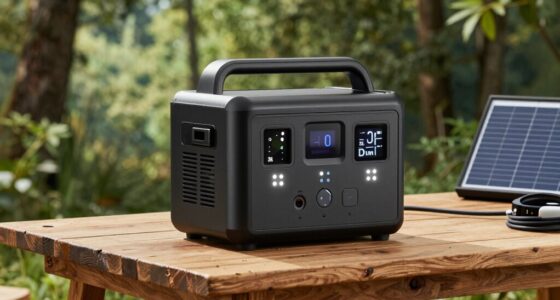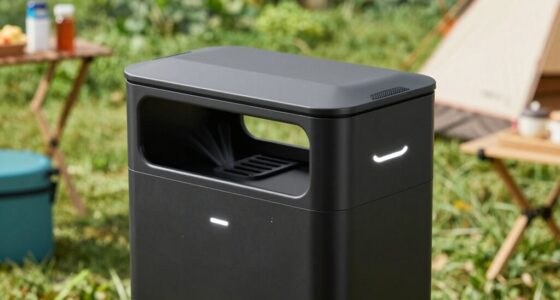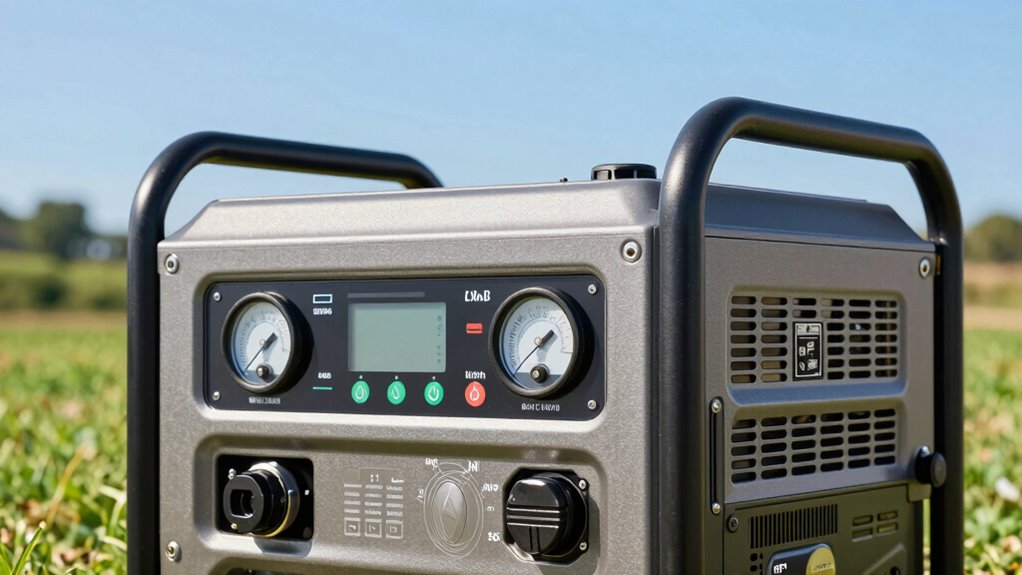

Understanding dual-fuel inverter generator specs is key to choosing the right power source. Watts measure your generator’s immediate output, while watt-hours show how much energy it stores or provides over time. Surge power handles quick startup demands, often exceeding running wattage. Recharge time indicates how long it takes to refill fuel or charge batteries, affecting usability. Grasping these details helps you pick a generator that fits your needs—continue exploring for more insights.
Key Takeaways
- Watts measure real-time power output, while watt-hours reflect total energy capacity over time.
- Surge power provides temporary high wattage for device startup, exceeding rated running wattage.
- Recharge time indicates how quickly the generator’s fuel or batteries are replenished after use.
- Fuel efficiency affects runtime and operational costs, with options like propane offering cleaner, longer use.
- Noise levels and overall specs help determine the generator’s suitability for specific environments and power needs.
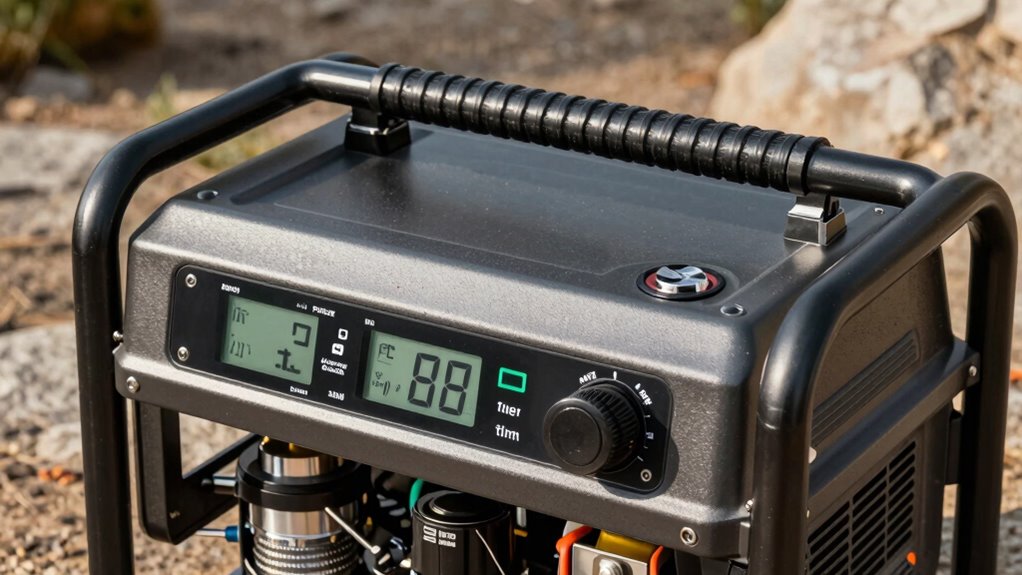
Are you looking for a versatile power solution that offers flexibility and reliability? Dual-fuel inverter generators might be exactly what you need. These generators give you the option to run on gasoline or propane, making them a practical choice for various situations. When evaluating their specs, understanding the differences between watts and watt-hours is key. Watts measure the generator’s immediate power output, indicating how much energy it can supply at a given moment. Watt-hours, on the other hand, reflect the total energy stored or available over time, helping you estimate how long the generator can run at a certain load. This distinction helps you plan your power needs effectively, ensuring you don’t run out of energy unexpectedly.
Surge power is another critical factor to think about. It refers to the generator’s ability to handle short bursts of high energy, such as when starting appliances with motors. Dual-fuel inverter generators typically offer a surge capacity that exceeds their running wattage, providing a safety margin for demanding devices. Knowing this figure helps you avoid overloading the generator and ensures smooth operation during startup of heavy appliances. Additionally, considering the fuel efficiency of the generator can significantly impact your long-term operational costs and runtime.
Surge power ensures smooth startup for demanding appliances and prevents overloads.
Recharge time is equally important, especially if you rely on the generator for extended periods. It indicates how long it takes to replenish the fuel or battery (if applicable) to keep your power supply continuous. Some models feature quick-start mechanisms or larger fuel tanks, reducing downtime and keeping your operations running smoothly. Plus, many dual-fuel generators are designed with fuel efficiency in mind, helping you stretch your fuel supply further. When running on gasoline, they optimize combustion to use less fuel, which is especially useful during long-term outages or camping trips. Propane use also tends to be cleaner and more efficient, providing an alternative that can extend the overall runtime.
Noise levels are another consideration that often goes hand-in-hand with fuel efficiency. Many inverter generators are engineered to operate quietly, making them suitable for residential areas, camping, or outdoor events. Lower noise levels mean less disturbance and a more comfortable environment, especially if you’re working or relaxing nearby. Modern dual-fuel models strike a good balance between power output and noise suppression, so you get reliable energy without excessive sound. Overall, understanding these specs—watts versus watt-hours, surge power, recharge time, fuel efficiency, and noise levels—empowers you to choose a generator tailored to your specific needs, offering dependable performance and peace of mind wherever you go.
As an affiliate, we earn on qualifying purchases.
Frequently Asked Questions
How Does Altitude Affect Generator Performance?
Altitude affects your generator’s performance because higher elevations cause performance degradation. As you go higher, the thinner air reduces cooling efficiency and engine combustion, which can decrease power output. To combat this, you should perform altitude adjustment on your generator. Without it, your generator might run less efficiently or even stall. Regularly adjusting for altitude ensures reliable operation and maintains peak performance at higher elevations.
Can I Run Sensitive Electronics Directly off a Dual-Fuel Generator?
While you can run sensitive electronics directly off a dual-fuel generator, it’s wise to prioritize electronics safety. These generators are compatible with various fuels, but make certain your device’s power needs match the generator’s output. Using a quality inverter ensures clean, stable power, preventing damage. To keep your electronics safe, consider adding a surge protector or power conditioner—think of it as a gentle hug for your valuable devices.
What Maintenance Is Required for Dual-Fuel Inverter Generators?
You need to regularly check and change the oil, clean or replace air filters, and inspect spark plugs to keep your dual-fuel inverter generator running smoothly. To prevent fuel issues, use fuel stabilization additives if storing fuel long-term. Also, verify emission controls are clean and functioning properly. Periodic maintenance like these extends your generator’s lifespan, improves efficiency, and keeps it compliant with environmental standards.
Are There Safety Features Specific to Dual-Fuel Models?
Think of your dual-fuel inverter generator as a guardian with shields. It features overload protection, preventing overloads from damaging your device, and fire suppression systems that act like a safety fire brigade. These safety features work silently, ensuring your power source stays safe during operation. You can rely on these built-in protections to keep you safe, giving you peace of mind during every use.
How Do I Store Fuel Safely for Long-Term Use?
To store fuel safely for long-term use, make certain you use proper storage containers designed for fuel, like approved safety cans. Fill them to about 95% to allow for expansion and add fuel stabilizers to prevent degradation. Store containers in a cool, well-ventilated, and secure area away from heat sources or flames. Regularly check for leaks or deterioration, and rotate your fuel stock to maintain freshness.
quiet portable inverter generator
As an affiliate, we earn on qualifying purchases.
As an affiliate, we earn on qualifying purchases.
Conclusion
Now that you understand the specs of a dual-fuel inverter generator, you’re ready to power your adventures like a modern-day explorer. Remember, watts and watt-hours are your map, surge power is your trusty steed, and recharge time is the pit stop that keeps you going. It’s like wielding a pocket-sized Excalibur—ready for any challenge the wilderness throws your way. Stay prepared, and you’ll conquer the great outdoors with confidence, just like a true hero of yore.
gasoline propane inverter generator
As an affiliate, we earn on qualifying purchases.
As an affiliate, we earn on qualifying purchases.
high surge capacity inverter generator
As an affiliate, we earn on qualifying purchases.
As an affiliate, we earn on qualifying purchases.