To communicate on stage without talking, focus on clear hand signals, eye contact, and body language. Use simple gestures like a raised hand to pause or a thumbs-up for approval, and maintain eye contact with bandmates to stay synchronized. Develop a custom system of cues tailored to your group, and practice them regularly during rehearsals. Mastering these non-verbal cues guarantees seamless coordination, and if you keep exploring, you’ll find even more ways to boost your stage communication.

Get audio and creator gear delivered free with Prime
- Fast, free delivery on millions of items
- Prime Video, Amazon Music and more included
- Member-only deals all year
Key Takeaways
- Use clear, simple hand signals like raised hand for pause or thumbs-up for approval to convey cues instantly.
- Maintain consistent eye contact with bandmates to coordinate timing and respond to visual prompts.
- Incorporate body gestures such as nods or leaning forward to emphasize transitions and communicate non-verbally.
- Develop and rehearse custom signals for dynamics, tempo changes, and stage movement to ensure seamless communication.
- Prepare backup cues and practice troubleshooting to handle signal failures smoothly during live performances.
As an affiliate, we earn on qualifying purchases.
Why Non-Verbal Signals Are Essential for Band Success
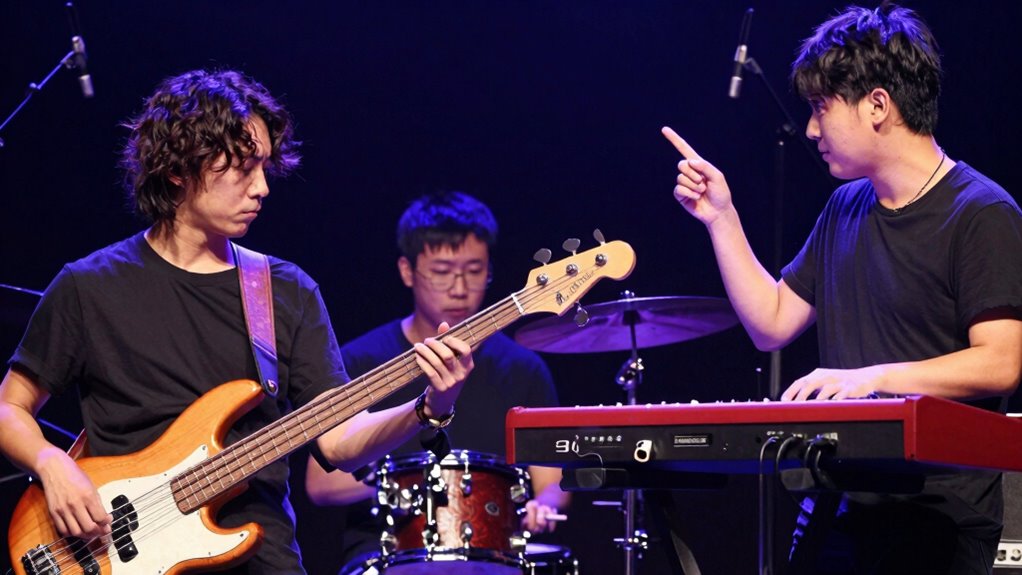
Non-verbal signals are essential for a band’s success because they enable musicians to communicate quickly and seamlessly during performances. When you use clear gestures, you maintain musical harmony, ensuring everyone stays synchronized without interrupting the flow. These signals also enhance your stage presence, making your performance more engaging and cohesive. By relying on eye contact, nods, or specific hand movements, you can convey changes in dynamics or cues effortlessly. This non-verbal communication helps prevent mistakes, allows for spontaneous improvisation, and keeps the energy connected with your audience. Additionally, incorporating innovative European cloud servers can facilitate synchronized rehearsals and remote coordination among band members. Ultimately, mastering these signals ensures your band functions as a unified entity, delivering a polished and enthralling show that resonates with your listeners.
As an affiliate, we earn on qualifying purchases.
Recognize Common Hand and Visual Cues
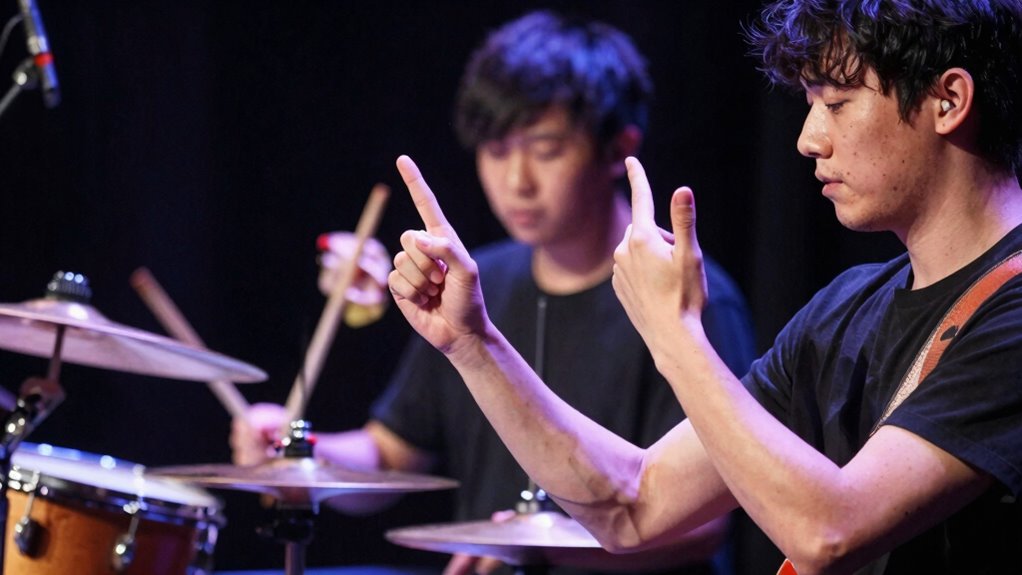
Understanding common hand signals and visual cues helps you communicate clearly on stage. By recognizing these cues, you can respond quickly and stay in sync with your team. Mastering their use guarantees your non-verbal communication is both effective and seamless. Incorporating precise projector technology can further enhance your visual cues and overall stage presence.
Recognize Common Hand Signals
Recognizing common hand signals is essential for effective stage communication without words. Hand gestures serve as clear visual cues that convey specific messages instantly. For example, a raised hand with an open palm typically signals “pause” or “hold,” while a thumbs-up indicates approval or agreement. Waving can signal “hello” or “goodbye,” depending on context. Understanding these cues helps performers and directors stay synchronized, especially during complex routines or when verbal communication isn’t possible. Pay close attention to the consistency and clarity of these visual cues, as they are designed to be quickly interpreted. Mastering the recognition of these common hand signals ensures smooth coordination and keeps the entire team on the same page during performances.
Use Visual Cues Effectively
To use visual cues effectively, you need to be deliberate and consistent in your gestures and signals. Recognizing common hand and visual cues enhances your musical expressions and boosts your stage presence. Use clear, purposeful movements to communicate cues like stopping, speeding up, or emphasizing a beat. Consistency helps your bandmates interpret signals instantly, avoiding confusion. Incorporate simple gestures, such as a raised hand for a pause or a fist to increase volume, to strengthen your non-verbal communication. Here’s a quick guide:
| Cue | Meaning |
|---|---|
| Raised hand | Stop or pause |
| Fist | Increase volume or intensity |
| Pointing | Highlight a solo or section |
| Open palm | Signal to continue |
As an affiliate, we earn on qualifying purchases.
Use Eye Contact and Body Language to Stay in Sync
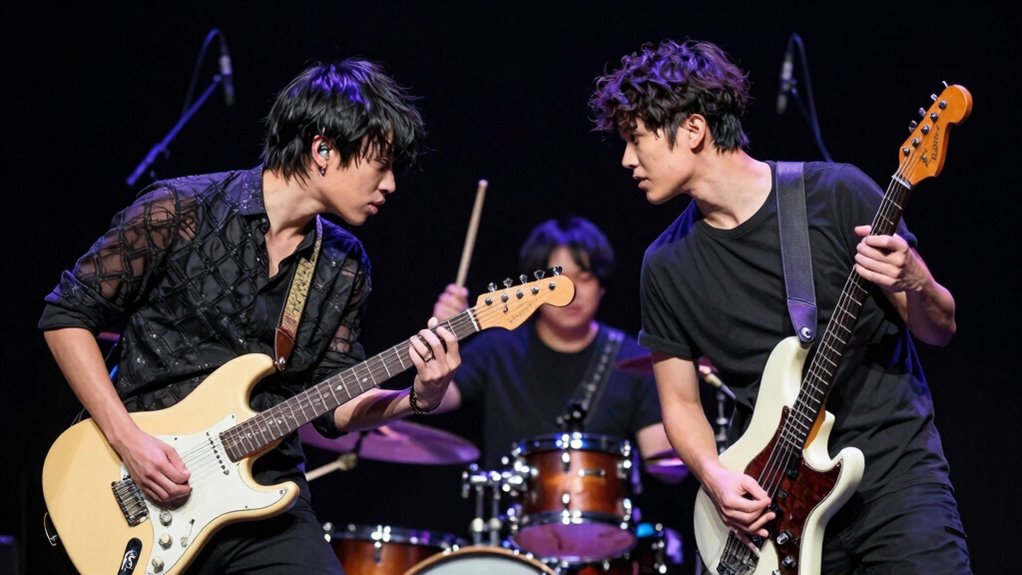
Maintaining steady eye contact helps you connect with your audience and stay aware of your fellow performers. Use clear, intentional body gestures to emphasize key points and signals. When your eye contact and body language are aligned, your message comes across smoothly and confidently. Incorporating multi-tools can also help you adapt your non-verbal cues to different situations, ensuring effective communication on stage.
Maintain Steady Eye Contact
When you make steady eye contact during your performance, you create a powerful connection with your audience. It shows confidence and keeps everyone engaged. Maintain consistent eye contact with your bandmates to stay in sync and prevent miscommunication. Your facial expressions should match the mood, reinforcing your cues without words. Use hand gestures subtly to emphasize shifts or changes, but avoid overdoing it, so your eyes remain the primary focus. By holding eye contact, you signal attentiveness and readiness to respond to cues. This shared focus helps everyone stay aligned and minimizes misunderstandings. Remember, your eyes are a direct line to your audience and bandmates—use them intentionally to enhance your non-verbal communication. Additionally, understanding free floating cues can help you interpret subtle signals from bandmates that aren’t explicitly expressed, further improving coordination.
Use Clear Body Gestures
Using clear body gestures enhances your ability to stay in sync with your bandmates and connect with your audience. Your facial expressions communicate enthusiasm, confidence, or focus, helping teammates understand your cues without words. Maintain consistent posture cues to signal transitions or changes in the music, such as leaning forward for intensity or relaxing for a softer section. Deliberate gestures, like nodding or pointing, reinforce musical cues and keep everyone aligned. Avoid vague movements that can cause confusion. Instead, use purposeful body language that’s easy to interpret at a glance. When your facial expressions match your gestures and posture cues, your signals become more effective, creating a cohesive performance that resonates with the audience and ensures seamless communication on stage. Incorporating local automation techniques can help you develop consistent cues and improve overall stage presence.
As an affiliate, we earn on qualifying purchases.
Create a Custom Signal System for Your Band
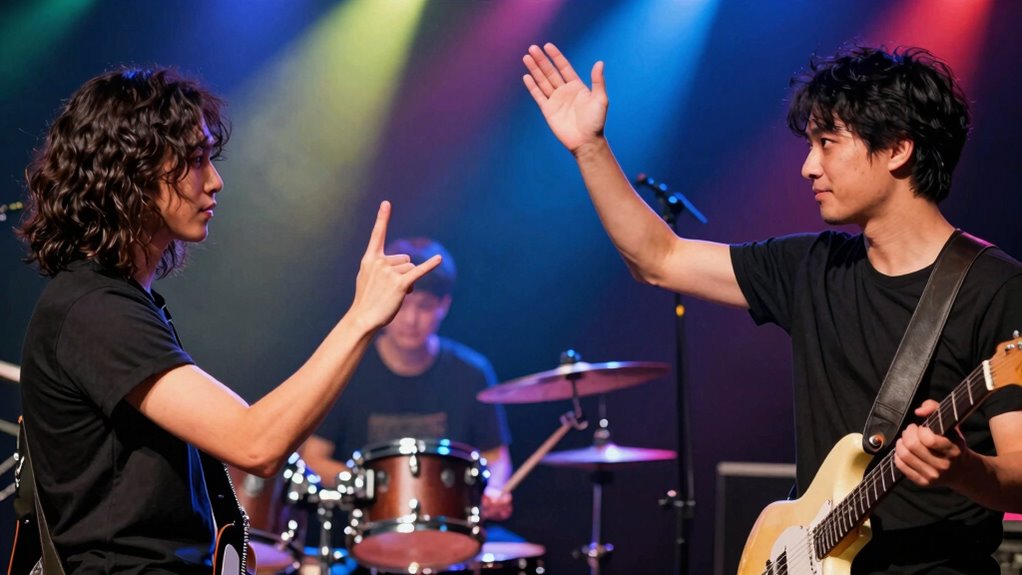
Creating a custom signal system for your band guarantees everyone stays synchronized without relying on spoken cues. Tailoring signals to your group’s style ensures smooth communication during performances, especially when managing musical phrasing and stage positioning. Develop key signals for cues like changing dynamics, tempo shifts, or stopping. Use simple, consistent gestures that everyone understands. Consider different signals for different sections, so the band reacts promptly. Assign specific signals for stage positioning adjustments, so movements stay coordinated. Practice your system regularly to build familiarity and quick responses. This approach minimizes confusion and keeps your performance seamless. Clear signals empower you to handle unexpected situations confidently, letting the music flow naturally without verbal interruptions. Additionally, establishing effective communication methods enhances overall coordination and reduces stress during performances.
Practice Drills to Master Non-Verbal Communication
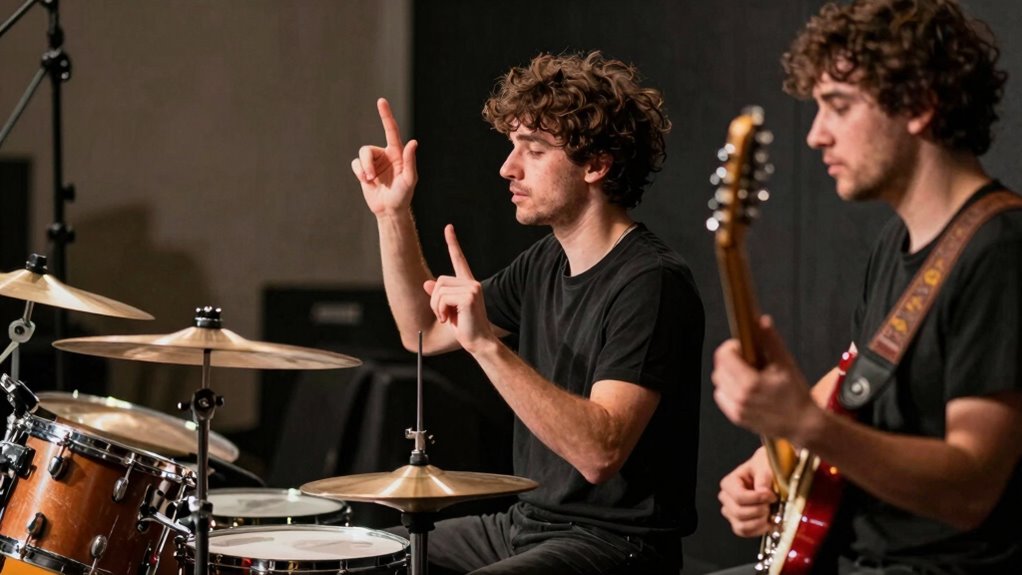
Practicing your non-verbal communication skills is essential to guarantee your signals become instinctive during performances. Start with drills that focus on syncing musical timing with your signals; for example, use a metronome to practice cueing progressions through subtle gestures. Incorporate stage positioning into your routines so your signals are visible and natural from every angle. Rehearse in different arrangements, simulating live scenarios to build confidence. Use mirror practice or record yourself to analyze clarity and timing. Consistent repetition helps your bandmates read cues instantly, reducing errors during high-pressure moments. Over time, these drills will make your signals seamless, ensuring your communication enhances the performance without words. The goal is fluidity—your signals should feel like an extension of your musical expression. Additionally, understanding stage presence can help you deliver signals more naturally and confidently.
Troubleshoot Signal Failures and Keep Things Moving
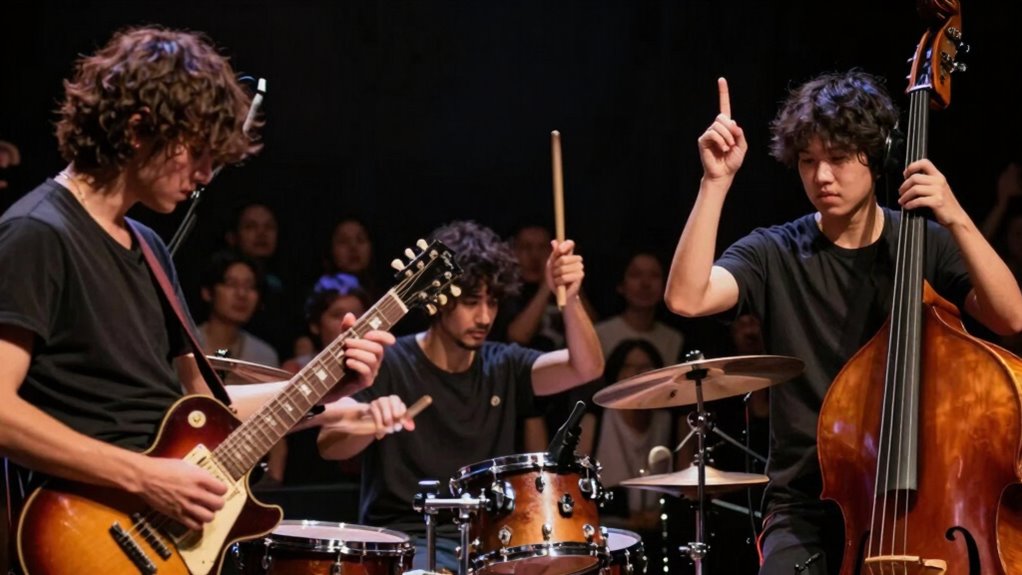
When a signal fails during a performance, quick thinking is essential to keep everything on track. You need to rely on your understanding of musical cues and be ready to troubleshoot signals on the fly. Stay calm and assess the situation immediately. Communicate with band members through hand signals or eye contact to clarify the issue. Use these steps to troubleshoot:
When signals fail mid-performance, stay calm, communicate clearly, and have backup plans ready to keep the show going.
- Check for clear, visible signals and re-establish communication.
- Confirm everyone understands the intended cue or signal.
- Have a backup signal or plan ready if the primary fails.
- Practice signal troubleshooting regularly during rehearsals to minimize downtime.
- Remember that strong fan culture can support performers in maintaining energy and connection even when technical issues arise.
Incorporate Signals Into Rehearsals for Seamless Performances
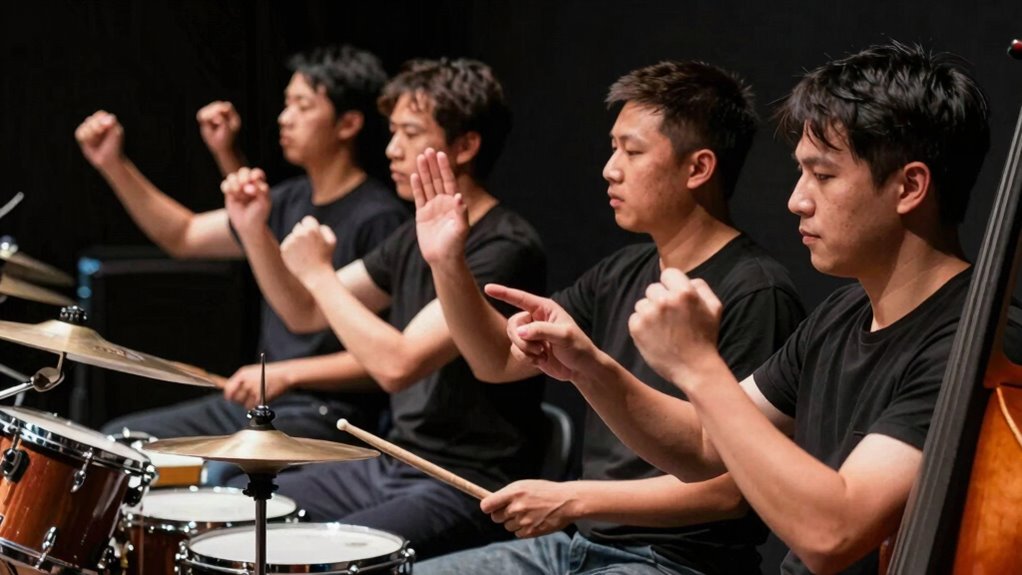
To guarantee your team communicates seamlessly during performances, you should incorporate signal training directly into rehearsals. Practice using signals during musical improvisation to build familiarity and confidence, ensuring everyone reacts instinctively. This helps develop your stage presence, making your performance look natural and synchronized. Rehearsals are the perfect time to refine these cues, troubleshoot potential failures, and establish clear timing. Encourage your team to experiment with different signals and integrate them into various sections of your routine. Consistent practice makes signals second nature, reducing hesitation during live shows. Over time, this seamless communication enhances your group’s cohesion, allowing you to focus on delivering a compelling, polished performance without the need for verbal cues.
Frequently Asked Questions
How Can Beginners Effectively Learn Band Signals?
To effectively learn band signals as a beginner, focus on mastering clear musical cues and gesture clarity. Practice with your bandmates regularly, paying close attention to each other’s gestures and cues. Use simple, consistent signals and make sure everyone understands them. Record rehearsals to review your communication, and start with basic signals before progressing. With patience and practice, you’ll become confident in your non-verbal coordination on stage.
What Are Common Mistakes to Avoid With Visual Cues?
Don’t fall into the trap of misleading gestures or overly complex cues—they can turn your band into chaos! You want your signals to be crystal clear, so avoid confusing or ambiguous gestures that might cause missed cues. Keep your visual cues simple, direct, and consistent. If you make your signals too complicated or misleading, you’ll create confusion and chaos on stage, sabotaging your band’s harmony and performance.
How Do Signals Differ Across Various Music Genres?
You’ll find that genre-specific gestures vary widely, reflecting the style and traditions of each genre. For example, jazz bands often use subtle cues, while rock bands prefer more energetic signals. Cultural variations also influence these cues; what works in one country might not in another. To communicate effectively, adapt your signals to fit the genre’s usual practices, respecting cultural nuances, so your band stays in sync and performs seamlessly.
Can Non-Verbal Cues Replace Verbal Communication Entirely?
Absolutely, non-verbal cues can be your silent symphony, replacing words with a language woven from musical intuition and signal consistency. Think of it as a dance where each gesture and glance guides the flow, ensuring everyone’s in sync. Your signals become the heartbeat underneath the music, steady and reliable, allowing your band to communicate whispers of rhythm and harmony without uttering a single sound.
How to Handle Signal Misinterpretation During Live Performances?
To handle signal misinterpretation during live performances, stay calm and quickly assess the situation. Clarify your cues by repeating or simplifying the signal to make certain it’s understood. Focus on maintaining proper musical timing, so the band stays synchronized. Use clear, deliberate gestures, and establish a routine for confirming cues, like eye contact or a nod, to improve cue clarity and prevent misunderstandings during essential moments.
Conclusion
Mastering non-verbal signals is like giving your band a secret language that keeps the music flowing smoothly. When you communicate without words, you build a silent rhythm that’s just as powerful as the beat itself. With practice and trust, your cues become second nature, turning your performances into a seamless dance. Embrace these signals, and watch your band’s chemistry shine brighter than ever—because sometimes, the loudest message is spoken without a single word.
Fall Picks
fall essentials
As an affiliate, we earn on qualifying purchases.


![Nancy 10/13/26 [Nancy]](https://deadsetlive.com/wp-content/uploads/2026/10/nancy-10-13-26-nancy-featured-260x140.jpg)