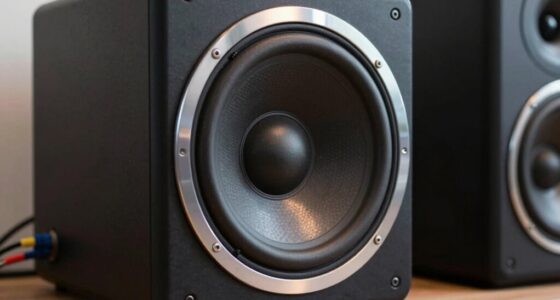

Your room placement has a bigger impact on sound quality than you might think. When your speakers are too close to walls or corners, reflections bounce and create echoes, muddying clarity. Proper placement minimizes these reflections, letting direct sound reach you clearly. The size, shape, and materials of your room also influence how sound behaves. Adjusting furniture and speaker position can dramatically improve your listening experience, so if you want to learn more, keep exploring how to optimize your space.
Listen free for 30 days with Audible
Thousands of audiobooks and originals — cancel anytime.
As an affiliate, we earn on qualifying purchases.
Key Takeaways
- Proper speaker placement minimizes acoustic reflections, preventing echoes that muddy sound clarity.
- Positioning speakers away from walls reduces delayed bouncing sound waves.
- Room shape and furniture placement influence how sound waves reflect and diffuse.
- Hard surfaces increase reflections, affecting sound quality more than expected.
- Adding diffusers or soft furnishings can significantly improve sound clarity by managing reflections.
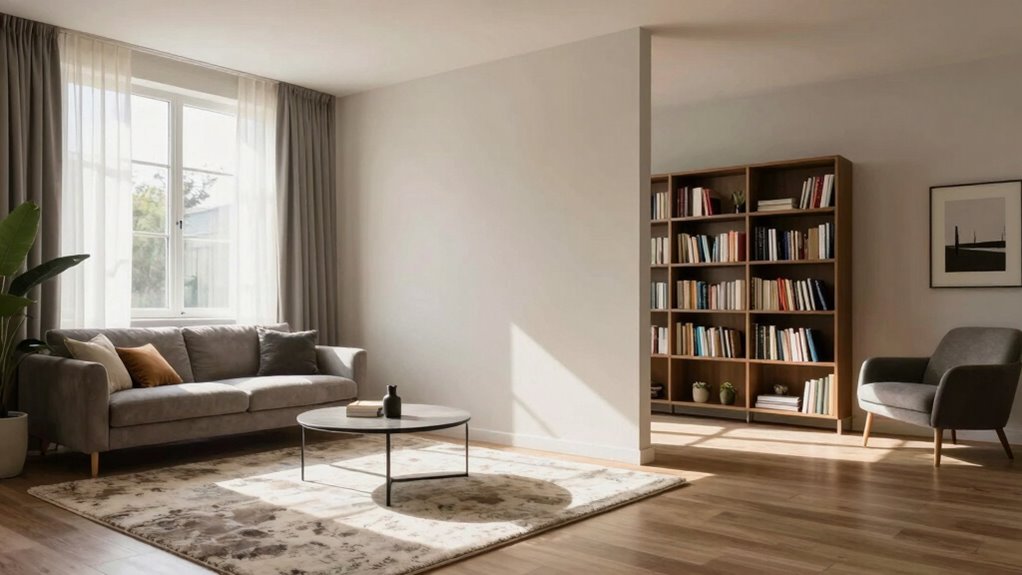
Have you ever wondered how the placement of your speakers or hearing devices impacts sound quality? It’s more influential than you might think, especially when it comes to how sound behaves within a room. The way sound waves bounce and scatter affects what you ultimately perceive, making your listening experience more dependent on room setup than you realize. Two key concepts play a crucial role here: acoustic reflections and sound diffusion. These factors determine whether sound feels natural and clear or muddy and echoey.
Room setup and surface placement greatly influence sound clarity and naturalness through reflections and diffusion.
When your speakers are placed too close to walls or corners, acoustic reflections increase markedly. These reflections are sound waves that bounce off surfaces and return to your ears slightly delayed. This can cause echoes or a sense of reverberation, muddying the clarity of vocals or instrument details. Proper placement minimizes these reflections, allowing direct sound from the speakers or hearing devices to reach you with minimal interference. It’s about finding that sweet spot where sound can travel directly without excessive bouncing around the room, ensuring a clean, crisp listening experience.
Sound diffusion also matters a lot. If a room has flat, hard surfaces—like bare walls or tile floors—sound waves tend to bounce chaotically, creating uneven sound distribution. This unevenness can make certain frequencies overpower others, distorting what you hear. Sound diffusion involves strategically placing or adding textured surfaces that scatter sound waves evenly throughout the space. Diffusers break up sound reflections, preventing them from creating hotspots or dead zones. This results in a more balanced sound environment where the nuances of audio are preserved, and your hearing devices can perform effectively. Additionally, understanding how acoustic reflections influence sound can help you optimize your room setup for better audio clarity. Recognizing how sound diffusion can be enhanced with specific materials allows you to tailor your space for improved sound quality. Incorporating room geometry considerations further enhances the effectiveness of sound diffusion strategies, ensuring a more immersive listening experience. Moreover, considering the placement of furniture can also contribute significantly to controlling sound behavior within the room.
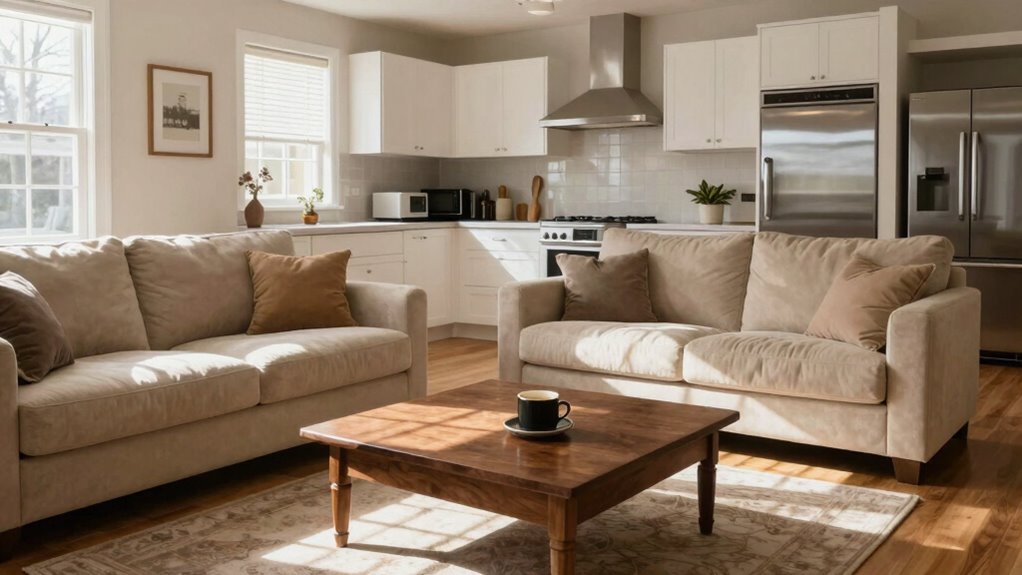
Furthermore, the size and shape of your room significantly impact how sound waves behave, affecting both reflections and diffusion. Your room’s layout, furniture, and even the materials used in its construction influence acoustic reflections and sound diffusion. Soft furnishings like curtains, rugs, and upholstered furniture absorb excess sound, reducing reflections and improving clarity. Conversely, hard surfaces reflect more sound, so their placement becomes critical. Positioning your speakers or hearing devices in a way that accounts for these factors can drastically improve sound quality. It’s not just about the equipment but how your room interacts with sound waves.
Ultimately, understanding how room placement impacts acoustic reflections and sound diffusion helps you create an environment where sound travels efficiently and naturally. Whether you’re listening to music, watching a movie, or relying on hearing devices, the way you position everything makes a noticeable difference. It’s a simple adjustment that can transform your listening experience from muddled to magnificent, all by managing how sound reflects and diffuses around you.
speaker placement acoustic panels
As an affiliate, we earn on qualifying purchases.
As an affiliate, we earn on qualifying purchases.
Frequently Asked Questions
Can Furniture Placement Influence Sound Quality in a Room?
Yes, furniture placement can influence sound quality in your room. When you position decorative elements and furniture thoughtfully, they help absorb or diffuse sound waves, reducing echoes and improving clarity. Electronic devices like speakers or TVs also benefit from strategic placement, minimizing noise interference. Moving furniture around can dramatically change acoustics, so experiment with placement to create a balanced, pleasant sound environment tailored to your space.
Do Wall Materials Affect Sound Reflection and Absorption?
Wall materials profoundly impact sound reflection and absorption in your room. Hard surfaces like drywall reflect sound, causing echoes, while softer materials absorb it, reducing noise. To improve acoustics, consider soundproofing techniques like adding acoustic panel options, which are designed to absorb sound waves and minimize reflections. These adjustments make your space sound clearer and more balanced, ensuring you get the best listening or talking experience possible.
How Does Ceiling Height Impact Acoustics?
Ceiling height profoundly impacts acoustics by influencing sound reflection and reverberation. Taller ceilings create more space for sound to bounce around, often causing echo and muddiness, while lower ceilings tend to produce a more intimate sound. To improve acoustics, you can use ceiling design techniques like incorporating acoustic panels, which absorb excess sound, and choose designs that minimize unwanted reflections, ensuring clearer, more balanced audio in your space.
Can Window Placement Alter Sound Clarity?
Like a painter adjusting their palette, you can enhance sound clarity by carefully placing windows. Proper placement minimizes external noise and reduces sound leakage. Use soundproofing techniques and acoustic treatments around windows to further improve clarity. Positioning windows away from noise sources and utilizing double-glazed glass helps create a quieter, more controlled environment. This strategic approach guarantees your space sounds as pristine as a well-composed symphony, free from unwanted disturbances.
Are There Specific Room Shapes That Improve Sound Experience?
You’ll find that rectangular or square rooms with symmetrical layouts often enhance sound clarity, especially when combined with proper acoustic treatment. Avoid irregular shapes that create echoes or dead spots. Incorporate soundproofing techniques like bass traps and diffusers to improve acoustics. These strategies help reduce unwanted reflections, making your listening experience richer and more precise, regardless of room shape. Proper room design truly makes a significant difference.
As an affiliate, we earn on qualifying purchases.
Conclusion
So, next time you’re annoyed by that echo or muffled sound, remember—it’s not just your equipment. Your room’s placement can drastically alter what you hear, often more than you’d expect. Ironically, the very space meant to enhance your listening experience might be the culprit behind your audio frustrations. Sometimes, the simplest tweaks in placement can make all the difference—yet we often overlook the room itself, assuming the problem lies elsewhere. So, look around—you might just find your perfect sound hiding in plain sight.
As an affiliate, we earn on qualifying purchases.
As an affiliate, we earn on qualifying purchases.
NFL season / tailgating Picks
team gear
As an affiliate, we earn on qualifying purchases.