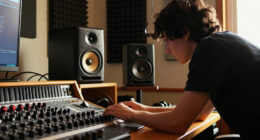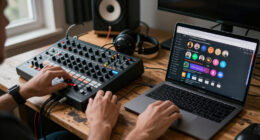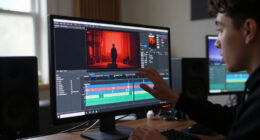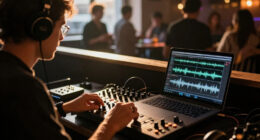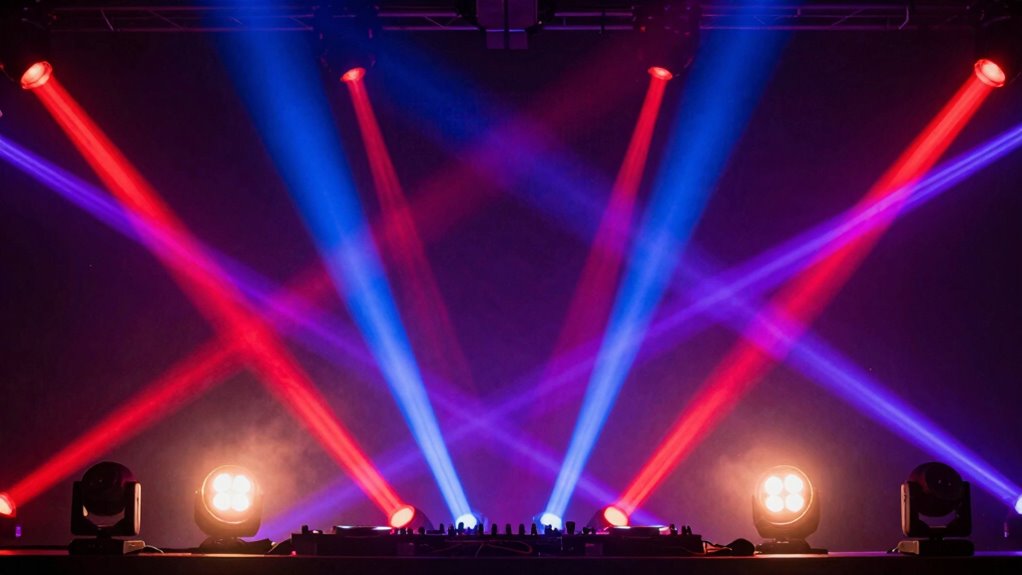

As a DJ or small production team, understanding key lighting terms helps you create the right atmosphere. You’ll encounter terms like stage ambiance, which sets the mood with lighting, and fixtures like LED panels or moving heads that produce effects. Control systems, such as DMX controllers, manage these fixtures seamlessly. Proper positioning and design principles help you craft mesmerizing visuals. To build your skills further, explore these concepts more deeply and take your shows to the next level.

Get audio and creator gear delivered free with Prime
- Fast, free delivery on millions of items
- Prime Video, Amazon Music and more included
- Member-only deals all year
Key Takeaways
- Understand different lighting fixtures like LED panels and moving heads to choose the right tools for your event.
- Learn about lighting control systems such as DMX controllers for synchronized effects and seamless operation.
- Recognize the importance of fixture placement to enhance stage ambiance and avoid shadows.
- Know how lighting design shapes mood, whether energetic or intimate, to match event goals.
- Use core design principles to communicate effectively with technicians and create cohesive lighting setups.
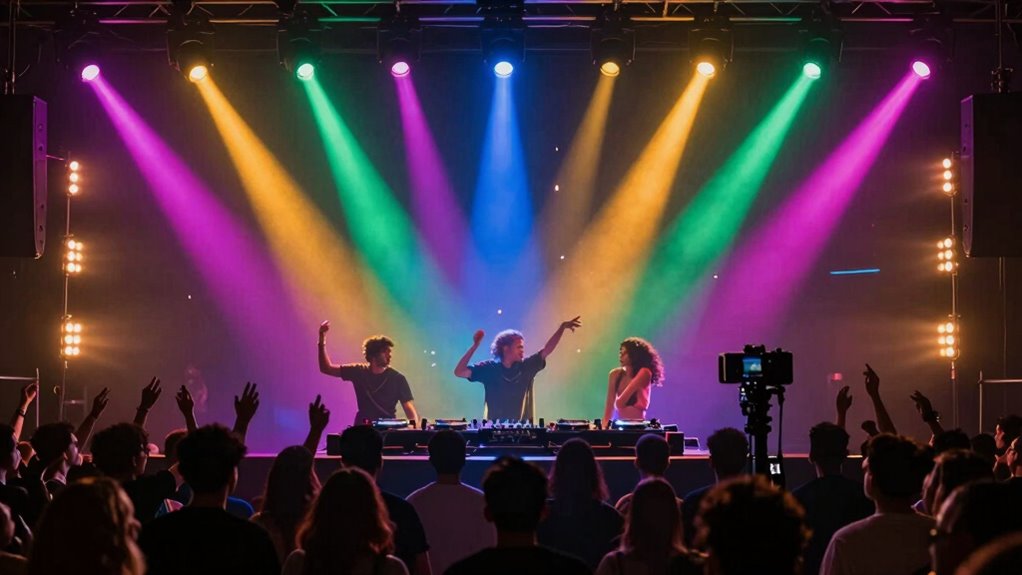
Are you familiar with the common terms used in event lighting? If you’re stepping into the world of DJing or managing small productions, understanding these terms makes planning and executing your event much smoother. One of the key concepts is stage ambiance, which refers to the overall mood created by your lighting design. It shapes how your audience feels and interacts with the event, whether it’s an energetic dance floor or an intimate gathering. Achieving the right ambiance hinges on choosing the proper lighting fixtures, which are the tools that produce the effects you want. These fixtures can vary from simple LED panels to complex moving heads, each offering different capabilities to sculpt light and influence the atmosphere.
Lighting fixtures are the backbone of event lighting. They range from basic spotlights to advanced automated fixtures. When selecting fixtures, you consider factors like brightness, color options, and movement capabilities. For example, LED wash lights are perfect for filling large areas with smooth, even color, helping to establish a vibrant or relaxed tone. Moving head fixtures add dynamic elements, allowing you to change the direction, color, and pattern of light during your event, which can elevate the energy and engagement of your audience. Understanding these fixtures helps you craft a cohesive visual experience that complements the music and overall vibe. Additionally, lighting control systems are essential for managing multiple fixtures simultaneously, especially in complex setups. A good understanding of light positioning can also help you optimize the visual impact and avoid shadows or uneven lighting. Incorporating lighting design principles can further enhance the overall aesthetic and ensure your lighting is intentional and effective.
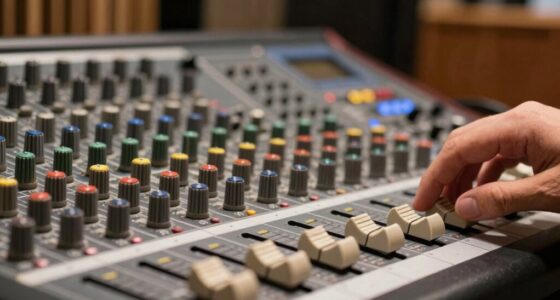
Another crucial term you’ll hear is lighting control, which involves the hardware and software used to operate your fixtures. With proper control, you can synchronize lighting effects with music or cues, creating a seamless flow that enhances the stage ambiance. Whether you’re using a simple DMX controller or a more advanced lighting console, knowing how to program and manipulate your fixtures ensures your lighting complements your event rather than distracts from it.
The goal is to use lighting fixtures to shape the stage ambiance effectively. Think about how different fixtures and their placement influence the space—spotlights to highlight performers, wash lights to fill the background, or strobes for dramatic effects. By understanding these terms, you can communicate better with lighting technicians, choose the right equipment, and design a lighting plan that elevates your event. Ultimately, the right combination of fixtures and control creates a compelling atmosphere that captivates your audience, making your event memorable and visually engaging.
As an affiliate, we earn on qualifying purchases.
Frequently Asked Questions
How Do I Choose the Right Lighting for My Event?
To choose the right lighting for your event, start by considering your desired atmosphere and matching it with your lighting color schemes. Think about fixture placement strategies—position lights to highlight key areas like the stage or dance floor while avoiding over-illumination. Use adjustable fixtures to create dynamic effects, and test different setups beforehand. This approach guarantees your lighting enhances the event’s mood and keeps the audience engaged.
What’s the Difference Between DMX and MIDI Lighting Controls?
DMX and MIDI controls both send signals to your LED fixtures, but DMX is the standard for professional lighting, offering precise control with dedicated DMX controllers. MIDI, originally for music, can also control lighting but is less common for complex setups. DMX provides more channels and flexibility, making it ideal for intricate lighting designs, while MIDI is simpler and often used for basic effects or integrating with music equipment.
How Do I Troubleshoot Common Lighting Setup Issues?
To troubleshoot common lighting setup issues, start by checking your lighting fixture troubleshooting guides to identify potential problems. Make certain all power source issues are addressed—verify connections, circuit breakers, and power outlets. If fixtures aren’t responding, test with a different power source or cable. Also, confirm your DMX or control settings are correct. By systematically inspecting power sources and following troubleshooting steps, you can quickly resolve most lighting issues.
What Safety Precautions Should I Follow With Event Lighting?
You should prioritize electrical safety by regularly inspecting cables and connectors for damage, ensuring proper grounding, and avoiding overloads. Emergency procedures are essential; familiarize yourself with fire exits and have a fire extinguisher nearby. Always follow manufacturer instructions, keep lights away from flammable materials, and never operate equipment with wet hands. These precautions help prevent accidents, ensuring a safe environment for everyone involved in the event.
How Can I Synchronize Lighting With Music Effectively?
To synchronize lighting with music effectively, you should focus on aligning light cues with the music tempo. Use a lighting controller or software that allows you to set cues to beat matches or specific musical moments. Pay close attention to the rhythm, and adjust your lighting shifts to match the tempo changes. Practicing beforehand helps guarantee smooth synchronization, creating an immersive experience that enhances the overall vibe of your event.
As an affiliate, we earn on qualifying purchases.
Conclusion
Now that you’re familiar with these event lighting terms, you’re better equipped to create unforgettable atmospheres. Think of lighting like a painter’s palette—each term is a color that, when combined thoughtfully, transforms a plain canvas into a vibrant masterpiece. I once saw a small DJ setup turn a dull room into a lively dance floor just by adjusting a few key lights. With your newfound knowledge, you’ll be ready to craft those memorable moments, one light at a time.
As an affiliate, we earn on qualifying purchases.
As an affiliate, we earn on qualifying purchases.
Halloween Picks
halloween
As an affiliate, we earn on qualifying purchases.