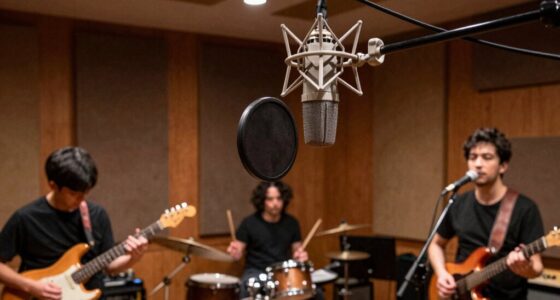
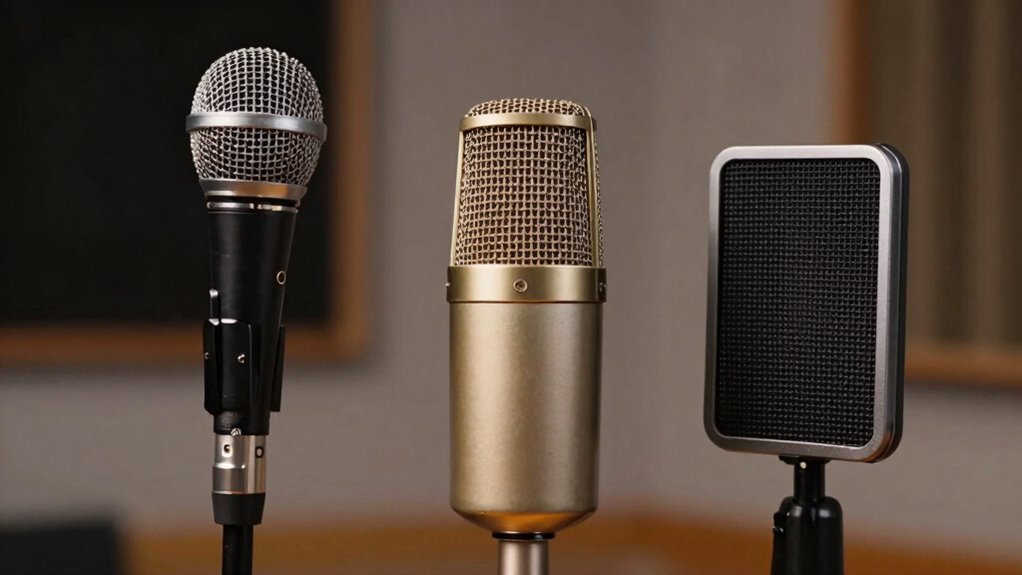
For live and studio vocals, you’ll find various mic types to suit your needs. Dynamic microphones are durable and great for loud stage performances, while condenser mics capture detailed vocals for studio recordings. Wireless mics offer mobility during live shows, and wired models guarantee steady sound for controlled environments. Polar patterns like cardioid or omnidirectional help you focus or capture ambient sound. Want to discover which mic fits your situation perfectly? Keep exploring for detailed tips on selecting the best microphone.
Key Takeaways
- Different microphone types are designed for specific applications, such as live performances or studio recordings.
- Wireless microphones offer mobility, ideal for dynamic live setups, while wired mics provide consistent quality for studio use.
- Polar patterns like cardioid and omnidirectional influence sound capture and rejection, crucial for vocal clarity in various environments.
- Key features like durability and sound quality ensure optimal performance in demanding live or studio settings.
- Selecting the right microphone depends on environment, mobility needs, and desired sound isolation for vocals.
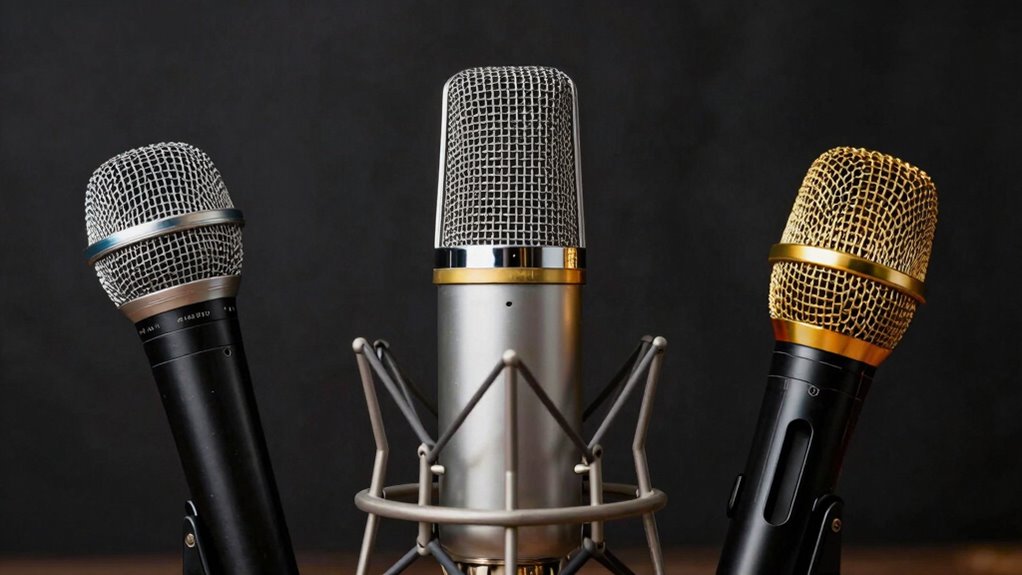
Microphones come in various types, each designed to suit different recording and sound reinforcement needs. When choosing the right microphone for live performances or studio vocals, understanding the key features like wireless connectivity and polar pattern options can make all the difference. Wireless connectivity allows you to move freely on stage or during a recording session without worrying about tangled cables, making it ideal for performers who want mobility and convenience. Whether you’re singing at the front of a stage or recording in a studio, wireless microphones eliminate the clutter of cables, giving you a cleaner setup and greater flexibility. This feature is especially useful in dynamic live environments, where mobility is vital, or in studio settings where you want to minimize equipment clutter. Additionally, understanding the different kinds of microphones and their specific applications can significantly improve your sound quality and setup efficiency. For example, some microphones are designed with durability in mind, making them suitable for rugged live environments. Polar pattern options are equally important because they determine how a microphone captures sound from different directions. For vocals, cardioid patterns are the most common—they pick up sound primarily from the front and reject noise from the sides and rear. This makes cardioid microphones excellent for isolating vocals from background noise and preventing feedback during live performances. Omnidirectional microphones, which pick up sound equally from all directions, are more suitable for studio recordings where you want a natural, ambient sound or when multiple performers are sharing a single microphone. Bidirectional or figure-eight patterns capture sound from the front and back, making them ideal for duet recordings or interviews where two sources face each other. In choosing between wired and wireless microphones, consider your environment and mobility needs. Wireless models often use digital or analog signals to transmit sound, with some offering advanced features like encryption for secure transmissions. While wireless microphones provide freedom of movement, they can be more expensive and may require batteries or charging. Wired microphones, on the other hand, tend to be more reliable with consistent sound quality and are generally more affordable. They are perfect for controlled studio environments or fixed stage setups where movement isn’t a priority. It’s also important to consider sound quality and the durability of the microphone, especially in demanding live settings. Selecting a microphone with appropriate features can help you adapt to different environments and ensure high performance. For optimal performance, selecting a microphone with the right features can make all the difference in capturing clear, professional audio. Ultimately, selecting the right microphone depends on understanding your specific requirements. If you perform on stage and need the freedom to roam, a wireless microphone with a cardioid polar pattern is a strong choice. For studio work, where sound quality and directional control are paramount, a wired microphone with suitable polar pattern options will serve you best. By paying attention to these features, you guarantee your vocals are captured accurately and with clarity, whether in a live setting or a recording studio.

Shure SM58-LC Dynamic Vocal Microphone – Professional Handheld Cardioid XLR Mic for Singing, Live Performance, Studio Recording, Podcast & Broadcast, Black
LEGENDARY VOCAL CLARITY: A finely tuned frequency response with subtle midrange lift delivers warm, articulate vocals that cut…
As an affiliate, we earn on qualifying purchases.
As an affiliate, we earn on qualifying purchases.
Frequently Asked Questions
How Do I Choose the Best Microphone for My Voice?
To choose the best microphone for your voice, consider your vocal tone and how sensitive the microphone needs to be. If you have a bright, high-pitched voice, a condenser mic might enhance your tone, while a dynamic mic suits a more powerful, raw sound. Test different options, paying attention to microphone sensitivity, to find the one that captures your voice naturally and complements your unique vocal style.
What Are the Common Issues With Different Microphone Types?
You might notice some quirks with different microphones, like unwanted background noise or feedback, often linked to their polar patterns. For example, cardioid mics focus on your voice but can pick up room sounds if not positioned carefully. Using the right microphone accessories, like pop filters or shock mounts, can help minimize issues. Being aware of these common pitfalls lets you fine-tune your setup for clearer, more professional sound.
Can I Use Studio Microphones for Live Performances?
Yes, you can use studio microphones for live performances, but consider their durability and power needs. Studio mics often lack the ruggedness needed for the stage, so they might not withstand rough handling or high sound pressure levels. Additionally, check their power requirements—some need external phantom power, which may not be readily available on stage. If you choose to use them, handle with care and make certain your setup supports their specs.
How Does Microphone Placement Affect Sound Quality?
Microphone placement considerably impacts sound quality by influencing clarity and feedback. You should consider polar patterns to target specific sounds and reduce unwanted noise. Using pop filters helps minimize plosive sounds and protect the mic. Position your microphone correctly—usually a few inches from your mouth—and adjust angles to optimize sound capture. Proper placement ensures your vocals are clear, balanced, and free from unwanted noise or distortion.
Are There Wireless Microphones Suitable for Vocals?
Imagine you’re a singer on stage, and yes, there are wireless microphones perfect for you. These mics offer wireless connectivity, giving you freedom to move without cables. Many models boast impressive battery life, so you won’t have to worry about losing power mid-performance. Whether for live shows or studio sessions, wireless microphones provide clear vocals and mobility, making your performance seamless and more dynamic.
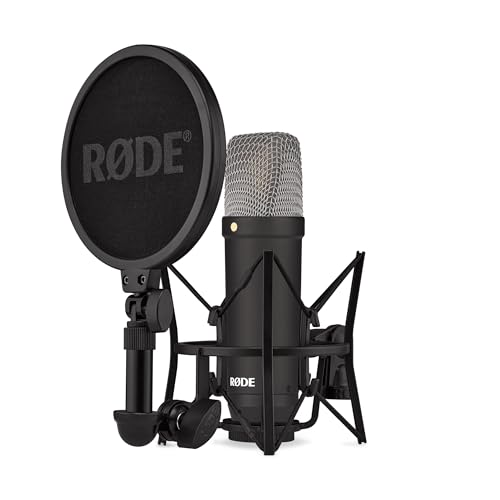
RØDE NT1 Signature Series Large-Diaphragm Condenser Microphone with Shock Mount, Pop Filter and XLR Cable for Music Production, Vocal Recording, Streaming and Podcasting (Black)
Large-diaphragm cardioid condenser microphone ideal for music production, vocal recording, streaming and podcasting
As an affiliate, we earn on qualifying purchases.
As an affiliate, we earn on qualifying purchases.
Conclusion
Choosing the right microphone is like finding the perfect dance partner—it brings your vocals to life and makes every performance shine. Whether you’re capturing the raw emotion of a live show or the intricate nuances of a studio recording, each mic type has its own personality and charm. When you match your mic to your voice and environment, you access a world of sonic magic. So go ahead, pick your partner, and let your vocals soar like a melody in the wind.

MICNAUX Wireless Microphone System, Pro 8 Channel UHF Mics Set with Metal Cordless Handheld Mics & Receiver, 200 Adjustable Frequency, 300ft Range for Singing, Church, Karaoke, Party
DURABLE METAL CONSTRUCTION: Built for reliability, the UHF wireless receiver and handheld microphones feature robust metal housings, ideal…
As an affiliate, we earn on qualifying purchases.
As an affiliate, we earn on qualifying purchases.
Shure SM58-LC Dynamic Vocal Microphone – Professional Handheld Cardioid XLR Mic for Singing, Live Performance, Studio Recording, Podcast & Broadcast, Black
LEGENDARY VOCAL CLARITY: A finely tuned frequency response with subtle midrange lift delivers warm, articulate vocals that cut…
As an affiliate, we earn on qualifying purchases.
As an affiliate, we earn on qualifying purchases.