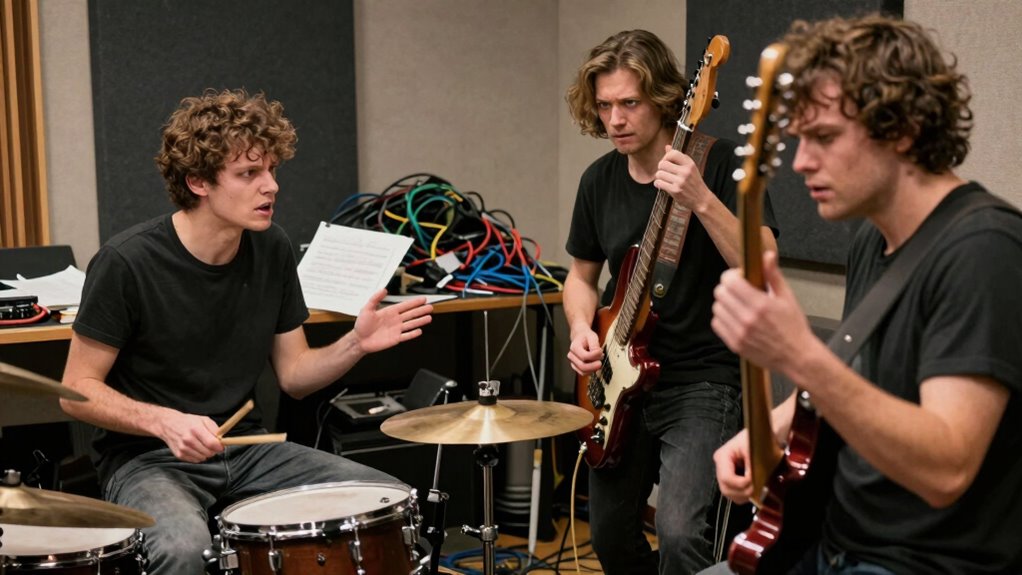

One common mistake bands make during rehearsals is assuming everyone is on the same page without clear communication. You might think that knowing your parts is enough, but overlooking details about nuances, stage presence, or cues can lead to misunderstandings. This misalignment affects energy, audience engagement, and sound balance during performances. If you keep skipping open dialogue and clarifying roles, it can hurt your stage presence and cohesion. Continuing on will help you avoid these pitfalls.

Get audio and creator gear delivered free with Prime
- Fast, free delivery on millions of items
- Prime Video, Amazon Music and more included
- Member-only deals all year
Key Takeaways
- Assuming everyone understands their roles without explicit clarification leads to misaligned performances.
- Failing to discuss nuances of stage presence causes disjointed energy and visual disconnect.
- Not maintaining open dialogue fosters mistrust and reduces cohesion among band members.
- Relying solely on sound checks without ongoing communication results in sound issues during the performance.
- Ignoring real-time feedback and adjustments hampers quick problem-solving and affects overall show quality.

Many bands fall into the same communication trap during rehearsals: assuming everyone is on the same page without clarifying details. You might think that because everyone knows their parts, there’s no need to talk through every nuance. But overlooking clear communication can lead to misaligned expectations, especially when it comes to stage presence and sound engineering. Without open dialogue, you risk ending up with a performance that feels disconnected or poorly balanced. Clear communication about sound adjustments during rehearsals can prevent misunderstandings during live shows.
When you don’t clarify how each member’s stage presence should come across, it can create a disjointed energy on stage. For example, if you’re unaware of how your bandmates want to engage with the audience, you might accidentally overshadow each other or miss opportunities to create a compelling visual dynamic. Discussing stage presence beforehand ensures everyone understands their role in energizing the crowd, which results in a cohesive and memorable show. It’s about aligning your movements, eye contact, and interaction so the audience feels the band’s unity. Additionally, fostering an environment where open dialogue is encouraged helps build trust among band members, which is essential for smooth performances.
Sound engineering is another area where assumptions can cause problems. Many bands assume that the sound check is enough to get everything right, but without ongoing communication about the mix, you might find yourself stuck with an unbalanced sound. If you don’t clarify who should be the point person for sound adjustments or how to communicate issues during the performance, small problems can snowball into major distractions. For instance, if the drums are too loud or vocals are drowned out, you might end up spending half the set trying to fix it rather than focusing on your performance. Regularly discussing sound engineering details helps everyone stay on the same page and adapt quickly during live shows. Recognizing the importance of effective communication in these technical aspects can significantly improve your overall sound quality.
band rehearsal communication tools
As an affiliate, we earn on qualifying purchases.
As an affiliate, we earn on qualifying purchases.
Frequently Asked Questions
How Can Bands Improve Their On-Stage Communication?
To improve on-stage communication, focus on clear cues and consistent signals to coordinate performance timing seamlessly. Engage your audience by making eye contact, reading their reactions, and adjusting your energy accordingly. Practice as a band to refine your timing and guarantee everyone’s on the same page. Good communication boosts confidence, enhances audience engagement, and creates a more memorable performance for everyone involved.
What Are Common Non-Verbal Communication Errors During Rehearsals?
You often make non-verbal communication errors during rehearsals by missing vital musical cues or failing to maintain eye contact. When you overlook cues, your timing and coordination suffer. Avoid this by actively watching your bandmates and making deliberate eye contact, which helps reinforce cues and signals. Pay attention to body language, and make certain everyone’s on the same page, fostering seamless communication and a tighter performance.
How Does Communication Affect Band Cohesion and Performance?
Did you know that clear communication boosts band cohesion by 50%? When you prioritize leadership clarity and focus on musical synchronization, your band performs better together. Effective communication helps members understand cues, stay in sync, and boost confidence. This unity creates a more engaging performance. So, by improving your communication, you enhance both individual contributions and overall band harmony, leading to a more powerful, cohesive sound.
What Tools Can Enhance Communication Among Band Members?
You can enhance communication among band members by using tools like metronomes and apps that promote musical synchronization, ensuring everyone stays in time. Incorporate feedback techniques such as constructive critiques and active listening to improve cohesion. Clear, open channels of communication help prevent misunderstandings, allowing the band to perform seamlessly. Regularly using these tools and techniques fosters better teamwork, leading to more polished performances and stronger musical connections.
How Should Conflicts Arising From Miscommunication Be Handled?
Like Odysseus charting treacherous waters, you should address conflicts through effective listening and clear expectations. When miscommunication sparks tension, calmly listen to each member’s perspective without interrupting, ensuring everyone feels heard. Then, clarify your shared goals and roles, aligning expectations. This approach fosters understanding, reduces misunderstandings, and keeps your band united—transforming conflicts into opportunities for growth and stronger collaboration.
stage presence coaching for bands
As an affiliate, we earn on qualifying purchases.
As an affiliate, we earn on qualifying purchases.
Conclusion
Remember, communication is the backbone of a successful band. If you keep repeating the same mistakes at rehearsal, it’s like banging your head against a wall—eventually, you’ll get nowhere. Instead, listen actively, clarify instructions, and give constructive feedback. When everyone’s on the same page, your sound will improve, and rehearsals will be more productive. As the saying goes, “A chain is only as strong as its weakest link”—strengthen your communication to strengthen your band.
live sound engineering equipment
As an affiliate, we earn on qualifying purchases.
As an affiliate, we earn on qualifying purchases.
band coordination and cue systems
As an affiliate, we earn on qualifying purchases.
As an affiliate, we earn on qualifying purchases.
Fall Picks
fall essentials
As an affiliate, we earn on qualifying purchases.