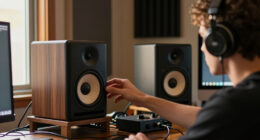

To turn live recordings into effective practice tools, actively listen and analyze key details like phrasing, dynamics, and improvisational choices. Slow down sections to identify chord progressions or scales, and mimic the techniques performers use. Focus on expressing nuances such as breath, articulation, and timing to improve your own skills. By engaging deeply with live nuances, you can develop a more versatile and expressive style—if you keep exploring, you’ll discover even more ways to elevate your playing.

Get audio and creator gear delivered free with Prime
- Fast, free delivery on millions of items
- Prime Video, Amazon Music and more included
- Member-only deals all year
Key Takeaways
- Actively analyze performance nuances, such as phrasing, dynamics, and improvisation, rather than passively listening.
- Slow down the recording to identify and study specific chord progressions, scales, or technical passages.
- Mimic live performers’ techniques to improve your own technical and expressive skills.
- Observe how performers respond to live energy and adapt their interpretation, enhancing your improvisation skills.
- Use recordings to connect music theory concepts with real-world performance, deepening your understanding.

Listening to live recordings can be a powerful way to improve your skills because they offer real-time insights into performance nuances. When you approach recordings with intent, they become more than just background noise—they turn into dynamic learning tools. Instead of passively listening, focus on analyzing how musicians interpret melodies, rhythms, and dynamics. Pay close attention to how they apply music theory in real-time—notice the phrasing, harmonic choices, and improvisational elements. This active listening helps you connect theoretical concepts with actual performance, deepening your understanding beyond textbook knowledge.
As you listen, challenge yourself with specific goals. For example, pick a section of a recording and slow it down if possible. Try to identify the chord progressions, scales, or modes being used, and see how they fit within the context of the piece. This process sharpens your ear and reinforces music theory concepts. Simultaneously, observe how performers execute technical exercises in live settings—how they navigate tricky passages, control breath, or manipulate fingerings. Mimicking these techniques in your practice sessions can elevate your technical exercises and improve your overall dexterity.
Use live recordings to analyze phrasing and articulation, which are often more expressive and spontaneous than in studio recordings. Notice how performers breathe, accentuate certain notes, or improvise within a framework. This insight encourages you to experiment with your phrasing and develop your personal style. When practicing, incorporate these observations into your technical exercises, focusing on precision and expressiveness. Repeating complex passages inspired by live performances helps develop muscle memory and confidence. Additionally, actively listening techniques can enhance your ability to dissect performances more effectively.
You can also use recordings to study how performers adapt during live shows, responding to audience energy or improvising on the spot. This adaptability can inspire you to become a more flexible musician. Recordings can serve as a reference for how to approach improvisation, especially if you analyze live solos note by note. Try to understand the choices made within the context of the music theory behind the improvisation, then incorporate similar ideas into your own playing. Additionally, analyzing performance strategies in live recordings can help you understand how musicians manage pressure and spontaneity during performances. Recognizing musical spontaneity can motivate you to embrace improvisation and develop your own creative voice.
Ultimately, using live recordings as active practice tools bridges the gap between theory and real-world application. They provide a window into authentic performance, showing how musicians interpret and adapt music in real-time. By engaging with recordings this way, you deepen your understanding, refine your technical skills, and develop a more expressive, versatile approach to your instrument.
audio slow down pedal for musicians
As an affiliate, we earn on qualifying purchases.
As an affiliate, we earn on qualifying purchases.
Frequently Asked Questions
How Can I Select the Best Live Recordings for Practice?
To select the best live recordings for practice, focus on high recording quality and match the music genres you want to improve. Look for recordings with clear audio, minimal crowd noise, and good instrument balance. Choose performances that showcase the techniques you want to develop, whether jazz, rock, or classical. Avoid recordings with poor sound quality or excessive background noise, so you can focus on learning and improving effectively.
What Equipment Is Needed to Analyze Live Recordings Effectively?
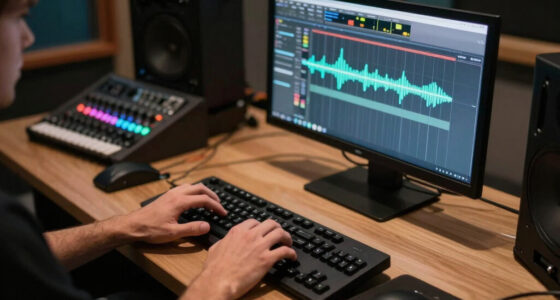
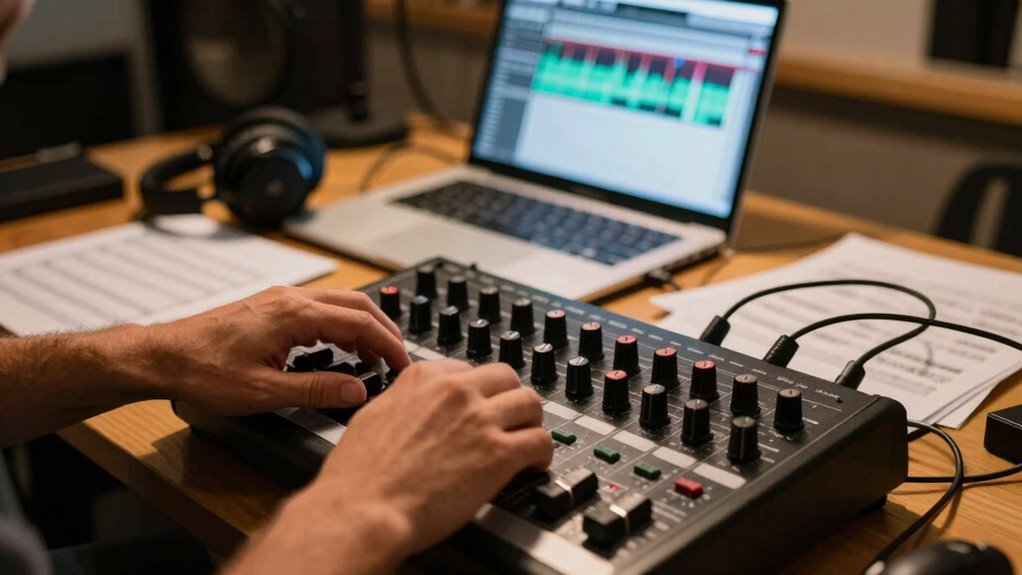
Picture yourself in a studio, equipped and ready to analyze live recordings. You’ll need essential equipment like a high-quality audio interface, headphones, and a reliable computer with editing software. Focus on recording quality to capture every detail—clear sound and minimal noise. These tools help you identify nuances, improve your skills, and turn recordings into powerful practice tools. With the right setup, you transform ordinary recordings into insightful learning sessions.
How Do I Adjust Recordings for Different Skill Levels?
You adjust recordings for different skill levels by tailoring your listening focus and challenging your musical intuition. For beginners, slow down the tempo and focus on basic melodies, gradually increasing complexity. For advanced players, isolate intricate sections to sharpen listening focus and develop musical intuition. Repeating sections and gradually increasing speed help you stay engaged without overwhelming, allowing you to build skills comfortably while deepening your understanding of the music.
Can Live Recordings Help Improve Specific Techniques?
Yes, live recordings can help improve specific techniques. By listening carefully, you can identify areas for improvement through technique analysis. Use these recordings as part of your improvement strategies, focusing on details like timing, tone, and execution. Replay sections repeatedly, and compare your performance to the recording. This active listening helps you refine your skills, giving you targeted feedback and boosting your overall technique development.
How Often Should I Incorporate Live Recordings Into Practice?
You should incorporate live recordings into your practice at least once or twice a week, depending on your music genre and recording quality. Regular listening helps you internalize stylistic nuances and improve your technique. For genres like jazz or classical, more frequent sessions are beneficial. Focus on high-quality recordings to catch details, and vary your practice to keep it engaging and effective, ensuring steady progress.
As an affiliate, we earn on qualifying purchases.
Conclusion
Now that you know how to turn live recordings into powerful practice tools, imagine the possibilities waiting for you. Will you focus on perfecting your timing, or maybe capturing the raw energy of a live performance? The secret lies in your hands—are you ready to release your full potential? Keep listening, practicing, and pushing boundaries. The next breakthrough could be just a recording away—are you prepared to discover what’s truly possible?
As an affiliate, we earn on qualifying purchases.
As an affiliate, we earn on qualifying purchases.
Halloween Picks
halloween
As an affiliate, we earn on qualifying purchases.