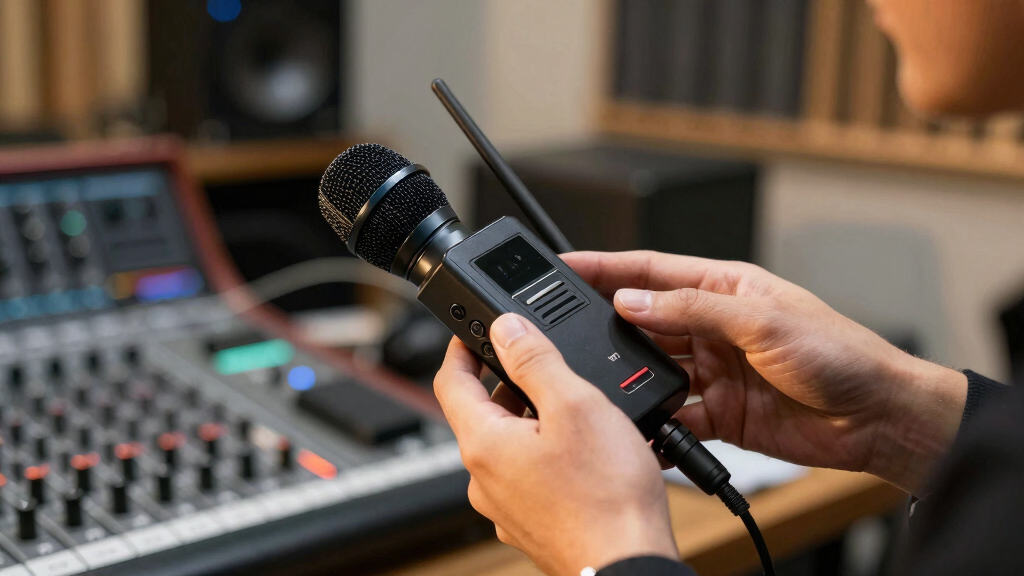

Among these wireless microphone systems, I’d name the Shure BLX24/PG58 best overall for buyers who want a recognized vocal system with a stated 300-foot range and 14-hour battery life. The Phenyx Pro PTU-7000-4H stands out for four-channel UHF flexibility and auto scan, while the TONOR TW388 serves events that need several headset or lavalier transmitters. The main tradeoff is between simple handheld setups, multi-mic capacity, and the frequency control or microphone variety needed for more demanding use. I compare the full 12-model lineup by fit, setup, and practical limitations below so you can find a system that suits your stage, event, or venue.

Get audio and creator gear delivered free — and shop member deals
- Fast, free delivery on millions of items
- Access to Prime Big Deal Days deals on October 6–7
- Prime Video, Amazon Music and more included
Complete the kit

Key Takeaways
- The Shure BLX24/PG58 is the clearest all-around vocal choice in this lineup, with a stated 300-foot range and 14-hour battery life; buyers needing several simultaneous mics should look elsewhere.
- Auto scan changes the setup equation: the Phenyx Pro PTU-7000-4H and PTU-71-2H offer a way to find a usable frequency, while fixed-frequency systems put more responsibility on the user.
- Channel count is not the same as speaker capacity: the TONOR TW388’s eight bodypacks suit group presentations, while four-channel handheld sets fit multiple vocalists but require more receiver and frequency planning.
- The JOYO MW-2 solves a different problem by adding wireless capability to a compatible dynamic microphone through a plug-on XLR transmitter, rather than supplying a conventional handheld microphone package.
- More features can mean more setup work: rackmount formats and multiple frequency options can help organized venues, but a simple two-mic system may be a better fit for casual karaoke or small events.
| TONOR Wireless Microphone System, Handheld Microphone, Gray | 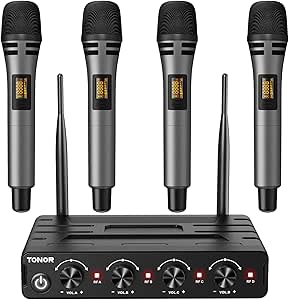 | Best Value for Simple Handheld Use | Connectivity: UHF | Connector: 6.35 mm jack | Form factor: Handheld | VIEW LATEST PRICE | See Our Full Breakdown |
| Phenyx Pro 4-Channel UHF Fixed Frequency Wireless Microphone System PTU-5000-4H |  | Best for Durable Four-Mic Events | Connectivity: UHF, 6.35 mm jack, and XLR | Channels: 4 | Frequency range: 541.9–568.65 MHz | VIEW LATEST PRICE | See Our Full Breakdown |
| JOYO 2.4GHz Wireless XLR Microphone System, Plug-on Transmitter & Receiver for Dynamic Mics, 100ft Range, 24-bit/48kHz, 6-8Hr Battery, 4-Channel (MW-2) |  | Best for Making a Dynamic XLR Mic Wireless | Wireless frequency: 2.4 GHz | Stated range: Up to 100 ft | Audio quality: 24-bit / 48 kHz | VIEW LATEST PRICE | See Our Full Breakdown |
| TONOR Wireless Microphone System with Handheld, Headset, and Lavalier Microphones |  | Best for Hands-Free Presentation Options | Connectivity: XLR | Connector: Aux | Microphone formats: Handheld, headset, and lavalier | VIEW LATEST PRICE | See Our Full Breakdown |
| Phenyx Pro Dual UHF Tunable Frequency Wireless Microphone System PTU-52-2H |  | Best for Frequency Flexibility | Connectivity: UHF, 6.35 mm jack, and XLR | Frequency range: 500–590 MHz | Frequency groups: 30 tunable groups | VIEW LATEST PRICE | See Our Full Breakdown |
| Shure BLX24/PG58 Wireless Vocal System (H9 Band, 300 ft Range, 14-Hour Battery) |  | Best for Solo Vocalists | Frequency band: H9 (512–542 MHz) | Range: 300 ft (100 m), line-of-sight | Battery life: Up to 14 hours on AA batteries | VIEW LATEST PRICE | See Our Full Breakdown |
| TONOR TW388 Wireless Microphone System with 8 Bodypack Transmitters and Headset/Lavalier Mics |  | Best for Large Groups | Model: TW388 (24236) | Wireless technology: UHF | Number of channels: 8 | VIEW LATEST PRICE | See Our Full Breakdown |
| MELONARE 4-Channel Wireless Microphone System (MWM-41-4H) |  | Best for Compact Four-Handheld Setups | Model: MWM-41-4H | Frequency range: 530–580 MHz | Number of channels: 4 | VIEW LATEST PRICE | See Our Full Breakdown |
| Phenyx Pro 4 Channel UHF Auto Scan Wireless Microphone System PTU-7000-4H |  | Best for Four-Mic Venue Flexibility | Number of channels: 4 | Frequency range: 530–580 MHz | Maximum stated range: 328 ft | VIEW LATEST PRICE | See Our Full Breakdown |
| Phenyx Pro Dual UHF Auto Scan Handheld Wireless Microphone System PTU-71-2H |  | Best for Two-Mic Events | Number of channels: 2 | Frequency range: 530–580 MHz | Maximum stated range: Up to 328 ft | VIEW LATEST PRICE | See Our Full Breakdown |
| MELONARE 4-Channel Wireless Microphone System (MWM-41F) |  | Best for Four-Mic Rack Setups | Wireless band: UHF, 500 MHz range stated in product description | Microphones: 4 handheld dynamic microphones | Channels: 4 | VIEW LATEST PRICE | See Our Full Breakdown |
| JBL Wireless Two Microphone System with Dual-Channel Receiver |  | Best for JBL PartyBox Pairing | Wireless system: Dual-channel UHF receiver | Microphone capacity: 2 microphones | Playback time: Up to 6 hours | VIEW LATEST PRICE | See Our Full Breakdown |
| wireless microphone system | Power | Frequency range |
|---|---|---|
| TONOR Wireless Microphone Syst | Battery powered | — |
| Phenyx Pro 4-Channel UHF Fixed | 8 AA batteries required | 541.9–568.65 MHz |
| JOYO 2.4GHz Wireless XLR Micro | — | — |
| TONOR Wireless Microphone Syst | Battery powered | — |
| Phenyx Pro Dual UHF Tunable Fr | 4 AA batteries required | 500–590 MHz |
| Shure BLX24/PG58 Wireless Voca | — | — |
| TONOR TW388 Wireless Microphon | — | — |
| MELONARE 4-Channel Wireless Mi | — | 530–580 MHz |
| Phenyx Pro 4 Channel UHF Auto | Eight AA batteries, included | 530–580 MHz |
| Phenyx Pro Dual UHF Auto Scan | Eight AA batteries, included | 530–580 MHz |
| MELONARE 4-Channel Wireless Mi | 8 AA batteries included | — |
| JBL Wireless Two Microphone Sy | Battery powered; listed with 1 lithium-polymer battery | 65–15,000 Hz |
More Details on Our Top Picks
TONOR Wireless Microphone System, Handheld Microphone, Gray
For karaoke hosts, presenters, or small events that need one straightforward handheld setup, this TONOR stands out for its 200-foot stated range and automatic syncing. Its UHF connection and compatibility with mixers, karaoke machines, amplifiers, and speakers give it more flexibility than a microphone tied to one audio setup. Compared with the Phenyx Pro PTU-52-2H, though, it offers less frequency-management detail for crowded wireless environments, and its channel information is less clear. The tradeoff is simplicity: it is a sensible choice when a basic handheld is enough, but it cannot provide headset or lavalier placement for hands-free speaking. Batteries are not included, and interference may require manual channel changes, so I would favor a more adjustable system for frequent events in busy venues.
Pros:- Stated wireless range of up to 200 feet supports movement across larger rooms
- Automatic syncing helps simplify initial setup
- Works with mixers, karaoke machines, amplifiers, and speakers
- UHF connectivity and multiple channels offer more flexibility than a fixed, single-channel setup
Cons:- Batteries are not included
- Handheld-only design does not suit hands-free speaking
- Manual channel switching may be needed when interference occurs
Best for: Karaoke hosts and occasional presenters who need a simple handheld microphone compatible with common mixers and speakers
Not ideal for: Speakers who need hands-free headset or lavalier microphones, or event operators who need detailed frequency coordination in crowded venues
- Connectivity:UHF
- Connector:6.35 mm jack
- Form factor:Handheld
- Polar pattern:Unidirectional
- Number of channels:4
- Stated range:Up to 200 ft / 60 m
- Power:Battery powered
- Color:Gray
Our verdict“Choose this TONOR for a simple, long-range handheld setup, but pick a more frequency-flexible system if you regularly work in crowded wireless environments.”
Phenyx Pro 4-Channel UHF Fixed Frequency Wireless Microphone System PTU-5000-4H
The PTU-5000-4H is the stronger fit when a venue needs four handheld microphones and a receiver built for regular setup and teardown. Its metal construction and cardioid pickup pattern give it a more work-oriented profile than the plastic-bodied JOYO MW-2, which is designed to make a dynamic XLR microphone wireless rather than supply a four-mic handheld kit. The stated 260-foot range also gives this Phenyx Pro room for performers to move across a larger space. Its main compromise is the fixed-frequency design: it is simple to monitor through the LCD, but it offers less flexibility than the tunable PTU-52-2H when frequencies conflict. I would also plan for an external amp or speaker and a supply of AA batteries; this receiver does not produce sound on its own.
Pros:- Four-channel setup suits events with several speakers or performers
- Metal enclosure is suited to frequent transport and handling
- Cardioid microphones help reject sound arriving from off-axis
- LCD and stated range of up to 260 feet aid setup and movement
Cons:- Fixed frequencies offer less flexibility than the tunable PTU-52-2H
- Requires an external amplifier, mixer, or speaker for sound output
- Eight AA batteries are required, which can mean replacements during extended use
Best for: Small venues, event organizers, and karaoke hosts who need four durable handheld microphones for use with an existing PA or mixer
Not ideal for: Buyers who need tunable frequencies for changing RF conditions, or anyone expecting a self-contained speaker system
- Connectivity:UHF, 6.35 mm jack, and XLR
- Channels:4
- Frequency range:541.9–568.65 MHz
- Stated range:Up to 260 ft
- Polar pattern:Unidirectional cardioid
- Signal-to-noise ratio:105 dB
- Microphone form factor:Handheld
- Power:8 AA batteries required
- Enclosure:Metal
Our verdict“Pick the PTU-5000-4H for a durable four-handheld kit and existing PA, but choose the tunable PTU-52-2H when frequency flexibility matters more.”
JOYO 2.4GHz Wireless XLR Microphone System, Plug-on Transmitter & Receiver for Dynamic Mics, 100ft Range, 24-bit/48kHz, 6-8Hr Battery, 4-Channel (MW-2)
Unlike the handheld kits in this roundup, the JOYO MW-2 lets a buyer keep a compatible dynamic XLR microphone and add wireless operation with a plug-on transmitter and receiver. That makes it a more targeted choice than the TONOR Gray handheld system, which supplies its own microphone but does not offer the same way to reuse an existing dynamic mic. The listed 24-bit/48 kHz audio and rechargeable 6–8-hour battery suit performances, recording setups, and camera rigs where portable operation matters. The range is shorter at 100 feet, and the system is not a universal replacement for a handheld kit: the product data warns of possible noise with some condenser microphones. Power cycles also call for careful muting to avoid pops, while 2.4 GHz interference can be an issue in some locations.
Pros:- Plug-on design can make a compatible dynamic XLR microphone wireless
- 24-bit/48 kHz audio specification suits recording-oriented setups
- Rechargeable battery is rated for 6–8 hours
- Supports up to four systems simultaneously
Cons:- Compatibility is aimed at dynamic microphones; some condenser mics may produce noise
- 100-foot stated range is shorter than the 200- and 260-foot claims on several UHF kits here
- Power cycling requires careful muting to avoid loud pops, and 2.4 GHz interference may affect operation
Best for: Performers and creators who already own a compatible dynamic XLR microphone and want a rechargeable wireless link to a PA, mixer, interface, or DSLR camera
Not ideal for: Buyers seeking a complete handheld microphone kit, users relying on condenser mics, or events that need more than 100 feet of stated range
- Wireless frequency:2.4 GHz
- Stated range:Up to 100 ft
- Audio quality:24-bit / 48 kHz
- Battery life:6–8 hours
- Battery type:Lithium-ion
- Simultaneous systems:Up to 4
- Supported microphone type:Dynamic microphones
- Supported devices:PA systems, mixers, audio interfaces, and DSLR cameras
- Housing:ABS plastic
Our verdict“Choose the MW-2 when you want to wireless-enable a compatible dynamic XLR mic, not when you need an all-in-one handheld system.”
TONOR Wireless Microphone System with Handheld, Headset, and Lavalier Microphones
This TONOR’s clearest advantage is the choice between handheld, headset, and lavalier microphones. A presenter can keep both hands free with a headset or lavalier, while a handheld suits announcements or karaoke—more placement flexibility than the TONOR Gray handheld-only system. The stated 200-foot range and automatic pairing also make it practical for meetings, church gatherings, and events where setup needs to be straightforward. The product data lists 20 channels, while the supplied description claims support for up to 40 microphones; I would not assume a particular simultaneous-microphone count without confirming the exact configuration. It is battery powered, with no included rechargeable battery option noted, and the available build information is limited. Buyers who prioritize documented durability or precise frequency planning may prefer a more clearly specified alternative.
Pros:- Handheld, headset, and lavalier options support different speaking and performance styles
- Stated range of up to 200 feet allows movement around a venue
- Automatic pairing can reduce setup steps
- Listed 20-channel specification offers channel choices
Cons:- Batteries are not included, and no rechargeable battery option is specified
- Product data gives differing channel-capacity details, so simultaneous operation needs clarification
- Limited durability information makes it harder to judge suitability for heavy touring use
Best for: Churches, meeting organizers, and presenters who want to switch between handheld and hands-free microphone styles
Not ideal for: Buyers who need clearly documented simultaneous-channel capacity, rechargeable transmitters, or detailed durability information
- Connectivity:XLR
- Connector:Aux
- Microphone formats:Handheld, headset, and lavalier
- Polar pattern:Unidirectional
- Listed channels:20
- Stated range:Up to 200 ft
- Signal-to-noise ratio:60 dB
- Power:Battery powered
- Enclosure materials:Metal and plastic
Our verdict“Choose this TONOR when hands-free headset or lavalier use matters, but confirm channel capacity before relying on it for a multi-microphone event.”
Phenyx Pro Dual UHF Tunable Frequency Wireless Microphone System PTU-52-2H
For two-microphone events where radio conditions may vary, the PTU-52-2H stands out for its tunable UHF frequencies and 30 frequency groups. That adjustability gives it an advantage over the Phenyx Pro PTU-5000-4H, whose four channels use fixed frequencies: the PTU-52-2H can be a better fit when operators need to respond to interference, though it supplies only two handheld microphones rather than four. Automatic pairing, mute and volume controls, and a stated open-space range of up to 200 feet support practical event use. The metal construction suits regular handling, but the receiver is bulkier than a compact plug-on option like the JOYO MW-2. It also runs on AA batteries and stays within the UHF band, so battery planning and local RF conditions still matter.
Pros:- Tunable frequencies and 30 frequency groups offer more adjustment than fixed-frequency systems
- Automatic pairing can speed setup
- Metal construction is suited to regular event handling
- Stated open-space range of up to 200 feet supports movement around a venue
Cons:- Two handheld microphones may not cover larger panels or groups
- Requires four AA batteries, which need replacement over time
- UHF operation may be affected by local frequency conditions, and the receiver is relatively bulky
Best for: DJs, karaoke hosts, and small event operators who need two handheld microphones and the ability to select frequencies around interference
Not ideal for: Choirs or panels needing four supplied microphones, or creators looking for a compact rechargeable XLR plug-on system
- Connectivity:UHF, 6.35 mm jack, and XLR
- Frequency range:500–590 MHz
- Frequency groups:30 tunable groups
- Channels:60
- Stated range:Up to 200 ft in open space
- Microphone form factor:Handheld
- Signal-to-noise ratio:98 dB
- Power:4 AA batteries required
- Weight:2.5 lb
Our verdict“Pick the PTU-52-2H for a two-mic UHF setup with frequency adjustment, but choose the PTU-5000-4H if supplying four microphones matters more.”
Shure BLX24/PG58 Wireless Vocal System (H9 Band, 300 ft Range, 14-Hour Battery)
The Shure BLX24/PG58 is the clearest fit here for a singer or presenter who needs one dependable handheld channel rather than a multi-mic package. Its PG58 dynamic microphone and included BLX4 receiver make the setup focused on vocal use, while QuickScan helps find an available frequency without the manual selection required by the MELONARE MWM-41-4H. The listed 14-hour AA battery life also means fewer mid-event changes than a system built around several transmitters. Its 300-foot line-of-sight range gives performers room to move, though actual usable range depends on the venue and local radio conditions. The tradeoff is capacity: unlike the four-channel Phenyx Pro PTU-7000-4H, this system handles one microphone at a time, and its H9 band needs a local frequency-compliance check.
Pros:- Up to 14 hours of operation on AA batteries
- QuickScan helps locate an available frequency
- 300-foot stated line-of-sight range gives performers room to move
- Includes the receiver and PG58 handheld microphone
Cons:- Supports only one included microphone channel
- H9 band requires checking local frequency rules
- May take technical setup to get the best performance
Best for: Solo singers, presenters, and event hosts who want a dedicated handheld vocal system with long stated battery life and QuickScan frequency selection.
Not ideal for: Choirs, panels, and karaoke hosts who need several microphones active at once, or buyers who cannot use the H9 frequency band in their area.
- Frequency band:H9 (512–542 MHz)
- Range:300 ft (100 m), line-of-sight
- Battery life:Up to 14 hours on AA batteries
- Included components:BLX4 receiver, BLX2 transmitter with PG58 microphone, AA batteries, power supply
- Compatible systems per band:12
- Frequency selection:QuickScan technology
Our verdict“Choose the Shure BLX24/PG58 for a single vocalist who values long battery life and QuickScan more than multi-microphone capacity.”
TONOR TW388 Wireless Microphone System with 8 Bodypack Transmitters and Headset/Lavalier Mics
When eight speakers need hands-free microphones, the TONOR TW388 serves a different job from the handheld systems in this group. It includes eight bodypacks, each compatible with a headset or lavalier mic, so presenters can choose a visible headset for active movement or a less conspicuous lapel mic. That flexibility suits conferences, services, and group performances better than the four-handheld Phenyx Pro PTU-7000-4H. Auto-pairing, memory functions, and battery monitoring help manage a large set, although they do not remove the work of checking and replacing batteries across eight transmitters. The stated 295-foot range is close to the Shure BLX24/PG58’s 300 feet, but this TONOR is bulkier as a receiver package and trades handheld simplicity for hands-free use. Its AA batteries are not included.
Pros:- Eight bodypack transmitters support a large group
- Includes both headset and lavalier microphones for each bodypack
- Auto-pairing and memory functions can speed setup and reconnection
- Real-time battery and frequency displays aid monitoring
Cons:- Requires two AA batteries per transmitter, and batteries are not included
- Managing batteries and frequencies across eight units adds work
- Receiver package is relatively large at 20.47 x 13.39 x 4.72 inches
Best for: Churches, conference organizers, and performance groups that need up to eight bodypack users with a choice of headset or lavalier microphones.
Not ideal for: Solo singers or casual hosts who want a simple handheld kit, and buyers who do not want to supply and manage batteries for eight transmitters.
- Model:TW388 (24236)
- Wireless technology:UHF
- Number of channels:8
- Transmission range:295 ft (90 m)
- Microphone form factors:Headset and lavalier
- Microphone pattern:Unidirectional (cardioid)
- Outputs:6.35 mm jack and XLR
- Transmitter power:Two AA batteries per bodypack
- Included components:Eight bodypacks, eight headset mics, eight lapel mics, receiver, charging adapter, 6.35 mm cable, manual
Our verdict“Pick the TONOR TW388 when multiple presenters need hands-free mic options; skip it if a small handheld setup is all you need.”
MELONARE 4-Channel Wireless Microphone System (MWM-41-4H)
The MELONARE MWM-41-4H packages four handheld microphones with a compact receiver, making it a practical match for karaoke, weddings, and smaller events where several people need to take turns or speak. Its four channels cover more users than the single-channel Shure BLX24/PG58, while the included AA batteries and cables allow a straightforward start without assembling accessories separately. The stated 200-foot range is shorter than the 328-foot claims for both Phenyx Pro systems, so it fits venues where performers do not need to roam far from the receiver. Frequency groups are provided for multi-system use, but frequency selection still calls for manual setup, and crowded wireless environments may create interference. This is a compact, four-handheld alternative, not the best fit for buyers who need scan-assisted setup or the longest stated reach.
Pros:- Four handheld microphones support group use
- Includes AA batteries, receiver, and cables
- Compact design is suited to portable event setups
- Frequency groups support use with multiple systems
Cons:- 200-foot stated range is shorter than the Phenyx Pro systems’ 328-foot claims
- Manual frequency selection may take extra setup
- Eight AA batteries are required, and frequent replacement may be needed
Best for: Karaoke hosts and small event organizers who need four handheld microphones in a compact kit and can manage frequency selection.
Not ideal for: Performers in large venues who need greater stated range, or users who want auto-scan help in crowded wireless environments.
- Model:MWM-41-4H
- Frequency range:530–580 MHz
- Number of channels:4
- Wireless range:200 ft
- Microphone type:Dynamic handheld, cardioid pattern
- Audio sampling rate:24-bit/48 kHz
- Frequency groups:4 groups of 10 frequencies
- Battery requirement:8 AA batteries, included
- Outputs:6.35 mm jack and XLR
Our verdict“Choose the MELONARE MWM-41-4H for a compact four-handheld kit at events where its 200-foot range and manual frequency setup are acceptable.”
Phenyx Pro 4 Channel UHF Auto Scan Wireless Microphone System PTU-7000-4H
The Phenyx Pro PTU-7000-4H is a stronger match than the MELONARE MWM-41-4H when four handheld microphones need more stated operating reach and help finding usable frequencies. Its auto scan feature can reduce manual frequency selection, while the listed 328-foot maximum range gives more room than the MELONARE’s 200-foot specification. Metal construction and adjustable EQ also make this set appealing for regular use with a mixer, PA, or event sound system. Those advantages come with a substantial receiver package: at 4.08 kg, it is less convenient to carry than a compact kit. It still requires eight AA batteries, and auto scan cannot remove the need to manage UHF frequencies in a busy venue. Compared with the two-channel Phenyx Pro PTU-71-2H, it favors channel capacity over a smaller setup.
Pros:- Four channels support multiple handheld microphones
- Auto scan helps with frequency selection
- 328-foot maximum stated range offers more room than the MELONARE MWM-41-4H
- Metal construction and adjustable EQ suit regular event setups
Cons:- System weighs 4.08 kg, making it less convenient to transport
- Requires eight AA batteries
- UHF operation still calls for frequency management, particularly at busy venues
Best for: Venue operators, DJs, and event organizers who need four handheld channels, auto scan, and a longer stated range for PA or mixer use.
Not ideal for: Traveling performers who prioritize a light, compact kit, or users who only need one or two microphones at a time.
- Number of channels:4
- Frequency range:530–580 MHz
- Maximum stated range:328 ft
- Frequency response:50 Hz–18 kHz
- Microphone pattern:Unidirectional
- Outputs:6.35 mm jack and XLR
- Power:Eight AA batteries, included
- Weight:4.08 kg
- Features:Auto scan, battery indicator, lock, mute, volume control
Our verdict“Choose the PTU-7000-4H when four handheld channels and auto scan matter more than keeping the system light.”
Phenyx Pro Dual UHF Auto Scan Handheld Wireless Microphone System PTU-71-2H
For a host and guest, duet, or small event team, the Phenyx Pro PTU-71-2H avoids carrying the four-microphone capacity of the PTU-7000-4H. Its two handheld microphones, dual receiver, and auto scan form a more focused package, while the stated 328-foot range matches the larger Phenyx system’s reach. XLR and 6.35 mm outputs make it compatible with common mixers, PA systems, and speakers, and the mute and volume controls give users basic adjustments during an event. The system is still a substantial 2.7 kg and requires eight AA batteries, so its two-channel layout does not make it especially light to transport. Unlike the Shure BLX24/PG58, it includes a second handheld mic, but the listed frequency range may require regional checks before use.
Pros:- Includes two handheld microphones and a dual receiver
- Auto scan helps find an available frequency
- 328-foot maximum stated range supports movement around an event space
- XLR and 6.35 mm outputs fit common sound equipment
Cons:- Eight AA batteries are required, which can add ongoing battery-management work
- At 2.7 kg, the system is not especially light for portable use
- The 530–580 MHz frequency range may vary in availability by region
Best for: Hosts, duos, and small event teams who need two handheld microphones, auto scan, and connections for a mixer or PA system.
Not ideal for: Solo vocalists who need only one mic and value the Shure BLX24/PG58’s stated 14-hour battery life, or groups needing more than two channels.
- Number of channels:2
- Frequency range:530–580 MHz
- Maximum stated range:Up to 328 ft
- Microphone form factor:Handheld
- Microphone pattern:Unidirectional
- Signal-to-noise ratio:98 dB
- Outputs:6.35 mm jack and XLR
- Power:Eight AA batteries, included
- Weight:2.7 kg
Our verdict“Pick the PTU-71-2H for two-mic events that benefit from auto scan and long stated range, but not if portability or extended battery life is the priority.”
MELONARE 4-Channel Wireless Microphone System (MWM-41F)
The MWM-41F is the stronger fit when a venue needs four handheld microphones at once and a receiver that can join a rack-based audio setup. Its UHF system advertises up to 260 feet of range and 4 groups of 10 selectable frequencies, giving operators more channel choices than a simple plug-and-play two-mic kit such as the JBL Wireless Two Microphone System. Color-coded controls and a receiver display also help keep microphones and channels straight during group events. The tradeoff is a more involved installation: this receiver, antennas, and rack ears suit a fixed mixer or PA setup better than a casual portable speaker outing. The product description claims support for multiple systems, but real-world usable range and frequency coordination depend on the venue and local RF conditions.
Pros:- Four handheld microphones let several singers or speakers participate simultaneously.
- Selectable frequency groups offer channel options for busy or multi-system setups.
- Rack ears support installation alongside other audio equipment.
- Color-coded microphone controls and a receiver status display aid channel management.
Cons:- The rack-oriented receiver and separate antennas are less convenient for quick, portable use.
- The advertised 260-foot coverage is a manufacturer claim and can vary with obstructions and RF interference.
- Requires eight AA batteries across the four microphones, adding ongoing battery management.
Best for: Churches, karaoke hosts, and event operators who need four handheld mics connected to a rack or mixer-based PA.
Not ideal for: People who only need one or two microphones for a portable JBL PartyBox setup, or who want a compact receiver with minimal setup.
- Wireless band:UHF, 500 MHz range stated in product description
- Microphones:4 handheld dynamic microphones
- Channels:4
- Frequency groups:4 groups of 10 frequencies
- Advertised range:Up to 260 ft
- Audio sampling:24-bit/48 kHz, as stated in product description
- Microphone pattern:Cardioid
- Power:8 AA batteries included
- Connections and mounting:XLR connector type; rack ears included
Our verdict“Choose the MWM-41F when four wireless handhelds and rack integration matter more than a compact, grab-and-go setup.”
JBL Wireless Two Microphone System with Dual-Channel Receiver
JBL’s two-mic system is the more straightforward choice for small events built around a compatible JBL PartyBox: it supports two microphones through a dual-channel UHF receiver and is described as plug-and-play. That keeps setup simpler than the four-channel, rackmount MELONARE MWM-41F, which is better suited to a mixer or installed PA. JBL also lists up to six hours of playback and a battery indicator, useful for keeping an eye on a short performance or gathering. Its narrower scope is the key compromise: two microphones will not cover a larger karaoke group, and the product information points to JBL PartyBox systems as its primary pairing. I’d favor it for portable, compatible-speaker use, but not for a venue that needs four channels or rack integration.
Pros:- Dual-channel receiver supports two microphones at the same time.
- Plug-and-play setup suits casual events and users who want fewer setup steps.
- Battery indicator light helps track power during use.
- Rechargeable system with replaceable batteries offers flexibility for continued operation.
Cons:- Playback is listed for up to six hours, which may not cover long events without a power plan.
- Two microphone channels offer less capacity than the four-channel MELONARE MWM-41F.
- The stated compatibility centers on JBL PartyBox models, so buyers should confirm fit with their audio equipment.
Best for: Party hosts and performers using a compatible JBL PartyBox who need two microphones with a simple receiver setup.
Not ideal for: Churches, DJs, or karaoke operators needing four simultaneous microphones, rack mounting, or a system built around a mixer rather than a compatible speaker.
- Wireless system:Dual-channel UHF receiver
- Microphone capacity:2 microphones
- Playback time:Up to 6 hours
- Frequency range:65–15,000 Hz
- Signal-to-noise ratio:60 dB
- Polar pattern:Unidirectional
- Connectivity:Wireless; USB connector
- Power:Battery powered; listed with 1 lithium-polymer battery
- Compatible devices:JBL PartyBox series and other compatible devices
Our verdict“Pick this JBL system for two-mic events with a compatible PartyBox, but choose a four-channel rack system for larger or mixer-based setups.”
How We Picked
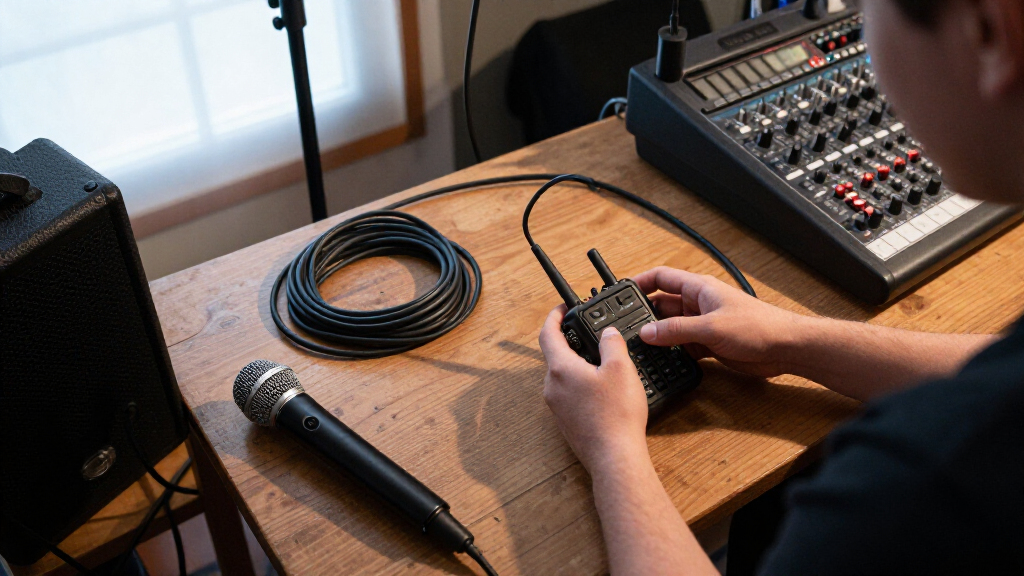
I ranked these wireless microphone systems by how well their design matches real buying needs: dependable live-use setup, practical microphone format, channel capacity, frequency management, stated range and battery details, and ease of connecting the receiver to a sound system. A larger channel count earned credit only when it matched a plausible use, since coordinating several transmitters can add work rather than simplify a small setup. I also separated handheld vocal packages from bodypack kits and the JOYO plug-on system because they solve different jobs.
The order favors versatility and clear buyer fit, not feature count alone. The Shure BLX24/PG58 leads as a focused vocal system with specific range and battery claims; the Phenyx Pro auto-scan models rank well for users who need more frequency-management help or multiple channels. Simpler and less specialized sets remain useful for casual or budget-conscious setups, but rank lower when their listed information offers less flexibility or fewer ways to handle changing sound environments. I treated manufacturer specifications as stated features, not as proof of performance in every venue.
Factors to Consider When Choosing Wireless Microphone Systems
Before choosing a system, match the transmitter format and channel plan to the people speaking or singing, then check whether the receiver will work with your existing sound gear. These broader decisions often matter more than headline range or channel count.
Choose handheld, bodypack, or plug-on based on the performer
A handheld microphone is straightforward for singers and speakers who can hold a mic throughout an event. A bodypack with a headset or lavalier leaves hands free, which suits presenters, instructors, and performers who move around. Plug-on systems such as the JOYO MW-2 serve a different purpose: they add wireless operation to a compatible dynamic microphone with an XLR connection. Don’t assume every transmitter works with every microphone; connector type, microphone power needs, and system compatibility matter. If several people will use the same system, plan who will handle and wear each transmitter. Choosing by use style first can prevent paying for extra channels or accessories you won’t use.
Match channel count to simultaneous use, not the size of the event
Count how many microphones must be active at the same time, rather than how many people may attend. A two-microphone setup can cover a host and guest, while a four-channel receiver can accommodate a group of vocalists when its channels are coordinated correctly. An eight-bodypack kit can suit a production with several presenters, but it brings more transmitters to assign, power, and manage. Extra channels do not automatically mean greater range or clearer sound. For occasional events, a smaller system can reduce setup and troubleshooting. Leave room for future growth only when you have a concrete plan for using the additional inputs.
Treat frequency coordination as part of the venue plan
Wireless systems share radio space with other devices, and the usable frequencies can vary by location. Auto scan can make setup easier by helping identify an available channel, but it does not replace checking the system’s supported band or following its frequency-matching instructions. Fixed-frequency options can work well in a predictable environment, yet multiple units may be harder to coordinate if their frequencies conflict. Before buying, check local wireless frequency rules and any band information supplied for the model. If you regularly work in different venues or run several systems, frequency flexibility deserves more weight than it does for a single home setup. Test the complete system at the venue before an event, not only in a quiet room.
Check receiver connections and sound-system compatibility
A wireless receiver still needs to connect to a mixer, powered speaker, or other audio input. Check the receiver’s output connections and confirm that your sound system has a suitable input before choosing a package. For multi-channel systems, find out whether each microphone has a separate output or whether the receiver combines signals, since that affects how you control levels at the mixer. Rackmountable designs can make a permanent installation tidier, but may be unnecessary for a portable setup. Also plan where the receiver will sit: a hidden or obstructed position can complicate operation and reception. Treat cables and placement as part of the system rather than assuming wireless means no setup.
Read range and battery claims in the context of your venue
A stated maximum range is not a guarantee of stable operation across every room, especially where walls, people, and competing radio signals intervene. Match the claimed range to the distance you actually need, then leave a margin rather than placing the receiver at the far edge of its specification. Battery runtime claims help with planning, but the real schedule also includes sound checks, breaks, and spare batteries or charging time. Check whether the transmitter uses replaceable batteries or a rechargeable design before settling on a workflow. For long events, battery access and a clear replacement routine can matter more than a larger headline range. Test from the performer’s likely positions with the receiver in its intended location.
Pay for flexibility only when it solves a recurring problem
Auto scan, tunable frequencies, multiple microphone types, and rack mounting can save time or expand a setup, but each adds complexity. A casual karaoke host may get more use from an uncomplicated handheld pair than from a system with controls that rarely leave their default settings. A venue that regularly hosts different performers may benefit from frequency options and receiver organization. If you need hands-free speech, paying for a headset or lavalier configuration addresses a real use need; extra handheld channels do not. Compare what comes in the box with what you would otherwise need to buy separately. The right spend follows the jobs the system will perform, not the longest feature list.
Frequently Asked Questions
Do I need auto scan if I only use one wireless microphone?
Not always. A single system used in one familiar venue may be simple to set up when its frequency works reliably there. Auto scan is more useful when you move between venues or encounter other wireless equipment that may occupy nearby frequencies. It can reduce manual channel hunting, but you still need to follow the manufacturer’s instructions and confirm the transmitter and receiver are matched. If the system is fixed-frequency, check its band and test it in the actual room before relying on it for an event.
Is a four-channel system a better choice than a two-microphone system?
Only if you need more than two microphones active at once or expect that need soon. A four-channel receiver can support more performers, but each additional transmitter adds batteries, setup, and frequency coordination. For a host and a guest, a two-mic model may be easier to operate and pack away. For a band, panel, or event with several speakers, the extra channels may justify the added management. Check whether the receiver gives you separate channel outputs if you need to mix each person independently.
Can I use a wireless microphone system with my existing speaker or mixer?
Usually, if the receiver’s audio output can connect to an available input on your speaker or mixer. Check the receiver’s output type and the input connections on your sound gear before buying, and confirm whether you need an adapter or cable. A multi-channel receiver may combine microphones or provide separate outputs, which changes how much control you have at the mixer. The microphone itself does not connect directly to a standard powered speaker unless the system’s receiver supports that connection. Test the full signal path before an event so connection issues don’t appear during setup.
Should I choose a headset system or a handheld microphone for presentations?
Choose a headset when the presenter needs both hands free or must move while speaking. A lavalier can look less prominent, though its placement and clothing can affect how consistently it captures speech. A handheld is easier to pass between speakers and can be a practical fit for short talks or audience questions. Bodypack systems also require the wearer to attach and manage a transmitter, so they are not automatically simpler. Consider who will set up the microphone and whether the same system must serve singers as well as presenters.
Does a longer stated wireless range mean the system will work better indoors?
No. A range figure describes a stated capability, not a promise for every indoor room. Walls, crowded spaces, receiver placement, and competing radio signals can all affect practical operation. A system with a more modest stated range may be enough for a small room, while a larger venue needs careful receiver placement and a real-world test. Compare range claims only after checking your intended distance and venue layout. Leave a margin between the receiver and the farthest performer rather than planning to operate at the stated limit.
Conclusion
For a straightforward vocal setup with a clear mix of stated range and battery details, I’d choose the Shure BLX24/PG58 as the best overall pick. Buyers seeking a strong value should compare the Phenyx Pro PTU-5000-4H for four handheld channels and the TONOR handheld system for a simpler format, checking included features and frequency details against their needs. The Shure is also my premium-leaning recommendation for buyers who prioritize its specified vocal-system package over maximum channel count. Beginners should favor a basic handheld set and avoid paying for channels or frequency controls they will not use. For specialized needs, choose the TONOR TW388 for multiple bodypacks, the JOYO MW-2 to add wireless operation to a compatible dynamic mic, or a Phenyx Pro auto-scan model when frequency selection is a priority.
Fall Picks
fall essentials
As an affiliate, we earn on qualifying purchases.