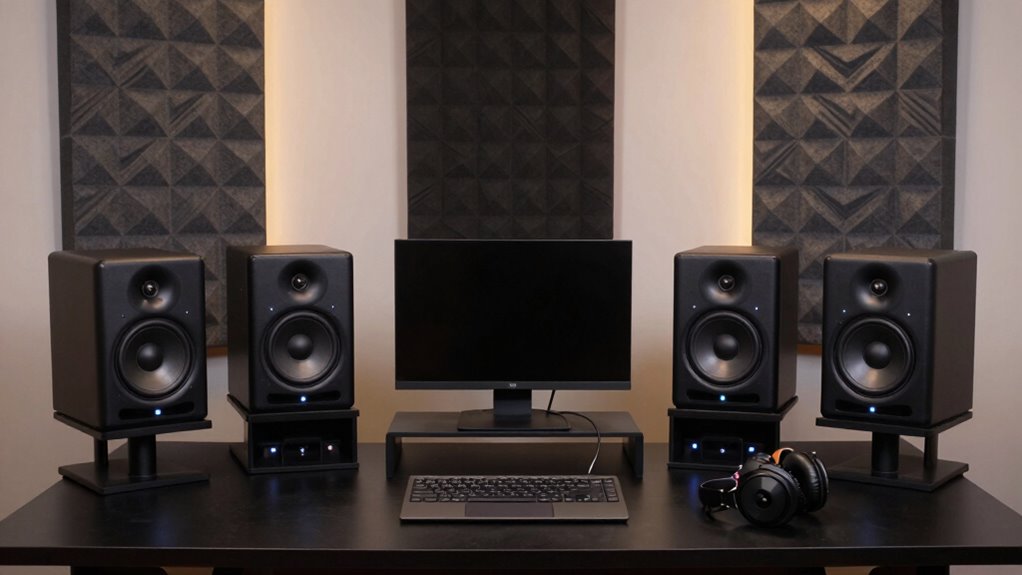

For most small rooms, I’d start with the Yamaha HS5 pair: its 5-inch format suits near-field placement, while its straightforward studio focus makes it a strong all-around choice. The PreSonus Eris 3.5 is a more compact, desk-friendly option, and the IK Multimedia iLoud Micro Monitor stands out when space and portability matter most. The main tradeoff is between a larger speaker’s fuller low end and the placement flexibility of a smaller cabinet; room reflections and boundary placement can matter as much as woofer size. Some picks also favor Bluetooth or desktop convenience over a strictly production-focused feature set. Read on for the full breakdown and a match for your room, desk, and listening priorities.

Get audio and creator gear delivered free with Prime
- Fast, free delivery on millions of items
- Prime Video, Amazon Music and more included
- Member-only deals all year
Complete the kit



Key Takeaways
The Yamaha HS5 pair is the strongest all-around studio-focused pick here, while the white HS5 two-pack bundle offers the same core monitor format for buyers who prefer that package.
Smaller cabinets can be the smarter room fit: the Eris 3.5 and iLoud Micro Monitor are easier to place on crowded desks than 5-inch models.
Five-inch speakers are not automatically better in a small room. They can offer a fuller presentation, but close walls and corners may exaggerate bass and complicate placement.
Convenience features change the use case. Bluetooth models such as the Edifier MR3, KRK Kreate 3, and Sanyun SW208 suit flexible everyday listening, while buyers focused on production should prioritize connection options and room placement.
The lineup spans genuine near-field monitors and desktop-oriented alternatives. The Yamaha MS101-4, Ortizan C7, Mackie CR3.5, and other compact options may fit specific desks or mixed-use setups, but buyers should match their capabilities to the work they do.
| Yamaha HS5 W 5-Inch Powered Studio Monitor (White, 2-Pack) Bundle |  | Best for Reference-Focused Mixing | Pair size: 2 monitors | Woofer: 5 inches | Tweeter: 1 inch | VIEW ON AMAZON | See Our Full Breakdown |
| PreSonus Eris 3.5 Powered Studio Monitors, Pair |  | Best for Tight Desktops | Pair format: Powered studio monitors | Amplification: 50W | Woofer: 3.5-inch woven-composite | VIEW ON AMAZON | See Our Full Breakdown |
| Edifier MR3 Powered Studio Monitor, Bluetooth Active Speaker |  | Best for Wireless Versatility | Woofer: 3.5 inches | Power output: 42 watts | RMS output: 18W × 2 | VIEW ON AMAZON | See Our Full Breakdown |
| Yamaha HS5 Powered Studio Monitor, Pair |  | Best for Wired Studio Monitoring | Number of speakers: 2 | Woofer: 5 inches | Tweeter: 2.54 cm | VIEW ON AMAZON | See Our Full Breakdown |
| KRK Kreate 3 Powered Studio Monitors Pair |  | Best Compact Bluetooth Studio Pair | Pair format: Powered studio monitors | Woofer: 3 inches | Woofer material: Woven glass fiber | VIEW ON AMAZON | See Our Full Breakdown |
| IK Multimedia iLoud Micro Monitor 50W Portable Wireless Bluetooth Studio Reference Monitors |  | Best for Portable Small-Room Setups | Power output: 50W RMS | Frequency response: Down to 55 Hz (-3 dB) | Woofer diameter: 3 inches | VIEW ON AMAZON | See Our Full Breakdown |
| PreSonus Eris E5 Pair 2-Way 5.25” Near Field Studio Monitors |  | Best for Nearfield Mixing Headroom | Woofer size: 5.25 inches | Tweeter type: Silk-dome | Power: 80W bi-amplification | VIEW ON AMAZON | See Our Full Breakdown |
| PreSonus Eris Studio 5 5.25-inch 2-Way Active Studio Monitors with EBM Waveguide |  | Best for Wide Stereo Imaging | Woofer size: 5.25 inches, woven composite | Tweeter size: 1 inch, silk dome | Frequency response: 48 Hz–20 kHz | VIEW ON AMAZON | See Our Full Breakdown |
| Sanyun SW208 3-inch Bluetooth 5.0 Bookshelf Speakers (Pair, White) | 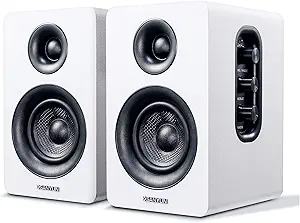 | Best for Wireless Desktop Listening | Speaker size: 3 inches | Power: 60W | Bluetooth: Version 5.0 | VIEW ON AMAZON | See Our Full Breakdown |
| Yamaha MS101-4 Desktop Powered Studio Monitor |  | Best Single Desktop Monitor | Power: 30W | Woofer: 4 inches | Tweeter: 1 inch | VIEW ON AMAZON | See Our Full Breakdown |
| Ortizan C7 Dual-Mode 2.0 Studio Monitors |  | Best for Flexible Connectivity | Configuration: Active 2.0 pair | Mid-bass driver: 3.5-inch carbon fiber | Tweeter: 0.75-inch silk dome | VIEW ON AMAZON | See Our Full Breakdown |
| Mackie CR3.5 Studio Monitors | 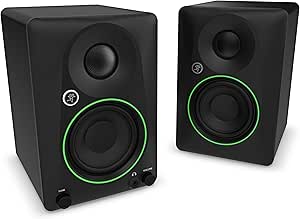 | Best for Straightforward Desktop Setup | Woofer: 3.5 inches | Tweeter: 1 inch | Power output: 50 watts | VIEW ON AMAZON | See Our Full Breakdown |
| ADAM Audio D3V Active Desktop Studio Monitor Speakers |  | Best Premium Compact Monitor | Woofer: 3.5-inch aluminum | Tweeter: D-ART ribbon | Power: 240 watts | VIEW ON AMAZON | See Our Full Breakdown |
| studio monitors for small room | Woofer | Tweeter | Inputs |
|---|---|---|---|
| Yamaha HS5 W 5-Inch Powered St | 5 inches | 1 inch | — |
| PreSonus Eris 3.5 Powered Stud | 3.5-inch woven-composite | 1-inch silk-dome | TRS, RCA, auxiliary |
| Edifier MR3 Powered Studio Mon | 3.5 inches | — | — |
| Yamaha HS5 Powered Studio Moni | 5 inches | 2.54 cm | XLR and TRS |
| KRK Kreate 3 Powered Studio Mo | 3 inches | Textile dome | — |
| IK Multimedia iLoud Micro Moni | — | — | Stereo RCA, 1/8-inch auxiliary, Bluetooth |
| PreSonus Eris E5 Pair 2-Way 5. | — | — | XLR, 1/4-inch, RCA |
| PreSonus Eris Studio 5 5.25-in | — | — | Balanced XLR, balanced 1/4-inch TRS, unbalanced RCA |
| Sanyun SW208 3-inch Bluetooth | — | — | — |
| Yamaha MS101-4 Desktop Powered | 4 inches | 1 inch | — |
| Ortizan C7 Dual-Mode 2.0 Studi | — | 0.75-inch silk dome | — |
| Mackie CR3.5 Studio Monitors | 3.5 inches | 1 inch | RCA and TRS |
| ADAM Audio D3V Active Desktop | 3.5-inch aluminum | D-ART ribbon | Balanced TRS and USB-C |
More Details on Our Top Picks
Yamaha HS5 W 5-Inch Powered Studio Monitor (White, 2-Pack) Bundle
For a small room where mix decisions matter more than extra bass or wireless convenience, this pair puts Yamaha’s five-inch HS5 platform in a stereo setup. Its bi-amplified design is intended to keep playback clear and controlled, making it a more reference-focused choice than the Bluetooth-equipped Edifier MR3 or the compact PreSonus Eris 3.5. The white finish can also suit a tidy desktop or studio setup. The tradeoff is that five-inch monitors need sensible placement in a small space, and this bundle’s listed dimensions look unusually large for HS5 speakers, so I would verify the actual footprint before buying. It also offers fewer listed convenience features than the Edifier. Choose this pair for focused stereo production, not casual wireless listening or a crowded desk.
Pros:- Pair provides a ready-made stereo monitoring setup
- Bi-amplified design supports clear playback
- Five-inch woofer suits nearfield production better than tiny desktop speakers
- White finish offers an alternative to the black monitors in this group
Cons:- The listed dimensions suggest a substantial footprint for a small-room setup and should be verified
- No wireless connectivity is listed
- Bass-reflex design and room placement may make low-frequency judgments less dependable in a cramped room
Best for: Home producers who want a matched pair of reference-oriented five-inch monitors for close-range mixing and have room to position them properly.
Not ideal for: Buyers with a very shallow desk, a need for Bluetooth, or no way to confirm the bundle’s unusually large listed dimensions.
- Pair size:2 monitors
- Woofer:5 inches
- Tweeter:1 inch
- Design:Bi-amplified, bass-reflex
- Color:White
- Mounting:Tabletop
- Audio mode:Stereo
- Listed dimensions:18 × 23.7 × 18.3 inches
Our verdict“Choose this pair if you want reference-minded five-inch monitors for mixing and can accommodate their stated footprint.”
PreSonus Eris 3.5 Powered Studio Monitors, Pair
The Eris 3.5 pair is the most straightforward fit here for a small desk: 3.5-inch woofers keep the speakers compact, while TRS, RCA, and auxiliary inputs make it easy to connect a computer and other sources. Its 50W amplification and room-tuning options give it more setup flexibility than the smaller-format KRK Kreate 3, though the Eris is still aimed at close listening rather than filling a room. The listed frequency range begins at 80 Hz, so deep bass is not its strength; producers who need confident low-end decisions may prefer the larger Yamaha HS5, accepting its bigger placement demands. There is no Bluetooth, unlike the Edifier MR3. I’d pick the Eris when desk space and wired versatility matter more than wireless listening or extended bass.
Pros:- Compact 3.5-inch format is suited to crowded desks
- 50W amplification is specified for the pair
- TRS, RCA, and auxiliary inputs support varied wired sources
- Customizable tuning helps adapt playback to a desktop setup
Cons:- Listed frequency response starts at 80 Hz, limiting deep-bass monitoring
- Designed for nearfield use rather than larger listening areas
- No built-in Bluetooth or wireless connection
Best for: Desktop producers, editors, and gamers who need compact stereo monitors with several wired input options.
Not ideal for: Bass-heavy music producers who need strong low-frequency playback, or buyers who want Bluetooth without adding another device.
- Pair format:Powered studio monitors
- Amplification:50W
- Woofer:3.5-inch woven-composite
- Tweeter:1-inch silk-dome
- Frequency range:80 Hz–20 kHz
- Inputs:TRS, RCA, auxiliary
- Color:Black
Our verdict“Pick the Eris 3.5 if desk space and wired connectivity matter more than deep bass or wireless convenience.”
Edifier MR3 Powered Studio Monitor, Bluetooth Active Speaker
The Edifier MR3 is the flexible pick for a small room that doubles as a work and listening space. Bluetooth, RCA, auxiliary, and balanced TRS connectivity let it move between a phone, computer, and audio gear more readily than the wired-only PreSonus Eris 3.5. App-based EQ and sound modes add a way to adjust playback without relying solely on placement. Its stated 18W × 2 RMS output and 3.5-inch woofer make it better suited to a desk than a large room, but wireless convenience does not make it a substitute for a dedicated, carefully configured reference setup. The plastic enclosure may also feel less substantial than the Yamaha HS5’s more studio-focused proposition. I’d choose the MR3 for a compact hybrid setup, and the HS5 instead when mixing accuracy takes priority over everyday flexibility.
Pros:- Bluetooth plus RCA, auxiliary, and balanced TRS connections
- App-based EQ and sound modes add useful setup flexibility
- Stereo pair with stated 18W × 2 RMS output
- Works with computers and mobile devices
Cons:- Plastic enclosure may be less reassuring than a more studio-oriented cabinet
- Listed Bluetooth range is limited to 10 meters
- Small woofer is not the strongest choice for low-frequency monitoring
Best for: Content creators and desktop listeners who want one compact pair for wired monitoring, phone playback, and app-adjusted listening.
Not ideal for: Mix engineers who prioritize a traditional reference setup, or listeners who need dependable wireless playback beyond the listed 10-meter range.
- Woofer:3.5 inches
- Power output:42 watts
- RMS output:18W × 2
- Connectivity:Bluetooth, balanced TRS, RCA, auxiliary
- Wireless range:Up to 10 meters
- Signal-to-noise ratio:85 dB
- Enclosure material:Plastic
- Warranty:2 years
Our verdict“Choose the MR3 for a small hybrid workspace where Bluetooth and app controls are as useful as studio-style connections.”
Yamaha HS5 Powered Studio Monitor, Pair
This HS5 pair earns its place for buyers who want a clear, wired studio setup rather than an all-purpose desktop speaker. The stated 54 Hz–30 kHz response, five-inch woofer, and bi-amplification make it a more explicitly specified mixing option than the HS5 W bundle, whose supplied data does not include a frequency range. Balanced XLR and TRS inputs also suit audio interfaces, while the Eris 3.5 is the more space-conscious choice for a crowded desk. That five-inch driver still needs room around it, and small-room bass buildup can complicate low-end judgments; it does not magically solve poor placement. The listed dimensions also appear unusually large for this model, so I’d check the product’s actual measurements before planning a desk layout. This is the pick for wired monitoring, not casual wireless use.
Pros:- Specified 54 Hz–30 kHz frequency response
- Bi-amplified design and five-inch woofers target nearfield monitoring
- Balanced XLR and TRS inputs suit common studio connections
- Pair supports a stereo mixing setup
Cons:- Listed dimensions are unusually large for a small-room monitor and merit verification
- No Bluetooth or other wireless connection is listed
- Five-inch monitors require thoughtful placement to limit room-related bass problems
Best for: Home-studio engineers with an audio interface who want a pair of five-inch nearfield monitors and can give them careful placement.
Not ideal for: People with very limited desk depth, a need for Bluetooth, or a small room where the listed dimensions cannot be accommodated.
- Number of speakers:2
- Woofer:5 inches
- Tweeter:2.54 cm
- Power output:70 watts
- Frequency response:54 Hz–30 kHz
- Inputs:XLR and TRS
- Weight:5.3 kg
- Color:Black
Our verdict“Choose the HS5 pair for balanced, wired studio monitoring if you can verify the footprint and position the speakers carefully.”
KRK Kreate 3 Powered Studio Monitors Pair
With three-inch woofers and Bluetooth listed alongside its intended studio uses, the Kreate 3 targets buyers who need monitoring in a tight workspace but also want easy playback from other devices. That makes it a more compact alternative to the five-inch Yamaha HS5 pairs, which give more room for nearfield mixing but demand more space. The product data does not list a frequency response, power output, or the specific wired inputs, so buyers seeking a thoroughly documented reference setup may prefer the PreSonus Eris 3.5, whose key response and connection details are supplied. The KRK’s woven glass-fiber woofer and textile dome tweeter are aimed at clear playback, but a small woofer has physical limits for bass-heavy work. Choose it for a space-saving stereo system, not as a stand-in for larger monitors when judging sub-bass.
Pros:- Three-inch woofers suit constrained desktop setups
- Bluetooth supports convenient playback from compatible devices
- Textile dome tweeter and woven glass-fiber woofer are specified
- Designed for stereo studio monitoring and music production
Cons:- Small woofer limits confidence when judging deep bass
- Product data does not specify frequency response or power output
- Specific wired inputs are not identified in the supplied specifications
Best for: Producers and creators working at a compact desk who want a small stereo pair with Bluetooth for everyday playback.
Not ideal for: Buyers who need detailed published response and input specifications, or who make bass-heavy mixes and need strong low-frequency monitoring.
- Pair format:Powered studio monitors
- Woofer:3 inches
- Woofer material:Woven glass fiber
- Tweeter:Textile dome
- Connectivity:Bluetooth; other specific inputs not listed
- Audio mode:Stereo
- Weight:12 pounds
- Power source:Corded electric
Our verdict“Pick the Kreate 3 for a compact Bluetooth-capable stereo setup, but choose a better-documented or larger monitor for critical bass work.”
IK Multimedia iLoud Micro Monitor 50W Portable Wireless Bluetooth Studio Reference Monitors
For a desk that doubles as a work surface—or a setup that has to travel—the iLoud Micro Monitor is the most space-conscious studio-focused pick here. Its 3-inch woofers and compact cabinets take up less room than the PreSonus Eris E5, while internal DSP gives you EQ options to help tailor the sound to close-range listening. Bluetooth is handy for casual playback, but the RCA and 1/8-inch inputs also support wired sources. The main compromise is low-end reach: response goes down to 55 Hz, so bass-heavy mixes still call for headphones or a subwoofer to check the bottom octave. It also needs wall power despite its travel-friendly size. Choose it for portability and a small footprint, not for room-filling bass.
Pros:- Very compact cabinets suit crowded desks and portable setups
- Internal DSP provides customizable EQ for placement and listening adjustments
- RCA, 1/8-inch auxiliary, and Bluetooth inputs accommodate several playback sources
- 50W RMS output and a stated 55 Hz low-frequency limit offer useful range for a small monitor
Cons:- Limited extension below 55 Hz makes sub-bass decisions difficult without another reference
- Requires a power outlet and has no built-in rechargeable battery
- Small drivers cannot provide the low-frequency scale of larger monitors such as the PreSonus Eris E5
Best for: Producers working at a compact desk or moving between small workspaces who want wired monitoring plus Bluetooth playback.
Not ideal for: Bass-focused producers who need to judge deep sub-bass from speakers alone, or anyone seeking a battery-powered travel monitor.
- Power output:50W RMS
- Frequency response:Down to 55 Hz (-3 dB)
- Woofer diameter:3 inches
- Tweeter diameter:1.91 cm
- Inputs:Stereo RCA, 1/8-inch auxiliary, Bluetooth
- Bluetooth range:10 meters
- Dimensions:5.31 x 3.54 x 7.09 inches (D x W x H)
- Weight:3.8 pounds
Our verdict“Choose the iLoud Micro Monitor if desk space and portability matter more than deep bass or battery operation.”
PreSonus Eris E5 Pair 2-Way 5.25” Near Field Studio Monitors
The PreSonus Eris E5 is the better fit when a small room still needs more output and a larger listening sweet spot than compact desktop monitors can offer. Its 5.25-inch woofer and 80W bi-amplification give it more headroom than the Yamaha MS101-4, whose 4-inch driver and 30W rating suit a more restrained desktop setup. XLR, 1/4-inch, and RCA inputs make the E5 easier to connect to a varied studio chain, and acoustic tuning controls help adapt it to the room. That extra scale has a cost in desk or stand space: these monitors need careful nearfield placement rather than being squeezed beside a screen. They are a stronger choice for active mixing than casual listening, but may be more monitor than a basic home setup needs.
Pros:- 5.25-inch woofer and 80W bi-amplification provide more headroom than smaller desktop models
- XLR, 1/4-inch, and RCA inputs support a range of studio sources
- Acoustic tuning controls allow sound adjustments for the listening space
- Protection features cover RF interference, overheating, transients, and other operating conditions
Cons:- Larger cabinets need more desk or stand space than the IK Multimedia iLoud Micro Monitor
- Higher output and studio connections may be unnecessary for casual desktop listening
- The supplied data does not specify frequency response, limiting direct comparison of low-end extension
Best for: Home-studio mixers with room for a pair of 5.25-inch monitors and audio gear that uses balanced or RCA connections.
Not ideal for: Users with very crowded desks or casual listeners who do not need the E5’s higher output and studio-oriented connection options.
- Woofer size:5.25 inches
- Tweeter type:Silk-dome
- Power:80W bi-amplification
- Maximum SPL:102 dB
- Inputs:XLR, 1/4-inch, RCA
- Protection features:RF interference, output current limiting, over-temperature, transient, and subsonic protection
Our verdict“Pick the Eris E5 if your small room has space for larger nearfield monitors and you want more mixing headroom than compact desktop models provide.”
PreSonus Eris Studio 5 5.25-inch 2-Way Active Studio Monitors with EBM Waveguide
Among the larger options in this group, the PreSonus Eris Studio 5 stands out for shaping how sound spreads across a close listening position. Its EBM waveguide is rated for 120° x 60° coverage, which is intended to give a broad stereo image; that can make placement less finicky than a tightly focused desktop monitor, though the room and speaker positioning still matter. The 5.25-inch woofer, 80W biamping, and stated 48 Hz–20 kHz response offer a more complete monitoring range than the IK Multimedia iLoud Micro Monitor, whose smaller drivers trade bass reach for a smaller footprint. In a very tight room, the Eris Studio 5’s cabinet size and wide dispersion may make placement harder, not easier. Its acoustic controls and balanced inputs suit a more developed production setup.
Pros:- EBM waveguide specifies 120° x 60° coverage for a broad listening image
- 48 Hz–20 kHz stated response reaches lower than the iLoud Micro Monitor’s 55 Hz limit
- Balanced XLR and 1/4-inch TRS inputs plus unbalanced RCA support multiple sources
- Acoustic tuning controls and several protection features support studio use
Cons:- 5.25-inch cabinets require more desk or stand space than compact monitors
- Wide dispersion still requires thoughtful placement and room adjustment
- The larger format is less suited to portable setups than the iLoud Micro Monitor
Best for: Small-room producers who can place 5.25-inch monitors properly and value a broad stereo image for mixing.
Not ideal for: Desk users with little clearance around their monitors, or buyers who need a tiny portable pair rather than a full-size nearfield setup.
- Woofer size:5.25 inches, woven composite
- Tweeter size:1 inch, silk dome
- Frequency response:48 Hz–20 kHz
- Power:80W biamped
- Waveguide coverage:120° x 60° EBM waveguide
- Inputs:Balanced XLR, balanced 1/4-inch TRS, unbalanced RCA
- Protection features:RF interference, output-current limiting, over-temperature, transient, subsonic, and soft-start protection
Our verdict“Choose the Eris Studio 5 if you have space for larger nearfields and want its broad waveguide coverage and stated low-frequency extension.”
Sanyun SW208 3-inch Bluetooth 5.0 Bookshelf Speakers (Pair, White)
The Sanyun SW208 is the most lifestyle-oriented option in this group, with Bluetooth 5.0, a 24-bit DAC, and adjustable bass and treble for switching between wired work and everyday playback. Its 3-inch drivers keep the pair compact, closer in footprint to the IK Multimedia iLoud Micro Monitor than the 5.25-inch PreSonus models. The distinction is purpose: the iLoud is described as a studio reference monitor with internal DSP, while the Sanyun emphasizes flexible listening and tone adjustment. That makes the SW208 appealing for a desk shared by music production, videos, and general computer use, but less compelling for critical mix decisions. The supplied specifications do not give a frequency response or input list beyond Bluetooth, so buyers have less information for judging accuracy and wired connectivity before purchase.
Pros:- Compact 3-inch speakers fit smaller desks
- Bluetooth 5.0 supports wireless playback
- Built-in 24-bit DAC is specified for wired digital audio
- Adjustable bass and treble let listeners tailor the sound
Cons:- The provided specifications do not state frequency response, making monitor-range comparisons difficult
- No balanced XLR or TRS inputs are listed, unlike the PreSonus Eris E5 and Eris Studio 5
- Manual bass and treble adjustment may make consistent mix referencing harder
Best for: Desktop users who want compact speakers for casual production, computer audio, and wireless listening with manual tone controls.
Not ideal for: Mix engineers seeking documented frequency response and a clearly specified set of balanced studio inputs.
- Speaker size:3 inches
- Power:60W
- Bluetooth:Version 5.0
- DAC:24-bit
- Speaker material:Carbon fiber
- Tone controls:Adjustable treble and bass
- Standby power saving:Yes
Our verdict“Choose the SW208 for a compact, flexible desktop listening setup, but favor a studio-focused model for more clearly specified mixing connections and response.”
Yamaha MS101-4 Desktop Powered Studio Monitor
The Yamaha MS101-4 suits a different kind of small-room setup: a single powered monitor for a compact desk, voice work, or simple audio playback. Its 4-inch woofer is larger than the 3-inch drivers in the IK Multimedia iLoud Micro Monitor and Sanyun SW208, but its 30W output and single-monitor format make it less of a stereo mixing solution than either pair. A two-band EQ offers basic tonal adjustment without the more involved acoustic tuning controls found on the PreSonus Eris E5. That simplicity can work well when space and setup time matter; it also limits flexibility for detailed room correction. The provided specs do not list inputs or frequency response, so buyers planning to connect several studio sources or judge low-frequency balance should seek clearer details first.
Pros:- Single compact monitor fits a desktop or other space-limited setup
- 4-inch woofer is larger than the 3-inch drivers in the iLoud Micro Monitor and Sanyun SW208
- 30W powered design avoids the need for a separate amplifier
- Two-band EQ provides basic sound adjustment
Cons:- One monitor does not provide stereo imaging for conventional mix work
- 30W output is less suited to larger rooms than the 80W PreSonus options
- The supplied specifications do not list inputs or frequency response
Best for: Creators who need one compact powered monitor for desktop audio, voice work, or a space-constrained setup that does not require stereo mixing.
Not ideal for: Mixers who need a stereo pair, higher output for a larger room, or clearly specified connections and frequency response.
- Power:30W
- Woofer:4 inches
- Tweeter:1 inch
- EQ:2-band
Our verdict“Pick the MS101-4 for simple, single-speaker desktop monitoring; choose a stereo pair for mixing or spatial listening.”
Ortizan C7 Dual-Mode 2.0 Studio Monitors
The Ortizan C7 suits a compact desk where the speakers need to handle more than one source. Its Bluetooth 5.3 connection complements RCA, 3.5mm AUX and balanced 6.35mm TRS inputs, making it easier to switch between a computer, audio gear and casual listening than with the wired-only Mackie CR3.5. A 3.5-inch carbon-fiber mid-bass driver and silk-dome tweeter keep the cabinet-oriented setup small, while the listed flat-response tuning is aimed at monitoring rather than bass-heavy playback. USB connectivity is also listed through a 24-bit DAC, though the input details do not specify the USB connector. The tradeoff is limited published information about power and cabinet dimensions, which makes room placement harder to judge. I would choose the C7 for source flexibility, not for a well-documented low-frequency reference.
Pros:- Bluetooth 5.3 plus RCA, AUX and balanced TRS connections accommodate varied sources
- 24-bit DAC is listed for USB digital audio
- Small 3.5-inch mid-bass driver suits near-field desktop placement
- Headphone output adds a private listening option
Cons:- Power output and cabinet dimensions are not specified in the supplied details
- A 3.5-inch driver is a limitation for judging deep bass without a subwoofer
- Multiple connection types and monitoring features may be more involved than casual listeners need
Best for: Desktop producers and listeners who want a compact pair with both balanced wired inputs and Bluetooth for switching between work and everyday audio.
Not ideal for: Buyers who need clearly documented power and dimensions before planning a tight desk layout, or who need dependable deep-bass reference from small speakers.
- Configuration:Active 2.0 pair
- Mid-bass driver:3.5-inch carbon fiber
- Tweeter:0.75-inch silk dome
- Wired inputs:RCA, 3.5mm AUX, 6.35mm balanced TRS
- Wireless connectivity:Bluetooth 5.3
- DAC:24-bit DAC via USB
- Other features:Headphone output; flat-response tuning
Our verdict“Choose the C7 if Bluetooth and several wired input options matter more than fully documented specifications or deep bass.”
Mackie CR3.5 Studio Monitors
The Mackie CR3.5 is a practical small-room pick for a desktop setup that benefits from simple controls and a known compact footprint. Its 3.5-inch woofer keeps the speakers modest in scale, and the supplied dimensions—7.1 inches deep, 5.5 inches wide and 8.1 inches high—make desk planning more predictable than with the Ortizan C7, whose dimensions are not provided here. The tone knob offers a direct way to adjust the sound for listening, though that convenience is less useful when the goal is to keep a consistent reference. Unlike the Bluetooth-equipped Ortizan, the CR3.5 is wired only, with RCA and TRS inputs. Its stated 50-watt output and included isolation pads support a ready-to-set-up pair, but the small woofers are unlikely to satisfy buyers who need substantial bass from the monitors alone.
Pros:- Compact stated dimensions help with crowded desk placement
- Tone knob allows quick sound adjustment
- RCA and TRS inputs cover common wired sources
- Includes isolation pads and setup cables
Cons:- 3.5-inch woofers limit deep-bass playback and assessment
- No wireless connectivity
- Tone adjustment can make consistent reference listening harder
Best for: First-time home producers or desktop editors who want a compact, dimensioned pair with straightforward wired connections and a simple tone adjustment.
Not ideal for: Buyers who need Bluetooth, strong low-bass extension from the speakers alone, or a strictly fixed tuning without an adjustment control.
- Woofer:3.5 inches
- Tweeter:1 inch
- Power output:50 watts
- Inputs:RCA and TRS
- Dimensions:7.1 inches deep × 5.5 inches wide × 8.1 inches high
- Weight:10.2 pounds
- Mounting:Tabletop
- Power source:Corded electric
Our verdict“Pick the CR3.5 for a compact, wired desktop system with easy controls, but look to a larger monitor or subwoofer for deeper bass.”
ADAM Audio D3V Active Desktop Studio Monitor Speakers
The ADAM Audio D3V is the most technically ambitious compact choice in this group, pairing a 3.5-inch aluminum woofer with a D-ART ribbon tweeter and passive radiators. Its listed 45Hz–23kHz range gives it a broader stated frequency span than the Mackie CR3.5, whose supplied specs do not list a frequency range; that makes the D3V more appealing when detailed upper frequencies and fuller low end matter in a small room. USB-C and balanced TRS inputs also suit a desk that serves both a computer and professional audio gear. DSP switches and detachable stands add placement and setup options, though the stands still take room and the monitors need sensible positioning to work well. This feature set is more than a casual listener may need, and the supplied details do not break down how the 240-watt figure is allocated.
Pros:- D-ART ribbon tweeter provides a distinct high-frequency design
- USB-C and balanced TRS support computer and pro-audio connections
- Passive radiators and a listed 45Hz lower frequency point aim to extend low-frequency output
- Detachable stands, DSP switches and headphone output add desktop flexibility
Cons:- Advanced features may be unnecessary for casual desktop listening
- Stands and placement needs can take up limited desk space
- The supplied specifications do not explain the 240-watt power allocation
Best for: Producers and editors working at a compact desk who want USB-C, balanced inputs, placement accessories and a detailed tweeter in one monitor system.
Not ideal for: Casual listeners seeking a simple, low-fuss speaker pair, or buyers with no room for the monitors and their stands to be positioned properly.
- Woofer:3.5-inch aluminum
- Tweeter:D-ART ribbon
- Power:240 watts
- Frequency range:45Hz–23kHz
- Inputs:Balanced TRS and USB-C
- Low-frequency design:Passive radiators
- Desktop features:Detachable stands, DSP switches and headphone output
Our verdict“Choose the D3V if you want the most feature-rich compact monitoring setup here and can give its stands room on your desk.”

How We Picked
I compared these 13 options through the specific demands of a small room: how practical the cabinet size is near a desk, how readily the speakers can be positioned away from walls, and whether their stated features suit close listening and music work. I also weighed connection flexibility, controls that can help adapt a setup, and whether a model’s design points more toward production, general desktop audio, or both. A compact footprint is useful only if the speaker still fits the listener’s purpose.
The ranking gives priority to balanced studio use and realistic placement in constrained spaces, then accounts for usability and versatility. That puts the paired Yamaha HS5 models near the top for a straightforward studio setup, with smaller options rising for desks where space is the main limit. Bluetooth and lifestyle-oriented models remain useful recommendations, but they rank lower for buyers who need a production-first tool. I treat the white HS5 bundle as a distinct package, not a different acoustic class from the standard pair.
Factors to Consider When Choosing Studio Monitors For Small Rooms
Small-room monitor shopping is less about finding the biggest speaker that fits and more about avoiding a setup that fights the room. I’d make the choice by matching cabinet size, listening distance, placement options, and intended use before weighing convenience features.
Match Woofer Size to Listening Distance
A larger woofer can support a fuller low-frequency presentation, but that does not automatically make it a better choice at a small desk. If you sit very close to the speakers, compact models may be easier to position and can sound more coherent at that distance. A 5-inch model can make sense when you have room for proper stands or a wider desk and can keep the speakers clear of nearby boundaries. Avoid choosing by woofer diameter alone; cabinet design and placement also affect what reaches your ears. If possible, measure the available space and listening distance before buying. For bass-heavy work, remember that a small-room setup may still benefit more from careful monitoring or reference checks than from simply moving to a larger speaker.
Plan for Walls, Corners, and Desk Reflections
Speakers pushed against a rear wall or tucked into corners can produce a bass-heavy balance that misleads mixing decisions. A desk can also reflect sound toward your ears, blurring detail even when the monitors themselves are capable. Before shopping, identify whether each speaker can sit symmetrically and at roughly ear height without blocking screens or living space. Rear-facing ports may need extra breathing room, so check the model’s layout and placement guidance rather than assuming a compact cabinet can go anywhere. If your layout is fixed, prioritize placement flexibility and available room controls over extra low-end output. Small moves in speaker position can make a larger difference than changing models within the same size class.
Decide Whether You Need Production Accuracy or Everyday Convenience
Bluetooth and simple desktop controls can make a monitor easier to use for casual listening, calls, or switching between devices. Those conveniences do not by themselves make a speaker a better tool for judging a mix. If you produce or edit audio, check how you will connect your interface and whether the speaker offers the inputs your setup needs. If the monitors will serve a shared desk, wireless playback or a tone control may be more useful than a studio-oriented feature you will rarely touch. Some products in this roundup are best understood as mixed-use desktop speakers rather than direct substitutes for every production monitor. Be honest about your main task before paying for features that do not improve it.
Treat Bass Management as a Room Decision
Low frequencies are often the hardest part of monitoring in a small room because boundaries and room modes can make some notes seem much louder than others. Buying a larger speaker to hear more bass can worsen that unevenness if the room and placement are not ready for it. If you work on bass-heavy music, prioritize repeatable listening positions and compare your mixes on headphones or other known systems. A subwoofer is not a simple fix: it adds placement and integration work, and may be impractical in a shared or untreated room. Smaller monitors can encourage disciplined low-end decisions, though they may not reveal the deepest bass clearly. Choose based on the balances you need to judge, not on a promise of maximum bass output.
Check Inputs, Controls, and Long-Term Fit
List your actual sources before choosing a pair: audio interface, computer, phone, or another device. Then check whether the monitors accept those connections directly or require extra adapters and switching hardware. Input and tuning controls matter most when they solve a real setup problem, such as accommodating a fixed position or multiple sources. Also check whether the pair is sold together and what is included, since bundles can differ from a standard pair even when the core monitor model is similar. Think about future changes too: a speaker that fits a cramped desk now may become limiting if you move to a wider workspace or add more sources. Buying for a realistic next step is more useful than paying for speculative upgrades.
Frequently Asked Questions
Are 5-inch studio monitors too large for a small room?
Not automatically. A 5-inch pair can work in a small room when you listen near-field, keep the speakers positioned sensibly, and avoid trapping them in corners. The greater concern is whether their low-frequency output interacts poorly with your room, not the number on the woofer alone. Compact models such as the Eris 3.5 may be easier on a crowded desk, while the Yamaha HS5 pair suits buyers with enough space for deliberate placement. If you cannot move speakers away from walls, favor placement flexibility over a larger cabinet.
Should I choose the Yamaha HS5 pair or the PreSonus Eris 3.5?
Choose based on your space and listening priorities rather than treating them as interchangeable. The HS5 pair is the more studio-focused choice if you have room for 5-inch monitors and want a straightforward near-field setup. The Eris 3.5 is easier to fit on a compact desktop and makes more sense when space is the main constraint or your use is mixed. Neither size guarantees accurate bass in a small room, so placement remains part of the decision. If you are unsure, measure your desk and listening distance first.
Do I need Bluetooth on studio monitors?
Bluetooth is useful when you want quick playback from a phone or a shared computer, but it is not a requirement for monitoring work. For production, a direct wired connection from an audio interface is typically the more practical path. Models such as the Edifier MR3, KRK Kreate 3, and iLoud Micro Monitor include wireless convenience, making them appealing for mixed-use desks. Choose Bluetooth if it solves a real source-switching need, not because it is a substitute for checking inputs. Confirm that the wired connections you need are available before choosing on wireless features alone.
Can small studio monitors give me reliable bass information?
They can help you make useful mix decisions, but no small monitor can remove the influence of room acoustics. In a compact space, bass may vary noticeably between listening positions, and walls can make certain frequencies sound stronger than they are. Small speakers may also provide less extension at the very bottom of the range than larger systems. Cross-check low-end decisions with headphones or familiar reference material, and keep your listening position consistent. Adding a subwoofer may help in some rooms, but it also requires careful placement and integration.
Is a two-pack bundle different from buying a standard monitor pair?
A bundle can include the same core monitor model as a standard pair while differing in finish, packaging, or included accessories. In this roundup, the white Yamaha HS5 two-pack bundle and the standard Yamaha HS5 pair belong to the same general monitor category, so the choice is less about room performance and more about the package that suits your setup. Read the included-items list carefully and confirm that the bundle contains a matched pair and the connections or accessories you need. Do not assume a bundle changes the speaker’s acoustic fit for a small room. Compare the product details before choosing between packages.
Conclusion
For a production-focused setup with enough desk or stand space, I’d choose the Yamaha HS5 pair as the best overall; the white HS5 two-pack bundle is a sensible alternative when that package fits your setup. The PreSonus Eris 3.5 is my best value-style pick for compact desks, while the ADAM Audio D3V is the best premium choice for buyers prioritizing a feature-rich desktop format. Beginners with limited space can start with the Eris 3.5 rather than forcing a larger speaker into an awkward position. For portability and wireless listening, consider the IK Multimedia iLoud Micro Monitor; for Bluetooth-centered everyday use, compare the Edifier MR3 and KRK Kreate 3. The best fit is the model you can place properly and connect to the sources you actually use.
Fall Picks
fall essentials
As an affiliate, we earn on qualifying purchases.