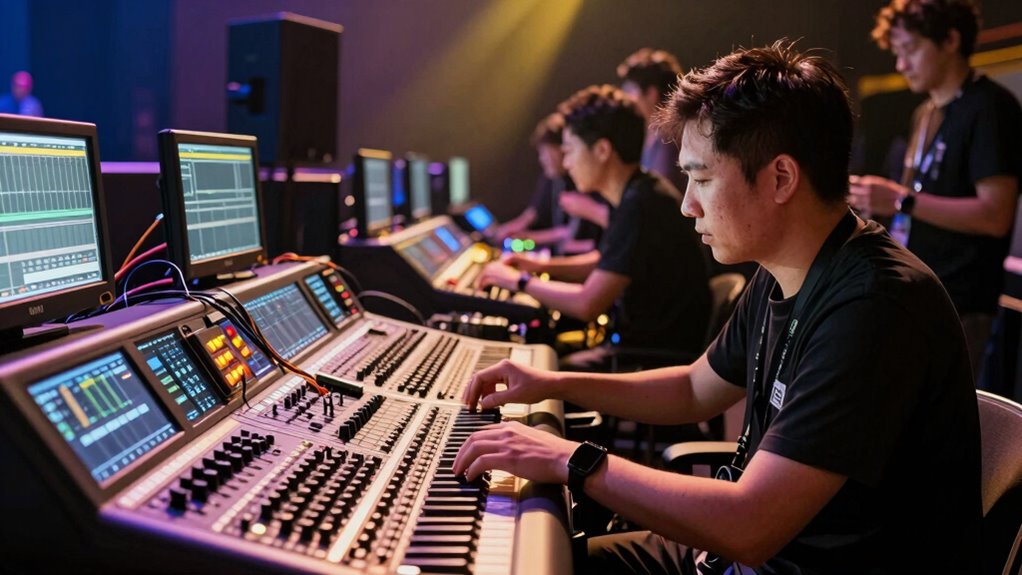
The main reason your show mix shifts after the first song is often due to inadequate soundcheck preparation. If monitor calibration or stage layout isn’t properly set, the sound can become inconsistent once the music begins. Improper gain, EQ, or speaker placement can cause balances to change unexpectedly, distracting performers and affecting sound quality. Ensuring thorough setup ahead of time helps maintain a stable mix. Want to discover more tips to keep your sound consistent?
Key Takeaways
- Inadequate monitor calibration causes volume and tone shifts, disrupting performers’ comfort and the overall mix.
- Poor stage layout leads to feedback and dead spots, requiring post-start adjustments.
- External noise and poor soundproofing can affect initial calibration, causing mix changes during the show.
- Lack of thorough soundcheck planning results in unpredictable sound shifts once the performance begins.
- On-the-fly adjustments after the first song often stem from initial setup issues needing pre-show calibration.
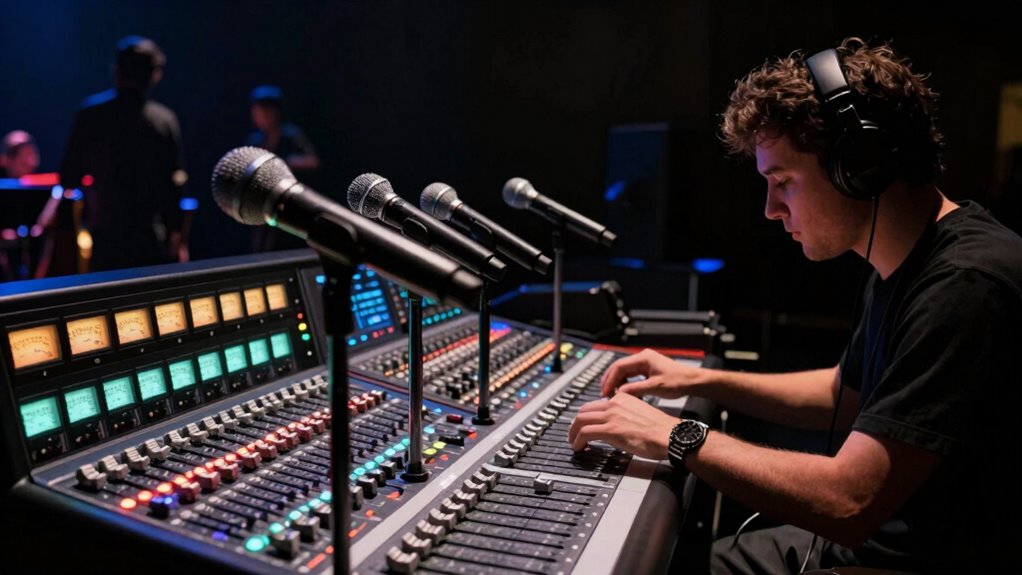
Ever wondered what separates a good soundcheck from a great one? The answer often lies in the details of your preparation and how well you set the stage for the actual performance. When it comes to nailing a flawless show, monitor calibration and stage layout are two vital factors that can make all the difference. If you don’t get these right during soundcheck, you might find that the mix changes unexpectedly once the first song kicks off, leaving you scrambling to adjust on the fly.
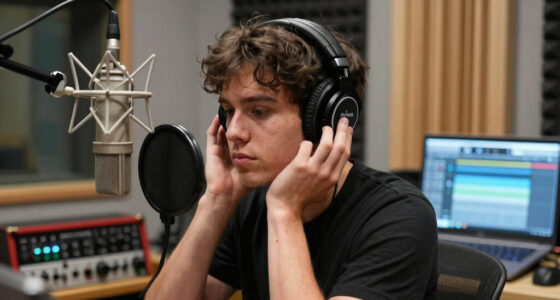
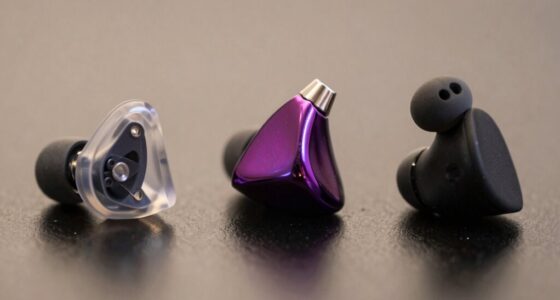
Monitor calibration is your first line of defense. Think of your monitors as the musicians’ lifeline—they need to deliver a clear, balanced sound for everyone on stage. If they’re not properly calibrated, some instruments or vocals might be too loud or too soft, causing performers to strain or lose their timing. During soundcheck, take the time to dial in each monitor carefully, ensuring that every musician hears what they need. This involves adjusting gain levels, EQ, and volume until it’s just right. When monitors are calibrated correctly, musicians stay comfortable and confident, which translates into a more cohesive performance. Without proper calibration, the moment the first song starts, even subtle shifts in volume or tone can throw performers off and force the sound engineer to make frantic adjustments. Inconsistent monitor mixes can lead to a chain reaction—musicians compensating by overplaying or tuning out certain elements—ultimately affecting the overall sound and energy of the show. Additionally, understanding the importance of soundproofing can prevent external noise from disrupting your soundcheck and subsequent performance.
Stage layout is another essential element that influences how the sound evolves after the first song. During soundcheck, you need to visualize and plan the placement of performers, microphones, and speakers. A well-thought-out stage layout minimizes feedback, dead spots, and phase issues. It also ensures that sound from speakers reaches the audience evenly and that performers can hear themselves clearly. If the layout isn’t optimized, the sound engineer might need to make drastic EQ or volume adjustments after the show begins to compensate for unexpected acoustics or feedback. This can cause the mix to shift unexpectedly after the first song, frustrating both the performers and the audience. Proper stage planning also helps during monitor calibration; knowing exactly where each musician is positioned allows for more precise adjustments. When the stage layout is soundly designed, the initial soundcheck sets a solid foundation, reducing the need for constant tweaks once the show is underway.
In essence, paying close attention to monitor calibration and stage layout during soundcheck ensures that the mix stays consistent and true to your intentions. It’s about creating a stable environment where performers can perform their best without worrying about technical issues. When these elements are overlooked or rushed, the first song often reveals the cracks, forcing everyone to adapt in real time. By focusing on these details beforehand, you set the stage for a smooth, professional performance that stays on point from start to finish.
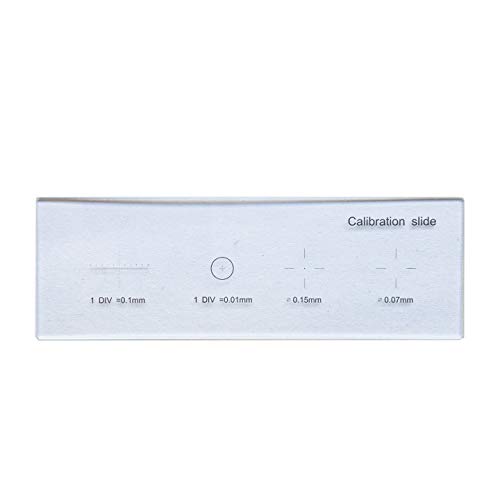
0.01mm Microscope Reticle Calibration Camera Slide Ruler Cross Stage Micrometer Multifunctional Microscope Calibrating Ruler
- Measuring Divisions: 0.01mm divisions for precise measurement
- Calibration Dots: Includes 0.15mm and 0.07mm calibration dots
- Size: 75mm x 25mm x 1.1mm
As an affiliate, we earn on qualifying purchases.
As an affiliate, we earn on qualifying purchases.
Frequently Asked Questions
How Do Sound Engineers Decide When to Adjust the Mix?
You decide when to adjust the live sound mix based on how the equipment setup sounds during the performance. As the sound engineer, you constantly listen and monitor the audience’s feedback, making real-time changes to guarantee clarity and balance. When you notice the initial mix doesn’t suit the evolving performance or audience needs, you tweak levels, effects, or EQ, keeping the sound ideal throughout the show.
What Equipment Influences the Show Mix After the First Song?
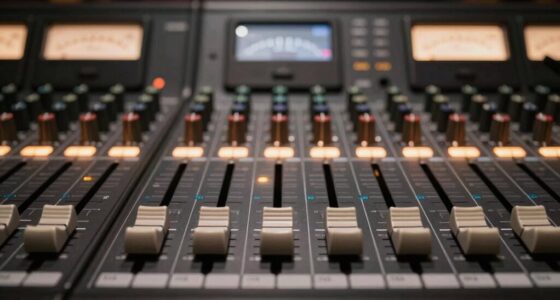
Your show mix after the first song is influenced mainly by stage monitors and mixing consoles. Stage monitors help performers hear themselves clearly, prompting adjustments for balance and clarity. Meanwhile, the mixing console allows you to modify levels, EQ, and effects in real-time. As the performance progresses, you’ll rely on these pieces of equipment to make certain the sound remains balanced, clear, and engaging for both the audience and performers.
Do Performers Have Input on the Sound Changes During the Show?
Think of the stage as a living canvas, where your performance paints vivid strokes that influence sound. You often have a say during the show through audience feedback and your preferences, guiding sound engineers to tweak the mix. Your energy and responses act as a compass, helping forge a sonic landscape that complements your performance. This collaboration ensures the audience feels connected and immersed in every note.
How Quickly Can Sound Engineers Implement Changes During a Performance?
During a performance, sound engineers can implement changes almost instantly, often within seconds. They use tools like stage monitoring adjustments and feedback suppression to fine-tune your sound on the fly. Whether it’s reducing feedback or balancing vocals, quick tweaks help guarantee the show sounds great. Your engineer’s experience and the digital equipment allow them to respond swiftly, maintaining peak sound quality without disrupting the performance.
Are There Standard Protocols for Adjusting the Mix Mid-Show?
Think of your live sound as a ship steering through changing tides. Yes, there are standard protocols for adjusting the mix mid-show, like listening to audience feedback and monitoring live sound dynamics. Your sound engineer follows these guidelines, making swift, strategic changes to guarantee the performance flows smoothly. They act like a skilled captain, guiding through waves of sound, fine-tuning the experience so every note hits the right emotional chord.

Pyle PA Speaker DJ Mixer Bundle – 300 W Portable Wireless Bluetooth Sound System w/ USB SD XLR 1/4" RCA Inputs – Dual Speaker, Mixer, Microphone, Stand, Cable – Home/Outdoor Party – PPHP28AMX,Black
- 8-Channel Mixer: Includes digital LCD display for multiple sources
- 300W Power Output: Dual 8-inch subwoofers with tweeters for full-range sound
- Wireless Bluetooth Streaming: Compatible with iPhone, Android, tablets, and PCs
As an affiliate, we earn on qualifying purchases.
As an affiliate, we earn on qualifying purchases.
Conclusion
Just like a master painter adjusts their brushstroke after the first splash of color, the show mix evolves because it’s a living, breathing art. The initial soundcheck sets the stage, but real magic happens once the spotlight hits and nuances reveal themselves. Embrace these changes as part of the performance’s story—each tweak is a whisper from the universe, reminding you that perfection is a journey, not a destination, much like chasing the elusive muse of creativity.

AGJ Wireless Tour Guide System, Tour Guide Microphone and Speaker, Tour Guide Headsets 2 Transmitters 30 Receivers 1 Charger 1 Storage Case, Court Church Translation System for Factory School
- Stylish and Durable Design: Lightweight, strong, and compact devices
- Single Transmitter per Group: One transmitter per channel for clear communication
- Versatile Application: Ideal for tours, training, conferences, and events
As an affiliate, we earn on qualifying purchases.
As an affiliate, we earn on qualifying purchases.

5Pcs Microphone Cover Foam Mic Cover Handheld Stage Microphone Windscreen,Orange
- Set of 5 foam microphone covers: Fits most standard handheld mics
- Soft, thick, elastic foam: Easy to install and remove
- Versatile use: Ideal for KTV, stage, interviews, and more
As an affiliate, we earn on qualifying purchases.
As an affiliate, we earn on qualifying purchases.