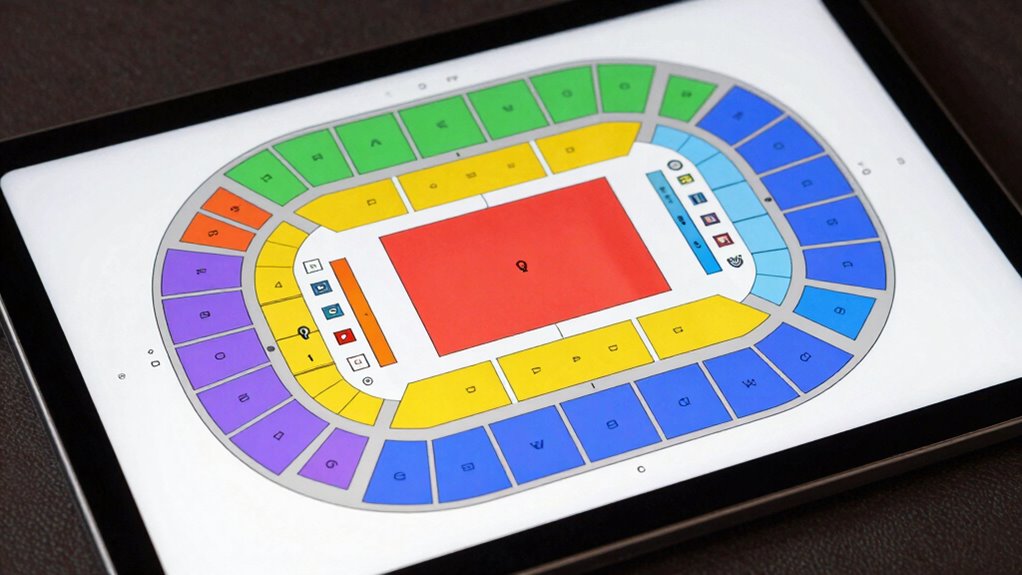

To read a venue seating chart like a pro, start by recognizing the symbols for seats, aisles, accessibility, and premium areas. Understand the color-coded zones that indicate different ticket tiers and their proximity to the stage. Check out features like restrooms or concessions marked on the map to plan your convenience. Comparing sections based on view quality and price helps you make confident choices—continue exploring to master the details and avoid future regrets.
Key Takeaways
- Familiarize yourself with symbols, icons, and color codes indicating sections, accessibility, and amenities.
- Understand ticket tiers and how proximity to the stage affects price and experience quality.
- Use the layout to evaluate view angles, distance, and comfort when selecting seats.
- Check for symbols marking features like restrooms, concessions, or VIP areas to enhance convenience.
- Balance your budget, preferred experience, and map features to choose the best seat with confidence.
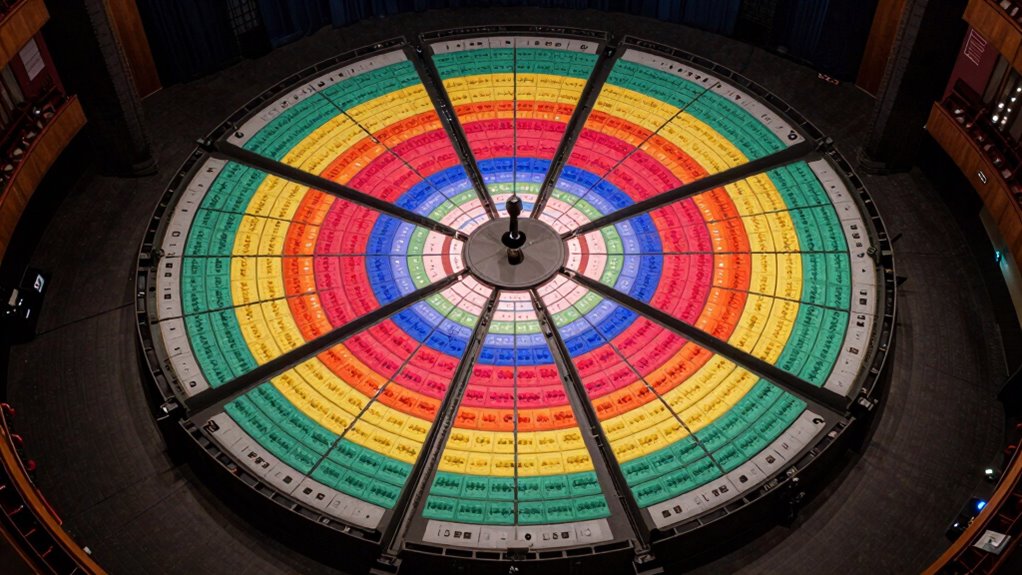
Understanding a venue seating chart can seem overwhelming at first, but once you know what to look for, it becomes much easier to choose the best seats for your experience. The key is to familiarize yourself with seat map symbols and ticket tiers. Seat map symbols are visual cues that help you identify different sections, accessibility options, and special features within the venue. For example, icons indicating aisles, wheelchair accessibility, or premium seating can guide you quickly toward the best spots. Ticket tiers, on the other hand, refer to the different pricing levels or categories of seats. These tiers typically range from general admission or economy sections to premium or VIP areas, each offering varying degrees of proximity, view, and amenities.
When you look at a seating chart, pay close attention to the symbols used. They often serve as shortcuts, saving you from confusion when selecting seats. For instance, a small icon of a camera might indicate a section with a good view for photos, while a star symbol could mark VIP or exclusive seats. Recognizing these symbols will help you assess what each section offers without needing extensive explanations. Also, most seat maps display color-coded zones corresponding to ticket tiers. Usually, the closer to the stage or main event area, the higher the ticket tier and the more expensive the seat. The outer rings or upper levels tend to be more affordable but may have a less direct view.
Additionally, understanding market trends and insights related to venue popularity and event timing can help you choose seats that maximize your experience and value. Knowing the layout of ticket tiers allows you to balance your preferences and budget. If you want the best experience, aim for seats in the lower tiers, particularly those near the front and center. However, if you’re looking for a more economical option, upper tiers or side sections can still provide good views and a lively atmosphere. Remember that some venues have different pricing for different sections, so comparing the ticket tiers on the seating chart can help you make an informed decision. Don’t forget to check for any additional features marked on the map, like concession stands or restrooms, which can influence your seat choice.
Frequently Asked Questions
How Do I Interpret VIP and Premium Seating Areas?
You interpret VIP and premium seating areas by recognizing they offer luxury amenities and exclusive access. These sections are usually closer to the stage or main event area, providing better views and comfort. Look for labels or color codes on the chart indicating these spots. When selecting tickets, prioritize these areas for an upgraded experience, knowing you’ll enjoy added perks like private entrances, comfortable seating, and personalized services that make your event memorable.
Are There Different Seating Chart Formats for Outdoor Venues?
Think of outdoor venues as open canvases, offering various seating arrangements tailored to the landscape. Yes, their seating charts often differ from indoor layouts, with symbols representing lawn areas, tiered seats, or picnic zones. These designs emphasize a flexible venue layout, guiding you to the best spot for comfort and view. Recognizing these different formats helps you navigate outdoor seating with confidence, ensuring a memorable experience from start to finish.
How Can I Find Accessible Seating Options Easily?
To find accessible seating options easily, look for symbols indicating wheelchair accessible areas and hearing impaired accommodations on the seating chart. Most venues highlight these sections in a distinct color or with icons. You can also check the venue’s website or contact guest services ahead of time. This way, you guarantee you get the best spot for your needs, making your experience comfortable and enjoyable.
What Do Seat Rows and Sections Mean in Large Venues?
Think of seat rows and sections as city blocks and neighborhoods, guiding you through a vast venue. Rows run horizontally like streets, while sections are neighborhoods with unique charms. When purchasing tickets, focus on venue layout advantages—closer seats for intimacy or higher sections for a broader view. Knowing this helps you select the best spot, ensuring a comfortable experience and avoiding surprises when you arrive.
How Do I Identify the Best Seats for Viewing Angles?
To identify the best seats for viewing angles, focus on seat positioning that offers a clear, unobstructed view of the stage or performance area. Typically, seats near the center and slightly elevated provide ideal viewing angles. Avoid seats too far to the sides or back, as they can distort your view. Look for seats labeled with good sightlines, and consider the proximity to the stage for a more immersive experience.
Conclusion
Now that you know how to read a venue seating chart like a pro, you’ll never be left guessing where to sit again. With this knowledge, you can select the perfect spot for the best view and experience. Isn’t it satisfying to feel confident in your choices and avoid those awkward regrets? Next time you buy tickets, remember these tips — because a little preparation ensures you’ll enjoy the event to the fullest.