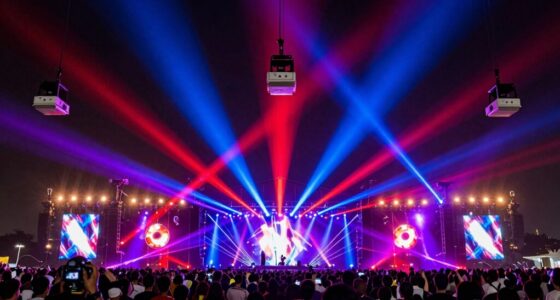
The Canon 12×36 IS III is my best overall pick for stadium concerts, balancing useful reach with a steadier, more manageable view than the higher-magnification models. For distant seats, the Canon 15×50 IS and Canon 18×50 IS offer more detail, while the Canon 8×20 IS is easier to carry and raise between songs. The main tradeoff is reach versus comfort: stronger magnification can make performers appear larger, but it also tends to mean a heavier instrument and a narrower view. Compact models are easier to handle but show less detail across a large venue. Read on for the full comparison and guidance on choosing for your seat, show, and carry style.

Get audio and creator gear delivered free with Prime
- Fast, free delivery on millions of items
- Prime Video, Amazon Music and more included
- Member-only deals all year
Complete the kit


Key Takeaways
- The Canon 12×36 IS III is the strongest all-around match because its magnification reaches beyond basic compact models without the bulk of the 15×50 and 18×50 options.
- The Canon 15×50 IS and 18×50 IS suit far seats best, but their added reach comes with more size and weight to manage during a long show.
- The Canon 8×20 IS prioritizes portability; it is a better fit for standing-room plans and small bags than for studying performers from the upper deck.
- The Canon 10×30 IS II is a middle-ground alternative for buyers who want less magnification than the 12×36 models and a less pocket-focused design than the 8×20.
- The Nikon Stabilized 12×25 stands apart for its compact, waterproof design, while the two Canon 12×36 listings appear closely related and should be compared by their included bundle contents.
| Canon 18×50 IS Image Stabilized Binoculars Bundle |  | Best for Maximum Reach | Magnification: 18x | Objective lens diameter: 50mm | Field of view: 3 degrees | VIEW ON AMAZON | See Our Full Breakdown |
| Canon 12×36 Image Stabilization III Binoculars | 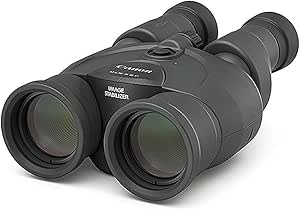 | Best All-Around Concert Pick | Magnification: 12x | Objective lens diameter: 36mm | Exit pupil: 3mm | VIEW ON AMAZON | See Our Full Breakdown |
| Canon 12×36 IS III Image Stabilized Binoculars (9526B002) Bundle |  | Best for Outdoor Daytime Concerts | Magnification: 12x | Objective lens diameter: 36mm | Field of view: 60° | VIEW ON AMAZON | See Our Full Breakdown |
| Canon 8 x 20 IS Binoculars with Image Stabilization |  | Best Compact Carry | Magnification: 8x | Objective lens diameter: 20mm | Field of view: 49.5 degrees | VIEW ON AMAZON | See Our Full Breakdown |
| Nikon Stabilized 12×25 Binoculars – Optical Image Stabilization, Waterproof, Compact for Outdoor Activities |  | Best Waterproof 12x Option | Magnification: 12x | Objective lens diameter: 25mm | Field of view: 236 ft at 1,000 yards | VIEW ON AMAZON | See Our Full Breakdown |
| Canon 10×30 IS II Image Stabilized Binoculars Bundle |  | Best Balanced Pick for Concerts | Magnification: 10x | Objective lens diameter: 30mm | Exit-pupil diameter: 3mm | VIEW ON AMAZON | See Our Full Breakdown |
| Canon 15×50 IS Image Stabilized Binocular |  | Best for Distant Seats | Magnification: 15x | Objective lens diameter: 50mm | Field of view: 236.2 feet | VIEW ON AMAZON | See Our Full Breakdown |
| image stabilized binoculars for stadium concert | Magnification | Objective lens diameter | Eye relief | Water resistance |
|---|---|---|---|---|
| Canon 18×50 IS Image Stabilize | 18x | 50mm | 15mm | Water resistant |
| Canon 12×36 Image Stabilizatio | 12x | 36mm | 14.5mm | Water resistant; level not specified |
| Canon 12×36 IS III Image Stabi | 12x | 36mm | 14.5mm | Not water resistant |
| Canon 8 x 20 IS Binoculars wit | 8x | 20mm | — | Waterproof |
| Nikon Stabilized 12×25 Binocul | 12x | 25mm | 2.1mm | Waterproof |
| Canon 10×30 IS II Image Stabil | 10x | 30mm | 14.5mm | — |
| Canon 15×50 IS Image Stabilize | 15x | 50mm | 15mm | Water resistant |
More Details on Our Top Picks
Canon 18×50 IS Image Stabilized Binoculars Bundle
For a concert seat far from the stage, the 18x magnification brings performers closer than the 12x Canon 12×36 IS III, while image stabilization helps control the shake that would otherwise make that much reach difficult to use by hand. Its 50mm objectives also gather more light than the smaller lenses in this lineup, a useful advantage as a venue darkens. The tradeoff is a demanding package: at 3 pounds, these are heavier to hold through a long set, and the 3-degree field of view makes it harder to track performers moving across the stage. Water resistance adds flexibility for outdoor venues, but stabilization needs batteries. I’d choose these for distant seats and detailed viewing, not for quick scanning or all-night comfort; the Canon 8 x 20 IS is much easier to carry.
Pros:- 18x magnification brings distant performers closer than the 12x models listed.
- Image stabilization helps make high-magnification handheld viewing more usable.
- 50mm objectives offer more light-gathering area than the compact 20mm and 25mm options.
- Water-resistant construction suits outdoor venues and changing weather.
Cons:- Three-pound weight can tire arms during an extended concert.
- Three-degree field of view makes tracking performers across the stage harder.
- Image stabilization requires batteries.
Best for: Concertgoers seated far from the stage who prioritize performer detail and can tolerate heavier binoculars.
Not ideal for: People who want to scan a wide stage quickly or hold binoculars comfortably through a long show; the weight and narrow field of view work against both.
- Magnification:18x
- Objective lens diameter:50mm
- Field of view:3 degrees
- Eye relief:15mm
- Weight:3 pounds
- Water resistance:Water resistant
- Tripod mount:Yes
- Close focus distance:19.7 feet
Our verdict“Choose this Canon for distant seats and maximum stage detail if reach matters more to you than light weight and easy scanning.”
Canon 12×36 Image Stabilization III Binoculars
The Canon 12×36 IS III hits a useful middle ground for stadium seating: 12x magnification gives a clear step up from ordinary compact binoculars without the reach-heavy feel of the Canon 18×50 IS. Its 36mm objectives are larger than those on the Nikon Stabilized 12×25, which can be helpful as concert lighting drops, while the 1.8-pound weight is easier to manage than the 18×50. Image stabilization supports handheld viewing, and 14.5mm eye relief may suit some glasses wearers. The compromises are that the data gives no precise field-of-view figure, and the water-resistance details are limited, so I wouldn’t treat it as the safest choice for rainy outdoor shows. It also still takes more bag space than the Canon 8 x 20 IS.
Pros:- 12x magnification offers meaningful reach without the 18×50’s heavier, narrower-view tradeoff.
- 36mm objectives are larger than the Nikon 12×25’s, a benefit when venue lighting is dim.
- At 1.8 pounds, it is lighter than the Canon 18×50 IS.
- 14.5mm eye relief may work for viewers wearing glasses.
Cons:- Water-resistance details are limited, leaving uncertainty for outdoor shows in wet weather.
- The 36mm format is less compact than the Canon 8 x 20 IS.
- Focus may need fine adjustment to sharpen the view.
Best for: Concertgoers who want a balance of useful stage magnification, stabilization, and moderate carry weight.
Not ideal for: People attending rainy outdoor concerts or seeking the smallest possible pair; its water-resistance details are limited and the 36mm body is larger than the 8 x 20.
- Magnification:12x
- Objective lens diameter:36mm
- Exit pupil:3mm
- Eye relief:14.5mm
- Prism type:Porro prism
- Weight:1.8 pounds
- Water resistance:Water resistant; level not specified
- Diopter adjustment:±3 diopters
Our verdict“Pick the Canon 12×36 IS III if you want a practical balance of stage reach, stabilization, and manageable weight.”
Canon 12×36 IS III Image Stabilized Binoculars (9526B002) Bundle
This bundled Canon 12×36 IS III brings the same basic concert-friendly balance as the Canon 12×36 IS III listed separately: 12x magnification for stage detail and stabilization for handheld viewing. Its supplied data highlights anti-reflective coatings and a 60° field-of-view figure, though that figure differs from the other 12×36 listing, so I would not assume the two listings are identical in every specification. Against the more powerful Canon 18×50 IS, this 12×36 is lighter in concept and easier to use for general stage viewing, but it gives up reach and has no water resistance. That last limitation makes this a better fit for dry indoor venues than open-air shows where rain is possible. Stabilization runs on two AA batteries, with listed life up to nine hours.
Pros:- 12x magnification provides useful stage detail without the 18×50’s stronger reach-oriented compromise.
- Image stabilization supports handheld viewing without a tripod.
- Anti-reflective coatings are intended to reduce light loss and reflections.
- Uses two AA batteries, with up to nine hours of listed battery life.
Cons:- Not water resistant, making it a poor fit for wet outdoor concerts.
- 12x magnification cannot bring distant performers as close as the Canon 18×50 IS.
- Listed battery life means stabilization depends on carrying charged or spare batteries.
Best for: Concertgoers attending dry indoor venues who want stabilized 12x viewing and value a stated wide field-of-view figure.
Not ideal for: People going to outdoor concerts where rain is possible, or buyers who need maximum reach; it is listed as not water resistant and offers less magnification than the Canon 18×50 IS.
- Magnification:12x
- Objective lens diameter:36mm
- Field of view:60°
- Exit pupil:3mm
- Eye relief:14.5mm
- Prism type:Porro
- Water resistance:Not water resistant
- Power source and battery life:2 x AA batteries; up to 9 hours
Our verdict“Choose this bundle for stabilized viewing at dry indoor shows, but skip it if weather protection or maximum magnification matters more.”
Canon 8 x 20 IS Binoculars with Image Stabilization
The Canon 8 x 20 IS is the easiest match here for buyers who want stabilization without carrying a larger pair through security, crowds, and a full evening. Its 8x magnification is less demanding to hold than the 12x Canon 12×36 IS III or 18x Canon 18×50 IS, but that also means less performer detail from distant seats. The 20mm objectives are the smallest in this group, so they give up light-gathering capacity when the stage is dim. Waterproofing is a useful advantage over the non-water-resistant 12×36 bundle, and the compact design is easier to stow. One listed specification gives the weight as 1.9 pounds, which is not especially light despite the compact label; check whether that carry weight suits your plans.
Pros:- 8x magnification is less demanding to hold steady than the higher-powered 12x and 18x choices.
- Compact dimensions make storage and transport easier than the larger 12×36 and 18×50 models.
- Listed as waterproof, unlike the Canon 12×36 bundle that is not water resistant.
- Image stabilization helps reduce hand shake during viewing.
Cons:- 8x magnification provides less reach than the Canon 12×36 IS III and Canon 18×50 IS.
- 20mm objectives offer less light-gathering capacity than the larger-lens options.
- Listed weight of 1.9 pounds may disappoint buyers expecting an especially light pair.
Best for: Concertgoers who prioritize a compact, waterproof pair for nearby seats, travel, and easy storage.
Not ideal for: People seated far from the stage or attending dimly lit shows who need stronger magnification and larger objectives.
- Magnification:8x
- Objective lens diameter:20mm
- Field of view:49.5 degrees
- Exit pupil:2.5mm
- Prism type:BaK4
- Water resistance:Waterproof
- Weight:1.9 pounds
- Dimensions:5.6 x 4.6 inches
Our verdict“Choose the Canon 8 x 20 IS for convenient carrying and waterproof protection when you do not need long-distance stage detail.”
Nikon Stabilized 12×25 Binoculars – Optical Image Stabilization, Waterproof, Compact for Outdoor Activities
The Nikon Stabilized 12×25 combines 12x magnification with a compact, waterproof design, making it a sensible option for outdoor concerts where weather protection matters. Compared with the Canon 12×36 IS III, its 25mm objectives make for a smaller format but provide less light-gathering area—a real compromise as stage lighting fades. The 236-foot field of view at 1,000 yards gives a useful sense of coverage, while a tripod mount offers support when a fixed viewing position is practical. The listed 2.1mm eye relief is unusually short and may be uncomfortable, particularly for glasses wearers, despite the description mentioning adjustable eyecups. Battery life is listed up to 12 hours, but stabilization still relies on power. I’d favor this over the non-water-resistant 12×36 bundle for wet-weather outings, not for dim shows or extended glasses-on viewing.
Pros:- Waterproof construction suits outdoor concerts where weather may change.
- 12x magnification offers more reach than the Canon 8 x 20 IS.
- Compact 25mm objectives make this smaller than the Canon 12×36 IS III.
- Up to 12 hours of listed battery life and a tripod mount add flexibility.
Cons:- Listed 2.1mm eye relief may make viewing uncomfortable, especially for glasses wearers.
- 25mm objectives gather less light than the Canon 12×36’s 36mm objectives.
- Image stabilization depends on batteries, so long outings may call for spares.
Best for: Outdoor concertgoers who want 12x magnification, waterproofing, and a compact format for changeable weather.
Not ideal for: Glasses wearers and fans at dim venues who need generous eye relief or larger objectives; the listed eye relief is short and the 25mm lenses are smaller than the Canon 12×36’s.
- Magnification:12x
- Objective lens diameter:25mm
- Field of view:236 ft at 1,000 yards
- Exit pupil:2.1mm
- Eye relief:2.1mm
- Prism type:Roof prism
- Water resistance:Waterproof
- Battery life:Up to 12 hours
Our verdict“Pick the Nikon for waterproof 12x viewing outdoors, but favor the Canon 12×36 if dim-light performance or more comfortable eye relief matters more.”
Canon 10×30 IS II Image Stabilized Binoculars Bundle
The 10x magnification and image stabilization offer a useful middle ground for following performers from stadium seats: more reach than compact 8x binoculars, without the stronger shake and extra bulk of the Canon 15×50 IS. Its 30mm objectives keep the body lighter than that larger model, which can matter during a long set when you are holding binoculars up repeatedly. The stated 60-degree apparent angle of view also suits tracking activity across the stage. The tradeoff is a smaller 3mm exit pupil, which may feel less forgiving in dim viewing conditions, and the binoculars need two AA batteries for stabilization. The listing’s water-resistance details are inconsistent, so I would not choose this pair for wet-weather use based on the supplied information alone.
Pros:- Image stabilization helps steady the 10x view when watching from handheld seats.
- Lighter, more portable design than the Canon 15×50 IS.
- 60-degree apparent angle of view helps follow performers across the stage.
- 14.5mm eye relief may accommodate some glasses wearers.
Cons:- Requires two AA batteries to operate image stabilization.
- The 3mm exit pupil offers less tolerance for dim conditions than larger-aperture options.
- Water-resistance information is inconsistent in the supplied product details.
Best for: Concertgoers who want stabilized 10x reach for stage viewing but prefer a lighter, less bulky option than a 50mm model.
Not ideal for: People attending rainy outdoor festivals or seeking a bright view late at night; the supplied water-resistance information is unclear, and the 3mm exit pupil is relatively small.
- Magnification:10x
- Objective lens diameter:30mm
- Exit-pupil diameter:3mm
- Eye relief:14.5mm
- Prism type:Porro prism
- Focus:Manual center focus
- Diopter adjustment:±5 diopters
- Coating:Multi-coated
Our verdict“Choose this pair for a balance of stabilized reach and manageable size, but not if low-light brightness or clearly specified weather protection is your priority.”
Canon 15×50 IS Image Stabilized Binocular
For upper-deck seats where performers look small, the 15x magnification brings in more stage detail than the Canon 10×30 IS II, while optical stabilization helps counter the hand movement that makes high power harder to hold steady. Its 50mm objective lenses gather more light than the 10×30’s 30mm lenses, a potential advantage as the venue darkens. That reach comes with a real concert-day cost: at 2.6 pounds, this is a heavier pair to raise and hold through a long performance, and its larger body is less convenient to carry. The 15x view also gives you a narrower-feeling window for tracking fast movement than lower-magnification choices. I’d favor it for distant seating and detail; for a more relaxed, portable view, the 10×30 is the easier choice.
Pros:- 15x magnification makes distant performers appear larger than with the Canon 10×30 IS II.
- Optical image stabilization helps control shake at high magnification.
- 50mm objective lenses provide a larger aperture than the 10×30 model.
- 15mm eye relief offers a comfortable viewing distance for some glasses wearers.
Cons:- At 2.6 pounds, it can become tiring to hold during a long concert.
- Bulkier dimensions make it less convenient to carry than the Canon 10×30 IS II.
- Water resistant, but not specified as fully waterproof.
Best for: Concertgoers in distant upper-level seats who prioritize pulling performers closer and can manage a heavier binocular.
Not ideal for: People in close or mid-level seats, anyone wanting a lightweight pair for all-night handheld viewing, or attendees who need fully waterproof protection.
- Magnification:15x
- Objective lens diameter:50mm
- Field of view:236.2 feet
- Eye relief:15mm
- Prism type:Porro prism
- Focus:Center focus
- Weight:2.6 pounds
- Dimensions:7.6 × 6 × 3.2 inches
- Water resistance:Water resistant
Our verdict“Pick the 15×50 IS for faraway seats and a closer stage view, and choose the lighter 10×30 IS II if comfort and easy carrying matter more.”

How We Picked
I ranked these models for the realities of a stadium show: viewing performers from different distances, keeping the image steady while standing or holding the binoculars up, and carrying them through a long event. I weighed magnification against practical handling rather than treating the largest number as an automatic win. Compactness, stated stabilization, build features, and versatility also mattered, since a binocular that is uncomfortable to hold may be less useful than one with greater reach.
The ranking favors a balance of reach and manageable size, which puts the Canon 12×36 IS III first for the broadest range of seats. Higher-power 15×50 and 18×50 models rank well for distant views but lose ground on carry and fatigue; compact 8×20 and 12×25 options trade detail for convenience. The Canon 10×30 IS II fills the middle, and the two 12×36 listings are treated as near-duplicates unless their bundles differ in a way that matters to the buyer.
| image stabilized binoculars for stadium concert | Water resistance | Prism type |
|---|---|---|
| Canon 18×50 IS Image Stabilize | Water resistant | — |
| Canon 12×36 Image Stabilizatio | Water resistant; level not specified | Porro prism |
| Canon 12×36 IS III Image Stabi | Not water resistant | Porro |
| Canon 8 x 20 IS Binoculars wit | Waterproof | BaK4 |
| Nikon Stabilized 12×25 Binocul | Waterproof | Roof prism |
| Canon 10×30 IS II Image Stabil | — | Porro prism |
| Canon 15×50 IS Image Stabilize | Water resistant | Porro prism |
Factors to Consider When Choosing Image Stabilized Binoculars For Stadium Concerts
For a concert, the best specification is the one that suits your seat and that you can comfortably use between songs. These broader checks can prevent a common mismatch: choosing for maximum magnification, then finding the binoculars too cumbersome or restrictive for the venue.
Match Magnification to Your Seat
Seat distance changes how much reach you need, but stadium layouts and stage screens also affect the view. Higher magnification can help reveal a performer from far away, yet it narrows the area you see and makes it harder to follow quick movement. A moderate-power model may be more enjoyable when you want to track the whole stage rather than inspect one spot. Before buying, check the venue’s seating map and think about whether you usually sit close, in the upper levels, or move around. Avoid assuming the biggest magnification will be best from every seat.
Think About How Long You’ll Hold Them
Concert viewing often means raising binoculars repeatedly, not using a tripod or resting your arms on a fixed surface. Weight and grip can matter more over a three-hour show than they do during a brief daytime observation. A larger model may offer more reach, but arm fatigue can make you use it less often. If you expect to stand, dance, or keep one hand free, favor a compact body and a comfortable strap or carrying case. Check the product’s listed weight and dimensions rather than judging size from magnification alone.
Treat Stabilization as Help, Not a Guarantee
Image stabilization can reduce hand movement, which is especially useful as magnification rises, but it cannot freeze a performer who is moving across the stage. Stabilization systems may also have controls or power requirements, so read the operating details before a show. A steady image is useful only if you can activate and hold the binoculars naturally. Practice handling and focus adjustments before entering a dark venue, where small controls are harder to manage. Do not expect stabilization to replace a comfortable grip or erase every shake.
Balance Brightness, Field of View, and Stage Lighting
Concert lighting shifts quickly between bright screens, spotlights, and darker parts of the venue. Binocular design and objective size affect how the view feels in those conditions, but no model can make a dim, distant stage look like daylight. A wider field of view can make it easier to follow performers and choreography; a tighter view can help isolate a distant subject. Consider whether you want a close look at a singer or a broader view of the production. Buyers often focus on magnification and overlook how much of the stage they can see at once.
Check Venue Rules and Carry Practicalities
Venue policies vary, and some restrict bags or equipment dimensions even when binoculars themselves are allowed. Confirm current bag and security rules before bringing a case, spare batteries, or accessories. Compact binoculars are easier to stow, while larger models may need more space and can attract attention during screening. A neck strap helps prevent drops in crowded aisles, but it should not interfere with movement or other gear. Make the venue’s entry requirements part of the choice rather than discovering them at the gate.
Compare the Complete Package, Not Just the Model Name
Some listings include a bundle, and the added contents can change what arrives without changing the core binocular design. Check whether a case, strap, batteries, or other accessories are included and whether those items suit your plans. The two Canon 12×36 listings are especially worth checking side by side because their names indicate closely related binoculars. Do not assume a bundle improves optical performance; its value depends on the included items and whether you need them. Confirm the exact model designation and package details before ordering.
Frequently Asked Questions
Are 12x binoculars enough for seats near the top of a stadium?
For many upper-level seats, 12x magnification offers a useful step up from compact 8x viewing, especially when you want to make out performers rather than watch only the stage screens. The exact result depends on venue size, sightline, lighting, and how far the stage is from your section. Higher-power models such as the Canon 15×50 or 18×50 may make distant subjects appear larger, but they are bulkier and show a narrower area. If you want to follow movement across the stage, a 12x model can be easier to use. Think about whether detail or a broad, easy-to-follow view matters more to you.
Should I choose the Canon 15×50 or 18×50 for a concert?
Choose between them based on how much extra reach you need and how much size you are willing to carry. The 18×50 offers greater magnification for very distant views, while the 15×50 gives up some reach and may be the more balanced choice for buyers who still want a high-power option. Both are larger than compact picks, so they may feel less convenient during standing-room shows or long periods of handheld viewing. A narrower view at higher power can also make it harder to follow fast movement. If your seats are not especially far from the stage, a 12x model may be easier to enjoy.
Is the compact Canon 8×20 a good choice for stadium concerts?
It can be a good choice if easy carrying matters more than seeing fine detail from far away. Its compact format is suited to small bags, standing-room plans, and viewers who want binoculars available without carrying a larger instrument all evening. The lower magnification means distant performers will appear smaller than they do through the 12x, 15x, or 18x options. That is a reasonable trade if you mainly want a closer look at nearer seats or a general view of the show. For far upper-deck seats, I would lean toward a higher-power model if you can manage the extra bulk.
Do I need waterproof binoculars for an indoor stadium concert?
Waterproofing is less central indoors than it is for outdoor events, but it can still be useful when concerts involve exposed seating, rain, or frequent travel between venues. The Nikon Stabilized 12×25 is the listing here that specifically calls out a waterproof design, giving it an advantage for buyers who use the same binoculars outside the stadium. For a strictly indoor show, comfort, magnification, and carry size are likely to matter more. Waterproof construction does not by itself make a binocular a better concert view. Check the manufacturer’s care guidance and the venue’s rules before exposing equipment to weather.
Are the two Canon 12×36 listings different binoculars or different bundles?
The product names suggest that the Canon 12×36 Image Stabilization III and the 9526B002 bundle may center on the same or closely related binocular design, but the listing details should be checked to confirm the exact model. Compare the included accessories, model number, warranty information, and seller description rather than assuming the bundle changes the optics. A case or strap can be useful at a concert, while accessories you already own may add little for you. If the core binocular specifications match, choose based on package contents and purchase terms. Verify the exact items included before placing an order.
Conclusion
For most stadium concertgoers, I recommend the Canon 12×36 IS III as the best overall balance of reach and manageable size. The Canon 10×30 IS II is my value-minded middle-ground pick for buyers who want stabilization without moving to the larger high-power models, while the Canon 15×50 IS is my premium choice for distant seats; choose the 18×50 when maximum reach matters more than compactness. Beginners who want a simple carry-friendly option can start with the Canon 8×20 IS, accepting less detail at long distances. For outdoor concerts or buyers who prioritize a compact waterproof design, consider the Nikon Stabilized 12×25. The two Canon 12×36 listings may suit the same viewer, so compare their exact bundle contents before deciding.