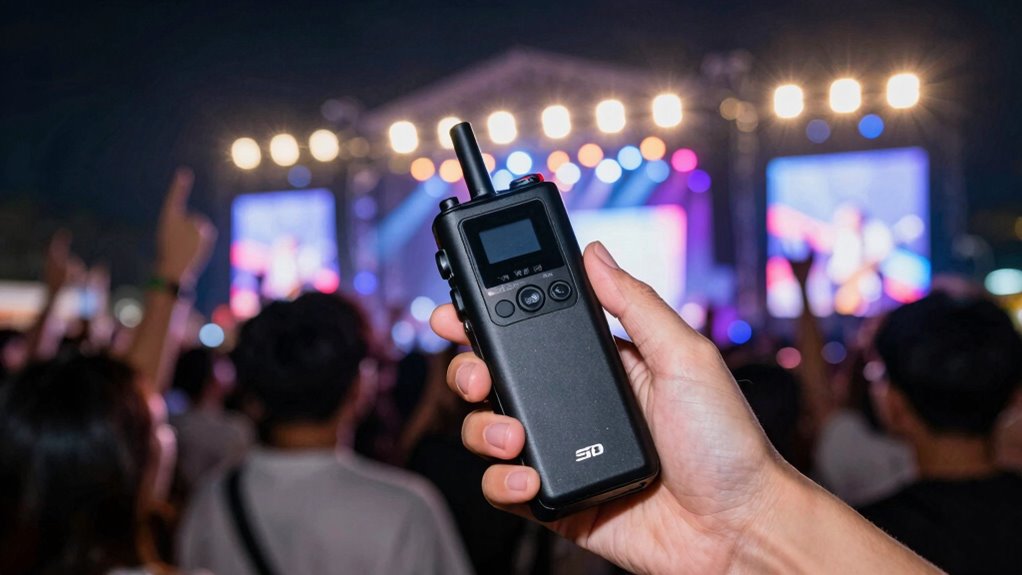

When selecting a handheld audio recorder for live concerts, clarity and reliability are paramount. The Zoom H4 stands out as the overall best choice for its professional-quality sound capture and versatile features. For those seeking portability, the Tascam DR-07X offers excellent value with straightforward operation. Meanwhile, the Xvive XV1-R provides impressive float-bit technology for capturing nuanced live performances. These options highlight the key tradeoffs: higher-end devices deliver superior sound but can be bulkier and more complex, while budget-friendly models are simpler but may lack advanced features. Keep reading for the full breakdown to find the best fit for your live recording needs.

Get audio and creator gear delivered free with Prime
- Fast, free delivery on millions of items
- Prime Video, Amazon Music and more included
- Member-only deals all year
Complete the kit


Key Takeaways
- The Zoom H4 consistently offers the highest sound quality, making it ideal for professional-level concert recordings.
- Portability and ease of use are well-balanced in the Tascam DR-07X, making it a top choice for casual recording or on-the-go capturing.
- Advanced features like 32-bit float recording and X/Y microphones provide significant benefits but often come with increased complexity and cost.
- Build quality and battery life vary widely; more robust models tend to last longer during extended performances.
- Choosing between stereo configurations and interface options depends on whether users prioritize simplicity or versatility for post-processing.
| Xvive XV1-R Portable Stereo Audio Recorder with 32-Bit Float, X/Y Microphones, WAV/AAC Format, USB Microphone, Auto Record, for Musicians, Podcasters, Filmmakers |  | Best Overall for High-Quality, Versatile Recording | Recording Format: WAV, AAC | Sample Rate: 96 kHz (WAV), 48 kHz (USB Microphone) | Bit Depth: 32-bit float, 24-bit PCM | VIEW ON AMAZON | See Our Full Breakdown |
| Tascam DR-07X Stereo Handheld Digital Audio Recorder and USB Interface |  | Best for Beginners and Long-Session Recordings | Microphone Type: Dual internal condenser | Recording Quality: Up to 24-bit/96kHz | Microphone Configuration: Adjustable A-B and X-Y | VIEW ON AMAZON | See Our Full Breakdown |
| Zoom H1 Essential Recorder for Musicians, Podcasters & Content Creators |  | Best Compact, All-in-One Recorder for Content Creators | Connectivity: USB-C | Audio Quality: Stereo | Suitable For: Music, podcasting, streaming | VIEW ON AMAZON | See Our Full Breakdown |
| Xvive XV1-R Portable Stereo Recorder and Audio Interface |  | Best for Versatile Field Recording and On-the-Go Production | Recording Quality: up to 96kHz, 24-bit or 32-bit float | Supported File Formats: HE-AAC, AAC-LC, WAVF32, WAV24 PCM | Storage Support: microSD, microSDHC, microSDXC up to 128 GB | VIEW ON AMAZON | See Our Full Breakdown |
| Zoom H1 XLR 2-Channel Recorder for Filmmakers, Musicians & Podcasters |  | Best for Multi-Channel, Professional-Quality Recording | Recording Quality: 32-bit / 96kHz | Inputs: 2 XLR/TRS combo | Display: OLED waveform | VIEW ON AMAZON | See Our Full Breakdown |
| Zoom H4 Essential Handheld Recorder for Musicians, Podcasters & Filmmakers |  | Best Versatile Recording Solution for Live Concerts | Number of Tracks: 4 | Input Options: Built-in stereo microphones, external mics, instruments, XLR/TRS inputs | Connectivity: USB-C for device connection and streaming | VIEW ON AMAZON | See Our Full Breakdown |
| handheld audio recorder for live concert | Storage | Recording Quality |
|---|---|---|
| Xvive XV1-R Portable Stereo Au | MicroSDHC 32GB, MicroSDXC 128GB | — |
| Tascam DR-07X Stereo Handheld | Supports microSD cards up to 128GB | Up to 24-bit/96kHz |
| Zoom H1 Essential Recorder for | — | — |
| Xvive XV1-R Portable Stereo Re | — | up to 96kHz, 24-bit or 32-bit float |
| Zoom H1 XLR 2-Channel Recorder | — | 32-bit / 96kHz |
| Zoom H4 Essential Handheld Rec | SD card | — |
More Details on Our Top Picks
Xvive XV1-R Portable Stereo Audio Recorder with 32-Bit Float, X/Y Microphones, WAV/AAC Format, USB Microphone, Auto Record, for Musicians, Podcasters, Filmmakers
The Xvive XV1-R stands out for its 32-bit float recording, which guarantees lossless audio that requires no gain adjustments—an advantage over the Tascam DR-07X, which offers high-quality but less flexible 24-bit/96kHz recording. Its X/Y microphones excel at capturing clear, detailed sound up to 130 dB SPL, making it ideal for live concerts with loud instruments. The device functions as a USB microphone for streaming or calls, adding to its versatility. However, the 12-hour recording limit and reliance on microSD cards, which are sold separately, could be restrictive for longer sessions. This pick is best suited for musicians and content creators who prioritize professional-grade audio quality and flexible formats, but might not be ideal for users needing extended recording durations or integrated storage. Pros include lossless 32-bit float recording, high SPL mic capture, versatile formats, and USB mic capability. Cons involve limited recording time and extra cost for storage. Overall, this is a top choice for those seeking professional, portable audio with minimal fuss.Pros:- Lossless 32-bit float recording for high fidelity
- High SPL X/Y microphones for loud environments
- Supports multiple formats including WAV and AAC
- Functions as a USB microphone for streaming
Cons:- Limited to 12 hours of recording per session
- Requires microSD card purchase separately
- USB sample rate fixed at 48 kHz, less flexible for some professional needs
Best for: Musicians, podcasters, and filmmakers needing top-tier, flexible audio recording in a portable form.
Not ideal for: Users requiring very long recording sessions without swapping microSD cards or needing built-in storage, or those on tight budgets for accessories.
- Recording Format:WAV, AAC
- Sample Rate:96 kHz (WAV), 48 kHz (USB Microphone)
- Bit Depth:32-bit float, 24-bit PCM
- Microphone Type:X/Y directional microphones
- Maximum Recording Time:12 hours
- Storage:MicroSDHC 32GB, MicroSDXC 128GB
Our verdict“This device best suits professionals or serious hobbyists prioritizing ultimate audio quality in a portable, versatile package.”
Tascam DR-07X Stereo Handheld Digital Audio Recorder and USB Interface
The Tascam DR-07X offers easy-to-use controls and versatile adjustable A-B and X-Y microphone configurations, making it accessible for newcomers who want decent sound quality without complexity. Its 24-bit/96kHz recording quality surpasses basic recorders like the Zoom H1, especially for capturing live concert ambience. The impressive battery life of up to 17.5 hours paired with the option to power via USB makes it suitable for extended recording sessions. However, it requires AA batteries, which could be inconvenient compared to rechargeable options, and its maximum microSD capacity of 128GB may limit very long recordings. This device is ideal for beginners or outdoor recordists who value long battery life and straightforward operation, but might not satisfy those seeking advanced onboard features or higher sampling rates. Pros include high-quality 24-bit/96kHz recording, adjustable mic configurations, long battery life, and USB interface capability. Cons involve battery dependency and limited storage capacity. Overall, this is a solid choice for entry-level users needing reliable, extended, portable recording.Pros:- High-quality 24-bit/96kHz recording
- Adjustable A-B and X-Y microphone setups
- Very long battery life with USB power option
- Supports microSD cards up to 128GB
Cons:- Requires AA batteries, which need replacement
- Limited storage capacity for very long sessions
- Basic interface may lack advanced features
Best for: Beginners and outdoor recording enthusiasts who need straightforward operation and long-lasting power.
Not ideal for: Professional users requiring higher bit depths, larger storage, or more advanced onboard features.
- Microphone Type:Dual internal condenser
- Recording Quality:Up to 24-bit/96kHz
- Microphone Configuration:Adjustable A-B and X-Y
- Battery:2 AA batteries or USB
- Battery Life:Up to 17.5 hours
- Storage:Supports microSD cards up to 128GB
Our verdict“Ideal for entry-level users or those needing dependable, long-duration recordings with simple controls.”
Zoom H1 Essential Recorder for Musicians, Podcasters & Content Creators
The Zoom H1 excels in delivering clear stereo sound in a compact, lightweight package, making it a prime choice for content creators needing quick, on-the-go recordings. Compared to larger models like the Zoom H1 XLR, it lacks professional XLR inputs but compensates with its portability and ease of use. Its USB-C connectivity makes it straightforward to connect to modern devices, and its suitability for recording music, podcasts, or ambient sounds is enhanced by its simple interface. The main tradeoff is its limitation to stereo recording, which might not satisfy those needing multi-channel or multi-mic setups. It’s best for beginners and casual content producers who value convenience but not complex audio configurations. Pros include compact design, good stereo quality, multi-use as a microphone, and USB-C connectivity. Cons involve single stereo channel and basic feature set. Overall, this makes sense for on-the-fly recording and streaming in small, portable formats.Pros:- Clear stereo audio quality
- Compact and portable design
- Can be used as a microphone for streaming
- Easy USB-C connection
Cons:- Limited to stereo recording, no multi-channel
- Basic features may not satisfy advanced users
- No onboard mic or XLR inputs
Best for: Content creators, podcasters, and musicians seeking a simple, portable recorder for quick stereo captures.
Not ideal for: Professionals requiring multi-channel recordings or advanced onboard features.
- Connectivity:USB-C
- Audio Quality:Stereo
- Suitable For:Music, podcasting, streaming
- Size:Compact, lightweight
- Use Cases:Music recording, podcasts, ambient sounds
- Input:Built-in stereo microphone
Our verdict“Best suited for casual content creators needing a small, easy-to-use device for high-quality stereo recordings.”
Xvive XV1-R Portable Stereo Recorder and Audio Interface
The Xvive XV1-R combines professional-grade 96kHz, 24-bit or 32-bit float recording with flexible input options, making it suitable for field recording, video production, and live concerts. Its support for large microSD cards and onboard sound processing features like noise gate and lo-cut filter give it an edge over basic recorders like the Zoom H1. The device’s compact form factor lends itself well to on-the-move use, but its reliance on batteries and stereo-only configuration could be limiting for more complex recording setups. Compared to the Tascam DR-07X, it offers higher sample rates and onboard effects, but lacks multi-channel inputs. This pick is best for field recordists, videographers, and mobile producers who need high fidelity and onboard processing, but it might be less suitable for multi-mic concert recordings. Pros include high-quality 96kHz/24-bit or 32-bit float recording, versatile input formats, long battery life, and built-in sound processing. Cons include stereo-only recording and small form factor, handling challenges. Overall, this is an excellent choice for professional field and video sound capture.Pros:- High-quality 96kHz/24-bit or 32-bit float recording
- Supports large microSD cards for extended sessions
- Onboard noise gate, limiter, and filters
- Compact and portable for field use
Cons:- Stereo recording only, not multi-channel
- Battery dependence for operation
- Small size can be challenging for some users to handle
Best for: Field recordists, videographers, and mobile content creators needing high-fidelity, portable audio capture.
Not ideal for: Users requiring multi-channel, multi-mic concert recordings or those who prefer built-in microphones.
- Recording Quality:up to 96kHz, 24-bit or 32-bit float
- Supported File Formats:HE-AAC, AAC-LC, WAVF32, WAV24 PCM
- Storage Support:microSD, microSDHC, microSDXC up to 128 GB
- Inputs:Stereo 1/8-inch mic/line
- Outputs:Line-level output
- Power:2 AA batteries
Our verdict“Best suited for professionals needing portable, high-fidelity recording with onboard processing features.”
Zoom H1 XLR 2-Channel Recorder for Filmmakers, Musicians & Podcasters
The Zoom H1 XLR provides 32-bit/96kHz recordings with dual XLR/TRS inputs, making it ideal for capturing high-quality sound from multiple sources in live settings. Its OLED waveform display offers clear monitoring, and support for SDXC cards up to 1TB ensures ample storage for lengthy sessions. Compared to the Zoom H1 Essential, it introduces professional inputs and higher capacity, but it requires external microphones since it lacks onboard mics. Its two-channel design allows for more complex setups, yet it doesn’t support multi-mic configurations beyond two sources. This device caters to filmmakers and musicians needing multi-mic flexibility but may be overkill for casual or solo concert recordings. Pros include professional XLR/TRS inputs, high-quality 32-bit/96kHz recording, large storage capacity, and OLED display for monitoring. Cons involve no onboard microphone and limited to two channels. Overall, this is a prime choice for multi-mic recording in live or studio settings.Pros:- High-quality 32-bit/96kHz recording
- Dual XLR/TRS inputs for versatile sources
- OLED display for waveform monitoring
- Supports SDXC cards up to 1TB
Cons:- Requires external microphones, no onboard mic
- Limited to two channels, not multi-mic
- Potentially larger and heavier for portable use
Best for: Filmmakers, professional musicians, and podcasters requiring multi-mic, high-quality audio capture.
Not ideal for: Solo performers or users seeking a compact, all-in-one recorder with built-in microphones.
- Recording Quality:32-bit / 96kHz
- Inputs:2 XLR/TRS combo
- Display:OLED waveform
- Storage Support:SDXC up to 1TB
- Inputs/Outputs:3.5mm stereo, headphone
- Additional Features:Waveform display
Our verdict“Best suited for professionals needing multi-mic inputs and high-fidelity recording in complex live or studio environments.”
Zoom H4 Essential Handheld Recorder for Musicians, Podcasters & Filmmakers
The Zoom H4 stands out for its combination of high-quality stereo sound and flexible input options, making it a strong choice for capturing live concerts in various settings. Compared with the Zoom H1, which is more compact and easier to carry, the H4 offers more input versatility, including XLR/TRS connections for professional microphones, which can significantly improve sound quality for live performances. However, this added capability comes with increased bulk and complexity, making it less portable and potentially overwhelming for beginners. The H4’s ability to record directly to SD cards and connect via USB-C for streaming or backing up recordings enhances its usefulness in professional settings, but it requires familiarity with managing multiple inputs and storage media. This pick makes the most sense for musicians or filmmakers who need a robust, multi-input device that can handle live concert audio with high fidelity, despite its larger size and learning curve.
Pros:- High-quality stereo sound with multiple input options including XLR/TRS connections
- Versatile connectivity for microphones, instruments, and devices
- User-friendly interface with spoken menu guidance
Cons:- Bulkier and heavier compared to simpler recorders like the Zoom H1
- Requires an SD card for storage, adding an extra step and potential point of failure
- Complex interface may be intimidating for users new to recording equipment
Best for: Musicians, filmmakers, or podcasters who need a versatile, multi-input recorder capable of capturing high-quality live concert audio in varied environments
Not ideal for: Beginners or solo performers seeking a lightweight, simple device for quick recordings, as the H4’s multiple features may be confusing or unnecessary
- Number of Tracks:4
- Input Options:Built-in stereo microphones, external mics, instruments, XLR/TRS inputs
- Connectivity:USB-C for device connection and streaming
- Storage:SD card
- Guided Interface:Spoken menu guidance
- Power:AA batteries or AC adapter
- Display:Color LCD screen
- Build:Robust plastic and metal chassis
- Size:Approximately 6 x 2.5 x 1 inches
Our verdict“This recorder is ideal for performers and professionals who prioritize sound quality and input flexibility over portability and simplicity.”
How We Picked
To determine the best handheld audio recorders for live concerts, I focused on key factors that directly impact live recording quality and usability. Performance metrics like microphone quality, recording formats, and noise handling were prioritized, along with build durability for outdoor or energetic environments. Ease of use and interface options were also evaluated, as live settings demand quick setup and reliable operation. Finally, value for money and portability influenced the rankings, ensuring each pick offers a distinct advantage for different types of users and recording scenarios.| handheld audio recorder for live concert | Storage |
|---|---|
| Xvive XV1-R Portable Stereo Au | MicroSDHC 32GB, MicroSDXC 128GB |
| Tascam DR-07X Stereo Handheld | Supports microSD cards up to 128GB |
| Zoom H1 Essential Recorder for | — |
| Xvive XV1-R Portable Stereo Re | — |
| Zoom H1 XLR 2-Channel Recorder | — |
| Zoom H4 Essential Handheld Rec | SD card |
Factors to Consider When Choosing Handheld Audio Recorder For Live Concerts
Choosing the right handheld audio recorder for live concerts involves balancing several important considerations. First, sound quality is paramount; look for devices with high-quality microphones and flexible recording formats to capture the full nuance of live performances. Second, portability and battery life matter, especially for longer events or outdoor settings. Third, ease of use and interface options can significantly affect your ability to record effectively in dynamic environments. Additional features like built-in microphones, XLR inputs, and onboard editing capabilities should align with your specific recording needs. Being aware of common pitfalls, such as underestimating noise levels or overcomplicating device operation, can help you make a more informed choice.Sound Quality and Microphone Configuration
The core of any recorder’s performance is sound quality, which depends heavily on microphone type and recording formats. Devices with X/Y microphones tend to provide a natural stereo image, ideal for capturing the ambiance of a live concert. Look for options supporting high-resolution formats like WAV or 24-bit/96kHz sampling rates, which preserve detail. Beware of models with poor microphone quality or limited format support, as these can compromise the fidelity of your recordings, especially in noisy venues.
Portability and Battery Life
Live concert recording often requires a lightweight, compact device that can be easily carried and operated on the fly. Battery life is equally critical; a recorder with limited power may cut off mid-performance, leaving gaps in your audio. Consider models with extended battery options or power-saving features. Keep in mind that bulkier units might offer better durability and longer recording times but could be less convenient for quick setups or movement.
Ease of Use and Interface
In high-energy environments, simplicity can be the difference between capturing a great performance or missing key moments. Devices with intuitive controls, clear display screens, and straightforward menus reduce setup time and user error. Features like one-touch recording or auto-level functions help manage unpredictable sound levels typical of live shows. Overly complex interfaces may slow you down or increase the chance of mistakes during critical moments.
Connectivity and Expandability
Many performers and content creators benefit from flexible connectivity options, such as XLR inputs for professional microphones or USB interfaces for direct computer connection. These features enable higher-quality audio input and easier integration into existing setups. However, additional inputs and outputs can increase device complexity and cost. Think about your specific needs—if you only require basic stereo recording, simpler models may suffice.
Durability and Weather Resistance
Live concert environments can be unpredictable; dust, moisture, and physical shocks are common. A durable, well-built recorder can withstand these conditions, ensuring consistent performance. Some models come with rugged housing or weather-sealing, but often at a higher price. If recording outdoors or in variable conditions, investing in a more resilient device can save money and frustration in the long run.
Frequently Asked Questions
What recording format should I prioritize for live concert recordings?
Opt for devices supporting WAV or FLAC formats, as they offer lossless audio quality suitable for detailed live recordings. These formats retain the full frequency range and dynamic nuances of performances, which are essential if you plan to mix or master the recordings later. Compressed formats like AAC or MP3 may save space but sacrifice fidelity, making them less ideal for professional-quality captures.
Can I use a handheld recorder for professional live concert recordings?
Yes, certain high-end models with XLR inputs, high-quality microphones, and advanced features like 32-bit float recording are capable of professional-level results. However, for truly top-tier recordings, many professionals still prefer dedicated field recorders or multi-mic setups. The right choice depends on your specific needs, budget, and whether you’re recording for personal use or publication.
How important is battery life for live concert recording?
Battery life is critically important because a dead battery during a performance can mean missing key moments. Look for models with long-lasting batteries or options for external power sources, such as rechargeable batteries or AC adapters. Testing or estimating real-world usage times helps ensure your device remains operational throughout the entire event, especially for extended or multi-act shows.
Should I choose a recorder with XLR inputs or stereo microphones?
Choosing between XLR inputs and built-in stereo microphones depends on your recording goals. XLR inputs allow connection to professional microphones, offering higher audio quality and flexibility, ideal for capturing complex live soundscapes. Built-in stereo microphones are more convenient and sufficient for casual recording but may lack the fidelity needed for detailed post-production work. Consider your desired sound quality and setup complexity when deciding.
What features are most important for outdoor live concert recordings?
For outdoor recordings, weather resistance and rugged build are essential, protecting your device from dust and moisture. Extended battery life and secure grip design also help manage long outdoor sessions. Additionally, features like windshields or foam covers for microphones can minimize wind noise, ensuring cleaner recordings. Prioritizing these features helps maintain high-quality audio in challenging environments.
Conclusion
For those seeking the best overall performance, the Zoom H4 remains the top recommendation thanks to its professional sound quality and versatile features. Budget-conscious users or casual recorders will find the Tascam DR-07X offers excellent value and ease of use. Content creators and musicians aiming for studio-grade recordings should consider the Xvive XV1-R with its advanced float-bit technology. Beginners or hobbyists should opt for simpler models with intuitive controls, while professionals requiring rugged, multi-input solutions should look toward the higher-end options. Understanding your specific recording environment and needs will guide you toward the right device for capturing live concert sound effectively.
Fall Picks
fall essentials
As an affiliate, we earn on qualifying purchases.