
Proper turntable placement is often overlooked, but it’s essential for great sound quality and record longevity. When you position your turntable correctly—away from vibrations, direct sunlight, or reflective surfaces—you’ll notice clearer audio and better stereo imaging. Good placement also prevents distortions and equipment issues, making your vinyl listening experience much more enjoyable. If you keep these tips in mind, you’ll discover even more ways to optimize your setup and enjoy superior sound quality.

Get audio and creator gear delivered free with Prime
- Fast, free delivery on millions of items
- Prime Video, Amazon Music and more included
- Member-only deals all year
Key Takeaways
- Proper placement reduces vibrations and feedback, directly improving sound clarity and record longevity.
- Incorrect positioning causes distortions and muddiness, diminishing the overall listening experience.
- Room acoustics and surface choices significantly influence sound quality and stereo imaging.
- External factors like noise and foot traffic can interfere with playback if the turntable isn’t well-placed.
- Attention to placement maximizes equipment performance and preserves vinyl records over time.
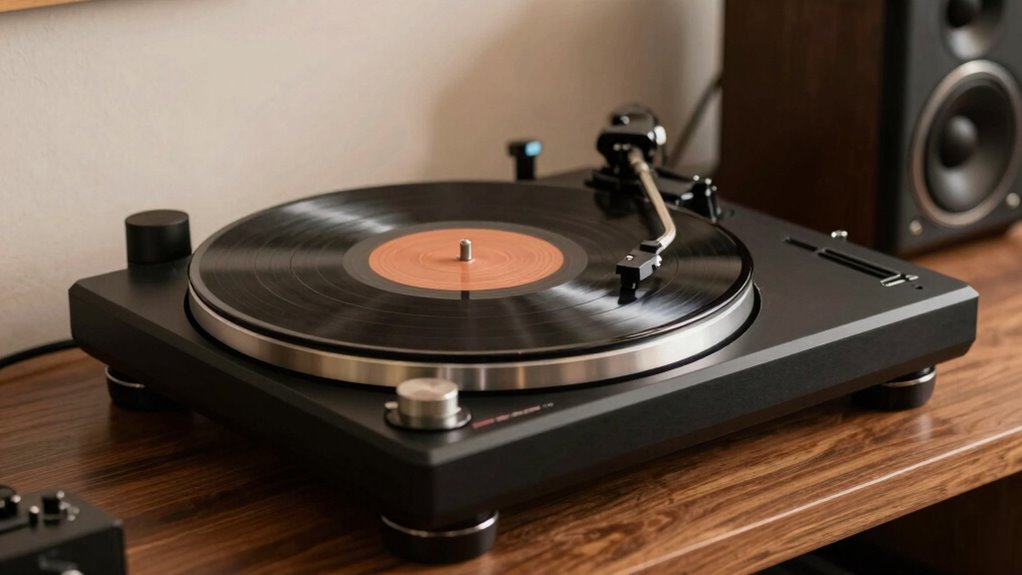
Proper turntable placement is essential for achieving the best sound quality from your vinyl records. When you set up your turntable, where you position it can make a significant difference in how your music sounds. One key factor to consider is speaker positioning. If your speakers aren’t aligned correctly or are placed too close to walls or corners, you’ll notice distortions, muddiness, or an uneven soundstage. Ideally, you want to position your speakers so they form an equilateral triangle with your listening spot, ensuring clear audio and balanced stereo imaging. This setup helps your turntable’s sound reach your ears without unwanted interference from improper speaker placement.
Proper speaker placement creates a clear, balanced soundstage for optimal vinyl listening.
Room acoustics also play a crucial role in turntable performance. The shape and materials in your space influence how sound waves travel and interact. Hard surfaces like glass or hardwood floors can create reflections that muddle the sound, while soft furnishings such as carpets, curtains, and cushions absorb excess noise, creating a warmer, more natural listening environment. Avoid placing your turntable near reflective surfaces like windows or bare walls, which can cause vibrations or feedback that degrade sound quality. Instead, find a spot that minimizes these reflections and provides a stable, vibration-free foundation for your turntable. Incorporating room acoustics best practices can significantly enhance your listening experience. Additionally, paying attention to soundproofing techniques can further improve sound clarity by reducing external noise interference.
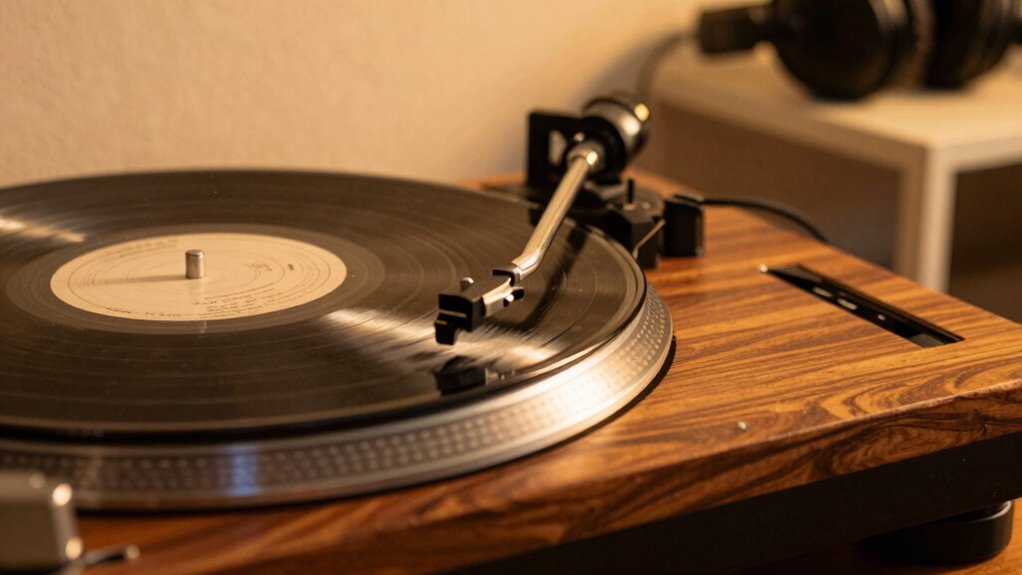
Many overlook that the surface where you place your turntable matters just as much as its location within the room. A sturdy, level surface reduces vibrations that could affect the stylus tracking and cause unwanted noise. Avoid placing your turntable on unstable or uneven furniture, as even slight tilts can distort playback. Additionally, keep the turntable away from direct sunlight, heat sources, or areas with high foot traffic, which can introduce unwanted vibrations or temperature fluctuations that impact your records and equipment. Proper placement is vital for preserving sound quality and ensuring your setup performs at its best. Ensuring your surface is also free from vibrations that can transfer from the environment enhances the overall listening experience.
turntable vibration isolation pads
As an affiliate, we earn on qualifying purchases.
As an affiliate, we earn on qualifying purchases.
Frequently Asked Questions
How Does Room Acoustics Affect Turntable Sound Quality?
Room acoustics are vital to your turntable’s sound quality. Vibration isolation is essential; it prevents unwanted vibrations from affecting playback, ensuring clarity. Acoustic treatment, like bass traps and diffusers, reduces echo and minimizes external noise, helping your turntable perform at its best. Proper placement within a well-treated room allows the stylus to track accurately, delivering richer sound and more precise detail. Paying attention to these factors elevates your listening experience dramatically.
Can Placement Impact Record Longevity?
Ironically, your turntable’s placement can impact record longevity more than you’d think. Proper vibration isolation and shelf stability prevent unnecessary vibrations that cause record wear over time. By ensuring your turntable sits on a stable, vibration-free surface, you protect your records from premature damage. Good placement isn’t just about sound quality but preserving your collection’s lifespan—so, don’t overlook the importance of a well-chosen spot.
What’s the Ideal Distance From Speakers?
You should place your turntable about a few feet from your speakers, ensuring they’re not too close to cause vibrations. Use vibration isolation pads to minimize unwanted noise, and align your speakers properly for balanced sound. Keep the turntable away from direct speaker output to prevent acoustic vibrations that can affect playback. Proper placement enhances sound quality and prolongs your records’ lifespan by reducing unnecessary vibrations.
How Often Should I Adjust Turntable Placement?
Think of your turntable as a delicate boat, needing calm waters to sail smoothly. You should adjust its placement whenever you notice unwanted vibrations or surface instability, ideally every few months or after moving furniture. Prioritize vibration isolation and surface stability, ensuring your setup remains steady. Regular tweaks keep your sound crisp and prevent distortions, just like a boat maintaining its course through tranquil waters.
Does Turntable Weight Influence Placement Considerations?
Yes, turntable weight influences placement considerations because a heavier turntable offers better stability and reduces vibrations. You want to guarantee proper vibration isolation, so place it on a sturdy, level surface that absorbs vibrations effectively. Stability minimizes unwanted movements, enhancing sound quality. Don’t overlook the importance of weight and placement; they work together to optimize performance, so invest in a solid stand and consider the turntable’s weight when choosing its location.
As an affiliate, we earn on qualifying purchases.
Conclusion
Remember, where you place your turntable isn’t just a small detail—it’s the secret weapon for stunning sound quality. If you neglect this, you risk turning your listening experience into a mere shadow of what it could be. Think of your turntable’s placement as the foundation of a masterpiece; mess it up, and everything else crumbles. Pay attention, get it right, and you’ll reveal an audio experience so pure, it’ll blow your mind like a sonic fireworks show.
As an affiliate, we earn on qualifying purchases.
room acoustic treatment for vinyl
As an affiliate, we earn on qualifying purchases.
As an affiliate, we earn on qualifying purchases.
Halloween Picks
halloween
As an affiliate, we earn on qualifying purchases.