
NRR, or Noise Reduction Rating, shows how well ear protection blocks loud sounds. A higher NRR means better noise reduction, helping prevent hearing damage in noisy environments. It’s usually listed on earplugs and earmuffs and depends on a good fit and proper use. Remember, the number is a guide and might overstate real-world protection. If you want to understand how to choose and use the right gear, keep exploring more details.
Key Takeaways
- NRR tells you how much noise your ear protection can block, making it safer to work or play in loud environments.
- Higher NRR numbers mean better noise reduction, but fit and proper use are just as important for real protection.
- NRR is measured in lab tests, so actual noise reduction in real life might be a bit less.
- Use NRR as a guide to pick the right hearing protection for the noise level you’re dealing with.
- Properly fitting ear protection and following safety tips help ensure you get the full benefit of the NRR.
ear protection with high NRR
As an affiliate, we earn on qualifying purchases.
As an affiliate, we earn on qualifying purchases.
What Is NRR and Why Is It Important?
Have you ever wondered what NRR actually means and why it matters? NRR, or Noise Reduction Rating, helps you understand how well hearing protection reduces noise levels. It’s essential for hearing safety because exposure to loud sounds can damage your ears over time. The higher the NRR, the better the protection, meaning it blocks out more noise. Knowing the NRR helps you choose the right ear protection for different environments, whether you’re working on a construction site or shooting at the range. Without considering noise levels, you risk hearing loss or long-term damage. NRR acts as a guide to keep your ears safe by minimizing sound exposure, making sure you can work or enjoy leisure activities without risking your hearing health. Additionally, understanding hydrotherapy techniques can promote overall ear and body wellness, especially when recovering from noise-induced stress or injury.
noise cancelling earplugs for loud environments
As an affiliate, we earn on qualifying purchases.
As an affiliate, we earn on qualifying purchases.
How Is NRR Calculated? A Simple Explanation
To calculate NRR, you start by figuring out your promoter percentage—customers who love your product. Then, you subtract the detractor percentage—those who aren’t satisfied—to see how your overall score changes. This simple step helps you understand your customer loyalty and growth potential. Paying attention to customer satisfaction can also help improve your NRR over time.
Calculating Promoter Percentage
Wondering how to determine the percentage of promoters in your customer base? It’s simple with the calculation method for promoter percentage. First, identify how many customers are promoters—those who rate you 9 or 10. Then, divide that number by your total customers and multiply by 100. This gives you the promoter percentage. Here’s a quick look: You can also analyze how this metric influences your overall customer satisfaction and growth strategies.
| Number of Promoters | Total Customers | Promoter Percentage |
|---|---|---|
| 45 | 50 | 90% |
| 30 | 60 | 50% |
| 80 | 100 | 80% |
This table helps you visualize the calculation method. Remember, the promoter percentage is vital for understanding your NRR and overall customer happiness.
Accounting for Detractors
Understanding how to account for detractors is essential when calculating your Net Revenue Retention (NRR). Detractors are customers who reduce your revenue, and properly factoring them in guarantees accurate measurement. To do this effectively, consider these points:
- Subtract revenue lost from detractors, similar to noise reduction in hearing safety, where eliminating unnecessary noise clarifies sound quality.
- Adjust your total revenue by removing the impact of detractors, maintaining clarity in your retention metrics.
- Monitor trends in detractor feedback to identify patterns, much like ensuring hearing safety by reducing harmful noise levels.
- Be aware of potential scams and fraudulent schemes associated with investments, which can impact your financial health and skew retention calculations.
earmuffs for hearing protection
As an affiliate, we earn on qualifying purchases.
As an affiliate, we earn on qualifying purchases.
What Do NRR Ratings on Ear Protection Mean?
When you see an NRR number on ear protection, it tells you how much noise reduction the device offers. You might wonder how that number is calculated or what it really means for your safety. Let’s break down what NRR ratings are and how to interpret those numbers effectively. Understanding these ratings can help you choose energy-efficient ear protection that aligns with your safety needs and environmental considerations.
What Is NRR Number?
Have you ever noticed the NRR number on your ear protection and wondered what it really means? The NRR, or Noise Reduction Rating, indicates how much noise your ear protection can reduce, helping you maintain hearing safety. A higher NRR suggests better noise cancellation, but it’s not a guarantee of complete noise elimination.
To understand it better, consider these points:
- The NRR is measured in decibels (dB) and reflects the potential noise reduction.
- It’s a useful guideline for choosing protection, especially in loud environments.
- Remember, actual noise reduction depends on fit and proper use.
- The NRR can be affected by the type of ear protection technology used, which influences overall effectiveness.
Knowing your NRR helps you manage noise levels effectively and protects your hearing safety.
How Is NRR Calculated?
The NRR rating on your ear protection is calculated through a standardized testing process that measures how much noise the device can reduce. This testing involves exposing the ear protection to a controlled noise level and measuring how much sound is blocked. The result is expressed as a decibel reduction, which indicates your potential noise reduction and hearing safety. Additionally, understanding Free Floating designs can help you select ear protection that minimizes discomfort and provides consistent noise reduction. Here’s a quick look at what NRR numbers mean:
| NRR Rating | Approximate Noise Reduction | Hearing Safety Level |
|---|---|---|
| 15 dB | Moderate noise reduction | Suitable for light noise |
| 25 dB | Good noise reduction | Protects against loud environments |
| 30 dB | Very high noise reduction | Ideal for extremely loud settings |
Higher NRR means better noise reduction, vital for hearing safety.
Decoding Ear Protection Ratings
Understanding what the NRR ratings on your ear protection really mean helps you choose the right gear for your environment. The NRR indicates how much noise reduction the device provides, directly impacting your hearing safety. To decode NRR ratings:
- A higher number means better noise reduction, offering more protection in loud settings.
- NRR values are based on laboratory tests, so actual noise reduction may be slightly less in real-world use.
- Always subtract about 3 dB from the NRR rating for a more realistic estimate of protection in your environment.
- Considering appropriate noise reduction levels ensures you select ear protection that balances comfort and safety effectively.
Knowing these ratings helps you select ear protection that effectively minimizes noise exposure, ensuring your hearing safety without unnecessary discomfort. It’s a simple way to make smarter choices about your hearing protection in noisy situations.
best hearing protection for shooting range
As an affiliate, we earn on qualifying purchases.
As an affiliate, we earn on qualifying purchases.
How to Pick the Right Earplugs Using NRR
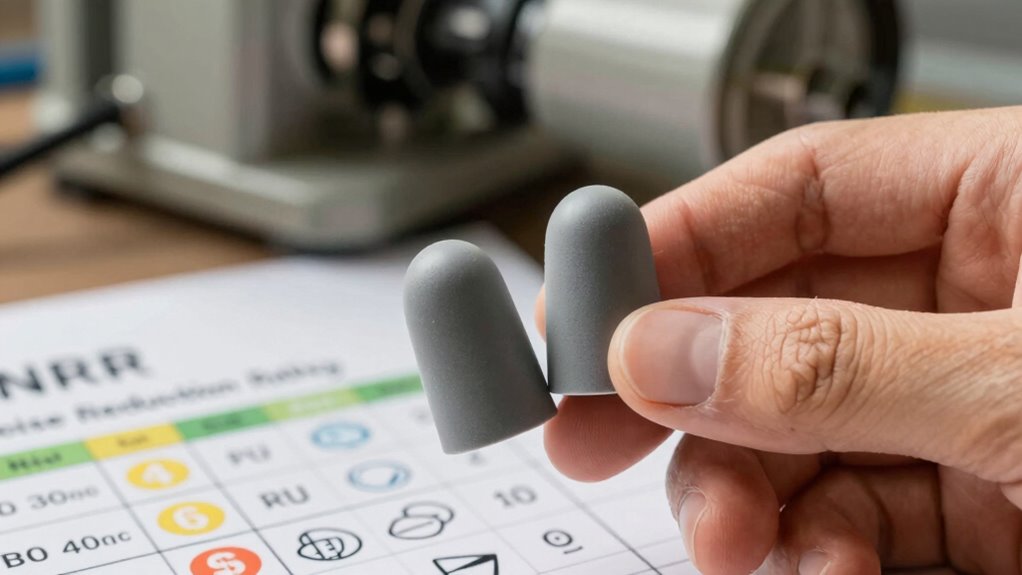
Choosing the right earplugs starts with understanding the Noise Reduction Rating (NRR) and how it applies to your environment. Your goal is effective noise reduction to protect your hearing, so pick earplugs that match your noise levels. If you’re in a loud setting, look for earplugs with a higher NRR to ensure maximum noise reduction. For quieter environments, lower NRR earplugs might suffice and offer better comfort. Remember, the NRR indicates the potential noise reduction, but actual protection depends on proper fit and insertion. Always read the product labels and choose hearing protection that aligns with your specific noise exposure. Properly selected Indonesian decor masks can also add aesthetic appeal while respecting cultural significance. Correctly selecting earplugs based on NRR helps you stay safe and comfortable without over- or under-protecting your hearing.
What Do High or Low NRR Numbers Mean for Your Hearing?
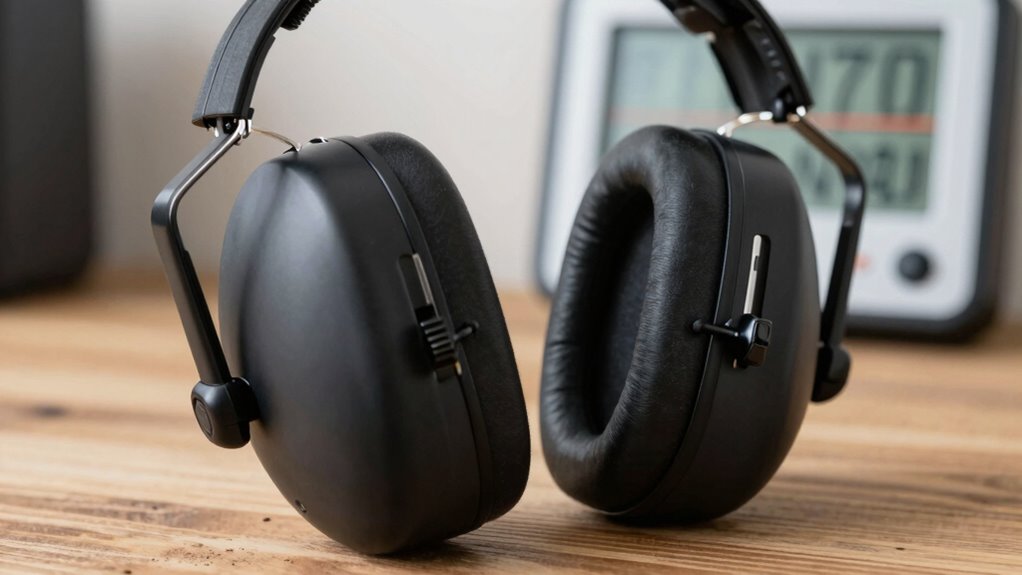
Have you ever wondered what a high or low NRR number really means for your hearing protection? The NRR indicates how much noise reduction you can expect, directly impacting your hearing safety. A higher NRR suggests better noise reduction, providing more protection in loud environments. Conversely, a lower NRR means less noise reduction, which might not be enough for very noisy settings. Understanding noise reduction efficiency helps you choose the right hearing protection. Here’s what high or low NRR numbers mean for your hearing:
- High NRR (25+): Offers maximum noise reduction, ideal for extremely loud environments.
- Moderate NRR (15-20): Suitable for moderate noise levels, balancing hearing safety and comfort.
- Low NRR (below 15): Provides minimal noise reduction, best for low-noise situations where safety isn’t compromised.
When Is a Higher NRR Better? Practical Examples

Ever wonder when a higher NRR is the right choice? If you’re working in environments with loud noise levels, a higher NRR means better protection. When safety standards require you to block out intense sounds, opting for ear protection with a higher NRR guarantees you meet or exceed those standards. For example, if you’re operating heavy machinery or at a construction site, a higher NRR can prevent hearing damage and keep noise levels within safe limits. It’s especially useful in situations where noise is unpredictable or fluctuates. While lower NRR options might be sufficient for casual use, a higher NRR provides extra safety margin, giving you peace of mind and protecting your hearing in demanding environments.
What Are the Limitations of NRR? Things You Should Know

While NRR provides a useful estimate of hearing protection, it has notable limitations that you should be aware of. First, the NRR value is based on controlled lab tests and may overestimate real-world noise reduction. Second, the way you wear ear protection considerably impacts its effectiveness; improper fit reduces noise reduction below the rated level. Third, NRR doesn’t account for noise environment variability or safety standards compliance. These factors mean that relying solely on NRR can give a false sense of security. To ensure adequate hearing protection, consider real-world conditions and proper fit. Remember, NRR is a helpful guideline but isn’t the final word on noise reduction and safety standards. Use it as a starting point, not the absolute measure.
Tips for Using NRR Effectively When Choosing Ear Protection
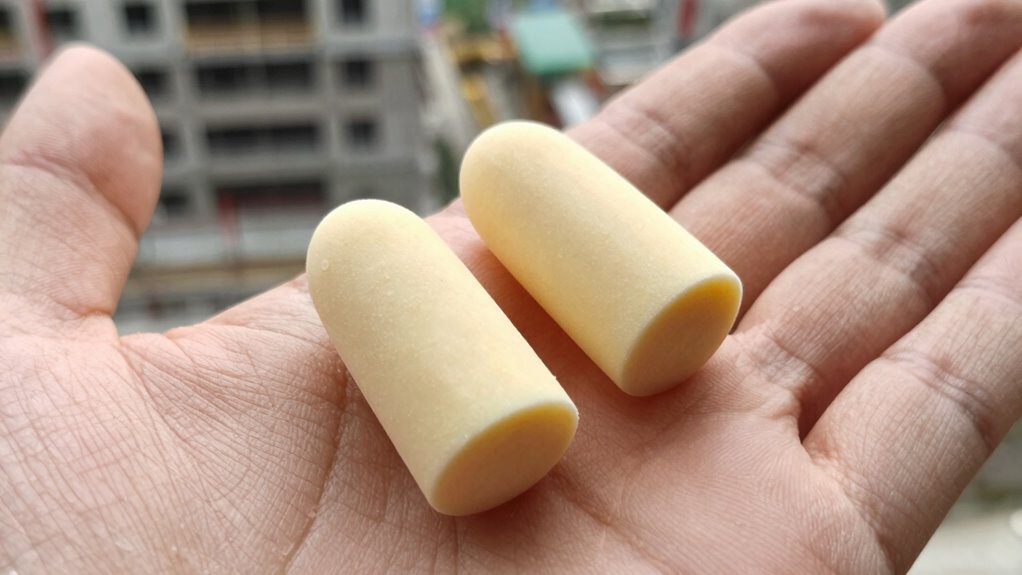
When choosing ear protection, understanding how to use the NRR effectively can make a big difference in safeguarding your hearing. First, always select ear protection with an NRR that matches the noise level you’ll encounter. Keep in mind that the NRR provides an estimate of noise reduction, so wear the ear protection properly—fit them snugly without gaps. For maximum noise reduction, avoid touching the ear cushions or inserting them incorrectly. Consider dual protection, like earplugs under earmuffs, for louder environments. Regularly inspect your hearing protection for damage or wear, as compromised gear reduces noise reduction. Remember, the goal is to minimize noise exposure effectively, so choose the right hearing protection and use it correctly to protect your ears from potentially damaging noise levels.
Common Questions About NRR Answered
Have you ever wondered how the Noise Reduction Rating (NRR) actually safeguards your hearing? Understanding NRR helps you grasp how it reduces noise levels to keep your hearing safe. Here are some common questions answered:
- How does NRR relate to real-world noise levels? The NRR indicates how much noise exposure is diminished when using hearing protection properly.
- Can I rely solely on NRR for hearing safety? No, it’s a guideline; actual noise reduction depends on fit and usage.
- Why is knowing the NRR important? It helps you choose appropriate ear protection for different environments, ensuring effective noise level management and hearing safety.
Knowing these details ensures you make informed choices about ear protection and better protect your hearing against harmful noise levels.
Frequently Asked Questions
Can NRR Be Used for Noise Exposure at Concerts?
Yes, NRR can be used for noise exposure at concerts. It helps you understand how much music volume might impact your hearing damage risk. By considering NRR, you can choose ear protection that reduces sound levels, lowering your chances of hearing damage. Just remember, while NRR provides a guideline, staying mindful of loud music and taking breaks are essential to protect your hearing during concerts.
Does NRR Account for Fit and Comfort?
Think of NRR as a rough map, not a detailed guide to comfort. It doesn’t directly account for ear comfort or fit considerations, which are vital for effective hearing protection. A poorly fitting earplug or uncomfortable earmuff can let noise sneak in, no matter the NRR rating. So, while NRR gives you a good idea of noise reduction, you need to prioritize proper fit and comfort to truly protect your ears.
How Often Should I Replace Ear Protection Based on NRR?
You should replace your ear protection regularly to maintain effective noise reduction and guarantee ear safety. Check for signs of wear, cracking, or dirt, and replace them at least every few months or sooner if they become uncomfortable or damaged. Properly maintained ear protection keeps noise reduction ideal, preventing hearing loss. Regular replacement also ensures your comfort, so you stay protected during noisy tasks, supporting your long-term ear health.
Is a Higher NRR Always Better for Every Situation?
A higher NRR isn’t always better for every situation; it’s like trying to wear ear protection that’s too thick—you might block out more noise than necessary. In some cases, you need just enough noise reduction for safety without muffling important sounds. Choosing the right ear protection depends on your environment. Remember, noise reduction should match your activity—over-protection can be as problematic as under-protection.
Are There Safety Standards That Regulate NRR Ratings?
Yes, safety standards and industry guidelines regulate NRR ratings to guarantee hearing protection. Regulatory standards set minimum requirements for hearing protection devices, making sure they provide adequate noise reduction. Industry guidelines help manufacturers design products that meet these standards. You should always check that your hearing protection complies with these regulations, especially in noisy environments, to keep your hearing safe and avoid potential damage.
Conclusion
Now that you’re armed with the basics of NRR, choosing the right ear protection doesn’t have to feel like decoding a secret code. Think of NRR as your hearing’s shield, helping you stay safe in noisy environments. Remember, it’s not just about the number but how you use it. With this knowledge, you can confidently pick gear that keeps your ears happy—like a trusty umbrella on a rainy day, it’s worth having when you need it most.