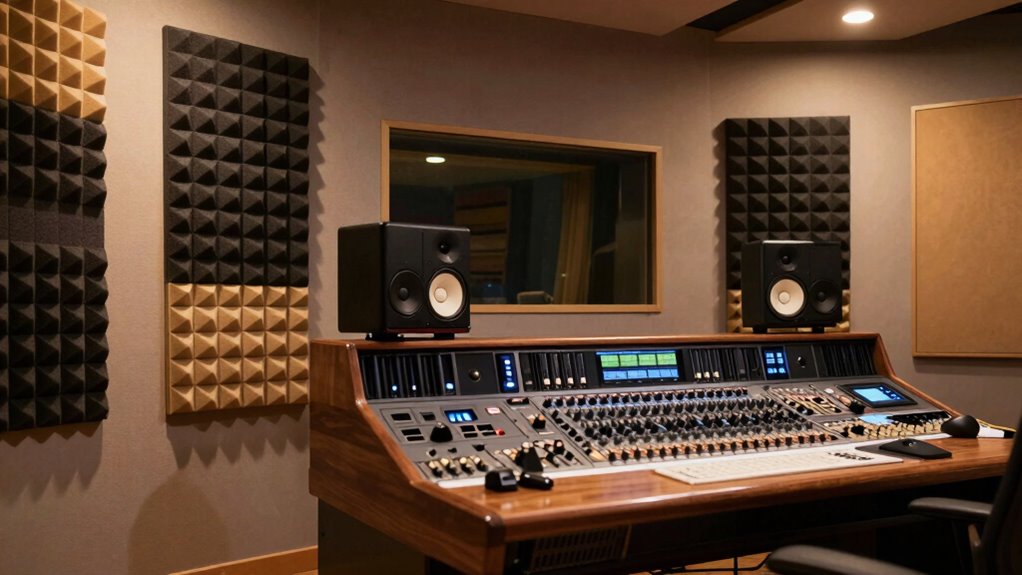

Understanding acoustic treatment terms can help you improve your sound environment. Soundproofing barriers, like thick walls or acoustic panels, block or absorb noise to keep your space private and clear. Diffusers scatter sound waves evenly, reducing echoes and preventing harsh reflections. Materials play a key role in shaping the sound quality, while combining barriers and diffusion techniques creates a balanced, professional sound. Keep exploring these concepts to truly transform your space into a studio fit for creating your best work.

Get audio and creator gear delivered free with Prime
- Fast, free delivery on millions of items
- Prime Video, Amazon Music and more included
- Member-only deals all year
Key Takeaways
- Soundproofing barriers block or absorb sound to prevent noise leakage and enhance recording clarity.
- Acoustic materials are selected based on their sound absorption and blocking properties.
- Diffusion techniques scatter sound waves evenly, reducing echoes and preventing dead spots.
- Proper acoustic treatment balances absorption and diffusion for natural, clear sound quality.
- Combining barriers, materials, and diffusion creates an optimal acoustic environment for musicians and creators.
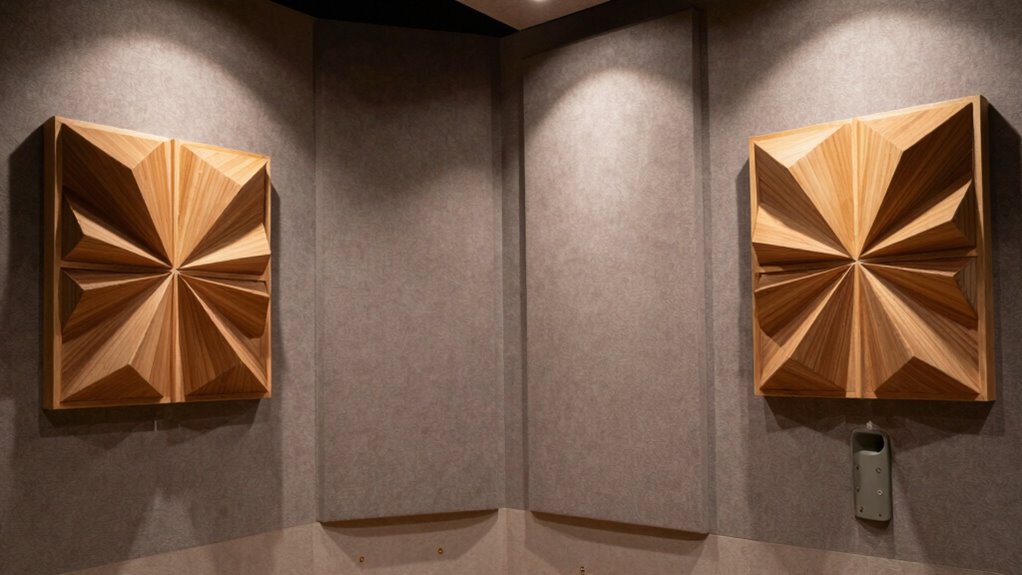
Ever wondered what the common terms in acoustic treatment really mean? If you’re diving into the world of sound, understanding key concepts can make a huge difference in how you shape your space. One of the fundamental ideas is soundproofing barriers. These are materials or structures designed to prevent sound from traveling between rooms or spaces. Think of thick walls, specialized curtains, or acoustic panels that absorb or block sound waves. When you use soundproofing barriers effectively, you create an environment where external noise stays out and your recordings stay inside, guaranteeing clarity and focus. It’s especially important if you’re working in a noisy environment or want to keep your music private. These barriers don’t just prevent sound from escaping; they also help reduce reflections and echoes, contributing to a cleaner, more controlled sound. soundproofing barriers are often combined with other treatments to optimize acoustic performance. Additionally, understanding the materials used in acoustic treatment can help you choose the most effective solutions for your space, especially when considering their sound absorption properties.
Alongside soundproofing barriers, diffusion techniques play an essential role in acoustic treatment. Diffusion involves scattering sound waves evenly throughout a room, rather than letting them bounce directly back and create unwanted reflections. This technique is indispensable for maintaining clarity while avoiding dead spots or overly dull areas. You might use diffusers—special panels with irregular surfaces—that break up sound waves and distribute them more evenly. When you employ diffusion techniques, you preserve the natural liveliness of your space without sacrificing sound quality. They’re especially useful in larger rooms or spaces where sound tends to bounce around excessively. The goal is to strike a balance: absorb unwanted echoes with soft materials while dispersing the remaining sound waves with diffusers, creating a more natural and balanced listening environment. Proper placement and selection of diffusion materials can significantly impact the overall sound quality, ensuring a more professional acoustic environment.
acoustic treatment panels for recording studio
As an affiliate, we earn on qualifying purchases.
As an affiliate, we earn on qualifying purchases.
Frequently Asked Questions
How Do I Choose the Right Acoustic Treatment for My Space?
To choose the right acoustic treatment, start by evaluating your room size to determine the amount of treatment needed. Consider your budget, focusing on essential items like bass traps or diffusers first. Prioritize treatments that target your main issues—such as echo or dead spots. You can add more over time as your space and budget grow. This approach helps you create an effective, cost-conscious acoustic environment tailored to your needs.
What’s the Difference Between Absorption and Diffusion?
Absorption and diffusion are like two sides of the same coin in managing sound reflection and room resonance. Absorption soaks up excess sound waves, reducing echoes and controlling reverberation, making your space sound clearer. Diffusion, on the other hand, scatters sound waves evenly in all directions, preventing dead spots. Together, they balance your room’s acoustics, ensuring your music sounds natural and well-rounded rather than echoey or flat.
Can I DIY Acoustic Treatment Effectively?
Yes, you can DIY acoustic treatment effectively by using cost-effective solutions and DIY installation techniques. You’ll save money and customize your space to fit your needs. Use materials like thick blankets, foam panels, or DIY diffusers made from household items. Just guarantee proper placement on walls and ceilings for ideal sound absorption and diffusion. With patience and research, you can considerably improve your room acoustics without professional help.
How Often Should I Update or Replace Acoustic Panels?
You should consider updating your acoustic panels every 5 to 10 years. Remarkably, 60% of room acoustics can be improved simply by replacing or repositioning panels. Regular updates enhance room aesthetics and sound quality, but keep cost considerations in mind. If your space’s use or design changes, or if panels become damaged or less effective, it’s time for a refresh to maintain ideal acoustics and visual appeal.
What Are Common Mistakes to Avoid in Acoustic Treatment?
You should avoid uneven room symmetry and neglecting proper soundproofing techniques, as these common mistakes can cause acoustic issues. Make sure your treatment is balanced across the space, preventing sound reflections and resonances. Don’t underestimate the importance of strategic placement of panels and bass traps. Also, ignore soundproofing basics, which can lead to noise leakage. By addressing these points, your room will sound clearer and more professional.
soundproofing barriers for home studio
As an affiliate, we earn on qualifying purchases.
As an affiliate, we earn on qualifying purchases.
Conclusion
So, after all this talk about diffusers, bass traps, and absorbent panels, you’re now a bona fide acoustic expert—ready to tame your chaotic sound space. Ironically, the more you learn, the more you realize how little you actually know about perfect acoustics. But don’t worry, even if your studio ends up sounding “just okay,” at least you’ll sound confident explaining why every wall looks like a science experiment. Happy tweaking!
sound diffuser panels for music room
As an affiliate, we earn on qualifying purchases.
As an affiliate, we earn on qualifying purchases.
As an affiliate, we earn on qualifying purchases.
Fall Picks
fall essentials
As an affiliate, we earn on qualifying purchases.




![Nancy 10/13/26 [Nancy]](https://deadsetlive.com/wp-content/uploads/2026/10/nancy-10-13-26-nancy-featured-260x140.jpg)