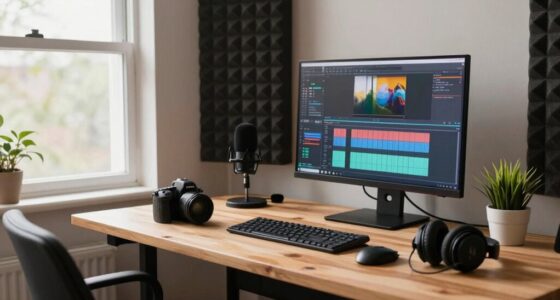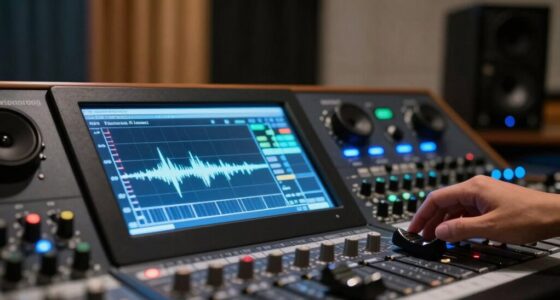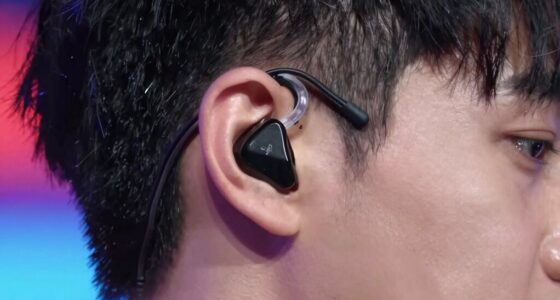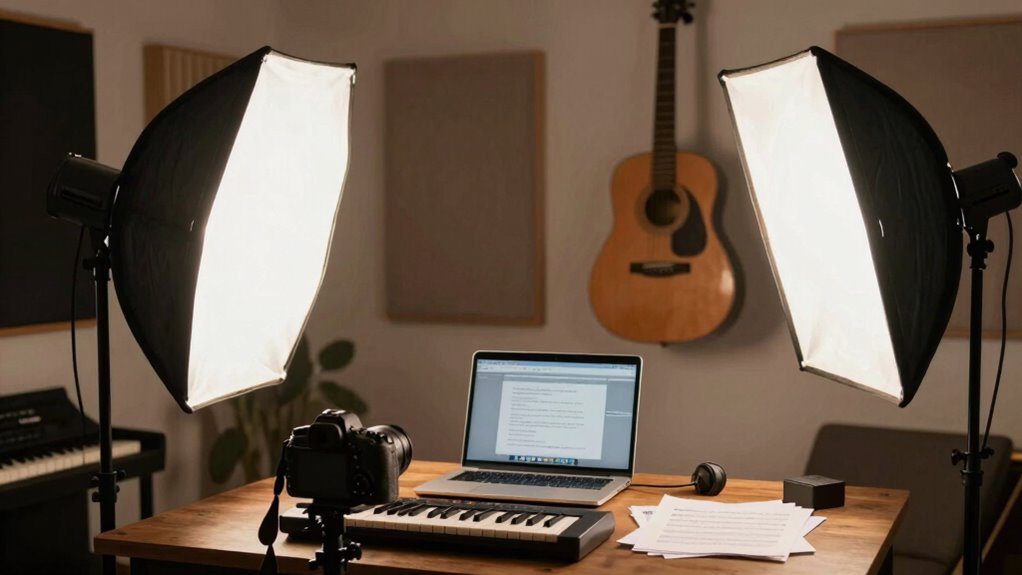

To set up a lighting kit for your home music studio, focus on versatile LED panels that are adjustable and energy-efficient. Position lights at eye level or slightly above, using diffusers to soften shadows and guarantee even lighting. Use the right color temperature—5600K for neutral daylight or warmer tones for coziness. Managing ambient light with curtains or reflectors keeps your main lighting consistent. Keep these tips in mind, and you’ll discover more ways to elevate your studio setup.

Get audio and creator gear delivered free — and shop member deals
- Fast, free delivery on millions of items
- Access to Prime Big Deal Days deals on October 6–7
- Prime Video, Amazon Music and more included
Key Takeaways
- Choose versatile LED panels with adjustable brightness and color temperature for flexible home studio setup.
- Position lights at eye level or slightly above, using diffusers or softboxes to soften shadows and create even lighting.
- Control ambient light sources like windows with blackout curtains or reflectors for consistent recording conditions.
- Select lighting with a color temperature around 5600K for natural, neutral tones suitable for professional content.
- Ensure lights are compatible with your space and goals, emphasizing proper placement to highlight performances effectively.
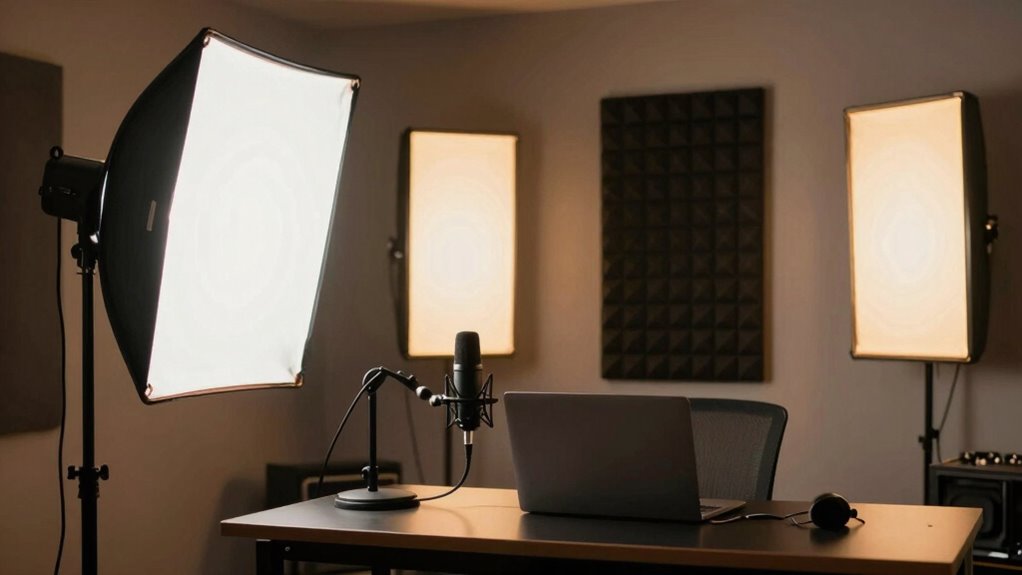
Lighting is a critical element for music creators working at home, as it directly impacts the quality of your videos, livestreams, and overall recording environment. When setting up your studio, good lighting isn’t just about brightness—it’s about creating the right mood, highlighting your performance, and guaranteeing viewers see you clearly. To get this right, you need to understand the basics of a studio setup, especially how to manage color temperature and light placement.
Your studio setup starts with choosing the right lights that fit your space and goals. LED panels are popular because they’re versatile, energy-efficient, and adjustable. When selecting lights, consider their color temperature, which is measured in Kelvin (K). This setting determines whether your lighting looks warm, cool, or neutral. For most home studios, a color temperature around 5600K offers daylight-balanced lighting that mimics natural sunlight, providing a neutral tone that works well for video recordings. If you want a warmer, more intimate feel, lights with a color temperature closer to 3200K create a cozy, yellowish glow. Conversely, higher Kelvin values—like 6500K—produce a cooler, bluish light, which can add a crisp, professional look but might feel harsh if overused.
Balancing your color temperature is essential because it influences the overall aesthetic of your recordings. If your camera’s white balance isn’t set correctly, mismatched lighting can produce strange color casts, making your videos look unprofessional. Many modern LED lights come with adjustable color temperatures, allowing you to fine-tune the lighting to suit your mood or the specific scene. When setting up your studio, place your lights at appropriate angles—ideally at eye level or slightly above—and use diffusers or softboxes to soften shadows and create even lighting. This prevents harsh highlights and ensures your face is evenly lit, which is fundamental for engaging livestreams and clear video content.
In your studio setup, don’t forget about ambient light, which can influence how your main lights appear on camera. Keep windows and other light sources in mind, and consider blackout curtains or reflectors to control ambient lighting. Proper management of ambient light sources ensures your main lighting remains effective and consistent. This way, your chosen color temperature and light placement will work harmoniously, giving you a professional-looking environment. Properly managing color temperature and ambient light sources can dramatically improve the quality of your recordings and the overall aesthetic of your content. In essence, understanding and managing your studio setup and color temperature are key to producing high-quality content from your home. When you get these elements right, your videos will look polished, inviting, and true to your creative vision.
adjustable LED studio light panels
As an affiliate, we earn on qualifying purchases.
As an affiliate, we earn on qualifying purchases.
Frequently Asked Questions
How Do I Choose the Right Lighting Color Temperature?
To choose the right lighting color temperature, consider the mood you want to create. Cooler temperatures (around 5600K) give a daylight feel, perfect for energetic or professional vibes, while warmer temps (around 3200K) create a cozy, relaxed atmosphere. You should also think about light diffusion—softening harsh shadows—by using diffusers or softboxes. Matching your color temperature to the environment helps your videos look natural and appealing.
What Are Budget-Friendly Lighting Options for Beginners?
Think of budget-friendly lighting options as the brushstrokes that bring your home studio to life. You can start with affordable LED desk lamps or clamp lights, which are versatile and portable lighting options. Look for basic lighting accessories like diffusers or reflectors to soften your light. These options are cost-effective, easy to set up, and perfect for beginners looking to improve their video quality without breaking the bank.
How Can I Prevent Glare on My Video Recordings?
To prevent glare on your video recordings, focus on glare reduction by adjusting your lighting setup and positioning. Use diffused lighting to minimize harsh reflections and avoid placing bright lights directly opposite your screen. Position your screen at a slight angle and reduce ambient light to lessen screen reflection. You can also use matte screens or anti-glare filters to further decrease glare, ensuring clearer, more professional-looking videos.
What Are the Best Placement Tips for Home Studio Lighting?
Think of your lighting setup like a balanced dance. Place your key light at a 45-degree angle to your face for a natural look, avoiding harsh shadows. Use soft, diffused lights to create an ambient glow and position them behind or beside your camera to add depth. Experiment with angles to generate creative shadows, but make certain your face remains well-lit and clear for viewers.
How Do I Set up Lighting for Different Music Genres?
To set up lighting for different music genres, choose lighting styles that match the mood you want to create. For energetic genres like pop or EDM, go for bright, dynamic lighting with bold colors to enhance excitement. For chill or acoustic music, opt for softer, warm lighting to promote relaxation. Adjust brightness and color temperature accordingly, ensuring your lighting enhances the genre’s mood and makes your videos or streaming sessions more engaging.
softbox diffusers for LED lights
As an affiliate, we earn on qualifying purchases.
As an affiliate, we earn on qualifying purchases.
Conclusion
Having the right lighting kit can truly elevate your home music setup, making your videos more professional and engaging. Did you know that 85% of viewers say lighting quality influences their perception of content? Investing in proper lighting isn’t just about looks; it’s about creating an alluring space that draws your audience in. So, take the time to understand your needs, and you’ll see your music projects shine brighter than ever before.
daylight balanced LED lighting for videos
As an affiliate, we earn on qualifying purchases.
As an affiliate, we earn on qualifying purchases.
studio lighting kit for home creators
As an affiliate, we earn on qualifying purchases.
As an affiliate, we earn on qualifying purchases.
Halloween Picks
halloween
As an affiliate, we earn on qualifying purchases.