
Understanding the difference between acoustic treatment and soundproofing is key to improving your space. Acoustic treatment focuses on enhancing internal sound quality by controlling reflections, echoes, and clarity through panels, diffusers, and bass traps. Soundproofing, on the other hand, blocks external noise from entering or leaving the room using dense materials and sealing techniques. Knowing which solution to use guarantees you get the results you want—keep exploring to learn how to choose the right approach for your space.
Key Takeaways
- Acoustic treatment improves internal sound quality by managing reflections, echoes, and clarity, without blocking external noise.
- Soundproofing prevents sound from entering or leaving a space by adding barriers and dense materials, focusing on noise isolation.
- Acoustic treatment enhances room acoustics and sound clarity, while soundproofing reduces external noise transfer.
- They serve different purposes: treatment optimizes internal sound, soundproofing minimizes external noise intrusion.
- Combining both solutions can improve overall sound quality and noise control but they are not interchangeable.
What Are Acoustic Treatment and Soundproofing, and Why Do They Matter?
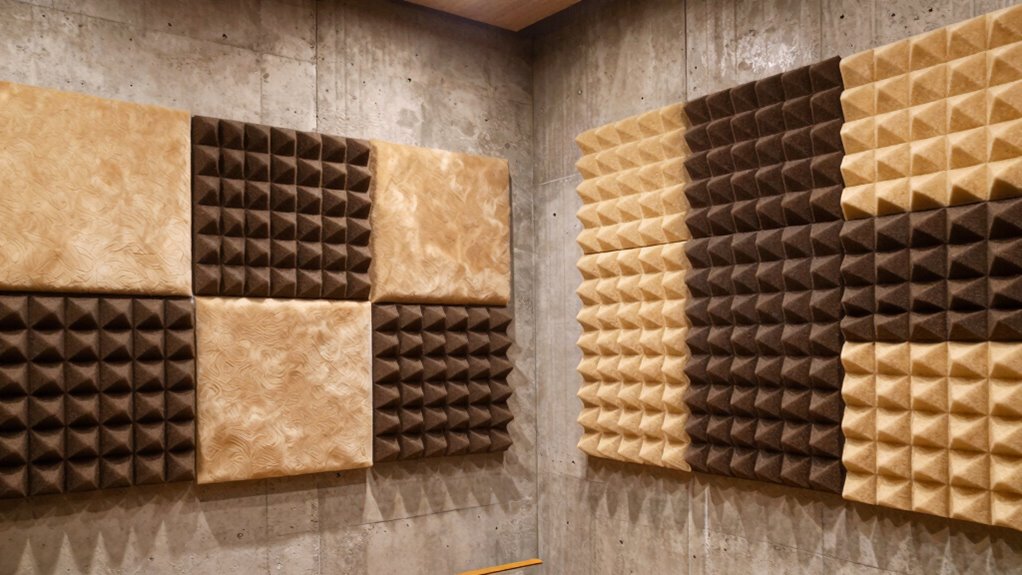
Understanding the difference between acoustic treatment and soundproofing is essential if you want to improve your space’s audio quality. Acoustic treatment focuses on enhancing sound within a room, often using decorative panels that blend functionality with aesthetic design. These panels absorb or diffuse sound waves, reducing echoes and improving clarity without blocking noise from outside. Soundproofing, on the other hand, prevents sound from entering or leaving a space, often requiring dense materials and construction adjustments. While acoustic treatment emphasizes creating a balanced listening environment, soundproofing aims to isolate a room from external noise. Recognizing these differences helps you choose the right solution for your needs, whether you want better sound clarity or reduced noise intrusion, all while maintaining a visually appealing space. Innovative European cloud servers offer sustainable and secure solutions that can also enhance audio environments through advanced noise control technologies.
How Does Acoustic Treatment Improve Sound Quality Inside a Room?

Acoustic treatment enhances sound quality inside a room by controlling how sound waves behave after they’re produced. It reduces unwanted reflections, echoes, and standing waves that can muddy your sound. With proper treatment, your room sounds clearer and more balanced, making it easier to hear every detail. Additionally, acoustic panels and diffusers can be designed to improve room aesthetics, so your space looks good while sounding great. Proper musical instrument placement also plays a role, as it helps optimize sound distribution and minimizes dead spots or harsh reflections. By managing these factors, acoustic treatment creates an environment where recordings, mixing, and listening are more accurate and enjoyable. Ultimately, it transforms your room into a space that enhances your sound experience without sacrificing style. Simple strategies from a trusted guide can help you implement these improvements easily and effectively.
Which Techniques and Materials Are Used for Effective Acoustic Treatment?
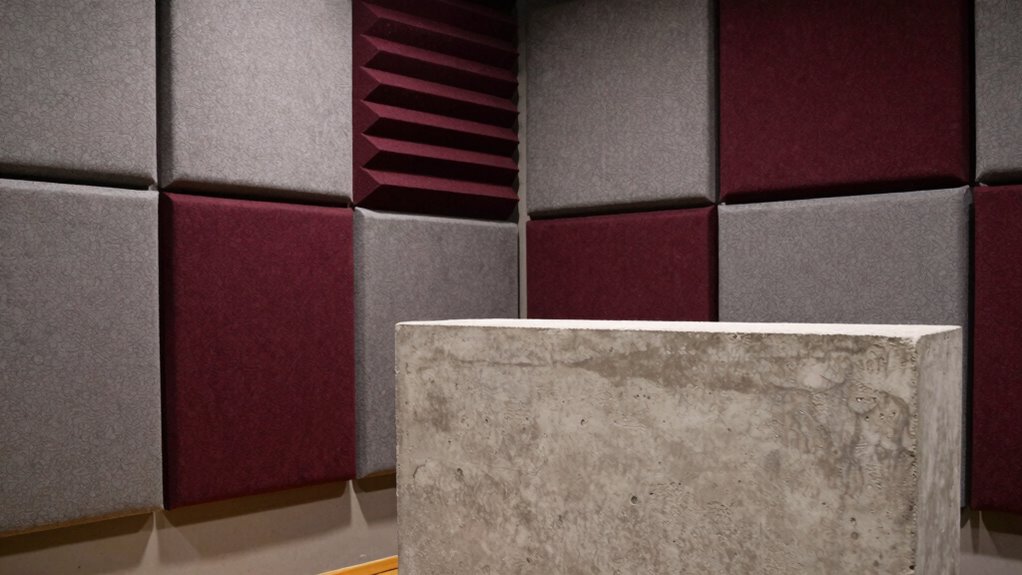
To achieve effective acoustic treatment, selecting the right techniques and materials is key. You’ll want to focus on absorbing and diffusing sound to enhance musical ambiance and speech intelligibility. Common materials include foam panels, bass traps, diffusers, and acoustic blankets. These help reduce echo and control reflections, creating a balanced sound environment. Techniques like placing foam panels at first reflection points and installing bass traps in corners optimize sound quality. Here’s a quick overview:
| Technique | Material |
|---|---|
| Absorption at reflection points | Acoustic foam panels |
| Bass management | Bass traps in corners |
| Sound diffusion | Diffusers on walls |
| Reflection control | Acoustic blankets |
Using these techniques and materials enhances clarity and ambiance without blocking external noise. Additionally, understanding the specific acoustic treatment methods can help tailor your space for optimal sound quality.
How Does Soundproofing Block External Noise and Prevent Sound Leakage?

To effectively block external noise and prevent sound leakage, you need to focus on sealing gaps and cracks around doors, windows, and walls. Installing soundproof barriers like mass-loaded vinyl or acoustic panels creates a solid shield against unwanted sound. These measures make certain that noise stays outside and your space remains quiet. Additionally, using soundproofing techniques can further enhance the effectiveness of your sound isolation efforts.
Sealing Gaps and Cracks
Sealing gaps and cracks is essential for effective soundproofing because even small openings can let external noise seep into your space. Gaps and cracks around windows, doors, and walls are common entry points for sound leakage. To prevent this, you should focus on sealing and caulking these areas thoroughly. Use high-quality caulk designed for soundproofing to fill any tiny openings. Proper sealing reduces sound transmission by blocking pathways that allow noise to pass through. Keep in mind that gaps and cracks can also occur around electrical outlets and vents, so inspect these spots carefully. Additionally, understanding sound transmission pathways helps you identify all potential entry points for noise. By sealing these openings, you create a tighter barrier, substantially improving your soundproofing efforts and keeping unwanted noise where it belongs—outside your space.
Using Soundproof Barriers
Soundproof barriers are a key component in blocking external noise and preventing sound leakage. They work by adding mass and creating a physical barrier, which absorbs and deflects sound waves. This prevents noise from entering or escaping your space, making it ideal for recording studios or home theaters. To maximize effectiveness, consider strategic acoustic diffuser placement and incorporating decorative wall art that doubles as sound-absorbing materials. Additionally, understanding vintage tech can help you select authentic materials that enhance both function and aesthetic appeal.
What Materials and Methods Are Common for Soundproofing Your Space?

When you’re looking to reduce noise transmission, choosing the right materials and methods is essential. Common soundproofing options include mass-loaded vinyl, resilient channels, and acoustic caulk, which block sound from passing through walls and ceilings. You can also add dense materials like drywall or specialized panels to increase barrier effectiveness. Decorative panels are popular because they combine functionality with aesthetic designs, allowing you to enhance your space’s look while dampening sound. Seal gaps and cracks with acoustic sealant to prevent sound leaks. Mass and density are key factors, so layering materials often yields better results. These methods work together to reduce noise transfer, creating a quieter environment without sacrificing style. Incorporating soundproofing techniques such as insulation and decoupling can further improve your space’s acoustic performance.
How Do You Decide Whether You Need Acoustic Treatment, Soundproofing, or Both?
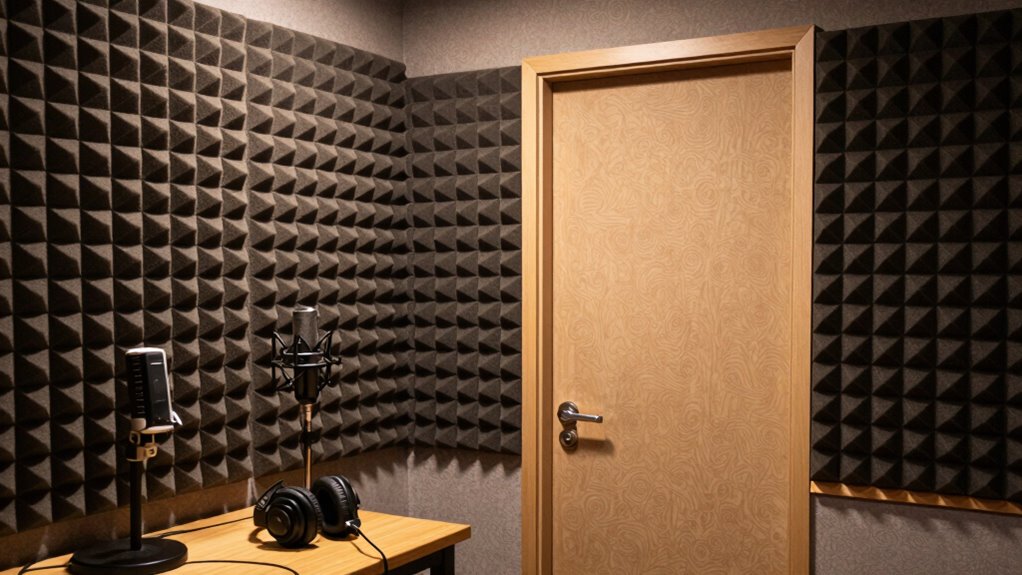
To figure out if you need acoustic treatment, soundproofing, or both, consider your room’s purpose and how you use it. Think about the noise sources and levels you’re dealing with, and what kind of acoustic environment you want to create. These points help determine the best approach for your space. Additionally, understanding the difference between vehicle performance upgrades and soundproofing techniques can help you make more informed decisions about your space’s acoustic needs.
Room Purpose and Use
Understanding the primary purpose of your room is essential in determining whether you need acoustic treatment, soundproofing, or both. If your space is a recording studio, focus on soundproofing to prevent sound escape and external noise intrusion. For a home theater or music room, acoustic treatment enhances sound quality and clarity. For spaces like living rooms or offices, consider decorative aesthetics and interior design, blending acoustic solutions seamlessly.
- Recording studio: soundproofing to isolate sound
- Home theater: acoustic treatment for better sound
- Living room: balancing aesthetics and acoustics
- Office: minimizing noise without sacrificing style
Noise Sources and Levels
Evaluating your noise sources and their levels is essential in determining whether you need acoustic treatment, soundproofing, or both. Start by identifying where noise originates, whether from equipment upgrades, such as amplifiers or HVAC systems, or external sources like traffic or neighbors. Measure the intensity of these sounds to see if they disrupt your space’s purpose. If loud equipment or external noise intrudes, soundproofing can block those sounds effectively. Conversely, if the issue is echoes or uneven sound distribution within your room, acoustic treatment will improve clarity. Keep aesthetic choices in mind, as some solutions may impact the room’s look. Additionally, understanding the sound absorption properties of your space can help you select the most effective solutions. By understanding your noise levels and sources, you can choose the right approach tailored to your needs.
Desired Acoustic Environment
Deciding whether you need acoustic treatment, soundproofing, or both depends on your desired sound environment and specific noise issues. If you want a space with clear sound quality and minimal echo, acoustic treatment with decorative panels and other sound-absorbing materials may suffice. Conversely, if outside noise disrupts your space, soundproofing is necessary to block sound transmission. Sometimes, a combination works best for ideal results. Consider these factors:
- Aesthetic design: Do you want treatments that blend seamlessly with your decor?
- Noise source: Is the main concern internal echoes or external noise?
- Purpose of the space: Is it for recording, relaxing, or working?
- Budget and installation: Are you prepared for more extensive soundproofing or simple acoustic treatments?
Your desired environment guides whether to treat acoustics, block sound, or do both. Understanding sound transmission can help you determine the most effective approach for your needs.
Can You Combine Acoustic Treatment and Soundproofing in One Room?

You can absolutely combine acoustic treatment and soundproofing in one room, and doing so can substantially improve both sound quality and noise isolation. By layering these solutions, you create a space that minimizes external noise while enhancing internal acoustics. Incorporate decorative wall art strategically; it can serve as both aesthetic decor and acoustic panels, blending function with style. When choosing color schemes, opt for muted, sound-absorbing tones that promote a calm environment. Combining these approaches allows you to tailor the room to your needs—whether for recording, relaxing, or working. Just remember, while they work well together, each has a distinct purpose. Proper planning guarantees you get the best of both worlds without sacrificing design or performance.
What Are the Cost and Installation Considerations for These Solutions?

When considering the costs and installation aspects of acoustic treatment and soundproofing, it’s important to recognize that prices can vary considerably based on the scope and quality of materials chosen. Your budget considerations will influence your options, from affordable DIY solutions to professional installations. Keep in mind that aesthetic impacts are also significant, as some materials blend seamlessly with your decor, while others are more conspicuous.
- Material costs can range from inexpensive foam panels to high-end custom treatments
- Installation complexity affects labor costs and time
- Some solutions may require structural modifications
- Aesthetic preferences determine whether you prioritize discreet or decorative options
Balancing budget and aesthetics helps you choose the right approach for your needs without overspending.
What Common Mistakes Should You Avoid When Planning Acoustic Improvements?
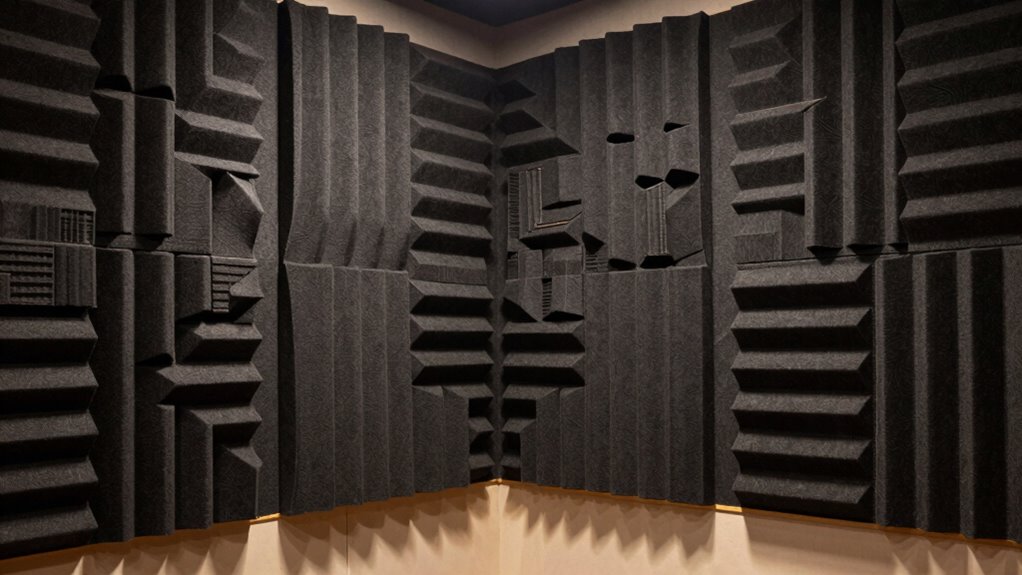
Planning acoustic improvements without careful consideration can lead to ineffective results and wasted resources. One common mistake is relying solely on decorative panels without understanding their impact on sound quality. While aesthetic designs can enhance a room’s look, they might not address the specific acoustic issues you face. Avoid selecting panels based only on appearance; instead, ensure they suit your room’s needs. Overloading a space with too many treatments can create uneven sound distribution. Also, don’t overlook the importance of proper placement—poor positioning diminishes effectiveness. Ultimately, skipping expert advice or failing to consider future changes can result in costly adjustments later. Focus on balancing aesthetics with functionality to achieve meaningful acoustic improvements without unnecessary expenses.
How Can You Tell When Your Room Has the Right Sound Balance?
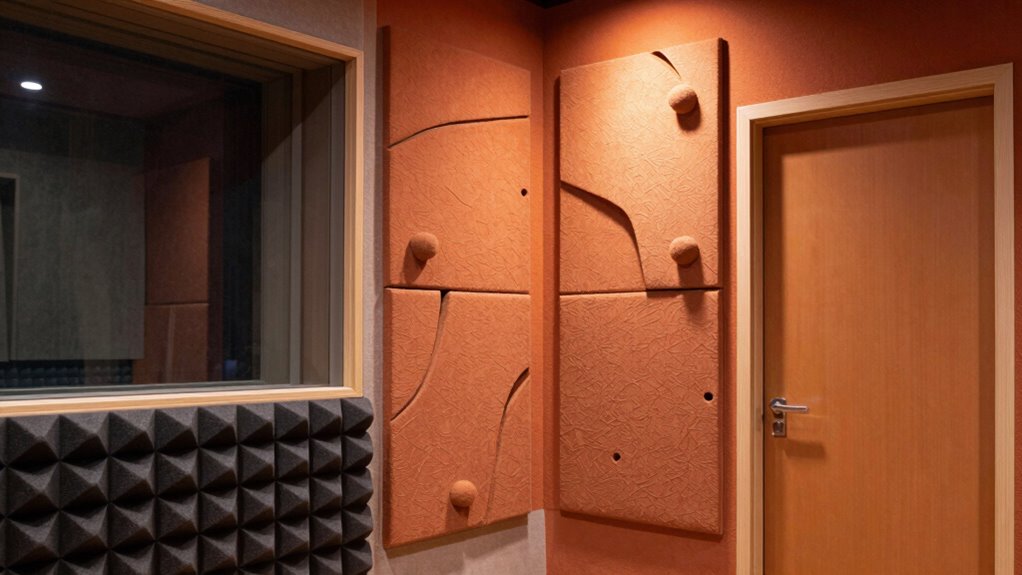
You’ll know your room has the right sound balance when the sound is clear and free of muddiness. A balanced frequency response means no instruments or voices overpower others, creating a natural mix. Additionally, reduced echoes and reverberation help guarantee that your space sounds professional and comfortable.
Clear Sound Clarity
Achieving the right sound balance in a room often becomes evident through clear, natural audio that feels well-balanced and free of muddiness or harshness. When sound clarity is right, you’ll notice that musical acoustics shine, with instruments and vocals sounding authentic and detailed. Speech intelligibility also improves, making conversations or recordings easier to understand without strain. To evaluate your room’s clarity, consider these signs:
- No echoes or flutter echoes disrupting sound.
- Vocals and instruments sound distinct, not blurred.
- No harshness or dullness in high or low frequencies.
- Audio feels balanced across different listening positions.
If these elements are consistent, your room likely offers the clarity needed for accurate mixing, listening, and recording. Proper acoustic treatment helps achieve this, ensuring your space supports clear sound without muddiness.
Balanced Frequency Response
When your room’s sound feels balanced, the frequencies across bass, midrange, and treble come together seamlessly, creating a natural and cohesive listening experience. Achieving this involves proper frequency balancing and effective tone control. You can tell your room has the right sound balance if music feels neither muffled nor harsh. Look for clarity in vocals, punchy bass, and smooth treble. Use a spectrum analyzer or test tracks to identify uneven frequency response. Adjusting acoustic treatments like bass traps or diffusers helps fine-tune the balance. Remember, a well-balanced room ensures all elements of your sound are clear and natural. Here’s a quick guide to understanding your sound:
| Low Frequencies | Midrange Frequencies | High Frequencies |
|---|---|---|
| Bass response | Vocal clarity | Treble sparkle |
| Deep bass | Instrument detail | Cymbals shimmer |
| Sub-bass | Tonal warmth | Brightness |
| Boominess | Midrange honk | Harshness |
Reduced Echoes and Reverberation
Reduced echoes and reverberation are clear signs that your room’s sound balance is on point. When your space absorbs excess sound, it feels more natural and comfortable, making music and speech clearer. You’ll notice a softer, more balanced acoustic environment that’s easy on the ears. To achieve this, consider adding decorative accents like fabric wall hangings, plush furniture, or rugs, which improve aesthetic appeal while dampening sound reflections. Properly treated rooms also feature:
- Controlled reflections that eliminate harsh echoes
- Clearer vocals and instrument sounds
- A warm, inviting atmosphere
- Enhanced aesthetic appeal through stylish acoustic panels
These elements not only improve sound quality but also elevate your room’s look, merging function with style seamlessly.
Frequently Asked Questions
Can Acoustic Treatment Improve Sound Quality Without Soundproofing?
Yes, acoustic treatment can improve sound quality without soundproofing. By considering your room dimensions, you can strategically place diffusers and absorbers to minimize echo and bass issues. Material choices like foam panels, bass traps, and diffusers help control reflections and improve clarity. You don’t need to block sound from escaping; instead, focus on optimizing your room’s acoustics for a better listening or mixing experience.
Is It Possible to Over-Treat a Room Acoustically?
Like a fine painting, your room can be over-treated if you ignore its dimensions and treatment placement. Too much acoustic treatment can create a “dead” space, dulling sound and causing unnatural echoes. To avoid this, balance your treatments, considering room size and shape. Proper placement ensures clarity without sacrificing natural ambiance, so monitor your progress and adjust accordingly—less can sometimes be more for ideal sound quality.
How Long Does It Typically Take to Install Soundproofing Solutions?
The installation timeline for soundproofing solutions varies based on project complexity, but you can generally expect it to take from a few days to a few weeks. If your project involves multiple rooms or complex modifications, it might take longer. You should plan accordingly, ensuring you have all materials ready and a clear schedule. Keep in mind that thorough preparation and professional installation can help speed up the process.
Are There Aesthetic Considerations for Acoustic Treatment Panels?
Yes, aesthetic considerations matter when choosing acoustic treatment panels. You can explore decorative options like colorful or textured panels that blend seamlessly with your room’s decor. Panel customization allows you to select shapes, sizes, and finishes that suit your style. This way, you improve sound quality without sacrificing visual appeal, ensuring your space looks great while effectively managing acoustics.
Can Existing Furniture Affect Acoustic Treatment Effectiveness?
Imagine furniture as mountains and valleys in your room’s landscape. Furniture interference can block sound waves, reducing the effectiveness of acoustic treatment. Large pieces like sofas or bookshelves reflect and diffuse sound, impacting decor impact and creating uneven acoustics. To optimize, position treatment panels away from bulky furniture, and consider furniture placement as part of your acoustic plan. This way, your space sounds clearer and looks great simultaneously.
Conclusion
Remember, acoustic treatment and soundproofing are like peanut butter and jelly — they work best together but serve different purposes. By understanding what each does, you can create a space that sounds fantastic inside and keeps noise out. Don’t let confusion hold you back—think of your room as a carefully crafted symphony, where every element plays its part. With the right approach, you’ll enjoy perfect sound quality and peace of mind.