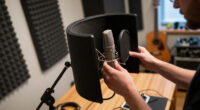
To build a home studio that encourages finishing work, focus on soundproofing your space to reduce distractions and external noise, sealing gaps and adding soundproof curtains. Use acoustic treatment like panels, bass traps, and diffusers to create a clear, balanced sound environment. Arrange furniture thoughtfully—avoid walls against monitors and add soft furnishings. A well-designed, quiet space boosts focus and productivity, and you’ll find more practical tips to optimize your setup as you explore further.

Get audio and creator gear delivered free with Prime
- Fast, free delivery on millions of items
- Prime Video, Amazon Music and more included
- Member-only deals all year
Key Takeaways
- Prioritize soundproofing to minimize external distractions and create a dedicated, quiet workspace.
- Use acoustic treatment to enhance sound clarity and keep the environment inspiring for focused work.
- Arrange furniture and equipment to reduce clutter and optimize comfort and workflow efficiency.
- Incorporate soft furnishings and strategic room layout to improve acoustics and reduce unsettling echoes.
- Conduct regular listening tests and adjust treatments to maintain an environment conducive to finishing projects.
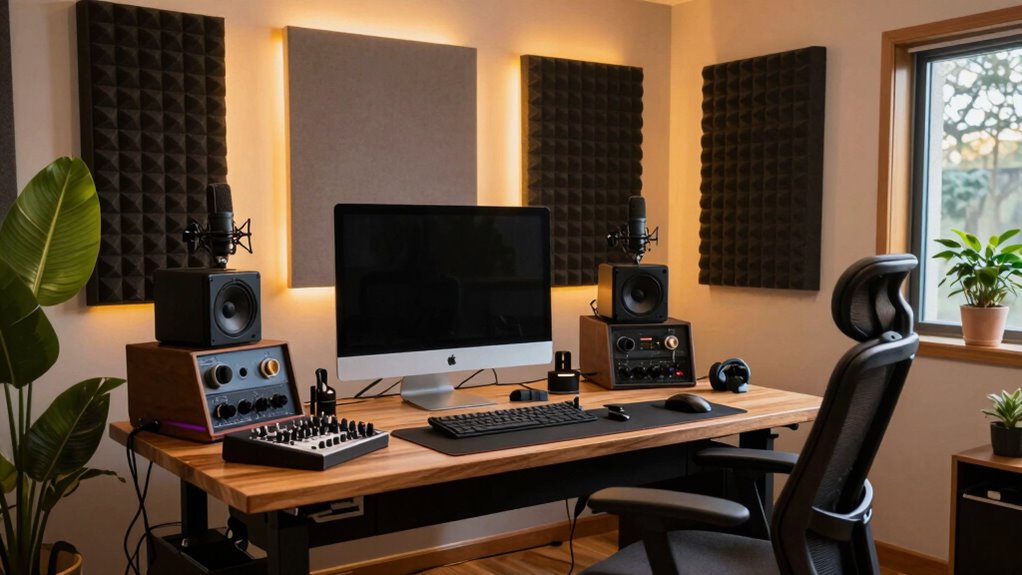
Creating a home studio can transform your passion into professional-quality work, whether you’re recording music, producing videos, or editing photos. The key to building a space that encourages you to finish your projects lies in creating an environment free of distractions and unwanted noise. Soundproofing techniques are essential to keep external sounds out and prevent your work from disturbing others, especially if you share your space with family or neighbors. Simple measures like sealing gaps around doors and windows, adding weatherstripping, or installing soundproof curtains can make a noticeable difference. For more advanced soundproofing, consider using acoustic barriers or specialized drywall designed to absorb sound.
Creating a home studio requires soundproofing to block noise and prevent disturbance, ensuring a focused, professional workspace.
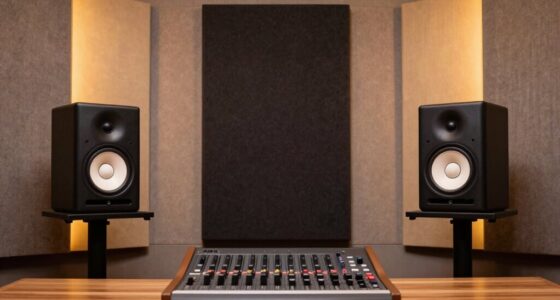
Once you’ve minimized external noise, focus on acoustic treatment inside your studio. Acoustic treatment helps control the sound within your space, ensuring that recordings are clear and that you can accurately hear your work. This involves strategically placing bass traps, diffusers, and acoustic panels to reduce echo and sound reflections. By managing how sound behaves in your room, you create a more accurate listening environment, which boosts your confidence and motivation to complete projects. Proper acoustic treatment also prevents the room from sounding dull or boxy, making it easier to make precise edits and mix your work. Incorporating soundproofing methods and acoustic treatment together maximizes the effectiveness of your studio environment.
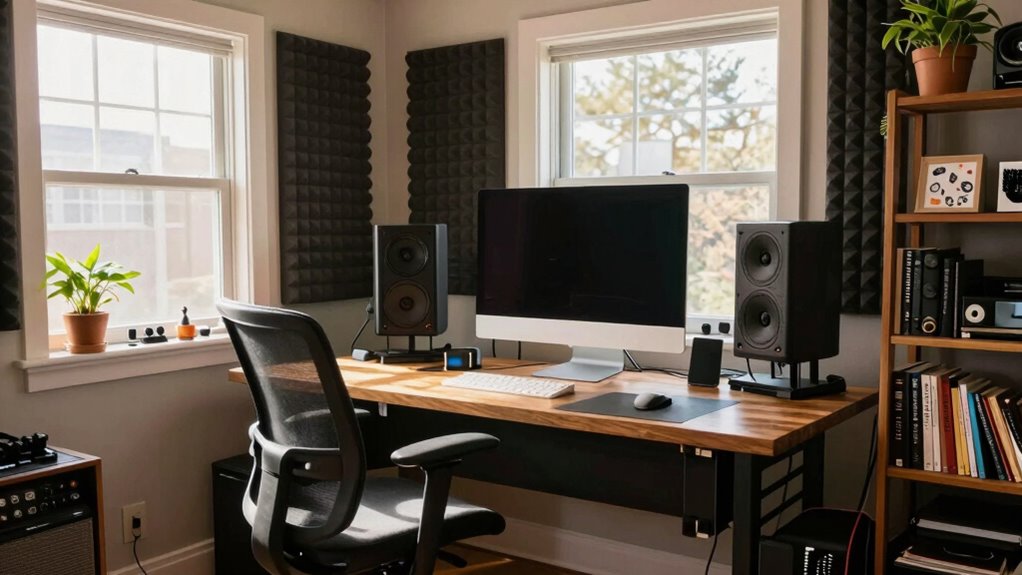
Your choice of furniture and equipment placement plays a significant role in acoustic treatment. Avoid placing your desk or monitors directly against walls to prevent sound waves from bouncing back and causing muddiness. Use stands or isolation pads under your monitors to improve sound clarity. Soft furnishings like rugs, curtains, and cushions further absorb sound and reduce reflections, creating a more controlled environment. As you set up, test your space with simple recordings or listening sessions to identify problematic spots and adjust your acoustic treatment accordingly. Additionally, soundproofing techniques that focus on reducing sound leakage can help maintain a quiet environment, especially in shared spaces. Implementing proper room layout can also enhance sound isolation and overall acoustic quality. Paying attention to room dimensions and how they influence sound behavior can further improve your studio’s acoustics and help you achieve your desired sound quality. To optimize your setup, researching acoustic design principles can provide valuable insights into creating an ideal workspace.
Popular right now

Shark Navigator Robot Vacuum with Self-Empty Base, Dark Grey (RV2120AE)

Dyson Big Ball Multi Floor Canister Vacuum, Yellow

iRobot Roomba 105 Vac Robot Vacuum
As an affiliate, we earn on qualifying purchases.
Frequently Asked Questions
What Are the Best Affordable Soundproofing Materials?
You should focus on affordable soundproofing materials like acoustic panels and soundproof curtains. Acoustic panels absorb sound waves, reducing echo and noise, while soundproof curtains block external noise and prevent sound leakage. Both options are budget-friendly, easy to install, and effective for home studios. Combining these materials creates a quieter environment, helping you stay focused and finish your work without costly renovations or complex setups.
How Can I Improve Natural Lighting in My Studio?
To improve natural lighting in your studio, maximize window use by keeping curtains light and open during the day. Add reflective surfaces like mirrors or white walls to bounce light around. Incorporate adjustable lighting fixtures for consistent illumination when natural light wanes. Combining natural light with well-placed lighting fixtures creates a bright, inviting environment that boosts your productivity and mood, helping you stay focused and finish your work efficiently.
What Ergonomic Furniture Is Ideal for Long Sessions?
For long sessions, you need ergonomic furniture like an ergonomic chair and an adjustable desk. An ergonomic chair provides lumbar support and encourages good posture, preventing fatigue. An adjustable desk lets you switch between sitting and standing, reducing strain and boosting focus. Together, these features create a comfortable workspace that helps you stay productive longer, minimizing discomfort and promoting healthier work habits during extended studio sessions.
How Do I Manage Cable Organization Effectively?
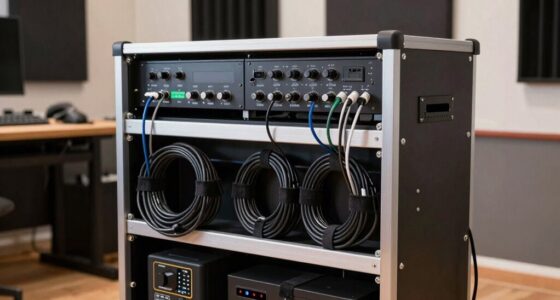
Did you know that cluttered cables can increase setup time by up to 30%? To manage cable organization effectively, use cable management solutions like clips, sleeves, or ties to keep cords tidy. Label your cables for easy identification, and route them along furniture or walls to reduce tangling. Regularly review and update your setup, ensuring your cables stay organized, making your studio safer and more efficient for focused work.
What’s the Minimum Equipment Needed to Start?
To start your home studio, you’ll need basic recording equipment like a microphone, audio interface, and headphones. Acoustic treatment is essential to improve sound quality; add foam panels or bass traps to control reflections. Keep your setup simple at first, focusing on quality over quantity. As you grow, you can expand your gear, but a clean, well-treated space with reliable recording equipment sets a solid foundation for finishing your work efficiently.
Conclusion
Creating a home studio that fuels your passion and keeps you motivated isn’t just a good idea—it’s a game-changer. When your space is tailored to inspire, you’ll find yourself finishing projects faster than you ever thought possible. Think of it as your personal creative sanctuary, where productivity skyrockets and doubts fade away. Stick to your setup, stay consistent, and watch your work transform from a mere task into an unstoppable creative force. Your best work is waiting—go claim it!