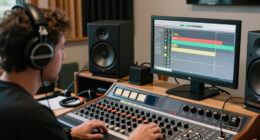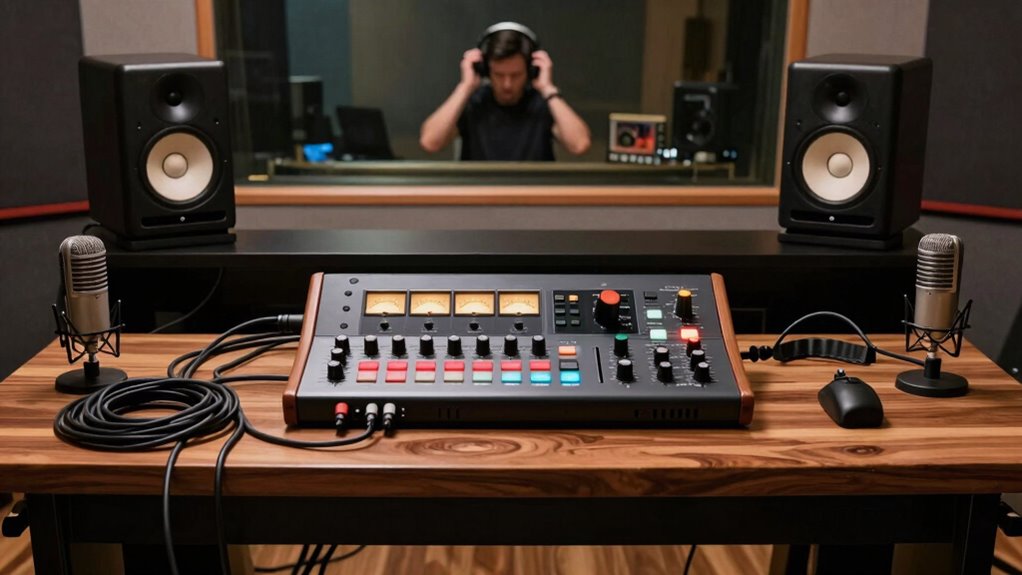

Think about your workflow first when choosing an audio interface, not just its number of inputs. Consider whether you need analog warmth or digital flexibility to match your style. If you work on-the-go or in a studio, portability or extensive I/O might matter most. Knowing how your setup aligns with your sound goals guarantees better decisions. Keep exploring, and you’ll discover how to choose an interface that truly fits your creative process.

Get audio and creator gear delivered free with Prime
- Fast, free delivery on millions of items
- Prime Video, Amazon Music and more included
- Member-only deals all year
Key Takeaways
- Align your interface choice with your workflow focus, whether prioritizing analog warmth or digital flexibility.
- Consider portability and mobility needs to ensure the interface supports remote or studio-based projects.
- Evaluate connectivity options and compatibility to streamline integration with your existing setup and future upgrades.
- Focus on audio quality and fidelity that match your project’s professional standards and sound preferences.
- Choose between analog, digital, or hybrid setups based on desired sound characteristics and workflow efficiency.

Understanding how to choose the right audio interface is essential whether you’re recording music, podcasting, or doing voice-over work. Your decision depends not just on the number of inputs and outputs but also on how you’ll use the device within your workflow. One key aspect to consider is the difference between analog versus digital interfaces. Analog interfaces maintain a continuous signal flow, offering warmer sound qualities that many musicians and vocalists prefer. Digital interfaces, on the other hand, convert signals into a digital format right away, which can be advantageous for seamless integration with digital audio workstations and processing software. If your work relies heavily on real-time analog processing or vintage sound qualities, opting for an analog or hybrid setup might serve you best. Conversely, if you prioritize quick, digital connectivity and integration with software plugins, a digital interface will likely streamline your workflow. Additionally, understanding the analog versus digital distinction can help inform your choice based on your specific sound and processing needs. Recognizing the importance of digital connectivity can further influence your decision, especially if you work extensively with computer-based production. Considering how audio quality impacts your overall project outcome can also influence your choice, especially in professional settings where clarity and fidelity are paramount.
Furthermore, understanding the industry standards for connectivity and compatibility can ensure your setup remains versatile and future-proof as technology evolves. Incorporating connectivity options that align with current industry norms can help prevent obsolescence and facilitate easier upgrades. Portability considerations also play a significant role when selecting an audio interface. If you’re constantly on the move—whether through gigs, remote recording sessions, or traveling for projects—you need a compact, lightweight device that won’t weigh down your gear. Small interfaces often sacrifice some features but excel in ease of transport. Mobile-friendly interfaces typically connect via USB-C or USB 3.0, providing reliable power and data transfer without additional power supplies. On the flip side, if your studio setup is stationary and you have ample space, you can prioritize more extensive interfaces with multiple inputs, high-quality preamps, and advanced features. These larger units often include additional I/O options, better audio fidelity, and more comprehensive control over your recordings.
When thinking about your workflow, consider whether you need an interface that emphasizes analog warmth or digital flexibility. If your projects involve layering vintage synth sounds or recording acoustic instruments with a natural tone, an analog or hybrid interface might be the best fit. For digital production and editing, a digital interface can offer smoother integration and lower latency. Similarly, weigh how often you’ll need to carry your setup. If portability is crucial, focus on compact, bus-powered units that fit easily into a backpack. If your work is mostly stationary, investing in a robust, feature-rich interface can enhance your recording quality and efficiency.
Ultimately, choosing the right audio interface isn’t just about inputs and outputs; it’s about aligning the device with your workflow, sound preferences, and mobility needs. By carefully considering whether you lean toward analog versus digital and how portable your gear needs to be, you set yourself up for smoother, more effective recording sessions tailored to your creative process.
As an affiliate, we earn on qualifying purchases.
Frequently Asked Questions
How Do I Choose the Right Audio Interface for My Specific Workflow?
To choose the right audio interface, consider your workflow’s microphone types and power needs. If you record vocals or acoustic instruments, opt for an interface with high-quality preamps suited for condenser mics that require phantom power. For live instruments or dynamic mics, focus on durability and low latency. Make certain the interface supplies the necessary power requirements and connections compatible with your microphone setup, making your workflow seamless and efficient.
Are There Compatibility Issues Between Audio Interfaces and Different Digital Audio Workstations?
You won’t believe it, but some audio interfaces and DAWs seem like they’re from different planets! Compatibility issues can happen, mainly with driver compatibility and plugin integration. Some interfaces work flawlessly with certain DAWs, while others cause chaos—latency, crashes, or missing features. Always check if your chosen interface explicitly supports your DAW, ensuring smooth driver compatibility and seamless plugin integration, so your creative flow stays uninterrupted.
What Are the Best Practices for Integrating Audio Interfaces Into a Home Studio?
You should position your microphone carefully, considering ideal placement to capture clear sound and reduce unwanted noise. Use acoustic treatment like foam panels to control room reflections, ensuring your audio interface delivers cleaner recordings. Connect your interface securely, set appropriate gain levels, and regularly check connections. Incorporate these practices into your workflow to enhance sound quality, making your home studio more professional and efficient.
How Does Latency Affect Workflow With Different Audio Interfaces?
Latency can substantially impact your workflow, causing delays between playing and hearing sound. You’ll notice this if buffer size is too large, adding noticeable lag, or if driver optimization isn’t set correctly. To minimize latency, reduce your buffer size within safe limits and make certain your audio interface’s drivers are optimized for your system. This helps keep your recordings and mixing smooth, responsive, and frustration-free.
Can I Upgrade My Audio Interface Without Disrupting My Current Setup?
Yes, you can upgrade your audio interface without disrupting your current setup. Before upgrading, check the firmware updates for compatibility and new features, ensuring smooth operation. Also, verify the power requirements of the new interface to avoid connection issues or power shortages. By doing this, you minimize downtime and maintain a seamless workflow, making the shift smooth and efficient.
analog vs digital audio interface
As an affiliate, we earn on qualifying purchases.
As an affiliate, we earn on qualifying purchases.
Conclusion
Now that you understand how to approach audio interfaces by workflow, you’re not just picking a box of inputs—you’re crafting the backbone of your entire creative process. Think of your setup as the engine that powers your sonic dreams, capable of transforming your ideas into reality with the precision of a laser. When you prioritize workflow, every session becomes a seamless symphony of efficiency and inspiration, making your audio interface the hero of your musical journey.
multi-input audio interface for studio
As an affiliate, we earn on qualifying purchases.
As an affiliate, we earn on qualifying purchases.
compact audio interface for mobile recording
As an affiliate, we earn on qualifying purchases.
As an affiliate, we earn on qualifying purchases.
Halloween Picks
halloween
As an affiliate, we earn on qualifying purchases.