
To build a less frustrating home studio workflow, start by creating a dedicated space and organizing your equipment with labels and cable management. Improve acoustics with simple soundproofing like heavy curtains and foam panels to reduce outside noise. Establish a routine that minimizes interruptions and keeps your most-used gear within reach. Focus on keeping your workspace tidy to prevent delays and technical hassles. If you keep these tips in mind, you’ll discover even more ways to streamline your creative process.

Get audio and creator gear delivered free with Prime
- Fast, free delivery on millions of items
- Prime Video, Amazon Music and more included
- Member-only deals all year
Key Takeaways
- Create a dedicated, organized workspace with accessible equipment and labeled cables to streamline setup and reduce frustration.
- Implement effective soundproofing and acoustic treatments to minimize noise distractions during recordings.
- Establish a consistent routine for sessions to build familiarity and reduce technical errors.
- Arrange your gear ergonomically to ensure easy access and quick transitions between tasks.
- Regularly review and optimize your workflow to identify and eliminate bottlenecks or inefficiencies.
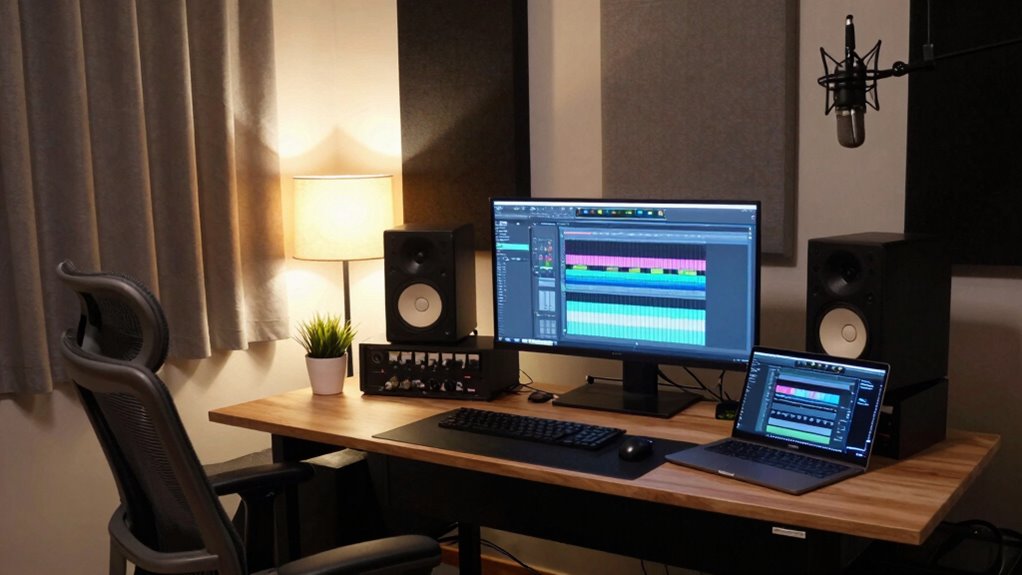
Have you ever wondered how to make your home studio sessions more efficient and stress-free? The key lies in establishing a solid workflow that minimizes interruptions and technical frustrations. One of the first steps is mastering soundproofing techniques. Without proper soundproofing, outside noise can seep in, disrupting your focus and recording quality. You don’t need to invest in expensive materials; simple solutions like sealing gaps around doors and windows, adding heavy curtains, or using foam panels can substantially reduce unwanted sound. Effective soundproofing creates a controlled environment, allowing you to concentrate on your work without constantly adjusting for noise issues. Soundproofing methods can be simple yet highly effective for creating a distraction-free zone. Additionally, implementing noise reduction techniques can further enhance your studio’s acoustics and overall workflow.
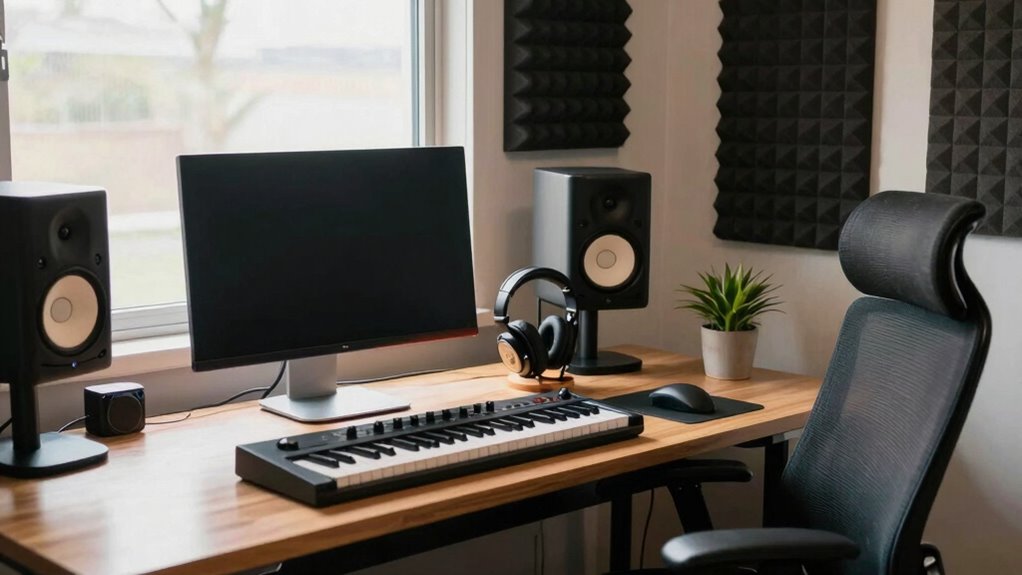
Once your room is properly soundproofed, you can focus on your equipment setup. Setting up your gear thoughtfully saves you time and prevents clutter. Arrange your microphone, audio interface, monitors, and MIDI controllers within easy reach, so you don’t waste time hunting for cables or adjusting equipment during sessions. Use cable organizers to keep everything tidy and prevent accidental disconnections, which can cause frustration and delays. Label your cables and devices to quickly identify what’s what, especially if your setup includes multiple pieces of gear. This organized equipment setup helps you shift smoothly from one task to another and maintains your creative flow. Additionally, organized workspace can reduce distractions and help maintain focus throughout your sessions. Creating a dedicated space can also help you establish a consistent routine, making it easier to stay productive and disciplined.
Arrange and label your gear for quick access, reducing delays and keeping your creative flow uninterrupted.
Creating a designated workspace also plays an essential role in streamlining your workflow. Designate a specific corner or room solely for your studio activities. When you know exactly where everything is, you eliminate the time wasted searching for gear or troubleshooting setup issues. Keep your most-used equipment in an accessible location and store less frequently used items elsewhere. Having a dedicated space helps condition your mind to switch into work mode, reducing distractions and increasing productivity. Furthermore, maintaining a clean and clutter-free environment can boost your overall efficiency and motivation during each session.
soundproof foam panels for home studio
As an affiliate, we earn on qualifying purchases.
As an affiliate, we earn on qualifying purchases.
Frequently Asked Questions
What Are the Essential Equipment for a Home Studio?
You need essential equipment like a good microphone, headphones, an audio interface, and a computer with recording software. Keep equipment organized to streamline your workflow, making sessions smoother. Opt for budget-friendly gear that offers quality without breaking the bank. Consider sturdy stands and proper cables to prevent clutter. Prioritize versatile, reliable equipment to create a functional, efficient home studio that sparks creativity and minimizes frustrations.
How Do I Acoustically Treat My Space Effectively?
You should focus on sound absorption by adding acoustic panels or bass traps to reduce echoes and control reflections. Guarantee room symmetry by placing treatment evenly across walls for balanced sound. Use diffusers to break up standing waves, and position your monitors correctly to optimize sound clarity. Regularly test your space with a calibration microphone, adjusting treatments as needed, to create a professional, frustration-free listening environment.
What Software Should I Choose for Recording and Mixing?
You should choose software that matches your workflow, like Ableton Live, Pro Tools, or Reaper. Ironically, the real magic begins with proper microphone placement and selecting the right audio interface, which makes the software’s features shine. Focus on intuitive interfaces and good compatibility. Your choice should streamline recording and mixing, not complicate it. Keep it simple, and you’ll find the software becomes just another tool, not a headache.
How Can I Improve My Soundproofing Without Major Renovation?
To improve your soundproofing without major renovation, try DIY solutions like sealing gaps around doors and windows with weatherstripping, adding heavy curtains or blankets to walls, and placing bookshelves filled with books against shared walls. Budget-friendly upgrades include foam panels or DIY acoustic panels made from materials like egg cartons or thick fabric. These small changes can considerably reduce noise transfer, creating a quieter, more focused studio environment.
What Are Common Mistakes to Avoid in Home Studio Setup?
Avoid common mistakes like poor equipment placement, which can cause sound issues, and neglecting creative organization, leading to clutter and inefficiency. Don’t underestimate the importance of acoustical treatment and proper cable management. Many overlook the room’s layout — guarantee your gear isn’t cramped or poorly positioned. By focusing on thoughtful equipment placement and maintaining an organized space, you’ll create a more productive and frustration-free home studio environment.
cable management organizer for studio gear
As an affiliate, we earn on qualifying purchases.
As an affiliate, we earn on qualifying purchases.
Conclusion
Building a home studio workflow might seem overwhelming at first, but it’s also incredibly rewarding. When you streamline your process, frustration gives way to creativity, and chaos transforms into clarity. It’s like turning a noisy, cluttered room into a peaceful sanctuary where ideas flow freely. Embrace the journey, knowing each step brings you closer to making music that truly reflects your passion. In the end, the chaos becomes a catalyst for your artistry, not an obstacle.
As an affiliate, we earn on qualifying purchases.
As an affiliate, we earn on qualifying purchases.
Columbus Day / Indigenous Peoples' Day Picks
long weekend sales
As an affiliate, we earn on qualifying purchases.