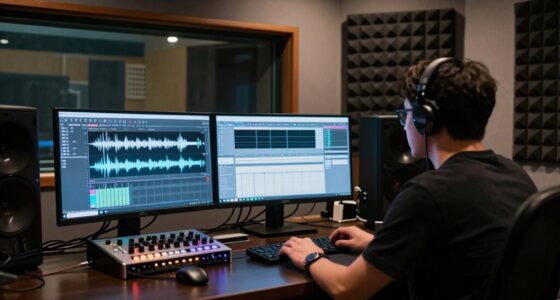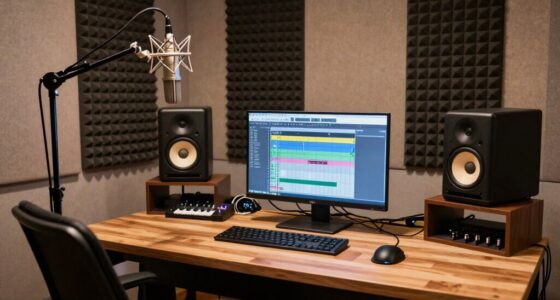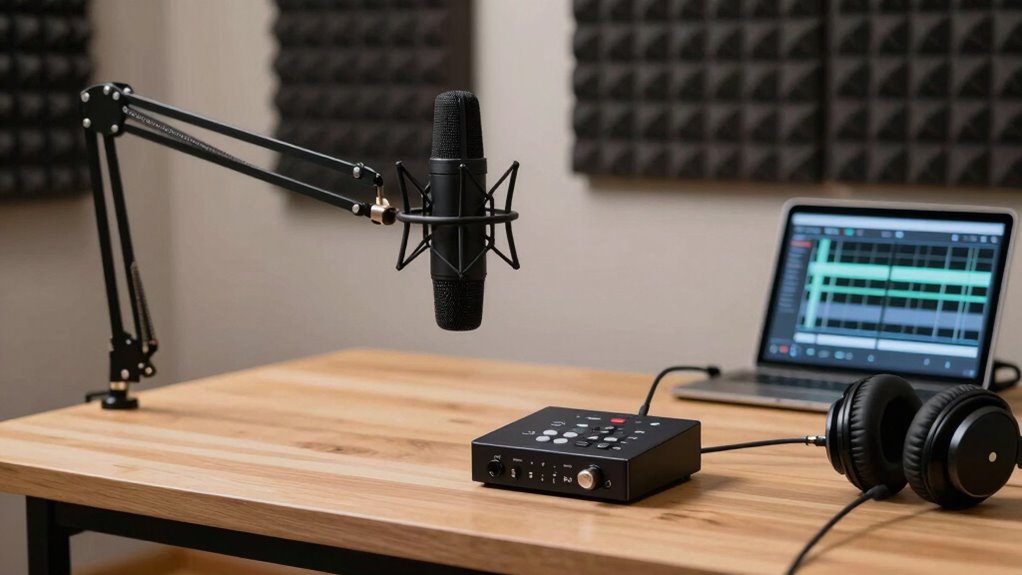
To make better mic decisions without a huge gear collection, focus on mastering placement and understanding your environment. Experiment with microphone position to find the “sweet spot” for clarity and tone, considering room acoustics to reduce echo or deadness. Learn the strengths of different mic types, like dynamic for loud sources or condenser for studio work, so you can choose wisely. Keep tuning your approach and optimizing what you have—more insights than you might expect await if you keep going.

Get audio and creator gear delivered free with Prime
- Fast, free delivery on millions of items
- Prime Video, Amazon Music and more included
- Member-only deals all year
Key Takeaways
- Master microphone placement techniques to optimize sound quality with minimal gear.
- Understand your environment and adjust mic position accordingly to reduce unwanted noise and reflections.
- Choose versatile microphone types suited for your primary recording needs to avoid unnecessary purchases.
- Use accessories like pop filters and shock mounts to enhance sound without expanding your gear collection.
- Experiment with different placements and techniques to achieve professional results without owning many microphones.
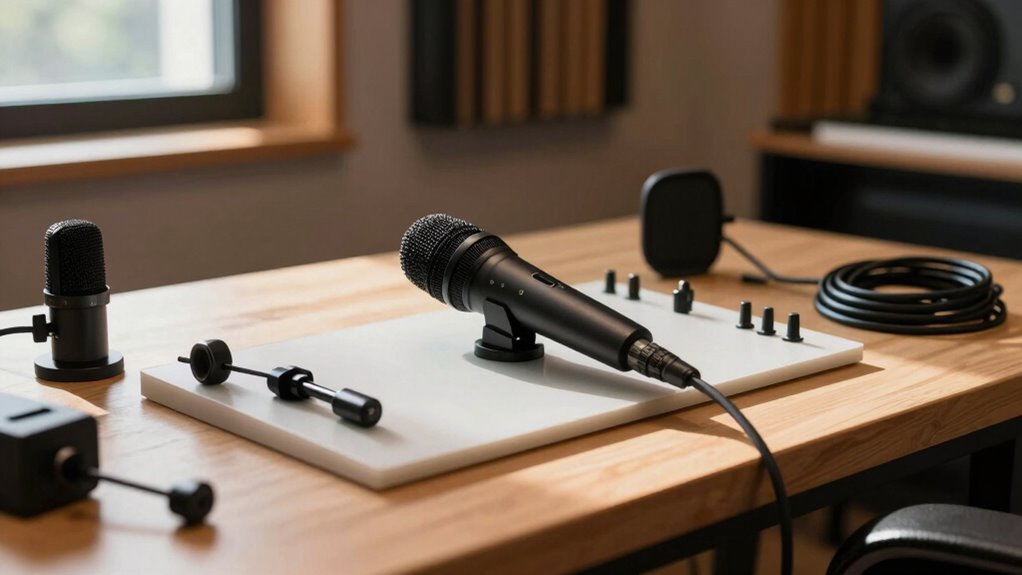
Have you ever struggled to choose the right microphone for a recording or live performance? It’s a common challenge, especially when you don’t have a huge collection of mics to experiment with. The good news is, making smart decisions doesn’t mean owning dozens of microphones. Instead, it’s about understanding how to optimize what you have and knowing the key factors that influence sound quality. One of the most critical elements is microphone placement. How close or far you position your mic from the source can dramatically change the tone, clarity, and overall quality of your sound. For vocals, placing the mic about six to twelve inches away can help capture warmth and detail, but you might need to adjust depending on the voice and environment. For instruments, different placements can emphasize certain frequencies or reduce unwanted noise. The goal is to find that sweet spot where the microphone best captures the true character of the sound without picking up too much background noise.
Sound quality hinges heavily on your microphone placement because it affects how well your source is represented. If you’re too distant, you risk losing detail and clarity; if you’re too close, you might introduce distortion or unwanted proximity effects. Experimentation is key—you should move the mic around, listen carefully, and note what position yields the best tone. This approach allows you to get the most out of your current equipment without buying additional mics. Remember, the room environment also plays a role. In a lively, echo-prone space, closer placement can help reduce room reflections, while in a dead room, you might want to give the mic a bit more room to breathe. Understanding microphone types and their best uses can further help you make informed decisions about your gear. Additionally, knowing how sound environments influence recording outcomes can lead to smarter placement choices. Being aware of the room acoustics can help you adapt your mic placement to improve overall sound quality. Proper microphone techniques are essential in maximizing your equipment’s potential, especially when working with limited gear. Recognizing the characteristics of different mics can also assist you in choosing the most suitable microphone for each situation and sound source.
Another way to make smarter mic decisions is to understand the different types of microphones and their best uses. Dynamic mics excel at handling loud sources and are great for live settings, while condenser mics are more sensitive and suited for studio recordings. Knowing these distinctions can help you pick the right tool for the job without filling your locker with unnecessary gear. Also, consider investing in accessories like pop filters or shock mounts, which can improve sound quality by reducing unwanted noise or vibrations.
In the end, you don’t need a vast collection of microphones to achieve professional results. Focus on mastering microphone placement, understanding your equipment, and adapting to your environment. These simple yet effective strategies will help you make better mic decisions and produce clearer, richer sound, regardless of how many mics you own.
Frequently Asked Questions
How Do I Choose the Right Microphone for My Specific Genre?
To choose the right microphone for your genre, focus on vocal clarity and instrument compatibility. If you’re singing, pick a mic that captures your voice clearly without muddiness, like a condenser. For instruments, consider dynamic mics that handle loud sounds well. Think about your genre’s typical sound, and test different mics to see which offers the best vocal clarity and pairs well with your instruments, ensuring a balanced, professional sound.
What Budget Options Are Available for High-Quality Mics?
You can find high-quality mics at budget brands like Audio-Technica, Rode, and Shure, which deliver excellent sound without breaking the bank. Many musicians successfully enhance their microphones through DIY modifications, like changing capsules or adding filters, to improve performance. Investigate reviews and tutorials to confirm these options work well for your genre. With some research and tweaks, you’ll enjoy professional sound without spending a fortune.
How Often Should I Upgrade My Microphone Gear?
You should upgrade your microphone gear when your current setup no longer meets your quality needs or when technological advances offer significant improvements. Focus on proper microphone placement and acoustic treatment to maximize your existing gear’s performance first. Regularly assess your sound quality—if issues persist despite adjustments, that’s a good sign it’s time for an enhancement. Staying attentive ensures your sound remains clear and professional.
Can I Improve Mic Quality With Accessories Like Pop Filters?
Think of a pop filter as a shield that battles harsh plosive sounds, improving your mic quality effortlessly. Its benefits include reducing unwanted noise and protecting your microphone from saliva. Pair it with thoughtful microphone placement, and you’ll notice clearer recordings. Using accessories like pop filters doesn’t replace good technique but enhances it, allowing your voice to shine without needing expensive upgrades. Keep experimenting for the best sound.
What Are Common Mistakes to Avoid When Selecting a Microphone?
When selecting a microphone, avoid common mistakes like poor microphone placement and ignoring your recording environment. Make sure you position the mic correctly—too close or too far can distort sound. Also, consider your environment; a noisy or echoey space affects quality. Choose a mic suited to your needs, and always test placement and settings before recording. This helps you get clear, professional audio without needing an extensive gear collection.
Conclusion
Think of your mic choices as planting a garden. You don’t need a sprawling field to grow beautiful flowers—you just need the right seeds, proper care, and attention. By understanding your needs and making thoughtful decisions, you’ll cultivate a soundscape that blooms with clarity and confidence. Remember, it’s not about having the biggest patch, but about nurturing what you have. With patience and knowledge, your audio garden will flourish, no giant locker required.
Fall Picks
fall essentials
As an affiliate, we earn on qualifying purchases.