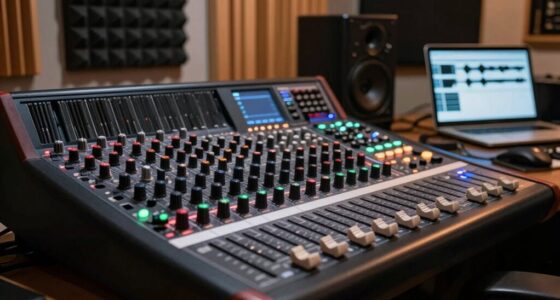
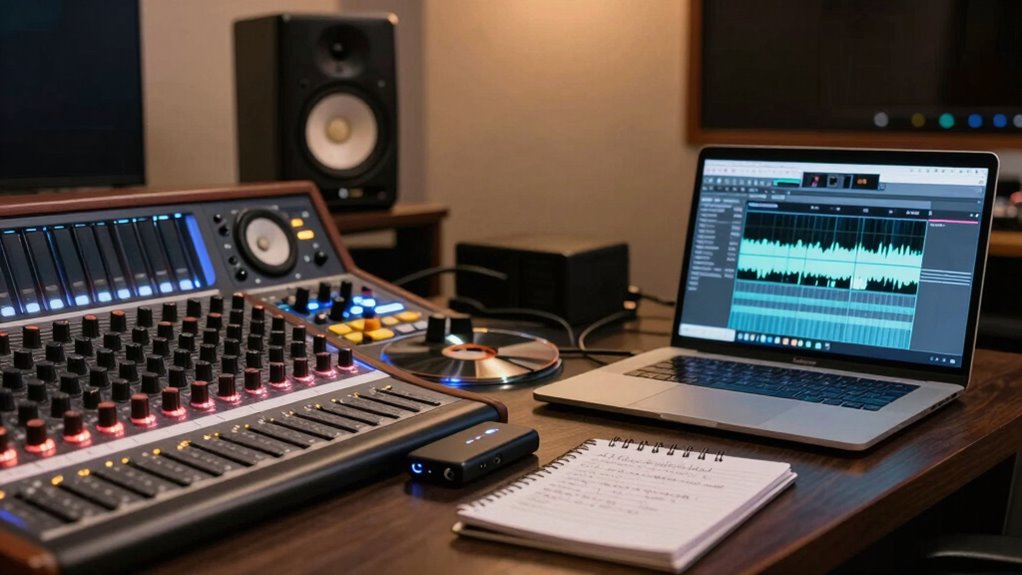

To use reference tracks without copying, focus on analyzing their genre-specific traits and production techniques. Listen for how elements are balanced, panned, and processed with EQ, compression, and reverb. Take note of the overall energy, clarity, and stereo spread, but avoid mimicking exact settings or effects. Instead, adapt the principles creatively to fit your own style. If you keep exploring, you’ll uncover how to elevate your mixes while maintaining originality.

Get audio and creator gear delivered free with Prime
- Fast, free delivery on millions of items
- Prime Video, Amazon Music and more included
- Member-only deals all year
Key Takeaways
- Analyze genre-specific traits to understand what makes the reference track unique, then incorporate those qualities into your own style.
- Observe how elements are balanced, panned, and processed, then adapt these techniques creatively rather than copying exact settings.
- Use reference tracks to identify professional qualities like clarity and punch, applying these insights to enhance your mix.
- Focus on the overall mood, energy, and stereo image of the reference, translating these into your mix without mimicking specific sounds.
- Treat reference tracks as guides for inspiration and learning, ensuring your final work maintains originality and personal expression.
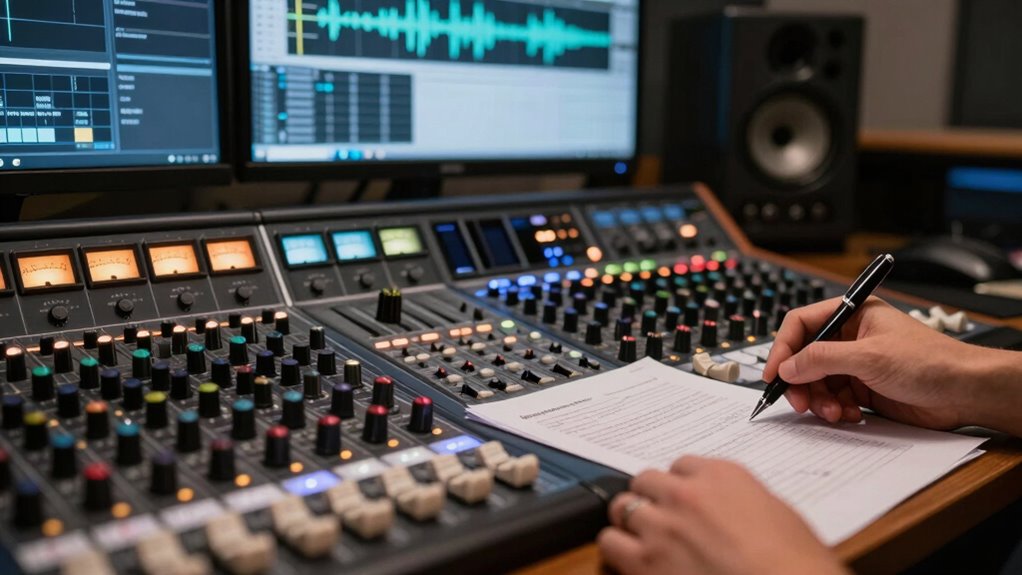
Using reference tracks can greatly enhance your music production, but it’s essential to do so without copying. When you select a track to guide your mix, you’re aiming to understand the qualities that make it sound professional—whether it’s the clarity, punch, or balance—without replicating every element. To do this effectively, start by analyzing genre comparison. Different genres have distinct characteristics, so identify what sets your target genre apart. For example, if you’re working on a hip-hop beat, pay attention to the heavy bass and prominent vocals. If you’re producing an EDM track, focus on the energetic synths and dynamic drops. Recognizing these genre-specific traits helps you understand the context and avoid simply mimicking the sound.
Use reference tracks to learn genre traits and improve your mix without copying.
Next, incorporate mixing techniques into your approach. Instead of copying the exact settings or effects from the reference track, observe how the mix is achieved. Notice how the elements are balanced—are the vocals upfront or more recessed? Is the bass tight and focused or more rumbling? Look at the use of EQ, compression, and reverb to shape the sound. Use these observations as inspiration rather than a blueprint. For example, if the reference track uses a certain EQ curve to carve out space for vocals, try applying a similar approach, but tailor it to your own mix. This way, you’re adopting effective techniques rather than directly copying the sound.
Be cautious about the stereo image and dynamic range. Many professional tracks employ specific panning decisions to create space and clarity. Use your reference to understand how the elements are spread across the stereo field, but make your panning choices based on your track’s unique needs. Similarly, observe the overall loudness and compression style, but adjust to fit your mix and avoid simply mimicking the loudness wars or compressor settings. Additionally, understanding the energy and mood conveyed in a track can help you capture the intended vibe without copying the exact arrangement.
Always remember, the goal is to learn from the reference track’s qualities, not to clone it. Use it as a guide to refine your understanding of genre comparison and mixing techniques. Develop your ear for what makes a track sound polished, and then apply those principles creatively to your own work. This approach not only keeps your music original but also helps you grow as a producer. By analyzing, adapting, and understanding what makes professional tracks shine, you’ll be able to craft your sound confidently without risking unintentional copying.
studio monitor speakers for mixing
As an affiliate, we earn on qualifying purchases.
As an affiliate, we earn on qualifying purchases.
Frequently Asked Questions
How Do I Choose the Right Reference Tracks for My Project?
To choose the right reference tracks, focus on genre differentiation to match your project’s style, ensuring the tracks align with your intended sound. Consider emotional resonance by selecting tracks that evoke similar feelings or atmospheres you want to achieve. Listen critically, comparing production quality, arrangement, and vibe. Pick tracks that inspire you without copying, so they guide your mix subtly and help you stay true to your artistic vision.
Can Reference Tracks Influence My Creative Process Negatively?
Yes, reference tracks can influence your creative process negatively if you rely on them too much. They might limit your originality preservation by encouraging you to imitate rather than innovate. To avoid this, use reference tracks only as guides for tone and mix balance, keeping your creative independence intact. This way, you stay true to your unique sound while still benefiting from professional benchmarks.
What Are Common Mistakes to Avoid When Using Reference Tracks?
Avoid over reliance on references because it can stifle your originality. Don’t ignore genre specificity; using tracks outside your genre can lead to a mismatch in sound and feel. Also, be cautious about copying details rather than drawing inspiration. Instead, use reference tracks as a guide to enhance your creativity, ensuring your unique style shines through while maintaining the essence of the genre.
How Do I Ensure My Mix Remains Unique Despite Referencing?
To guarantee your mix remains unique despite referencing, focus on originality preservation by using reference tracks only as guides, not templates. Emphasize your stylistic differentiation by blending your signature elements with insights gained from the reference. Experiment with different sounds, effects, and arrangements to keep your sound fresh. Regularly step back to evaluate whether your mix reflects your personal style, and avoid copying specific production techniques.
Are There Tools to Help Compare My Track With Reference Tracks?
Yes, comparison tools are available to help you match your track with reference tracks. These tools, like iZotope Ozone’s reference matching feature or LRDeChrome, allow you to compare frequency responses, loudness, and stereo image easily. You can analyze your mix against reference tracks, ensuring consistency without copying. Using comparison tools helps you stay true to your unique sound while benefiting from professional reference matching techniques.
audio interface for music production
As an affiliate, we earn on qualifying purchases.
As an affiliate, we earn on qualifying purchases.
Conclusion
By using reference tracks thoughtfully, you can navigate the creative journey like a seasoned captain steering through familiar waters, drawing inspiration without losing your unique voice. Remember, just as a painter studies masterpieces without copying, your goal is to learn and grow, not imitate. Embrace the process, trust your instincts, and let your originality shine—your own story is waiting to be told, brighter and more compelling than any borrowed tune.
professional EQ and compressor plugins
As an affiliate, we earn on qualifying purchases.
As an affiliate, we earn on qualifying purchases.
reference track mixing guide book
As an affiliate, we earn on qualifying purchases.
As an affiliate, we earn on qualifying purchases.
Halloween Picks
halloween
As an affiliate, we earn on qualifying purchases.