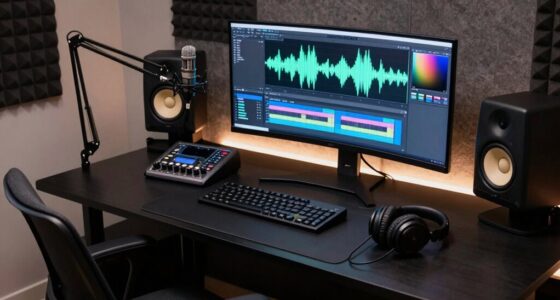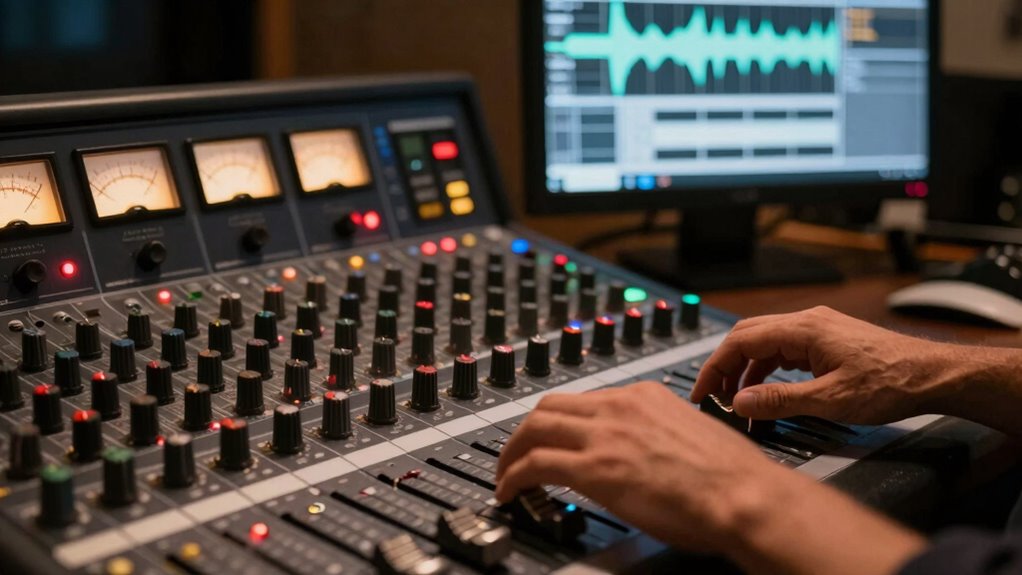

Monitoring mistakes ruin more mixes than plugins because your perception of sound depends heavily on your environment. Poor room acoustics or uncalibrated headphones distort frequencies, making you misjudge EQ, stereo placement, and balance. These inaccuracies lead to faulty decisions and over-processed sounds. Instead of blaming plugins, focus on optimizing your listening space and calibration. Keep going, and you’ll discover how improving your setup can make a real difference in your mixes.

Get audio and creator gear delivered free with Prime
- Fast, free delivery on millions of items
- Prime Video, Amazon Music and more included
- Member-only deals all year
Key Takeaways
- Poor room acoustics distort sound perception, leading to incorrect mixing decisions more than faulty plugins.
- Uncalibrated headphones can misrepresent stereo image and tone, causing misguided adjustments.
- Inaccurate monitoring environment affects the ability to detect and correct mistakes early in the mix.
- Relying solely on plugins without proper listening conditions increases the risk of flawed mixes.
- Optimizing monitoring setup ensures accurate sound perception, preventing mistakes that plugins alone cannot fix.
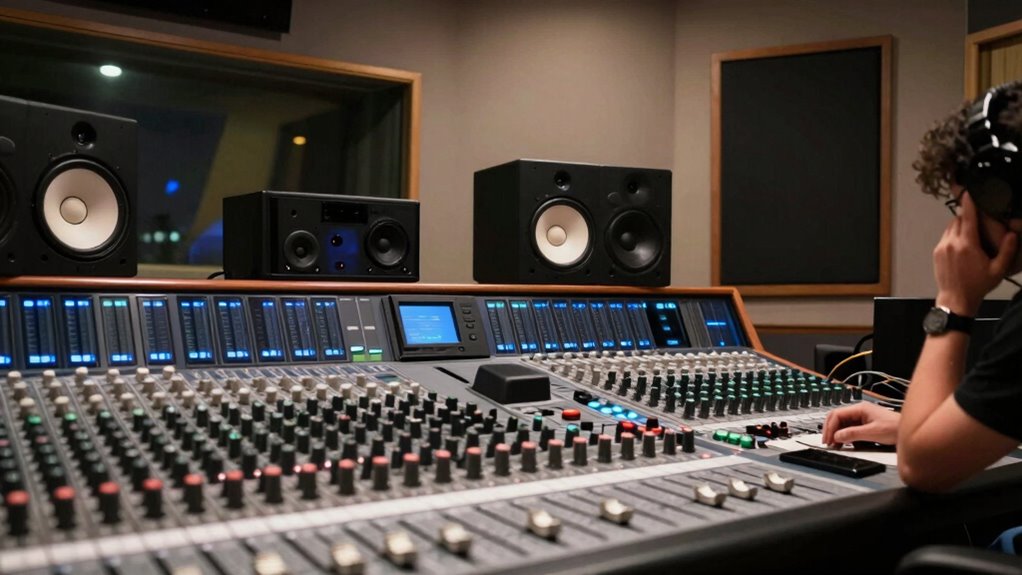
Many mixing mistakes happen not because of faulty plugins or complex processing but because of how you monitor your tracks. Your listening environment plays a fundamental role in how accurately you perceive your mix. If your room acoustics are off, it’s like trying to see clearly through frosted glass—you’re missing essential details. Poor room treatment can cause frequency buildup, resonance, and uneven sound distribution, leading you to make decisions based on inaccurate cues. You might boost or cut certain frequencies, thinking it’s a problem, when in reality, your room is distorting what you hear. Recognizing this, you need to address your room’s acoustics first. Properly treating your space with bass traps, diffusers, and absorbers helps create a neutral listening environment where your mix translates well across different systems. Without this foundation, even the most skilled engineer can make misguided adjustments, simply because the room is coloring the sound. Additionally, monitoring accuracy depends heavily on your room setup and calibration, emphasizing the importance of a properly treated space. Ensuring your listening environment is optimal is essential for making precise mixing decisions. On the other hand, headphone calibration is equally imperative when monitoring digitally or on headphones. Unlike speakers, headphones can isolate you from ambient noise but also introduce their own distortions. If you don’t calibrate or use high-quality headphones, your perception of stereo image, bass response, and tonal balance can be skewed. This can lead you to make EQ decisions that sound good on your cans but fall apart on other systems. Many professionals overlook the importance of headphone calibration, assuming they can trust their ears blindly. But calibration tools and proper headphone matching ensure you’re hearing a more accurate representation of your mix. This minimizes the risk of over-boosting certain frequencies or misjudging the stereo field, which often happens when your headphones aren’t calibrated or are of subpar quality. Additionally, understanding room acoustics can help you identify how your environment influences your sound perception and assist in making more informed decisions. You should also consider monitoring environment factors as they directly impact your ability to judge your mix accurately. Recognizing the significance of acoustic treatment can lead to better control over your listening conditions and improve your mixing outcomes. Ultimately, your monitoring environment—whether through room acoustics or headphone calibration—has a more direct impact on your mix than the plugins you use. If you’re not attentive to these factors, you risk making decisions based on flawed perceptions. It’s tempting to blame complex processing or new plugins when things sound off, but the truth is, fixing how you listen often yields the most immediate improvements. Take the time to treat your room and calibrate your headphones. Doing so sharpens your listening skills, ensuring you catch mistakes early and make better choices, no matter what plugins you’re employing. Your mixes will be clearer, more balanced, and more professional—simply because you listened better from the start.
room acoustic treatment bass traps
As an affiliate, we earn on qualifying purchases.
As an affiliate, we earn on qualifying purchases.
Frequently Asked Questions
How Can I Identify if I’M Making Monitoring Mistakes?
You can identify monitoring mistakes by paying attention to how your room acoustics affect sound, causing inconsistent mixes. If your mixes sound different on other systems, it’s a sign. Use headphone calibration to check for accurate sound reproduction and compare your mixes in different environments. Notice if certain frequencies are exaggerated or missing, which indicates room or monitoring issues. Trust your ears and regularly check your setup’s calibration to avoid costly mistakes.
What Are the Most Common Monitoring Errors Beginners Make?
You’re sailing into dangerous waters if you overlook common monitoring errors. Many beginners ignore room acoustics, which can turn your studio into a canyon of sound reflections, and skip headphone calibration, making mixes sound different everywhere else. These mistakes distort your perception, leading to poor decisions. Always treat your room and calibrate your headphones, so your mixes translate well outside your studio. It’s like tuning a musical instrument before a concert.
How Does Monitoring Affect Overall Mix Coherence?
Monitoring greatly impacts your mix coherence because poor room acoustics and uncalibrated speakers distort your perception of sound. When your room’s acoustics are off, you might misjudge balance and EQ, leading to inconsistent mixes. Likewise, without proper speaker calibration, your mixes won’t translate well across other systems. Correctly managing room acoustics and calibrating your monitors guarantees you hear an accurate representation, resulting in more cohesive, professional mixes.
Can Monitoring Mistakes Damage My Speakers or Ears?
While minor monitoring mistakes might seem harmless, poor speaker placement and excessive listening can lead to ear fatigue, which risks long-term damage to your ears. Pushing your speakers too loud or misaligning them strains your hearing, making it more vulnerable over time. To protect both your ears and speakers, use proper placement, take regular breaks, and keep volume levels reasonable. Your hearing health is worth the effort.
What Affordable Tools Improve Monitoring Accuracy?
To improve your monitoring accuracy affordably, invest in high-end headphones like the Audio-Technica ATH-M50x or Beyerdynamic DT 770 Pro, which offer detailed sound. Additionally, prioritize room treatment with bass traps and acoustic panels to reduce reflections and standing waves. These tools help you hear more accurately, preventing mistakes that can ruin mixes. Consistent listening environment and quality headphones are key to accurate monitoring on a budget.
studio monitor calibration tools
As an affiliate, we earn on qualifying purchases.
As an affiliate, we earn on qualifying purchases.
Conclusion
Remember, your biggest mix mistakes often come from how you monitor, not your plugins. For instance, imagine mixing on speakers with a poor room setup—you might boost bass unnecessarily, leading to a muddy sound. A simple upgrade in your monitoring environment, like adding acoustic treatment, can prevent costly errors. So, invest in good monitoring—it’s your first line of defense against ruining a perfect mix. Better monitoring saves you time, effort, and ultimately, a better sound.
high-quality headphones for mixing
As an affiliate, we earn on qualifying purchases.
As an affiliate, we earn on qualifying purchases.
As an affiliate, we earn on qualifying purchases.
Halloween Picks
halloween
As an affiliate, we earn on qualifying purchases.