
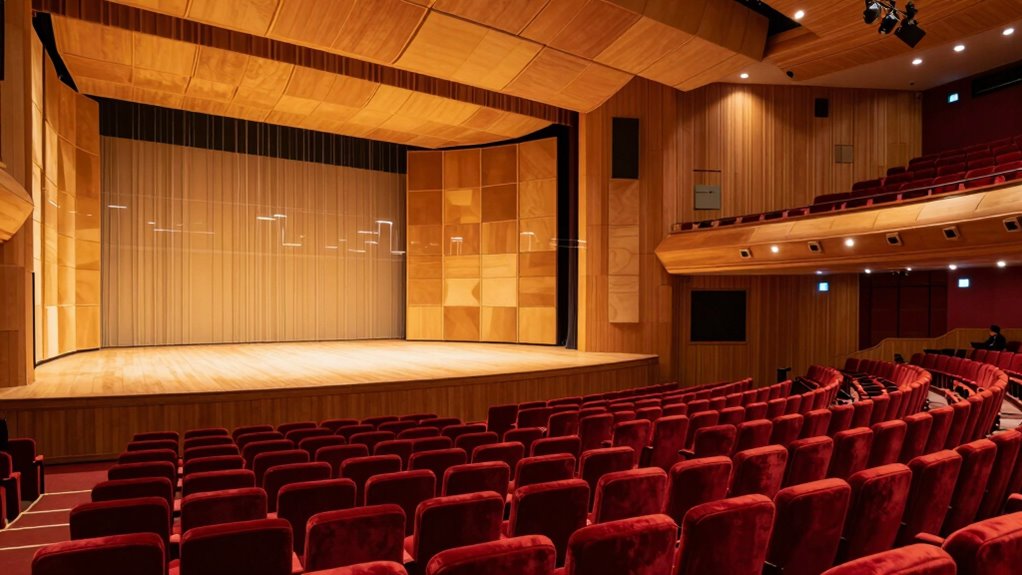

When a venue sounds boomy, it’s because sound waves bounce between walls, ceiling, and floors, creating in-phase reflections that amplify bass frequencies. Hard, reflective surfaces increase sound reflection and reinforce these low pitches, making the sound muddy and overwhelming. Without enough absorbing materials, like curtains or acoustic panels, these resonances build up, causing that booming effect. To understand how to fix this issue and improve sound clarity, keep exploring the physics behind room resonance.

Get audio and creator gear delivered free with Prime
- Fast, free delivery on millions of items
- Prime Video, Amazon Music and more included
- Member-only deals all year
Key Takeaways
- Room resonance amplifies certain bass frequencies due to sound reflections bouncing between reflective surfaces.
- Hard surfaces reflect sound waves, causing reinforcement and buildup of low-end frequencies.
- Lack of sound-absorbing materials allows reflections to persist, increasing resonance and boominess.
- Poor room design causes in-phase sound waves to reinforce, leading to exaggerated bass.
- Acoustic treatments reduce reflections and absorption, mitigating low-frequency resonance and improving sound clarity.
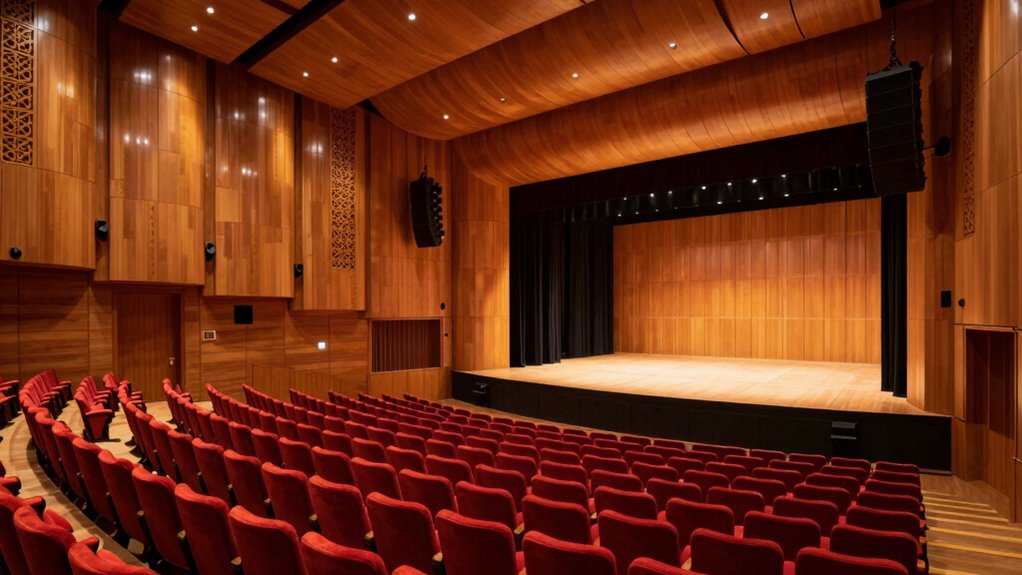
Have you ever stepped into a venue where the sound seems overwhelming, with bass rattling your bones and everything feeling unbalanced? That sensation of a “boomy” sound is often caused by room resonance, a phenomenon where certain frequencies amplify due to the room’s characteristics. When sound waves bounce between walls, ceiling, and floors, they can reinforce particular pitches, creating those lingering, booming echoes that make the music feel muddy and less clear. This isn’t just a matter of volume; it’s about how the space interacts with sound. If a room has hard, reflective surfaces and minimal sound absorption, it’ll tend to resonate at specific frequencies, causing those bass-heavy, boomy effects you notice.
Room resonance causes boomy, muddy sound by amplifying certain frequencies through reflections and minimal absorption.
Room resonance occurs when sound waves reflect in a way that they reinforce each other at certain frequencies. Think of it like pushing someone on a swing; if you time your pushes just right, the swing goes higher and higher. Similarly, if sound waves bounce and arrive in phase at the listener’s ear, they add up, boosting those frequencies and making them seem unnaturally prominent. This is especially true for low frequencies, which are less easily absorbed by typical materials and tend to linger longer. As a result, the room acts like a giant amplifier for those bass notes, making the sound feel overwhelming and unbalanced.
Sound absorption plays a significant role in controlling this effect. When a venue lacks sufficient sound-absorbing materials—such as acoustic panels, carpets, or curtains—the sound waves have fewer ways to dissipate. Instead of being absorbed, they reflect repeatedly, intensifying room resonance and contributing to a boomy environment. You might notice that adding soft furnishings or specialized acoustic treatments can drastically improve clarity, reducing those muddled low-end frequencies. Proper sound absorption helps dampen unwanted reflections, preventing low frequencies from building up and creating that overwhelming bass sensation. Acoustic treatment can make a substantial difference in balancing sound in such spaces.
Understanding these physics principles reveals why some venues sound so “boomy.” It’s not just about loudness but how the space manages sound energy. Venues designed with poor acoustic treatment or with reflective surfaces will naturally foster resonance at certain frequencies, especially bass. When sound absorption is insufficient, those frequencies build up, leading to the characteristic boominess. So, if you’ve ever wondered why some places sound muddled or bass-heavy, it’s because of how the room’s resonance interacts with your sound system and how well the space absorbs or reflects sound waves. Addressing these issues through acoustic design can turn a boomy venue into a space with clear, balanced sound.
acoustic panels for room soundproofing
As an affiliate, we earn on qualifying purchases.
As an affiliate, we earn on qualifying purchases.
Frequently Asked Questions
How Do Room Dimensions Affect Boomy Sounds?
Your room dimensions greatly influence boomy sounds. When room ratios and ceiling height are disproportionate, sound waves reflect unevenly, creating excessive bass. Tall ceilings can amplify low frequencies, while irregular ratios may cause standing waves, making the sound muddy and boomy. To reduce this, aim for balanced room ratios and moderate ceiling heights, which help control bass buildup and produce clearer, more balanced acoustics.
Can Acoustic Treatments Eliminate Boomy Acoustics?
Ever wonder if acoustic treatments can truly eliminate boomy acoustics? They can markedly reduce unwanted echoes and reverberation, but complete elimination is tough. Soundproofing techniques like bass traps and diffusers help, yet combining them with electronic equalization allows you to fine-tune the sound. While treatments improve clarity, some residual boominess might remain, making it essential to use a mix of approaches for the best results.
What Role Do Materials Play in Sound Absorption?
Materials play a vital role in sound absorption by influencing how much sound energy they absorb. Higher density materials generally have higher absorption coefficients, meaning they effectively reduce sound reflections. When you choose materials with appropriate density and absorption coefficients, you improve acoustic quality by minimizing echoes and controlling reverberation. This helps create a balanced sound environment, preventing the venue from sounding overly boomy or dull.
How Does Speaker Placement Influence Room Echo?
Imagine your sound bouncing around the room like a lively game of ping-pong. When you adjust the speaker angle and height, you regulate this bounce, reducing echo. Positioning speakers at ear level and angling them slightly downward helps direct sound waves toward your listening area, minimizing room reflections. This setup ensures clearer, more balanced sound, making your experience immersive without unwanted echoes or reverberation.
Are Certain Musical Genres More Prone to Boomy Sound?
Certain musical genres, especially those with heavy bass resonance like EDM, hip-hop, and dubstep, are more prone to boomy sounds. These genres emphasize low sound frequency ranges, which can amplify bass resonance in a venue, causing a booming effect. If your venue’s acoustics aren’t properly managed, this effect worsens, making it sound overly booming or muddy. Adjusting speaker placement and sound equalization helps control this, ensuring clearer sound.
sound absorbing curtains for venues
As an affiliate, we earn on qualifying purchases.
As an affiliate, we earn on qualifying purchases.
Conclusion
So, next time you find a venue a tad lively, remember it’s just embracing its unique character. Sometimes, a touch of “boomy” warmth adds a cozy charm that’s hard to replicate elsewhere. Instead of focusing on the quirks, enjoy the rich, enveloping sound that makes the space memorable. After all, every venue has its own personality—some are just a little more lively, inviting you to experience their vibrant spirit firsthand.
bass traps for acoustic treatment
As an affiliate, we earn on qualifying purchases.
As an affiliate, we earn on qualifying purchases.
As an affiliate, we earn on qualifying purchases.
Fall Picks
fall essentials
As an affiliate, we earn on qualifying purchases.