
To compare IEM tuning styles for travel, stage, and home, start by identifying your primary environment and listening goals. For travel, look for neutral sound with good isolation to block noise; for stage, prioritize clarity and midrange punch with secure fit; for home, seek a rich, immersive sound profile with warm tones. Test how each tuning emphasizes different frequencies and interacts with your surroundings. Exploring these factors further will help you choose the perfect IEM for any setting.

Get audio and creator gear delivered free with Prime
- Fast, free delivery on millions of items
- Prime Video, Amazon Music and more included
- Member-only deals all year
Key Takeaways
- Assess how the sound signature aligns with your environment, such as neutral for travel or bass-heavy for stage use.
- Evaluate the level of isolation provided, ensuring it matches your need to block external noise in each setting.
- Consider the tuning emphasis—midrange clarity for stage performance or warmth for home listening—to suit specific environments.
- Test IEMs in similar environments to your intended use to accurately perceive tuning effectiveness.
- Balance sound signature and isolation features to ensure optimal comfort and audio quality for travel, stage, or home scenarios.
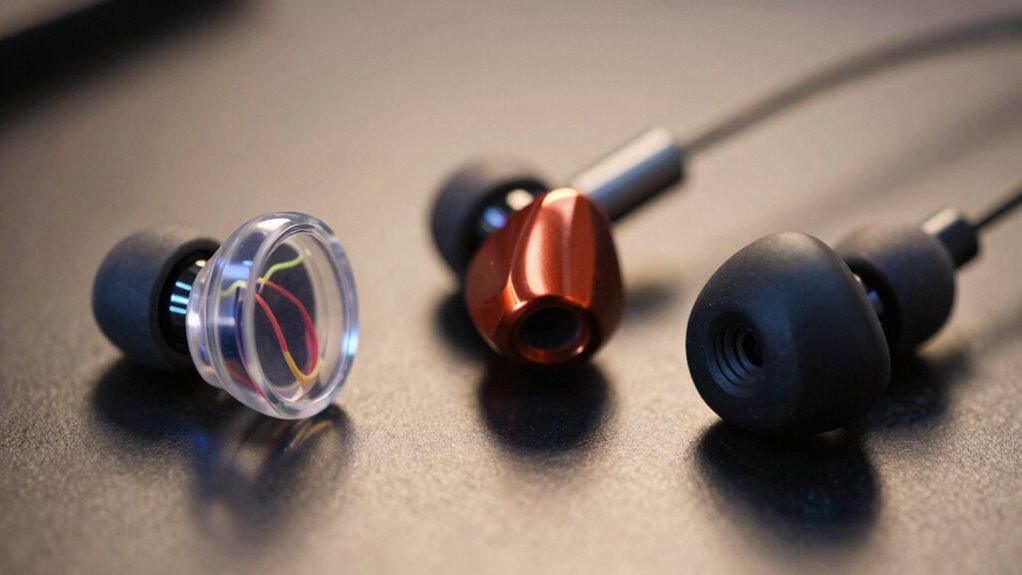
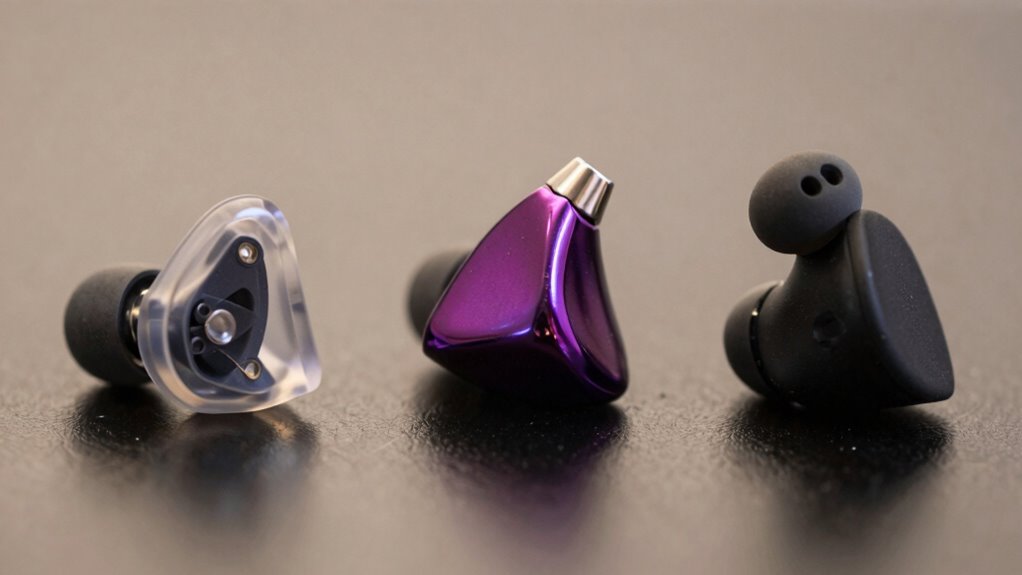
When choosing in-ear monitors (IEMs), understanding their tuning styles is essential because it directly affects how they sound and feel to your ears. The tuning style determines the overall sound signature, shaping the way different frequencies are presented, while the isolation performance influences how well they block external noise. Both aspects are crucial when comparing IEMs for travel, stage use, or home listening, as each environment demands different priorities. Additionally, recognizing how sound signature interacts with your environment can help you select the most suitable IEMs for your needs. The sound signature is the foundation of your listening experience. For travel, you might prefer a balanced or neutral sound signature that reproduces audio faithfully without coloring the sound. This allows you to enjoy music or podcasts clearly, even in noisy environments like airplanes or busy streets. Stage performers, on the other hand, often favor IEMs with a more tailored tuning—either with emphasized midrange clarity for vocals or punchy bass to drive their performances. For home listening, you might look for a sound signature that highlights details and provides a rich, immersive experience, whether that’s a warm, bass-heavy profile or a more neutral, transparent sound.
Isolation performance plays a pivotal role in how effectively your IEMs block out ambient noise. When traveling, you need high isolation so external sounds won’t interfere with your listening or disturb others. Good isolation also helps you conserve battery life and reduces the need to turn up the volume, which protects your hearing. On stage, isolation is equally vital; it prevents stage noise from bleeding into your monitors, ensuring you hear a clear, accurate representation of your mix. For home use, isolation might be less critical, but it still enhances your experience by minimizing background sounds, especially if you’re in a noisy household or apartment. Furthermore, the type of environment in which you use your IEMs can influence how the tuning is perceived, making it important to consider both sound signature and isolation together.
When comparing tuning styles, consider how the sound signature complements your primary environment. Do you need IEMs that deliver a flat, transparent sound for critical listening? Or do you prefer a more colored sound that emphasizes certain frequencies for a more engaging experience? Similarly, test their isolation performance—if possible, try them in environments similar to where you’ll use them most. Good isolation doesn’t just block noise; it also affects the perceived sound signature, making some IEMs sound different depending on how much external noise is filtered out.
Ultimately, the right IEMs depend on balancing your preferred sound signature with adequate isolation performance for your specific needs. Whether you’re traveling, performing on stage, or relaxing at home, knowing these differences helps you pick a pair that enhances your listening experience in every environment.
As an affiliate, we earn on qualifying purchases.
Frequently Asked Questions
Can I Customize IEM Tuning Styles Myself?
Yes, you can customize IEM tuning styles yourself with DIY tuning and tuning accessories. Many IEMs are designed for user modification, allowing you to adjust sound profiles to match your preferences. Using tuning accessories like filters, equalizers, or damping materials, you can fine-tune your IEMs for travel, stage, or home listening. Just make certain you follow proper procedures to avoid damaging your earphones and achieve the desired sound.
How Do Tuning Styles Affect Long-Term Ear Health?
Tuning styles can impact your ear health by influencing ear canal irritation and hearing fatigue. If a tuning style emphasizes bass or high frequencies, it might cause more ear canal irritation over time, especially if you listen loudly or for long periods. For long-term health, choose tuning styles that avoid excessive loudness and listen at moderate volumes, and give your ears regular breaks to prevent fatigue and potential damage.
Are Certain Tuning Styles Better for Specific Music Genres?
Think of tuning styles as musical palettes; some are better suited for certain genres like vibrant, bass-heavy tunes or delicate acoustic pieces. Your tuning style preferences influence how immersive each genre feels, with bass-heavy styles enhancing EDM or hip-hop, while neutral or balanced tunes suit classical and jazz. Choosing the right tuning style improves genre compatibility, making your listening experience richer and more authentic.
How Do IEM Tuning Styles Influence Noise Isolation?
IEM tuning styles affect noise isolation by influencing sound pressure within your ear canal. A bass-heavy tuning often creates a tighter seal, reducing external noise more effectively. Conversely, a more neutral or airy tune might let in more ambient sound, decreasing isolation. Your ear canal shape also plays a role; a snug fit enhances noise isolation regardless of tuning style, so choose IEMs that suit your ear shape and preferred sound signature.
Can I Switch Tuning Styles Between Different IEMS?
Yes, you can switch tuning styles between different IEMs, and it’s like transforming your sound universe! With personalization options and technical adjustments, you’re free to tailor each IEM’s sound to your mood or environment. Just keep in mind, some IEMs might require specific tips or filters, so check if your gear allows easy swaps. Embrace the flexibility and craft your perfect listening experience anytime, anywhere!
stage in-ear monitors with midrange punch
As an affiliate, we earn on qualifying purchases.
As an affiliate, we earn on qualifying purchases.
Conclusion
Ultimately, choosing the right IEM tuning style depends on your listening adventures—whether you’re jet-setting, rocking the stage, or relaxing at home. Think of it like selecting the perfect tune for a midnight serenade; each style offers a unique experience. Don’t be a digital damsel stuck in the past—embrace the variety and find what truly makes your ears sing. With a little exploration, you’ll discover your perfect match and keep your sound journey happily ever after.
warm sound home listening earphones
As an affiliate, we earn on qualifying purchases.
As an affiliate, we earn on qualifying purchases.
As an affiliate, we earn on qualifying purchases.
Fall Picks
fall essentials
As an affiliate, we earn on qualifying purchases.