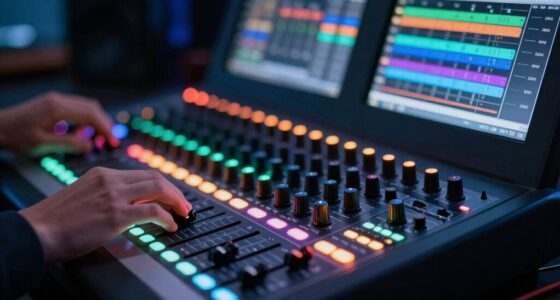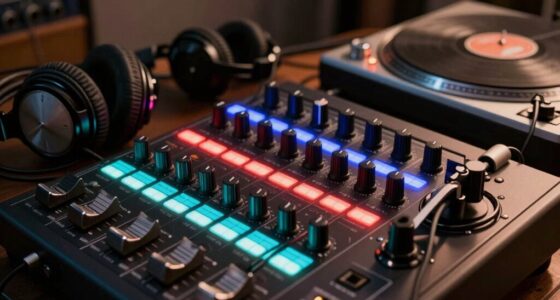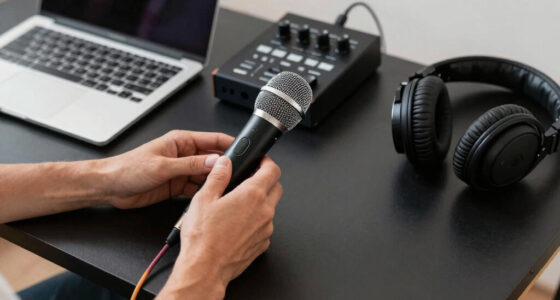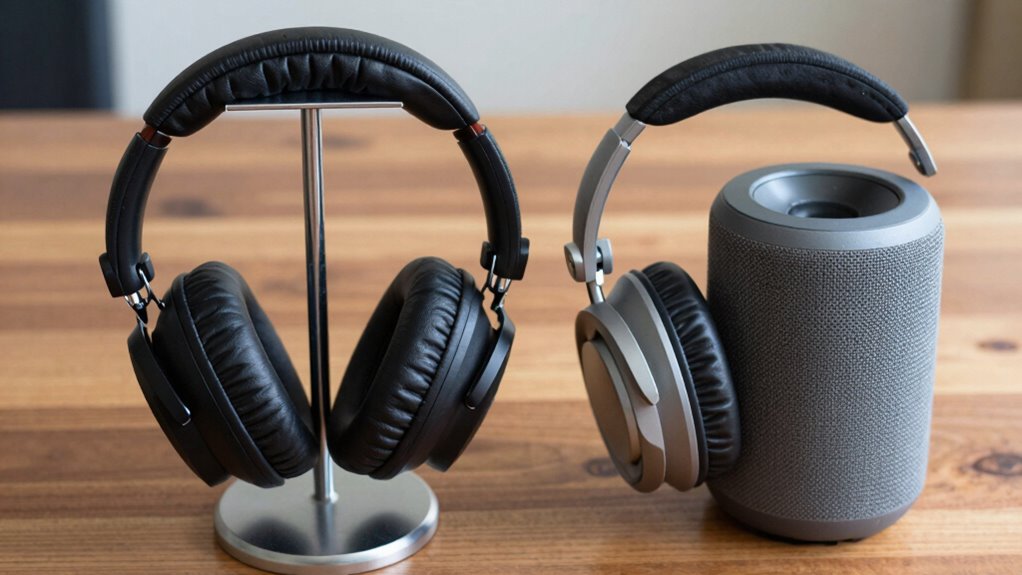
To fairly compare listening setups, start by calibrating your audio to guarantee accurate, balanced sound. Use familiar tracks with clear spatial cues and maintain consistent volume and environment. Focus on details like soundstage, imaging, and tonal balance across different genres. Take notes and switch between setups patiently. If you keep these steps in mind, you’ll avoid biased judgments and gain a true understanding of your system’s strengths—discover how to improve even further.

Get audio and creator gear delivered free with Prime
- Fast, free delivery on millions of items
- Prime Video, Amazon Music and more included
- Member-only deals all year
Key Takeaways
- Use familiar, well-recorded tracks to accurately detect differences without bias.
- Maintain consistent volume, positioning, and environment for all comparisons.
- Focus on objective criteria like soundstage, clarity, and tonal balance, not personal preferences.
- Conduct multiple tests across various genres to identify consistent strengths and weaknesses.
- Take detailed notes or checklists to ensure systematic and honest evaluation.
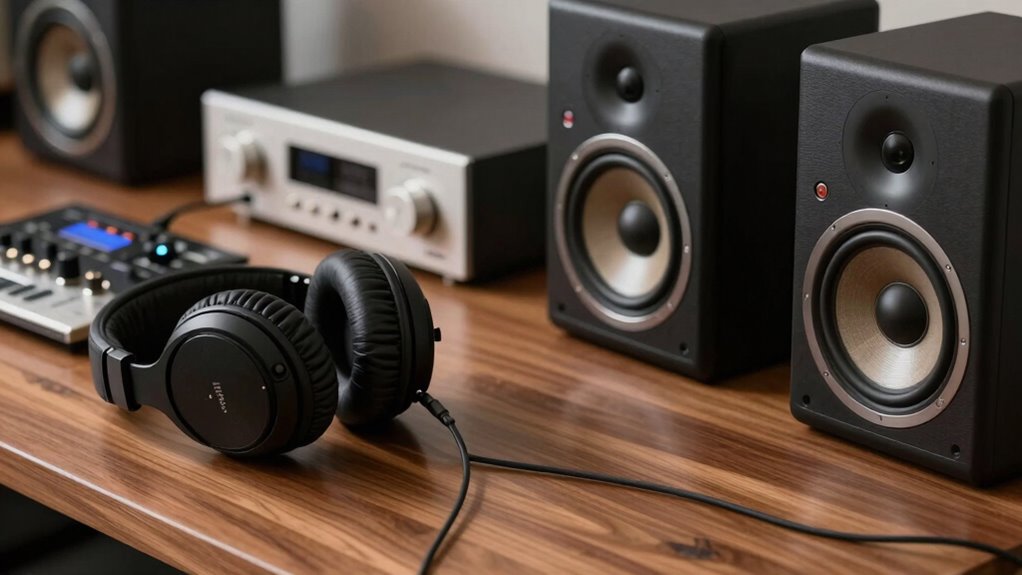
When comparing listening setups, understanding what factors influence sound quality and how different components work together is vital. One of the key aspects to consider is audio calibration, which guarantees your system delivers accurate and balanced sound. Proper calibration involves adjusting the equalization, volume levels, and speaker placement so that your listening environment is optimized. When done correctly, audio calibration reveals the true character of your setup, making it easier to compare different configurations objectively. Without it, you might mistake a poorly calibrated system for a superior one, leading you to make decisions based on misleading impressions. Additionally, listening environment plays a crucial role in how sound is perceived and should be considered during comparison.
Accurate audio calibration is essential for objective sound quality comparisons and true system performance.
Another essential factor is soundstage imaging, which refers to how well your setup reproduces the sense of space and placement of instruments or vocals within a recording. Good soundstage imaging gives you a sense of depth, width, and height, making the listening experience more immersive. When comparing setups, pay close attention to how accurately each system creates this spatial illusion. If one configuration produces a more precise soundstage, you’ll notice clearer distinctions between different instruments and vocals, giving you a better sense of realism. To accurately assess soundstage imaging, listen in a consistent environment with familiar recordings that emphasize spatial cues. Additionally, understanding audio calibration helps you recognize when differences in sound are due to setup adjustments rather than inherent flaws.
Furthermore, being aware of acoustic treatment can significantly impact the accuracy of your comparisons, as untreated rooms often color the sound and obscure true differences between setups.
It’s also essential to use familiar music that you know well, so you can detect subtle differences between setups. When you listen, focus on specific aspects like clarity, detail, bass response, and the overall tonal balance. Relying solely on your memory or impressions can be misleading, so it helps to have a checklist or notes to compare features systematically. Keep your volume levels consistent across tests to avoid skewed perceptions caused by loudness differences. Using test tracks designed to highlight particular qualities can help you evaluate how each system handles complex passages, subtle nuances, and dynamic shifts.
You should also think about how well your system adapts to different genres or recordings. Some setups excel with certain types of music, but may fall short with others. By switching between multiple genres and reference recordings, you get a more thorough picture of each configuration’s strengths and weaknesses. Ultimately, the goal is to identify what setup best matches your preferences while remaining faithful to the recording’s intent. Remember, honest comparison requires patience and a disciplined approach—trust your ears, stay consistent, and avoid rushing your judgment. Only then can you truly determine which listening setup elevates your experience without fooling yourself.
audio calibration tools for speakers
As an affiliate, we earn on qualifying purchases.
As an affiliate, we earn on qualifying purchases.
Frequently Asked Questions
How Do I Account for Room Acoustics in Comparisons?
You should start by implementing room treatment to minimize unwanted reflections and standing waves, creating a more accurate listening environment. Then, perform acoustic calibration with tools like room correction software or measurement microphones to account for your room’s influence. This way, you’ll compare setups more objectively, ensuring differences in sound truly come from equipment rather than room acoustics. Always calibrate each setup in the same treated space for consistent results.
What Role Does Personal Music Preference Play?
Your personal music preference plays a significant role because personal bias can influence how you perceive sound differences. Your listening habits shape what qualities matter most, so you might favor warm tones or crisp clarity. To get an objective comparison, focus on consistent listening sessions and try to recognize biases that could skew your judgment. Remember, what sounds best to you might differ from someone else’s perspective, so trust your authentic preferences.
How Can I Ensure Unbiased Listening Tests?
Did you know that studies show bias can skew 80% of subjective audio tests? To guarantee unbiased listening tests, focus on bias elimination by using blind testing methods. Rely on objective criteria like frequency response and distortion levels rather than personal preferences. Keep the environment consistent, switch setups randomly, and use multiple listeners. This approach helps you make fair, accurate comparisons, ensuring your judgments truly reflect the equipment’s performance.
Should I Compare Setups With Different Genres?
Comparing setups across different genres can be insightful because genre differences often influence your listening experience. However, it’s best to keep your listening environment consistent to avoid bias. Switching genres may highlight how each setup handles various sounds, but it can also introduce variables that distract from the true quality of your equipment. To get a clear comparison, focus on similar genres or guarantee your environment remains steady during tests.
How Often Should I Revisit My Listening Setup Evaluations?
You should revisit your listening setup evaluations every few months to guarantee ideal sound. Regularly check equipment calibration and consider changes in your listening environment, like furniture or room acoustics, which can affect sound quality. By doing so, you’ll stay aware of how equipment and environment influence your experience, helping you make informed adjustments. Frequent reviews keep your setup aligned with your evolving preferences and assure consistent, high-quality listening.
high fidelity test tracks for audio comparison
As an affiliate, we earn on qualifying purchases.
As an affiliate, we earn on qualifying purchases.
Conclusion
Remember, when comparing listening setups, don’t rush or rely solely on memory; take your time and trust your ears. Use consistent testing conditions to make fair judgments. It’s like tasting wine—only through careful, repeated sampling can you truly appreciate the differences. Keep an open mind, stay patient, and you’ll find the setup that sounds just right for you. After all, “A journey of a thousand miles begins with a single step.”
soundstage and imaging measurement headphones
As an affiliate, we earn on qualifying purchases.
As an affiliate, we earn on qualifying purchases.
As an affiliate, we earn on qualifying purchases.
Halloween Picks
halloween
As an affiliate, we earn on qualifying purchases.