

To hear more detail in music without turning it up, create a quiet, well-treated listening space to reduce distractions and echoes. Use high-quality headphones or speakers that accurately reproduce sound, and choose lossless formats like FLAC. Focus on different elements of the music, isolating instruments or vocals, and listen multiple times to catch subtle nuances. Developing mindful listening habits will train your ear to notice more details naturally—keep exploring to learn even more effective techniques.

Get audio and creator gear delivered free with Prime
- Fast, free delivery on millions of items
- Prime Video, Amazon Music and more included
- Member-only deals all year
Key Takeaways
- Use high-quality headphones or speakers to accurately reproduce subtle sound details.
- Listen in a quiet, acoustically treated environment to minimize external noise and echoes.
- Focus on specific instruments or layers, and listen multiple times with different analytical angles.
- Choose lossless or high-bitrate audio formats that preserve nuanced sound elements.
- Develop active listening habits, creating distraction-free settings to enhance attention to details.
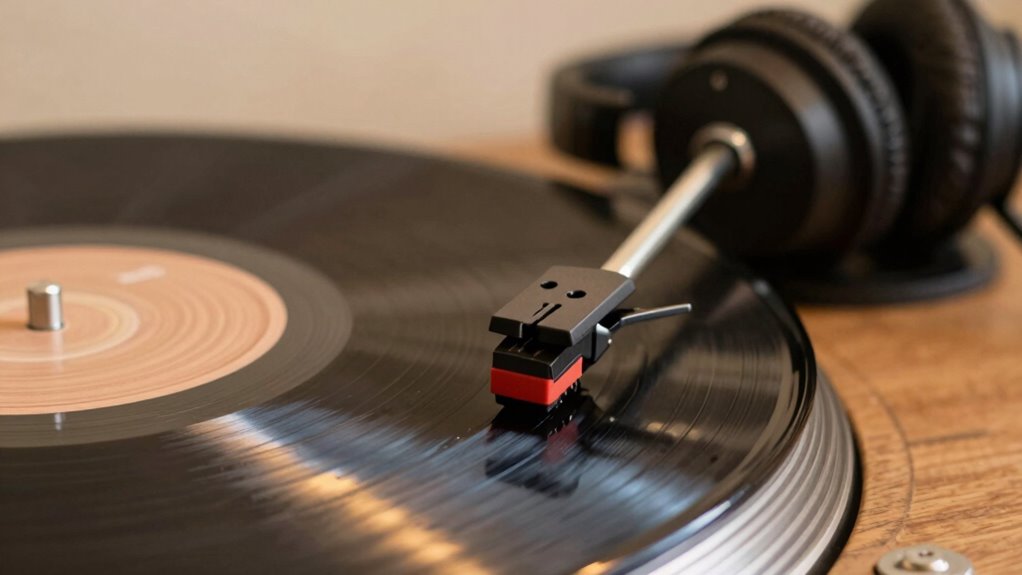
Listening closely to music can reveal a wealth of subtle details that often go unnoticed. When you pay attention to how different music genres are produced, you start to notice textures, layers, and nuances that might be drowned out when you simply turn up the volume. Each genre—whether jazz, classical, rock, or electronic—has a unique soundscape crafted by the producers. Recognizing these differences helps you develop a more discerning ear, encouraging you to listen more intentionally rather than relying solely on loudness to bring out details. Your listening environment considerably impacts your ability to notice these subtleties. A quiet, well-treated room minimizes external noise and echoes, allowing you to focus fully on the music. Conversely, noisy or echo-prone environments can mask the intricate elements embedded within the mix, making it harder to hear the delicate layers that give each piece its depth.
A quiet, well-treated space enhances your ability to notice subtle layers and textures in music.
To truly hear more detail, start by choosing high-quality audio sources. Lossless formats like FLAC or high-bitrate MP3s preserve more of the original recording’s nuance, providing clearer separation of the different instruments and vocals. Use good headphones or speakers that accurately reproduce sound without coloring it too much. When listening, avoid the temptation to crank the volume; instead, lower it slightly to a level where every instrument’s pitch and texture are clear, then slowly adjust until you find the sweet spot. This prevents distortion that can blur the details and allows your ears to pick up subtle shifts in tone and dynamics. Additionally, understanding the importance of a proper listening environment—such as a quiet space—can greatly enhance your ability to notice these nuances. Creating a space with controlled acoustics reduces unwanted echoes and background noise, making it easier to detect subtle sounds. Developing an awareness of how sound quality impacts perception can also improve your overall listening skills. Furthermore, paying attention to how different audio formats preserve or distort details helps you choose the best sources for nuanced listening.
Another technique is to focus on specific elements within the music. Try to isolate individual instruments or vocal lines, paying close attention to their placement in the stereo field. This active listening approach trains your ear to distinguish the different layers, revealing things like the faint hum of a background instrument or the subtle reverb on a vocal. Additionally, consider listening to tracks multiple times, each with a different focus—first for rhythm, then for harmony, then for finer details like background textures. Over time, this practice enhances your ability to detect nuances that are often overlooked.
Ultimately, your listening environment and your mindful approach to music are key. By creating a space free of distractions and training your ear to focus on the details, you’ll find yourself appreciating songs more deeply. Instead of turning up the volume to hear better, you’ll develop a more refined listening skill that uncovers the rich complexity woven into every track.
high-quality headphones for detailed music listening
As an affiliate, we earn on qualifying purchases.
As an affiliate, we earn on qualifying purchases.
Frequently Asked Questions
What Headphones Are Best for Revealing Subtle Music Details?
You should look for headphones that offer excellent noise isolation and bass enhancement. Closed-back models or in-ear monitors help block external noise, revealing subtle details in your music. Choose headphones with a balanced sound profile that emphasizes clarity and instrument separation. Good bass enhancement adds depth without overpowering the details. Investing in high-quality headphones with these features lets you enjoy intricate nuances without cranking up the volume.
How Does Room Acoustics Affect Music Clarity?
Room acoustics greatly impact music clarity through room resonance and sound diffusion. Excessive resonance can cause muddiness, while poor diffusion leads to uneven sound distribution, making details hard to hear. You can improve clarity by adding diffusers or acoustic panels to break up standing waves. Keep the room well-damped but avoid over-treatment. Properly managing these factors guarantees your music sounds clearer, revealing subtle details without needing to turn up the volume.
Can Music Streaming Quality Impact Detail Perception?
Yes, streaming quality impacts how much detail you perceive in music. Lower streaming bitrate or excessive file compression can strip away subtle nuances, making music sound less rich or detailed. To improve your listening experience, opt for higher bitrate streams or lossless formats when available. This way, you preserve more of the original sound, allowing you to catch those intricate details without just turning up the volume.
Do Equalizers Improve Hearing Small Details in Music?
Yes, equalizers can improve your hearing of small details in music by enhancing specific audio perception aspects. They allow sound enhancement by boosting or cutting particular frequencies, making subtle instruments or vocals more distinct. By tailoring your sound profile, you deepen your overall listening experience, revealing nuances that might otherwise be masked. Just remember, subtle adjustments often yield the best results without distorting the overall sound quality.
Is There a Difference Between Speakers and Headphones for Detail?
Yes, there’s a difference between speakers and headphones for detail. As a hobbyist listener or audiophile, you’ll notice that headphones often reveal more intricate details because they deliver sound directly to your ears, minimizing room effects. Speakers provide a more natural soundstage but can sometimes mask subtle nuances. Choosing between them depends on your preferences—if you want precision and clarity, high-quality headphones might suit your audiophile tastes better.
As an affiliate, we earn on qualifying purchases.
Conclusion
Remember, sometimes less is more. By adjusting your listening environment, investing in quality gear, and focusing on specific details, you can uncover new depths in your music without cranking up the volume. Don’t just hear the surface—listen deeply. As the saying goes, “The devil is in the details.” So, take your time, be patient, and enjoy discovering all the rich nuances your favorite tracks have to offer.
acoustic treatment panels for listening room
As an affiliate, we earn on qualifying purchases.
As an affiliate, we earn on qualifying purchases.
stereo speaker system for audiophiles
As an affiliate, we earn on qualifying purchases.
As an affiliate, we earn on qualifying purchases.
Columbus Day / Indigenous Peoples' Day Picks
long weekend sales
As an affiliate, we earn on qualifying purchases.