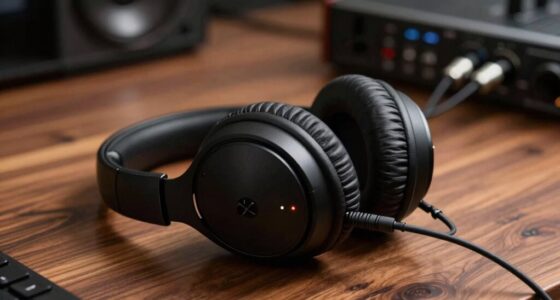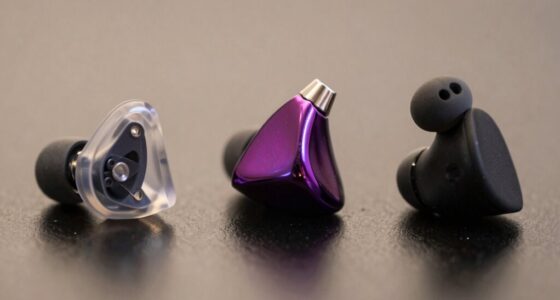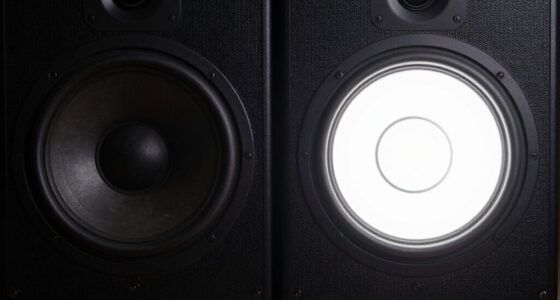
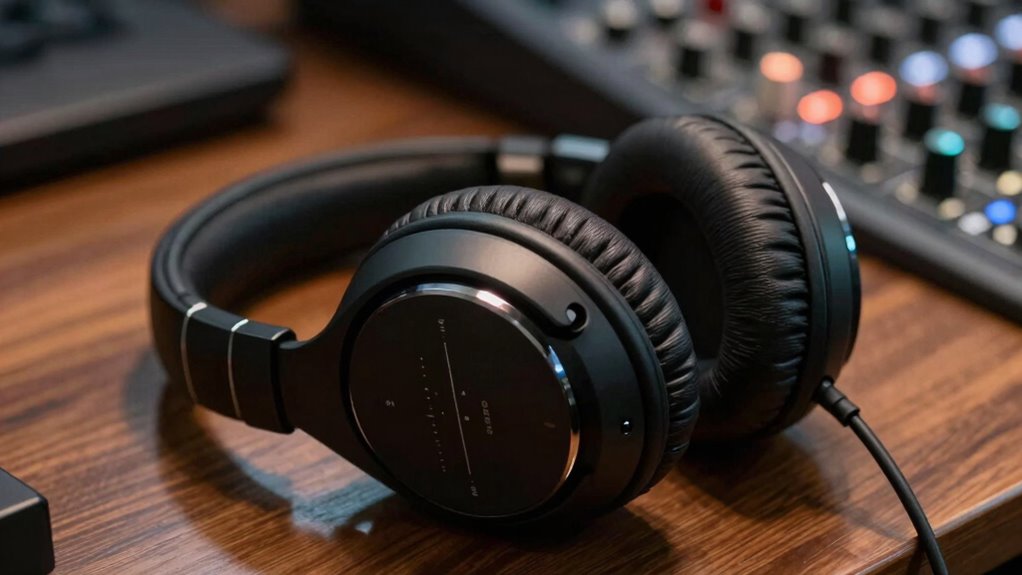
When you match volume levels, you remove loudness bias, allowing you to focus on sound qualities like clarity, tone, and detail. Your hearing sensitivity varies, so louder sounds can seem better even if they’re not. By leveling the playing field, you get a more accurate assessment of audio, preventing your perception from being tricked by volume differences. Keep exploring, and you’ll discover how understanding volume perception can greatly improve your sound judgment.

Get audio and creator gear delivered free with Prime
- Fast, free delivery on millions of items
- Prime Video, Amazon Music and more included
- Member-only deals all year
Key Takeaways
- Volume matching ensures comparisons are made at equal perceived loudness, reducing bias in sound evaluation.
- It isolates sound qualities like clarity and tone by eliminating loudness as a confounding factor.
- Perceived loudness influences subjective judgments, often making louder sounds seem better, which volume matching corrects.
- Matching volume levels allows listeners to focus on subtle differences rather than loudness discrepancies.
- Understanding volume perception helps avoid biases, leading to more objective and accurate sound judgments.
When it comes to enjoying music or managing audio, understanding volume matching is essential for sound judgment. It’s a fundamental step that influences how you perceive and evaluate different sounds, whether you’re listening to headphones, speakers, or mixing audio. Your sound perception isn’t just about hearing the music; it’s about how your brain interprets the volume levels and the details within the sound. If the volume isn’t properly matched, your judgment can become biased, making some sounds seem more appealing or clearer simply because they’re louder. That’s why being aware of how volume matching impacts your listening experience is crucial for accurate sound assessment.
Your hearing sensitivity plays a significant role here. Everyone’s hearing is unique, and some people are more sensitive to volume changes than others. When you encounter different audio sources, your hearing sensitivity influences how loud or soft sounds seem, even if the actual volume levels are identical. If one track is played at a higher volume, your auditory system perceives it as louder, which can lead you to believe it’s better or more engaging. Conversely, a quieter sound might be dismissed or undervalued, even if it’s technically more detailed or accurate. Recognizing this bias is key to making fair judgments about sound quality and content.
Hearing sensitivity varies, affecting how we perceive loudness and influencing our sound judgments and preferences.
Volume matching helps mitigate these biases by ensuring that you’re comparing audio sources at equal perceived loudness. When you match volumes, you’re essentially leveling the playing field, so your sound perception isn’t skewed by differences in loudness. This process allows you to focus on the actual qualities of the sound—its clarity, tone, and detail—rather than how loud it feels. Without proper volume matching, your ears might be tricked into favoring louder audio, which can distort your evaluation of sound accuracy or enjoyment. This is especially important in professional audio settings, where precise judgment can impact mixing, mastering, or critical listening.
Moreover, understanding how volume matching influences your sound perception can improve your overall listening experience. It encourages you to develop a more critical ear, helping you discern subtle differences that might otherwise be overshadowed by volume disparities. Whether you’re a casual listener or an audiophile, being aware of your hearing sensitivity and ensuring proper volume matching helps you appreciate the true qualities of the sound. Recognizing the importance of perceived loudness and how it can influence your judgment allows you to make more informed and objective evaluations. This knowledge ties into the broader concept of hearing sensitivity, which affects how we perceive and interpret audio signals. Additionally, being mindful of volume perception can help you avoid common biases that skew sound evaluations. Developing an understanding of auditory perception can further enhance your ability to analyze sound critically and accurately. By doing so, you gain a more objective perspective, making your sound judgment more accurate and satisfying. This awareness ultimately enhances your ability to enjoy music and manage audio with confidence and precision.
As an affiliate, we earn on qualifying purchases.
Frequently Asked Questions
How Does Volume Matching Affect Perceived Sound Quality?
Volume matching affects your perception of sound quality by minimizing perceptual bias and highlighting differences in dynamic range. When volumes are equalized, you’re less likely to be influenced by loudness, allowing you to focus on clarity, detail, and tonal balance. This method guarantees your judgment is more objective, helping you accurately compare audio sources without the distortion of volume-induced perceptions, leading to a better overall listening experience.
Can Volume Matching Influence Emotional Responses to Music?
Yes, volume matching can influence your emotional responses to music. When sounds are leveled, your emotional perception becomes clearer, allowing you to connect more deeply with the music. Without listener bias caused by volume differences, you’re more likely to experience genuine feelings and reactions. This consistent volume setting helps you focus on melodies and nuances, enhancing your emotional engagement and making your listening experience more authentic and impactful.
What Are Common Mistakes When Volume Matching During Listening Tests?
A common mistake is neglecting proper equipment calibration, which leads to inconsistent volume matching. You might also fall into comparison bias, where you unconsciously favor one sound over another based on previous expectations. To avoid these errors, always calibrate your equipment accurately and focus on objective listening rather than preconceived notions. This guarantees your volume matching is precise, helping you judge sounds more fairly and consistently during listening tests.
Does Volume Matching Vary Across Different Audio Genres?
Yes, volume matching varies across different audio genres due to genre-specific loudness and cultural listening habits. You might find that genres like classical music require precise volume matching to appreciate subtle details, while genres like EDM often have a consistent loudness level. Cultural listening habits also influence your perception, as some cultures prefer louder or softer listening experiences. Adjusting volume carefully guarantees an accurate judgment tailored to each genre’s unique characteristics.
How Do Personal Hearing Sensitivities Impact Volume Matching?
Your personal hearing sensitivities directly influence your volume matching, as hearing thresholds vary from person to person. If you’re more sensitive, you might set a lower volume to match perceived loudness, affecting auditory perception. Conversely, less sensitive ears may require higher volumes for accurate matching. This individual variation highlights how personal hearing thresholds shape your perception of sound, ultimately impacting how you judge audio quality across different listening contexts.
As an affiliate, we earn on qualifying purchases.
Conclusion
By mastering volume matching, you modify your mindset, making your judgment more just and genuine. It’s about balancing biases and breaking barriers that blind you to true sound. When you focus on fairness and finesse, you’ll find your focus sharpens, and your sound sense strengthens. So, step beyond superficiality, see symmetry in sound, and savor the subtle, superlative nuances that make every listening experience truly transformative.
As an affiliate, we earn on qualifying purchases.
As an affiliate, we earn on qualifying purchases.
Halloween Picks
halloween
As an affiliate, we earn on qualifying purchases.