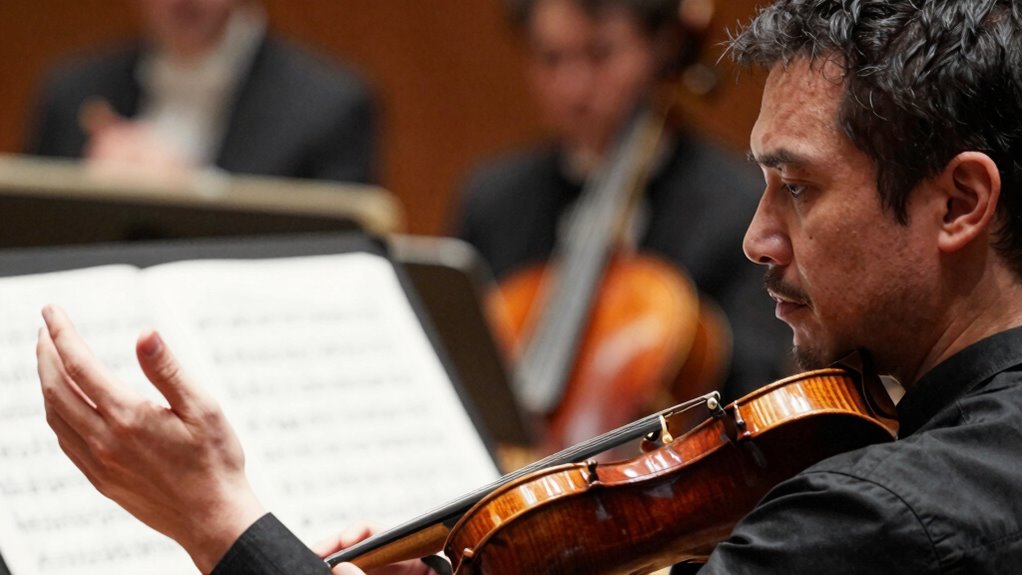

To listen for dynamics without getting lost in jargon, focus on how the music’s volume and intensity change naturally. Pay attention to softer moments, like whispering or gentle passages, and louder sections that feel bold or intense. Notice how these shifts create emotion and shape the mood. By tuning into the ebb and flow, you’ll start to understand how dynamics tell a story. Keep exploring, and you’ll discover even more ways to connect deeply with the music.
Key Takeaways
- Focus on changes in volume and intensity rather than technical terms; notice when music gets louder or softer.
- Use your ears to listen for emotional shifts, which often align with dynamic changes.
- Pay attention to how individual instruments or voices swell or soften during different passages.
- Practice with familiar music to identify familiar dynamic patterns without jargon confusion.
- Trust your natural listening instincts; emphasize what the music feels like rather than technical labels.
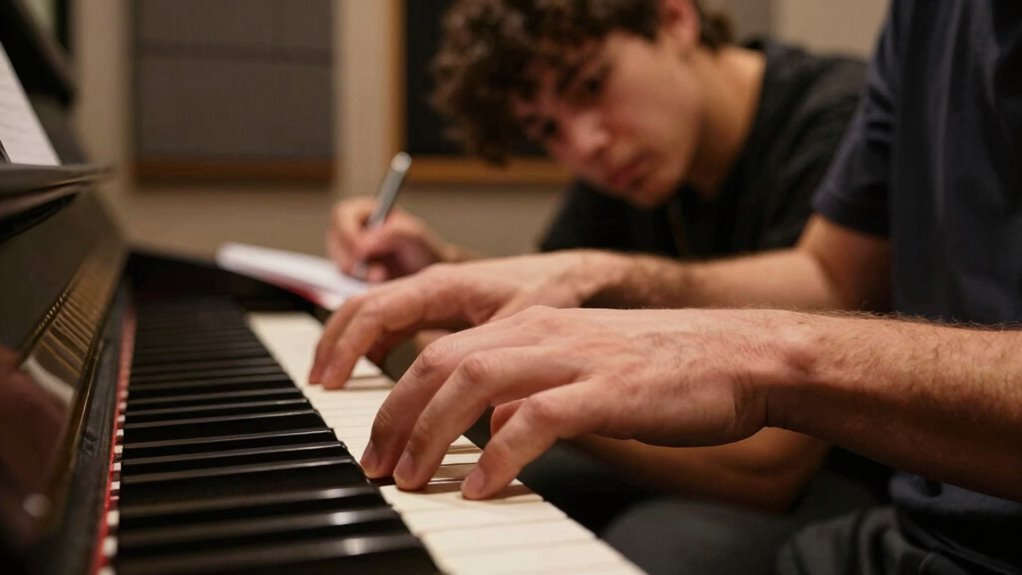
Listening for dynamics in music involves more than just hearing loud and soft sounds; it requires you to pay close attention to subtle shifts in volume and intensity. When you tune in to these variations, you’re engaging in a form of musical expression that adds emotional depth to what you hear. Dynamics shape the mood, highlight important passages, and bring the music to life. The key is to focus on volume control—not just the extremes of loud and soft, but the way the music smoothly or suddenly moves between these levels. This helps you understand how musicians use dynamics to communicate feelings and tell a story.
Pay attention to subtle volume shifts to deepen your emotional connection with the music.
To start, listen for the softer moments, often called pianissimo, where the music becomes whisper-quiet. These sections can evoke intimacy, vulnerability, or anticipation. Then, notice when the music swells into louder passages, like forte, which might feel bold and powerful. The contrast between these levels makes the music more expressive and engaging. Pay attention to how the volume shifts—are they gradual crescendos or sudden accents? Recognizing these changes allows you to appreciate the composer’s or performer’s intention behind the dynamic choices, giving you a deeper connection to the music’s emotional landscape.
You can improve your ability to listen for dynamics by focusing on individual instruments or voices. When a specific instrument, like a violin or piano, varies in volume, it often reflects musical expression. For example, a soloist might swell in volume during a passionate moment or soften to draw you into a quiet reflection. By listening closely to how each part interacts through volume control, you’ll start to notice the art of musical storytelling at work. It’s not just about loud or soft, but about how these levels ebb and flow to shape the overall mood. Developing this skill can also help you recognize the musical nuances that make a performance truly memorable. Additionally, understanding the volume dynamics used by performers can deepen your appreciation for their technical skill and interpretive choices.
Another helpful tip is to listen in different contexts—live performances, recordings, or across various genres. Each setting emphasizes different aspects of dynamics and volume control, but the core idea remains the same: dynamics are an essential tool for emotional expression. Recognizing and understanding musical expression through volume shifts enhances your emotional connection to the music. When you become more aware of these shifts, you’ll find that you’re not just hearing music—you’re feeling it. This heightened awareness allows you to experience the subtle artistry behind every note, making your listening more meaningful and immersive. By honing your focus on the nuances of volume, you reveal a richer understanding of musical expression that’s both satisfying and enlightening.
audio equipment for listening to dynamics
As an affiliate, we earn on qualifying purchases.
As an affiliate, we earn on qualifying purchases.
Frequently Asked Questions
What Are Common Misconceptions About Musical Dynamics?
Many people believe that mastering dynamic terminology requires understanding complex technical jargon, but that’s not true. Dynamic markings like forte or piano are straightforward, and you can grasp their meaning without deep technical knowledge. A common misconception is thinking dynamics only mean loud or soft, but they also include subtle variations like crescendo or decrescendo. Focus on listening actively, and you’ll naturally understand how dynamics shape the music.
How Do Dynamics Vary Across Different Musical Genres?
Imagine a symphony of colors where each genre paints its own vibrant shade. In jazz, you feel the spontaneous swing of crescendos and decrescendos, while in classical, the precise control mimics a painter’s delicate brushstrokes. Cultural influences shape these dynamics, infusing genres like flamenco or reggae with distinct emotive peaks and valleys. Genre-specific techniques highlight these differences, helping you recognize the unique emotional landscape each style creates.
Can Listening for Dynamics Improve Overall Musical Appreciation?
Yes, listening for dynamics can greatly improve your overall musical appreciation. When you focus on expressive techniques and performance nuances, you notice how musicians use volume changes to convey emotion and story. This heightened awareness helps you connect deeper with the music, making performances more meaningful. By actively listening for these subtle shifts, you develop a richer understanding of the artist’s intent and the emotional depth behind each piece.
How Do Dynamics Relate to Emotional Expression in Music?
Did you know that over 60% of listeners say emotional intensity deeply impacts their musical experience? Dynamics play an essential role in conveying expressive nuances and emotional expression. When you notice crescendos or sudden drops, you’re sensing the music’s mood shifts. By tuning into these variations, you connect more profoundly with the piece, feeling the artist’s intent and heightening your overall emotional response to the music.
What Are Simple Exercises to Train Dynamic Listening Skills?
Start with simple ear training exercises, like listening to a piece and identifying loud and soft passages. Focus on rhythm awareness by tapping along to the music, paying close attention to volume changes with each beat. Practice actively discerning subtle dynamic shifts without labeling them, trusting your ear. Repeat these exercises regularly, gradually increasing complexity, to sharpen your ability to detect and interpret dynamics naturally in any musical context.
As an affiliate, we earn on qualifying purchases.
Conclusion
By focusing on the sound’s energy and subtle shifts, you can listen for dynamics without drowning in jargon. Think of it like tuning into a conversation at a lively party—you catch the important moments without getting overwhelmed by every word. Trust your ears and stay present, and you’ll naturally pick up on the music’s emotional flow. With practice, you’ll navigate dynamics as smoothly as a boat gliding on calm water.
high-quality headphones for music analysis
As an affiliate, we earn on qualifying purchases.
As an affiliate, we earn on qualifying purchases.
instrument microphones for dynamic control
As an affiliate, we earn on qualifying purchases.
As an affiliate, we earn on qualifying purchases.