

A limiter prevents your audio signals from exceeding a certain volume level, which helps maintain consistent sound and avoids distortion. It works by instantly reducing any sudden loud sounds, keeping the overall volume safe and balanced. Live albums use limiters to control dynamic range, ensuring energetic parts don’t cause clipping and the sound stays clear across various playback systems. If you’re curious about how limiters fine-tune your audio, keep exploring to learn more.

Get audio and creator gear delivered free with Prime
- Fast, free delivery on millions of items
- Prime Video, Amazon Music and more included
- Member-only deals all year
Key Takeaways
- A limiter prevents audio signals from exceeding a set volume, avoiding distortion and clipping during recordings or live performances.
- It instantly reduces gain when loud sounds surpass the threshold, maintaining a consistent and balanced sound level.
- Live albums use limiters to ensure professional sound quality, handling dynamic, energetic performances smoothly.
- They help maintain audio clarity and prevent sudden loud noises from damaging equipment or disturbing listeners.
- Using a limiter ensures a polished, stable listening experience across various playback devices and environments.
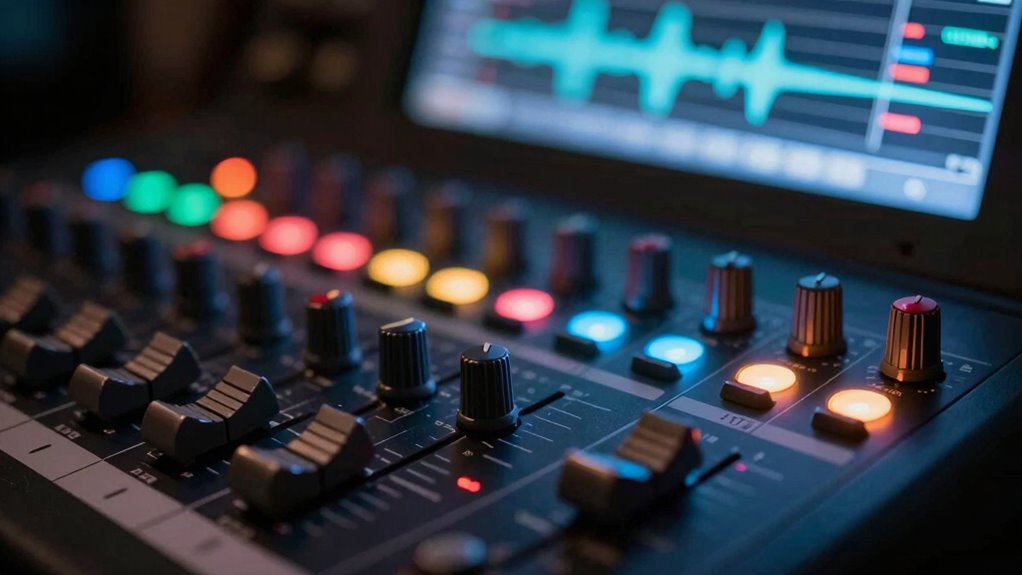
A limiter is a tool used in audio processing to prevent signals from exceeding a specific volume level. When you’re working with music or live recordings, maintaining consistent loudness is paramount, and that’s where a limiter steps in. It helps you control the dynamic range, which is the difference between the quietest and loudest parts of your audio. Without it, sudden loud sounds—like a cymbal crash or a vocalist hitting a high note—can spike beyond the desired volume, causing distortion or discomfort for listeners. By applying a limiter, you guarantee these peaks are contained, providing a smoother, more polished sound.
Peak control is the primary function of a limiter. Think of it as a gatekeeper that immediately stops any audio signal from crossing a predefined threshold. When a sound exceeds that limit, the limiter reduces its gain instantly, preventing it from distorting or clipping. This is especially important in live albums, where unpredictable sounds—like audience reactions or unforeseen instrumental solos—can cause sudden volume spikes. Using a limiter in this context guarantees a consistent listening experience, no matter what happens on stage.
A limiter instantly stops signals from crossing a set threshold, ensuring consistent, distortion-free audio.
In live settings, dynamic range can be quite wide, which can make audio challenging to manage. Without proper control, the louder sections could overwhelm the mix, overshadowing softer parts and resulting in an uneven sound. A limiter helps tame this variation by compressing the peaks, making everything sound more balanced. This not only preserves audio clarity but also ensures the overall volume remains within a safe, listener-friendly range. When you limit the peaks, you keep the energy of the performance intact without risking distortion or listener fatigue.
Live albums often utilize limiters to achieve a professional, broadcast-quality sound. They help maintain a consistent level from start to finish, even if some parts are naturally louder or more energetic. This consistency is essential for listeners tuning in through various devices, from high-end speakers to earbuds, as it preserves the intended listening experience. Additionally, by controlling the peak levels, limiters prevent sudden loud noises that could trigger automatic volume adjustments on playback devices, ensuring the sound remains stable and enjoyable.
In essence, a limiter is an indispensable tool that provides peak control and manages the dynamic range of your audio. It allows you to keep everything within a controlled volume, preventing distortions and ensuring clarity. Whether you’re mixing a studio track or recording a live album, understanding how to use a limiter effectively helps you deliver a polished, professional sound that resonates with your audience. Recognizing the role of audio dynamic range and how limiters contribute to it can significantly improve your production quality.
As an affiliate, we earn on qualifying purchases.
Frequently Asked Questions
Can a Limiter Affect the Overall Tone of a Recording?
Yes, a limiter can affect your recording’s tone by controlling the dynamic range, which influences how loud or soft certain parts sound. When you use a limiter, it can make your recording feel more consistent and clear, but if overused, it might also squash the natural dynamics, reducing clarity and making the sound less lively. So, it’s essential to find the right balance to maintain tone while managing dynamics.
How Do Limiters Differ From Compressors?
Limiters differ from compressors mainly in how they control dynamic range. You set a threshold adjustment on a limiter to prevent peaks from surpassing a specific level, effectively capping loud sounds. Compressors, on the other hand, reduce the dynamic range more gradually, allowing you to shape the overall tone. While both manage dynamics, limiters act more aggressively to keep signals within a tight range, ensuring your audio stays clean and balanced.
Are Limiters Necessary for All Live Recordings?
Think of a limiter as a safety net for your live recordings. You might not need it for every show, but it’s vital when you want to protect your dynamic range from bursting, like preventing digital clipping. If your performance hits high peaks, a limiter helps keep those moments controlled, guaranteeing your sound remains clear and balanced. So, while not always necessary, it’s often a wise choice to guarantee quality.
What Are Common Settings for a Limiter During Live Shows?
During live shows, you typically set your limiter’s threshold around -3 to -6 dB for peak control, ensuring the dynamic range stays balanced. This prevents sudden volume spikes from overwhelming the audience or equipment. Keep the attack time fast to catch peaks quickly, and set the release time so it recovers smoothly. These settings help maintain consistent sound quality while protecting your gear from distortion caused by excessive volume.
Can Using a Limiter Cause Audio Distortion?
Think of a limiter as a vigilant guardian, protecting your audio from peaking too high. Yes, it can cause distortion if set too aggressively, crushing the dynamic range and muddying the clarity. When pushed beyond its threshold, the limiter’s protective shield distorts the sound, sacrificing nuance. To preserve audio clarity, you need to balance the limiter’s settings carefully, ensuring it shields without sacrificing the richness of your live performance.
As an affiliate, we earn on qualifying purchases.
Conclusion
Think of a limiter as the gatekeeper at a concert, holding back the wild, unruly waves of sound so they don’t crash over your ears. It keeps your music shining brightly without blowing out your speakers or distorting. When you listen to a live album, it’s like having a skilled conductor guiding a roaring orchestra, ensuring every note hits just right. Without it, your musical journey might feel like a storm—powerful but unpredictable.
As an affiliate, we earn on qualifying purchases.
As an affiliate, we earn on qualifying purchases.
Fall Picks
fall essentials
As an affiliate, we earn on qualifying purchases.


![Iron Maiden Legend Nicko McBrain Turned Down Trump Golf Invite: “[He] Should Be Put In Jail”](https://deadsetlive.com/wp-content/uploads/2026/10/iron-maiden-legend-nicko-mcbrain-turned-down-trump-golf-invite-he-should-be-put-featured-260x140.jpg)