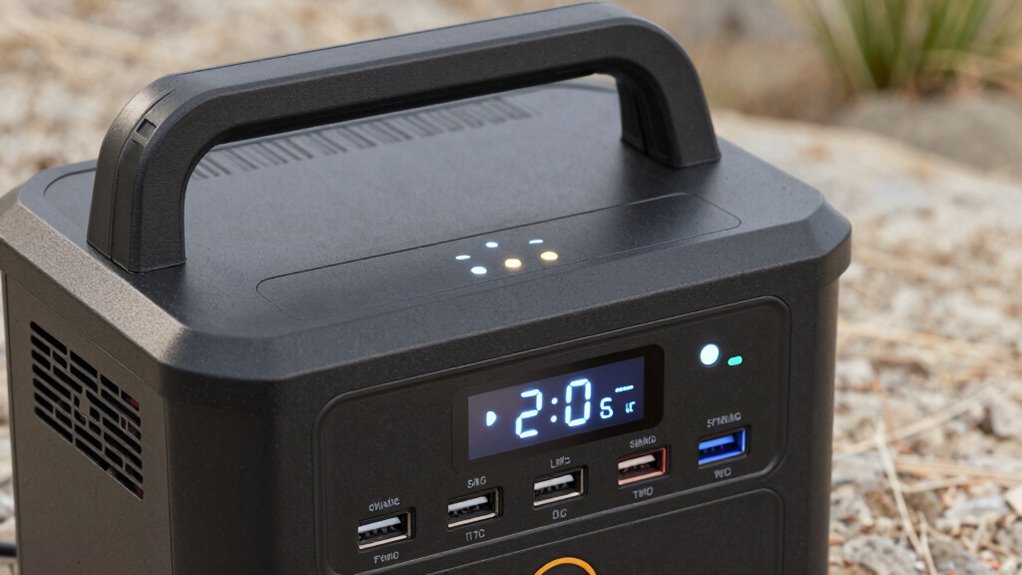

Understanding portable power station specs helps you choose the right device. Watts measure how much power your device consumes or produces at a given moment, while watt-hours show total energy capacity—longer usage equals higher watt-hours. Surge power is the short burst of extra power needed to start appliances, and recharge time tells you how fast the station refills. Getting familiar with these details guarantees you pick the best model for your needs; explore further to see how they all connect.

Get audio and creator gear delivered free — and shop member deals
- Fast, free delivery on millions of items
- Access to Prime Big Deal Days deals on October 6–7
- Prime Video, Amazon Music and more included
Key Takeaways
- Watts measure the power output at a specific moment, while watt-hours indicate total energy capacity over time.
- Surge power is the maximum short-term wattage a power station can deliver to start appliances with high initial demands.
- Higher watt-hour ratings mean longer device operation between charges, essential for extended use.
- Inverter efficiency determines how much of the stored energy is converted into usable AC power, affecting overall performance.
- Recharge time reflects how quickly the station can be replenished, impacting readiness during outdoor or emergency use.

When choosing a portable power station, understanding its specifications is essential to guarantee it meets your energy needs. One of the most important factors to consider is the battery capacity, usually measured in watt-hours (Wh). This tells you how much energy the power station can store and deliver over time. A higher watt-hour rating means you’ll get longer usage between charges, which is indispensable if you plan to power devices for extended periods. Keep in mind that battery capacity isn’t just about size; it directly impacts how long your devices can run. For example, a 500 Wh power station can theoretically power a 50-watt device for about 10 hours, assuming perfect efficiency. But, to truly understand how much power you’ll get, you also need to consider inverter efficiency.
Understanding battery capacity and inverter efficiency helps you choose a reliable portable power station.
Inverter efficiency refers to how effectively the power station converts the stored DC energy into usable AC power. Even if the battery capacity indicates a large amount of energy, poor inverter efficiency can reduce the actual usable power. Most modern power stations boast inverter efficiencies around 85% to 95%, meaning you lose some energy during conversion. This loss translates into shorter usage times or the need for a higher battery capacity to compensate. When comparing models, a higher inverter efficiency means you get more out of the same amount of stored energy, making your device operation more economical and reliable. So, if you’re powering sensitive electronics or appliances, it’s worth prioritizing a unit with a high inverter efficiency to guarantee minimal energy wastage.
Beyond battery capacity and inverter efficiency, understanding surge power is also indispensable. Surge power indicates the maximum power the station can handle for a short burst, which is especially important for starting appliances like refrigerators or power tools with motors. If your device’s startup surge exceeds the station’s surge power rating, it won’t run properly, or it could damage the power station. Most units specify both continuous wattage and surge wattage, so always check these numbers against your device requirements.
Recharge time is another critical specification. It tells you how long it takes to fully recharge your power station, whether through AC wall outlets, solar panels, or other sources. A faster recharge time means less downtime, which is advantageous during outdoor trips or emergencies. Keep in mind that recharge times can vary depending on the input power source and the capacity of the station. Balancing these specs—battery capacity, inverter efficiency, surge power, and recharge time—ensures you select a portable power station that truly fits your needs, providing reliable and efficient power wherever you go. Additionally, considering European standards can help you choose products that meet regional safety and efficiency regulations.
portable power station with high watt-hour capacity
As an affiliate, we earn on qualifying purchases.
As an affiliate, we earn on qualifying purchases.
Frequently Asked Questions
How Do I Choose the Right Portable Power Station for My Needs?
To choose the right portable power station, consider your battery capacity needs based on what devices you’ll power. If you need long-lasting energy, opt for higher watt-hour capacity. Also, look at portability features like size, weight, and handle design to guarantee easy transport. Match the station’s surge power with your equipment’s startup demands, and check recharge options to keep it ready when you need it most.
What Maintenance Is Required for a Portable Power Station?
Think of your portable power station as a garden that needs regular tending. To keep it thriving, you should monitor its battery lifespan, ensuring it doesn’t stay fully discharged for too long. Keep firmware updates current to enhance performance and security. Occasionally, clean the vents and connectors to prevent dust buildup. Proper maintenance guarantees your station remains reliable, ready to power your adventures whenever you need it most.
Can Portable Power Stations Be Used While Charging?
Yes, you can use a portable power station while charging, but you should prioritize charging safety and verify compatibility. Always check the manufacturer’s guidelines, as some models may have specific instructions or limitations. Using a compatible charger and avoiding high power draw during charging helps prevent overheating or damage. Staying within the recommended parameters ensures safe and efficient operation, allowing you to enjoy your power station’s convenience without risking safety or device longevity.
Are Portable Power Stations Weather-Resistant or Waterproof?
Most portable power stations offer some level of weather resistance, but not all are fully waterproof. You should check the water protection rating, like IP ratings, to determine how well they withstand rain or splashes. While they’re designed to handle outdoor use, avoid exposing them to heavy rain or submersion, as water resistance varies. Always prioritize models with higher water protection ratings if you plan to use them outdoors frequently.
How Do I Safely Store a Portable Power Station When Not in Use?
Picture your portable power station resting peacefully in a cool, dry corner, away from moisture and extreme temperatures. To guarantee safe handling, store it in a well-ventilated area, ideally at about 50% charge, and avoid direct sunlight. Keep it upright, protected from dust and impacts, and check the battery storage regularly. Doing so preserves its lifespan and guarantees safe, reliable use whenever you need power on the go.
best inverter efficiency portable power station
As an affiliate, we earn on qualifying purchases.
As an affiliate, we earn on qualifying purchases.
Conclusion
Now that you know the ins and outs of watts, watt-hours, surge power, and recharge time, you’re practically a portable power station expert! With this knowledge, you’ll never be caught powerless again—your adventures will be unstoppable, and emergencies will bow to your tech-savvy skills. Get ready to conquer any situation with the ultimate power source by your side—because when it comes to portable energy, you’re now a true powerhouse!
portable power station for outdoor use
As an affiliate, we earn on qualifying purchases.
As an affiliate, we earn on qualifying purchases.
power station with high surge power
As an affiliate, we earn on qualifying purchases.
As an affiliate, we earn on qualifying purchases.
Fall Picks
fall essentials
As an affiliate, we earn on qualifying purchases.